In a market long dominated by incremental upgrades and familiar silhouettes, Otto Aerospace Phantom 3500 stands out as something genuinely different. Still several years away from certification, the aircraft is already sparking serious conversation within private aviation thanks to a design philosophy that prioritizes efficiency, speed and sustainability over brute force and tradition.
At first glance, the Phantom 3500 looks like it belongs in a retro-futuristic sci-fi film rather than on today’s flight line. That impression is no accident. The aircraft is built around an advanced laminar-flow aerodynamic concept, meaning its fuselage is designed to keep airflow smooth and uninterrupted for as long as possible. By eliminating external rivets, protrusions and even traditional windows, Otto Aerospace aims to drastically reduce drag, allowing the aircraft to fly faster and farther using less energy.
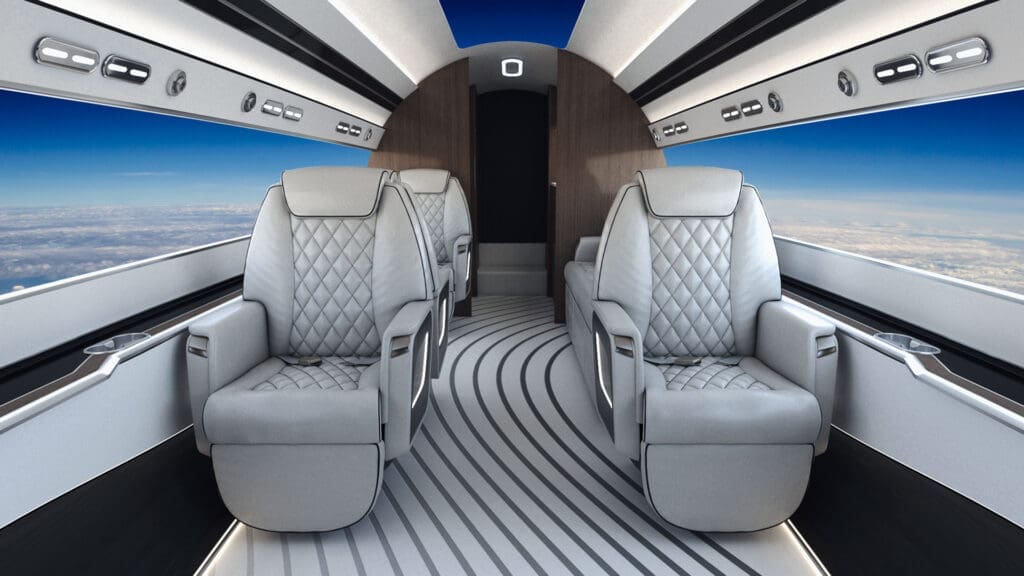
Instead of windows, the cabin relies on high-resolution cameras mounted along the exterior of the fuselage, feeding live views to large panoramic screens inside. Passengers can choose between real-time outside scenery, immersive entertainment or a full business-class video conferencing environment. The result is a cabin that feels more like a modern design studio or private lounge than a conventional business jet interior.
Phantom 3500 – The New Private Aviation
Despite being roughly the same size as established super midsize jets such as the Challenger 3500 or Embraer Praetor series, the Phantom 3500 promises significantly lower operating costs. Its lightweight carbon-fiber structure is produced using advanced robotic manufacturing and resin-transfer molding, allowing Otto Aerospace to reduce overall weight while maintaining structural strength. Smaller, more efficient engines further contribute to lower fuel burn and maintenance demands, placing operating costs closer to those of light jets while offering the space and range of a larger aircraft.
Performance is another area where the Phantom 3500 aims to challenge the status quo. While most jets in this class cruise comfortably around Mach 0.83, Otto Aerospace has signaled ambitions of pushing closer to Mach 0.9. Longer, more efficient wings allow for higher cruise altitudes, steeper climbs and improved efficiency over long distances, making transcontinental and even transatlantic missions part of the aircraft’s intended mission profile.

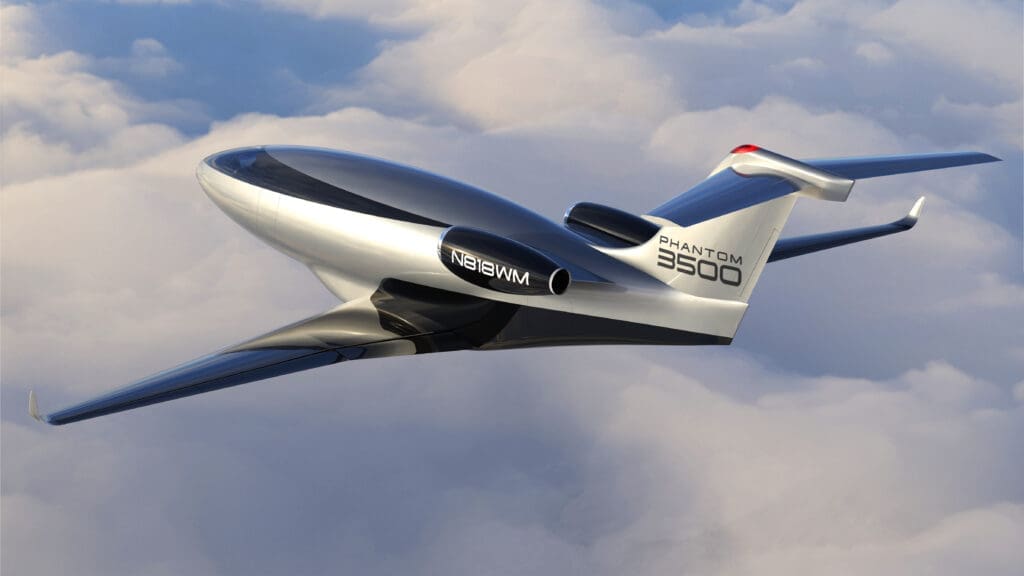
The industry has taken notice. Fractional ownership giant Flexjet has already committed to 300 aircraft, a significant endorsement for a jet that has yet to take to the skies. First flight testing is currently projected for 2027, with certification targeted around 2030. If the Phantom 3500 delivers on its promises, it could mark a shift in how private jets are designed, marketed and flown in the years ahead.
Rather than chasing excess, the Phantom 3500 represents a future where performance, comfort and sustainability coexist. It is an aircraft that questions long-held assumptions about windows, engines and design language, and in doing so, may help define the next chapter of private aviation.
Want to read about another private jet – check this article
