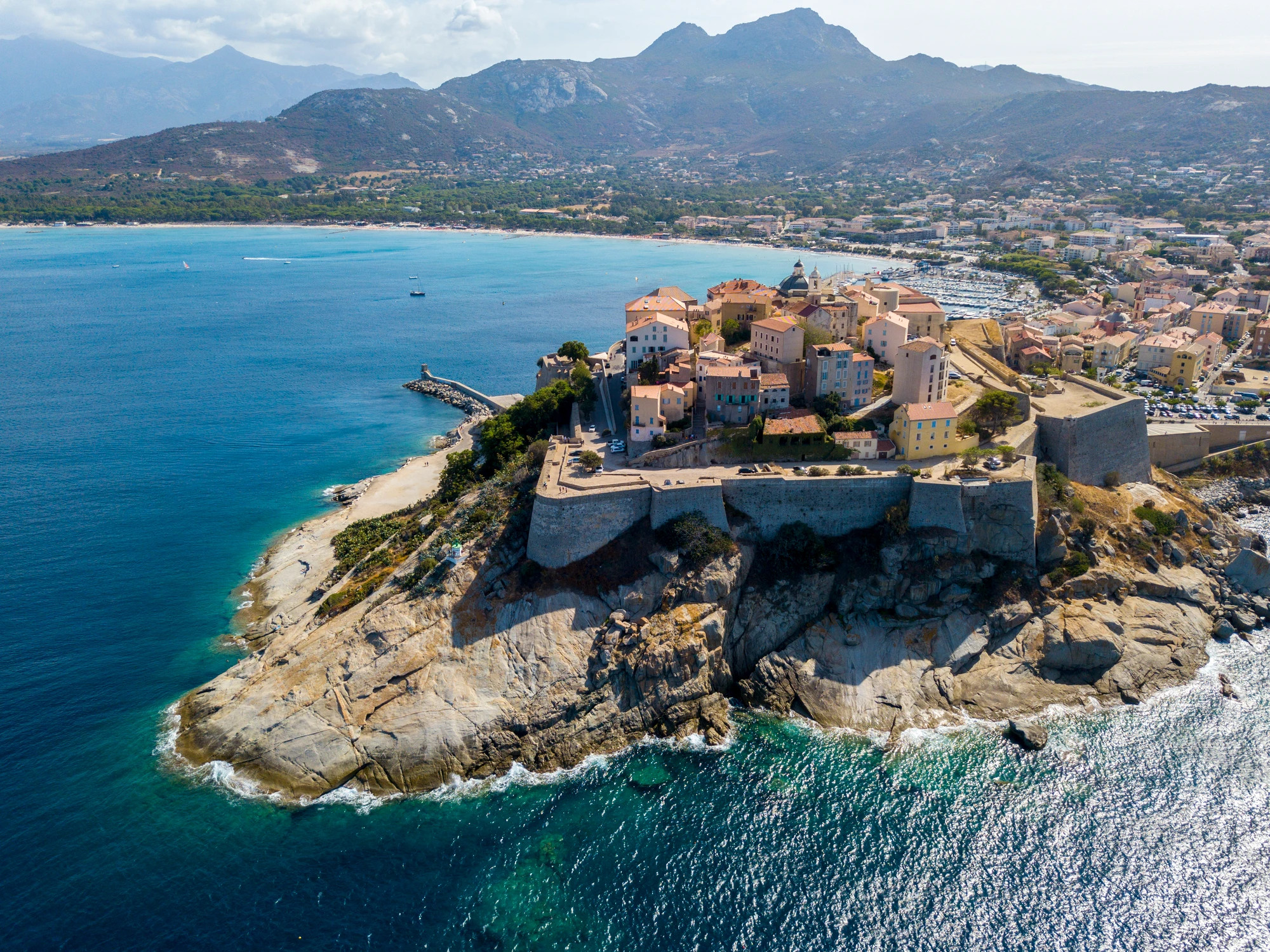
The view of Bonifacio from the water is the one that stays with you. The medieval town is perched on a dramatic limestone cliff, its architecture overlooking the Tyrrhenian Sea. From the deck of a yacht, you see the island as it was always meant to be seen: a fortress coastline, a port of call in the middle of the sparkling Mediterranean.
This is Corsica, an island with over a thousand kilometres of coastline defined by a blend of French and Italian influences. It is famous as Napoleon Bonaparte’s birthplace, but its true character is found in its wild landscapes and unspoiled anchorages. Many of its best coves and pristine beaches are accessible only by sea, a geographic reality that has preserved its nature.
The Northern Approach
A seven-day charter often begins on the northwest coast at Calvi. The city is known for its massive 13th-century Genoese citadel and the local belief that Christopher Columbus was born here. Arriving by water, the citadel towers above red-tiled roofs, framed by forested mountains and a crescent of white sand beach that stretches for six kilometres. In summer, the port becomes a hub for festivals, with jazz beats heard from the water.
From Calvi, the landscape turns otherworldly at the Scandola Nature Reserve, a UNESCO World Heritage Site. This is the remnant of a volcano that collapsed into the sea millions of years ago. Exploring by tender is the only way to navigate the colourful canyons and coves, where deep orange cliffs rise from the water. At the reserve’s southern edge is Girolata Bay, a favorite anchorage for swimming and diving among red rock cliffs. The small village of Girolata is also only accessible by boat.
The Southern Beaches
Further south, a charter can stop at Porto-Vecchio, a bustling port with Roman origins and a 16th-century Genoese citadel. Its narrow cobblestone streets are lined with boutique shops and cafés. The port provides access to some of Corsica’s most idyllic beaches, including Palombaggia, Santa Giulia, Cala Rossa, and Pinarello, all known for their impossibly blue waters and soft sand.
Palombaggia is a firm favorite, stretching three kilometres and defined by red rocks and umbrella pine trees. The neighboring Cerbicale islands are a UNESCO World Heritage nature reserve, offering the chance to sight crested cormorants. Below the surface, the waters hold mullet, octopus, and the famed salema porgy, a golden-striped fish that is a hallucinogen if consumed.
En route to Sardinia, the Lavezzi Islands Nature Reserve emerges as a scattering of granite boulders and islets. This 80,000-hectare protected area includes the famous dive site 'Grouper City', named for the massive fish species that can reach 100kg. The only inhabited island, Cavallo, is fiercely protected. Not even a single sunlounger is permitted on its coastline.
Beyond The Anchorages
The island offers more than just beaches. The clear waters off Calvi allow divers to explore the wreck of a B17 American bomber. For hikers, the famous GR 20 trail crosses the island over 180km, but shorter routes like the 90-minute Tête de Mort loop above Ajaccio offer panoramic views. The island’s naval history is visible in its 16th-century clifftop towers and fortified towns, best seen at Bonifacio, Corte, and Calvi.
Corsica is also known for its produce and wine. A charter with a firm like Burgess can arrange intimate private meals at rustic, family-run restaurants nestled in the hills. At Saleccia beach, local fishermen can be seen unloading their fresh catches of succulent octopus and squid from small boats bobbing on translucent waters. It is a reminder of the island’s connection to the sea, a connection best understood from the water itself.
Read more about yachts here.