
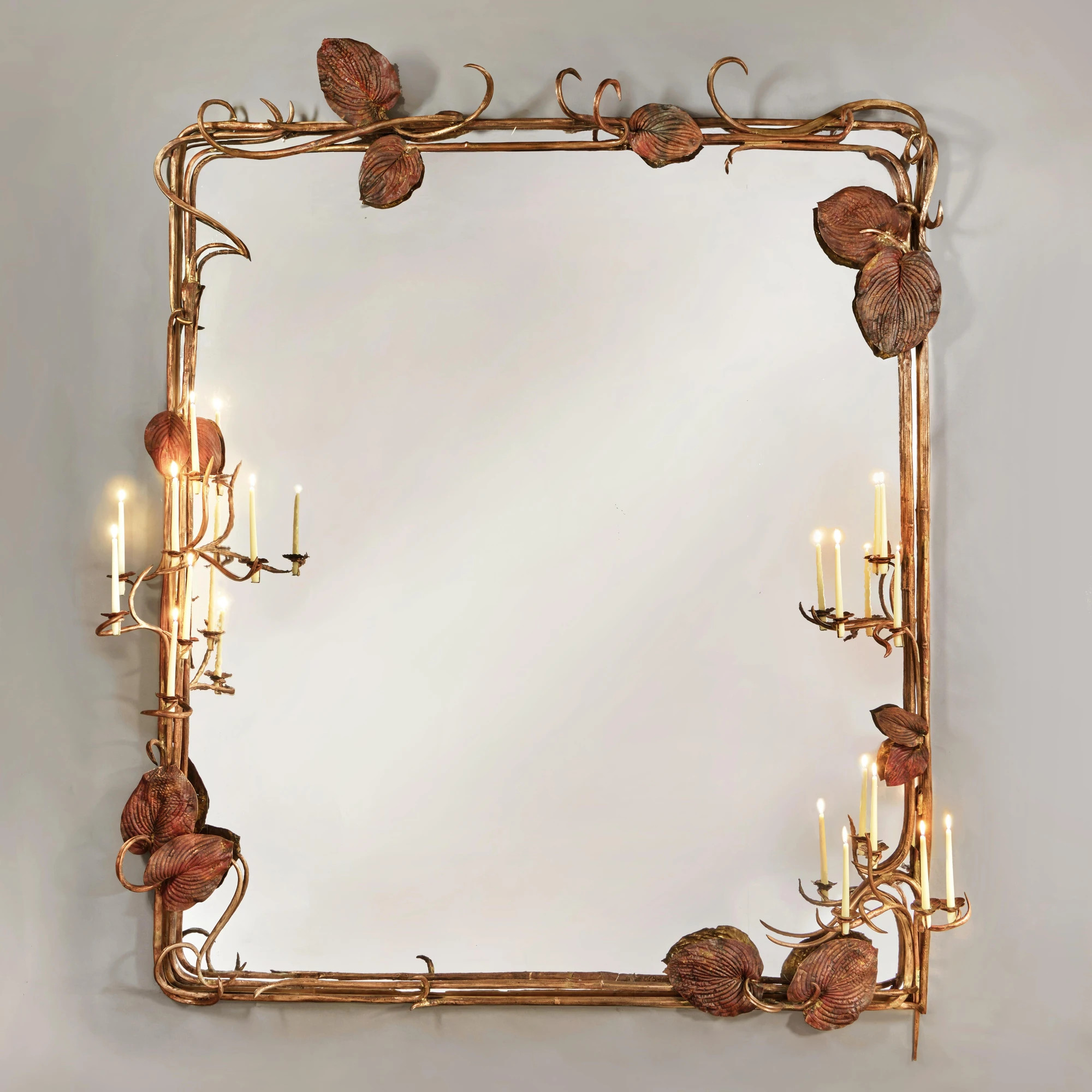
Ten minutes is a long time in an auction room. It is long enough for the polite rhythm of bidding to turn into a contest of wills. It is the space between a high price and a historic one. For nearly ten minutes at Sotheby's New York, a set of mirrors by Claude Lalanne held the room’s attention. When the hammer finally fell, the number was $33.5 million.
The figure marks a new record for any piece of design sold at auction. But the record itself is less interesting than what it confirms about the objects we choose to live with. This was not just a sale of furniture. It was a recalibration of where value resides.
The mirrors in question were part of an ensemble, commissioned for the Paris home of Yves Saint Laurent and Pierre Bergé. That detail matters. Provenance like this adds a layer of narrative that cannot be manufactured. The mirrors are not just objects, they are witnesses to a specific, highly influential world of taste.
Claude Lalanne, often working alongside her husband François-Xavier, created a world of her own. Her work dissolves the line between the natural and the man-made. Gilded bronze transforms into gnarled branches and delicate leaves, wrapping around functional objects until the function itself feels secondary to the poetry of the form.
Art, Design, and a Blurring Line
A sale like this suggests a market that no longer bothers with old distinctions. The separation between fine art and decorative art has become a fiction. An object’s worth is now dictated by the cultural gravity of its creator, not the category it occupies.
We have seen this happen elsewhere. The art world watched as the raw energy of artists like Jean-Michel Basquiat was absorbed by the market, his name becoming a category of its own. A Lalanne piece now functions in a similar way for design. It represents a singular, immediately recognizable vision that collectors are willing to pursue with the same intensity once reserved for paintings on a wall.