One pint and one ounce of fuel. That was all that remained in the tank of the Light 20 H.P. Rolls-Royce after four hours, six minutes, and 0.06 seconds of racing. The year was 1906, and at the wheel was Charles Rolls, with his riding mechanic Eric Platford. Their victory at the Isle of Man Tourist Trophy was a matter of precision as much as pace, a win defined by what was held in reserve.
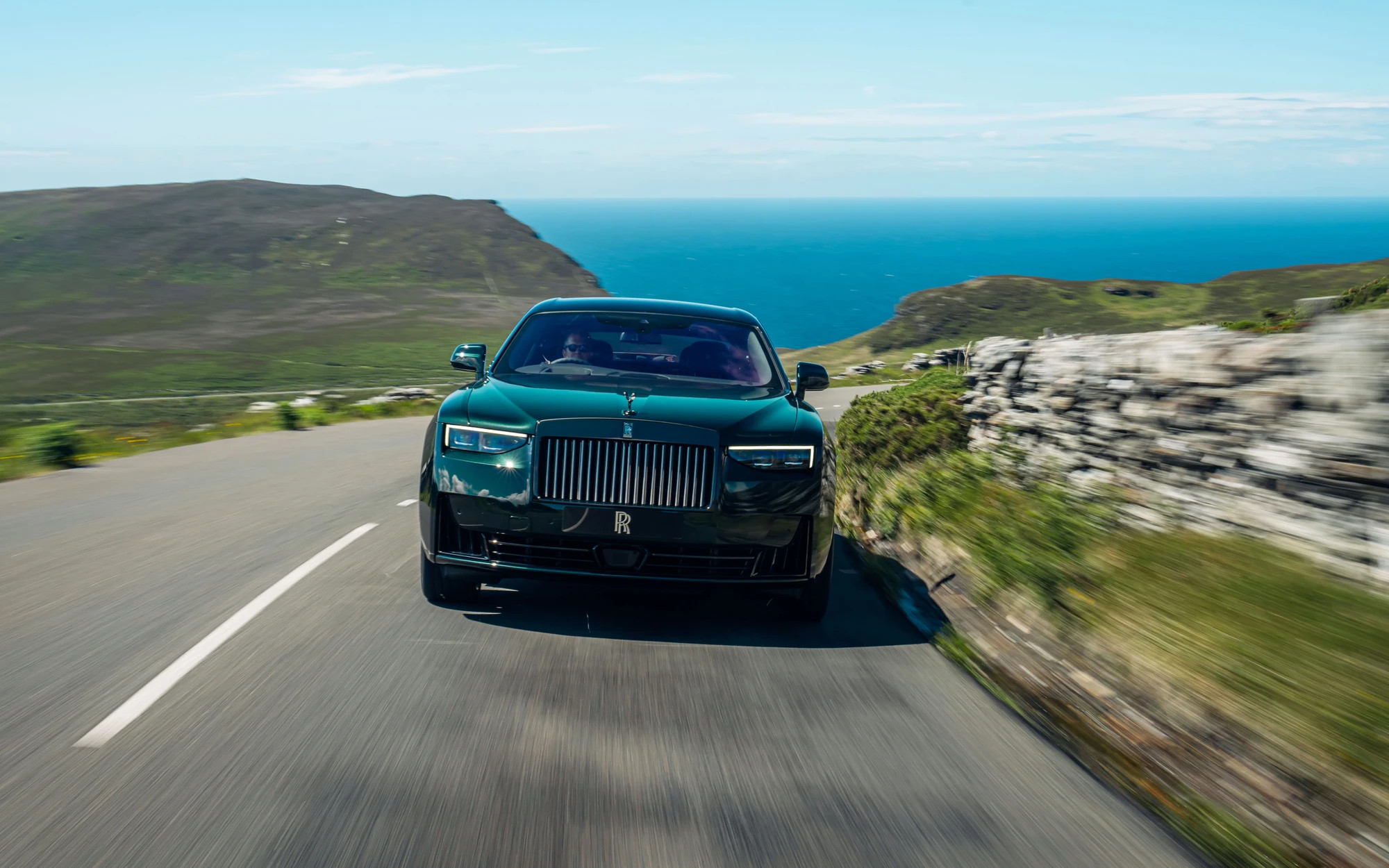
Some 120 years later, Rolls-Royce has returned to the Isle of Man with a car built to honor that moment. The Black Badge Ghost Tourist Trophy is a bespoke commission presented on the island where its story began. It takes its inspiration from that 1906 race, an event that tested endurance and mechanical sympathy over four laps of a demanding 40.38-mile course.
Rolls started in fourth position and was leading by the end of the first lap. He finished with a 10-minute advantage, a testament to calculated risk and careful fuel management. John Beckley, the brand’s Regional Director, notes that the victory was “a test of judgement, nerve and faith in a finely prepared motor car.”
The Colour of Victory
The new Ghost commission reflects the original race car in quiet gestures. The exterior is finished in Dark Emerald, a direct reference to the green hue of the 1906 Light 20 H.P. A single Tan Coachline cuts across the paintwork, accompanied by a hand-painted motif of the number 4 in Arctic White, marking Rolls’ starting position.
Inside, the story becomes more personal. The cabin uses a palette of Black and Tan leather, with Black Badge Technical Fibre and Mocassin lambswool. It’s here that the car reveals itself as a kind of private archive, embedding the details of the race directly into the design.