The Morgan Midsummer Coupé began with a single conversation. After the company revealed its Midsummer barchetta in 2024, a client approached the workshop on Pickersleigh Road with an idea. He wanted a fixed-head interpretation of the open-top car. Rather than simply enclose the original design, Morgan’s teams saw an opportunity to create something new, a project that would require its own design language and structural architecture.
That initial proposal soon attracted a further eight commissions. The result is a strictly limited series of nine client vehicles, each developed as a unique interpretation of the core concept. The project represents a landmark for the company’s coachbuilding expertise and continues the creative collaboration between Morgan and the Italian design house Pininfarina, who worked together on the original Midsummer.
A New Form
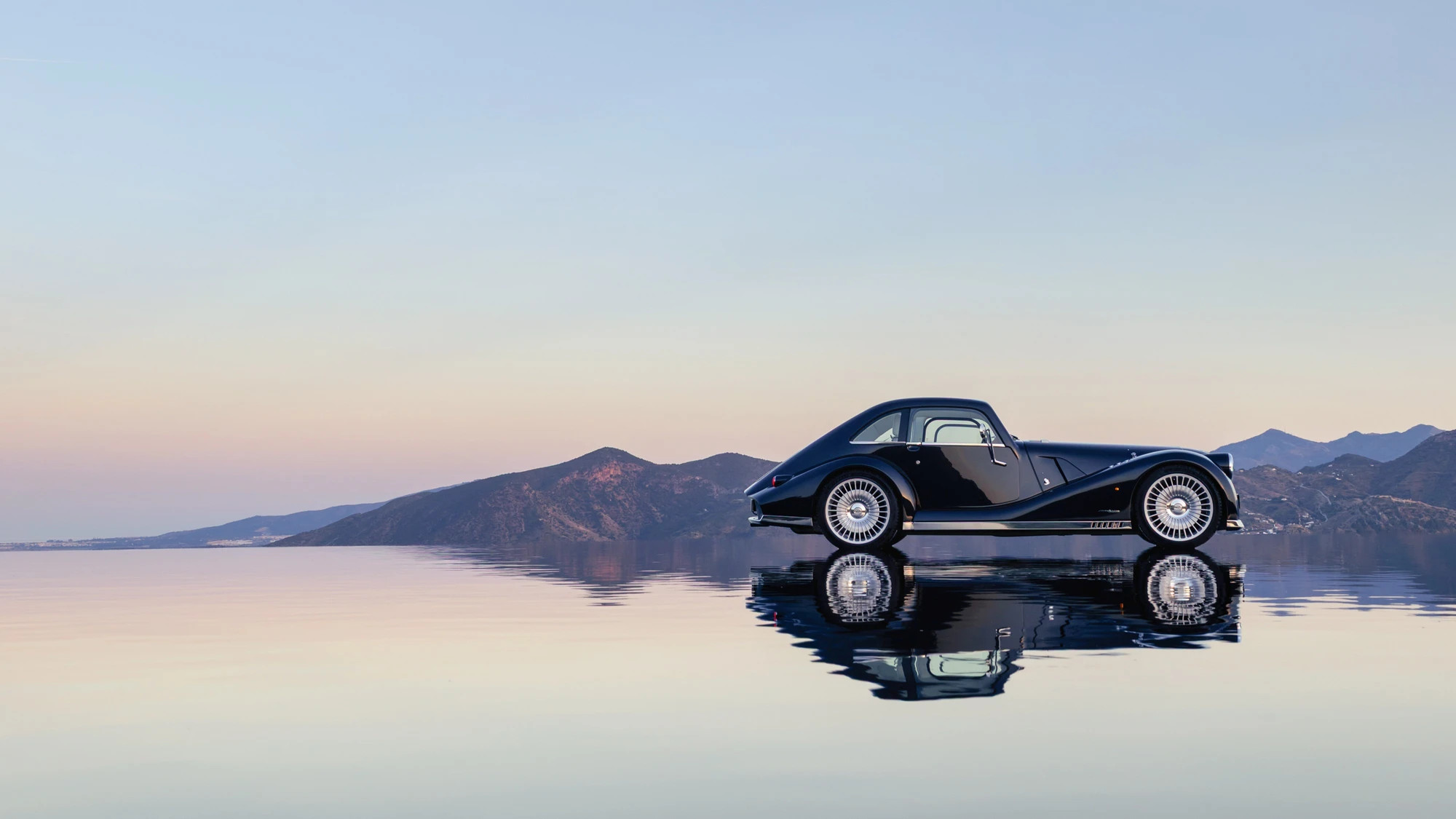
The addition of a roof fundamentally changed the car’s profile. The fixed-head architecture allowed designers to rethink the vehicle’s proportions, creating a dramatic glazed canopy that flows seamlessly into the rear bodywork. This gives the Coupé a sense of purpose and elegance distinct from the barchetta it evolved from.
Exterior details connect the car to its origins while establishing a new identity. Polished stainless-steel lower body panels provide a visual link to the Midsummer barchetta. New forged 19-inch aluminium wheels, Morgan’s most intricate design to date, sit at each corner. A central stainless-steel graphic runs the length of the car, creating a visual thread that ties the exterior to the interior.
Wood, Metal, and Light
Inside, the expansive glazed roof fills the cabin with natural light. Teak, a defining material of the original Midsummer, is used extensively to create visual continuity. It appears as an inlay on the newly developed aluminium gear selector and on the sun visors. These visors, along with the rear-view mirror, are mounted to a solid aluminium rail that spans the width of the cabin. The window switches are mounted directly within the roof structure.
The prototype, known as the artists' proof, features teak throughout, but the nine subsequent commissions will offer clients alternative timber finishes and material combinations. This ensures each car will have its own distinct character, developed in a close creative partnership between Morgan and the owner.