
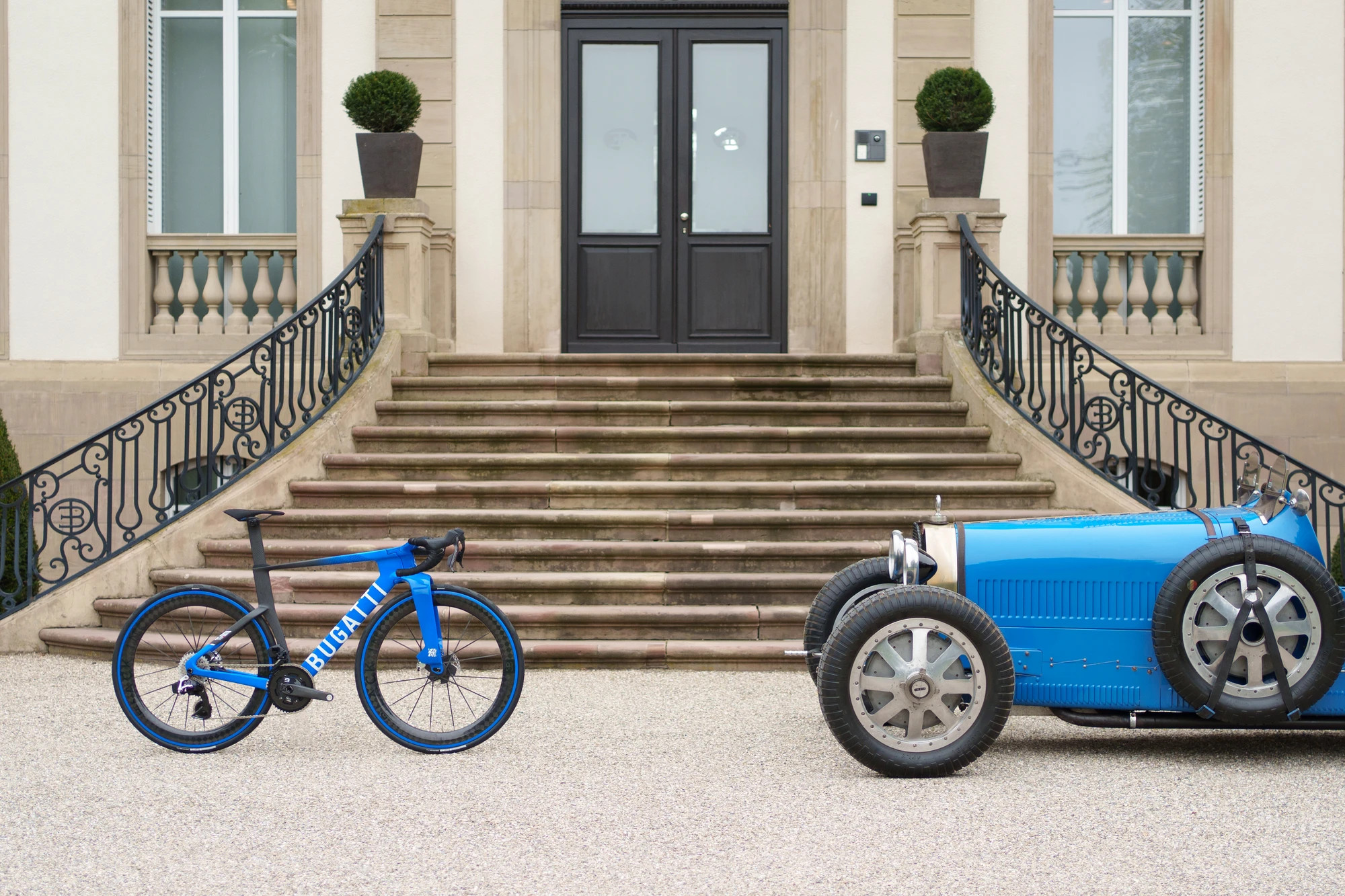
Bugatti Puts Its Name On A Machine Without An Engine
    By Tom

    Bugatti Puts Its Name On A Machine Without An Engine

    The name Bugatti brings a certain physics to mind. Immense power, deployed with brutal precision. Sixteen-cylinder engines and speeds that push the boundaries of road-legal travel. The brand’s logic has always been one of overwhelming force, of conquering physics with engineering superiority. So it is interesting to see that same name attached to an object powered by nothing more than human muscle.

    The Bugatti Factor ONE is a professional road bike. It is an exercise in translating a hypercar philosophy into a domain where success is measured in grams and aerodynamic efficiency. The two worlds seem opposed. One is about generating near-limitless horsepower. The other is about conserving every possible watt of human effort. Yet the collaboration with high-performance bicycle manufacturer Factor Bikes suggests a common ground exists.

    An Alliance of Engineers

    The choice of partner is telling. Factor Bikes is not a lifestyle brand with a cycling division. It is an engineering-first company from Norfolk, UK, with a reputation for building some of the fastest UCI-legal racing bikes in the professional peloton. This is not a simple licensing deal. It is a collaboration grounded in shared principles of material science and performance optimisation. Both companies build machines designed to operate at the very edge of what is possible.

    The Factor ONE frame becomes a canvas for this shared thinking. The design features a wide fork stance and a shape honed to reduce aerodynamic drag. Every surface appears considered, designed to manage airflow in a way that recalls the meticulous engineering of a Bugatti hypercar's bodywork. The goal is the same, even if the scale and power source are worlds apart. Maximum speed from available energy.

    Gallery

    Bugatti Details on Two Wheels

    The collaboration extends beyond the frame's geometry. The bike features custom CARBON-TI rotors and chainrings, pieces developed exclusively for this project. These are not off-the-shelf parts with a new logo. They are integral to the bike’s performance identity, a sign of a deeper integration between the two brands' engineering teams.

    The wheelset, named the Black Inc Hyper 62, was also conceived as the cycling equivalent of a Bugatti wheel. It has to balance strength, rotational mass, and an aerodynamic profile. It is another instance where the guiding questions are the same ones asked in Molsheim. How can we make it lighter, stronger, and faster using the most advanced materials available?

    This project makes more sense when viewed within the larger Bugatti universe. The brand has always been more than just a car company. It is a purveyor of mechanical extremes. That identity allows it to pursue a world record with the Veyron Super Sport one day, and place a tourbillon complication inside its latest hypercar the next. The common thread is an uncompromising approach to engineering.

    The bicycle, then, is not a departure. It is a reinforcement of the core idea. It is a test of identity, a way to see if the spirit of Molsheim can exist on two wheels. The Factor ONE suggests it can, provided the commitment to engineering remains absolute.

    It also suggests that for a brand like Bugatti, the definition of performance has become more flexible. It is not only about what an engine can do. It is about what is possible when design and materials are pushed to their logical conclusion, regardless of the application.

    Read more about cars here.