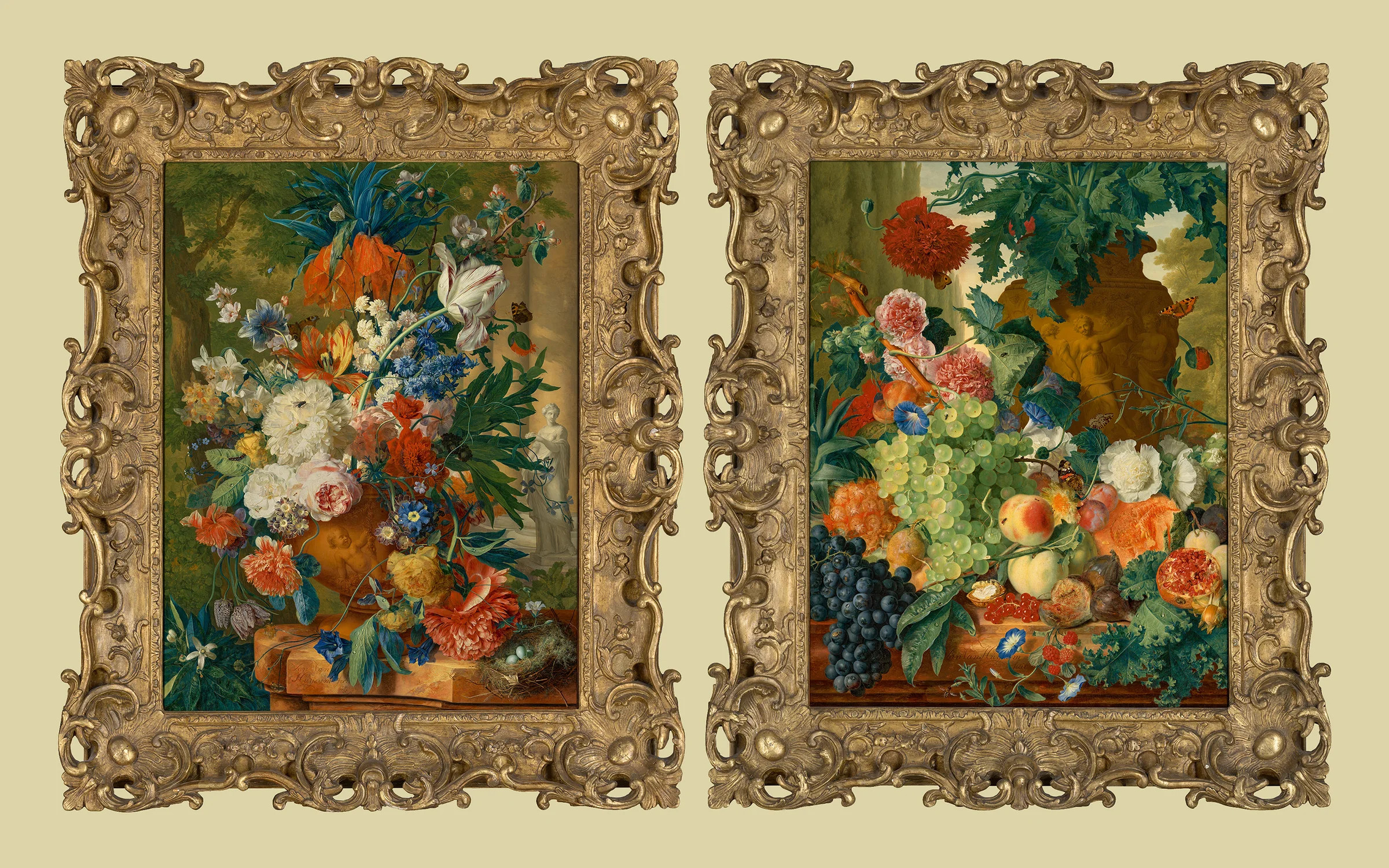
Christie's will offer a pair of still-life paintings by Jan van Huysum at its London headquarters on 8 December 2026. The oil panels, carrying an estimate of £6,000,000 to £8,000,000, appear in the Old Masters Evening Sale after more than two centuries in private hands. They represent the only known large-scale fruit-and-flower pendants by the Amsterdam master that remain paired in private ownership.
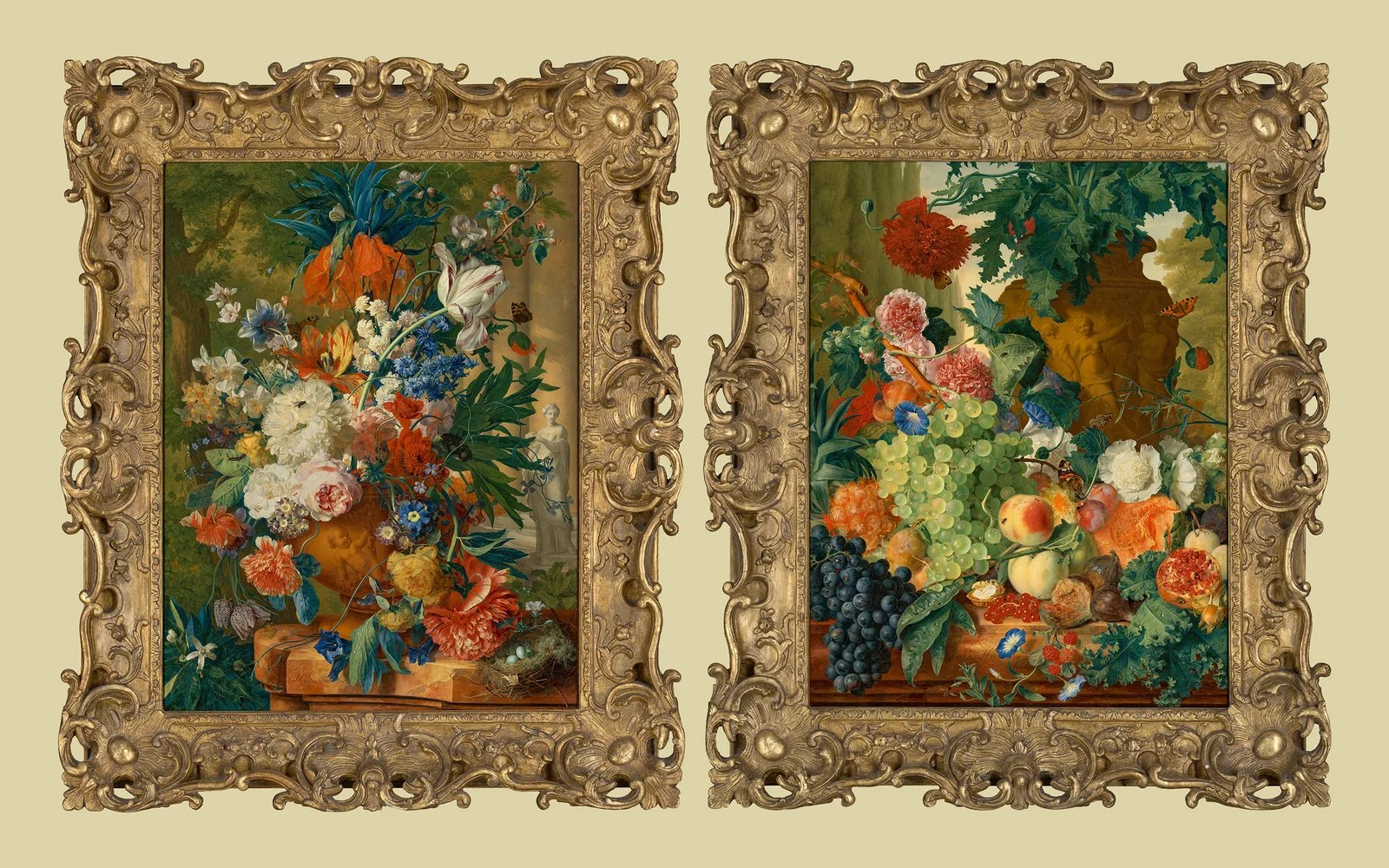
Both panels measure roughly 80 centimetres high. In the first composition, dated 1731 and 1732, an arrangement of roses, hyacinths, gentians, and peonies rises out of a terracotta vessel against a stone terrace. A bird nest holding three cuckoo eggs rests on the edge of a marble plinth, surrounded by iridescent green moss. The companion panel, dated 1732 and 1733, displays blue-green grapes, figs, peaches, and a pineapple resting across a ledge beneath hollyhocks and poppies.
Van Huysum observed each plant directly from nature, working slowly across multiple growing seasons. The double dates inscribed on both works reflect an exacting schedule. The artist started each panel during the summer months, then waited for the following year to record specimens as they reached full maturity. His compositions regularly assembled forty distinct botanical varieties into a single visual field.
Precision in the Studio and the Field
Van Huysum guarded his studio methods with strict secrecy, barring patrons, fellow painters, and his own relatives from watching him work. In extreme instances, missing a single bloom halted an entire commission. In 1742, he informed the agent of the Duke of Mecklenburg-Schwerin that a painting had been delayed an entire calendar year because he was unable to locate a suitable yellow rose.
The painter made regular trips to Dutch horticultural hubs such as Haarlem to examine living flowers. Several of his single-flower watercolour studies from those expeditions now reside in the British Museum. Preliminary working sheets in oiled charcoal and watercolour survive in both the Morgan Library in New York and the Louvre in Paris, documenting how he organized complex compositions before applying oils to wood.
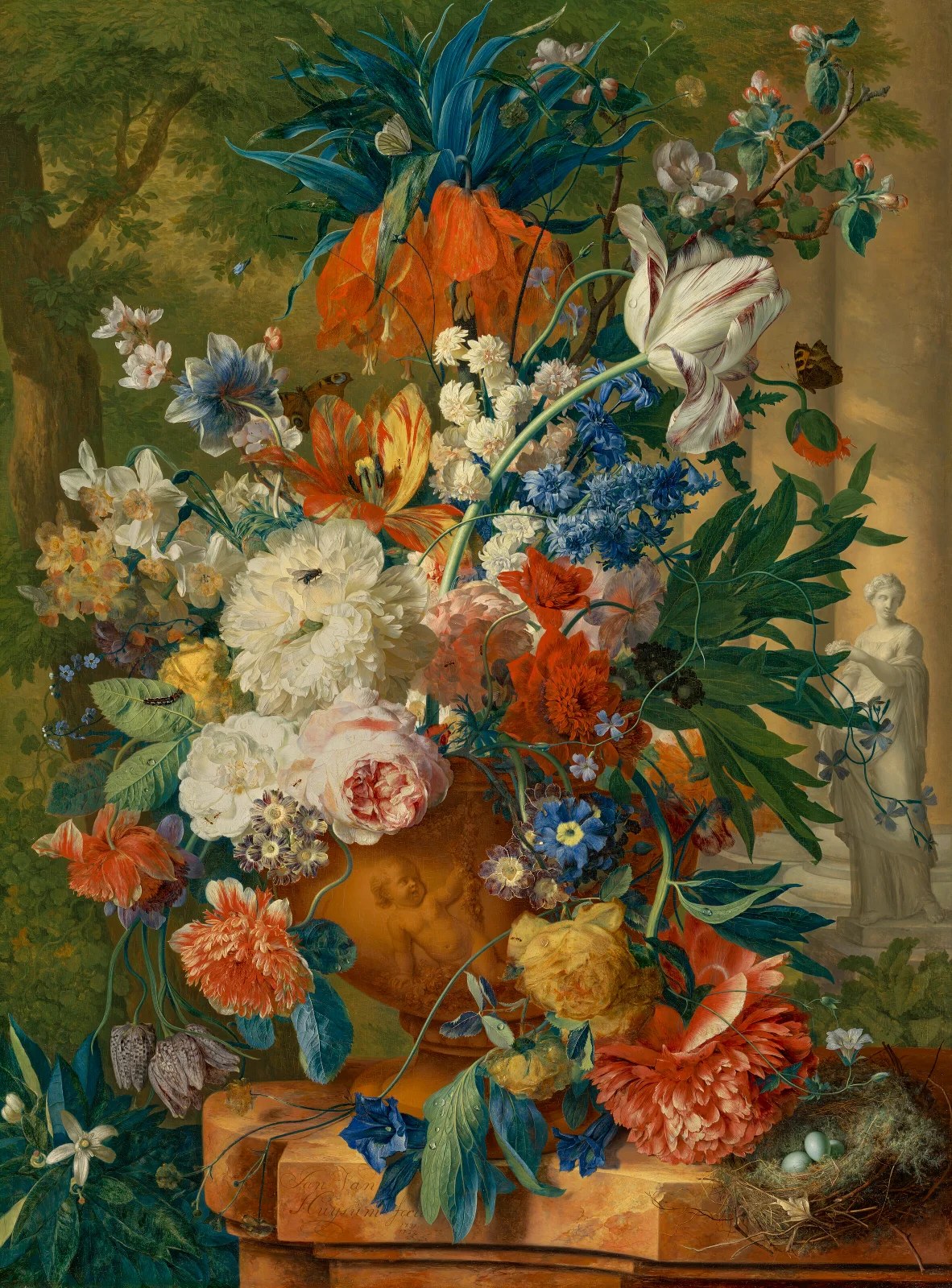
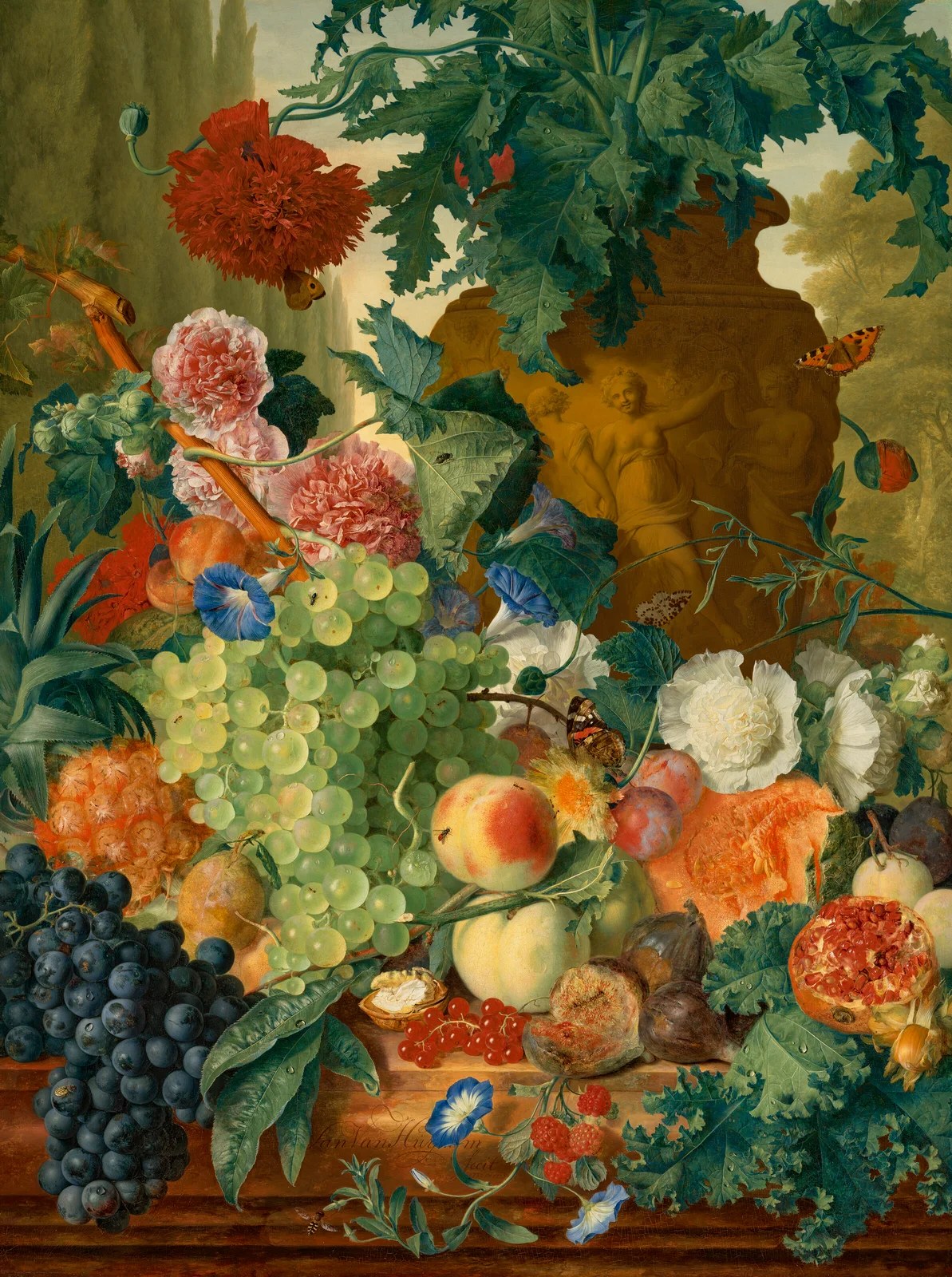
His technique involved layering thin oil glazes to achieve luminous transparency. Light enters the fruit panel from an unseen point on the left, passing through the skin of the grapes to expose the seeds and delicate vascular structures within. Van Huysum described this standard of botanical precision as the pursuit of optimum clarity and harmony. Fine details reward close inspection, including droplets of water catching light and tiny ants moving across foliage.
Two Centuries of Provenance at Christie's
During the eighteenth century, Van Huysum earned unmatched financial success within the Dutch tradition of pronkstilleven, or show-off still life. His patrons included the King of Prussia, the prime minister of Britain, the Elector of Saxony, and the dukes of Orléans. Collectors regularly paid up to 1,000 guilders for his panels, roughly five times the market price for a canvas by Rembrandt. A single composition brought 4,000 guilders shortly after the artist died in 1749 at age 66.
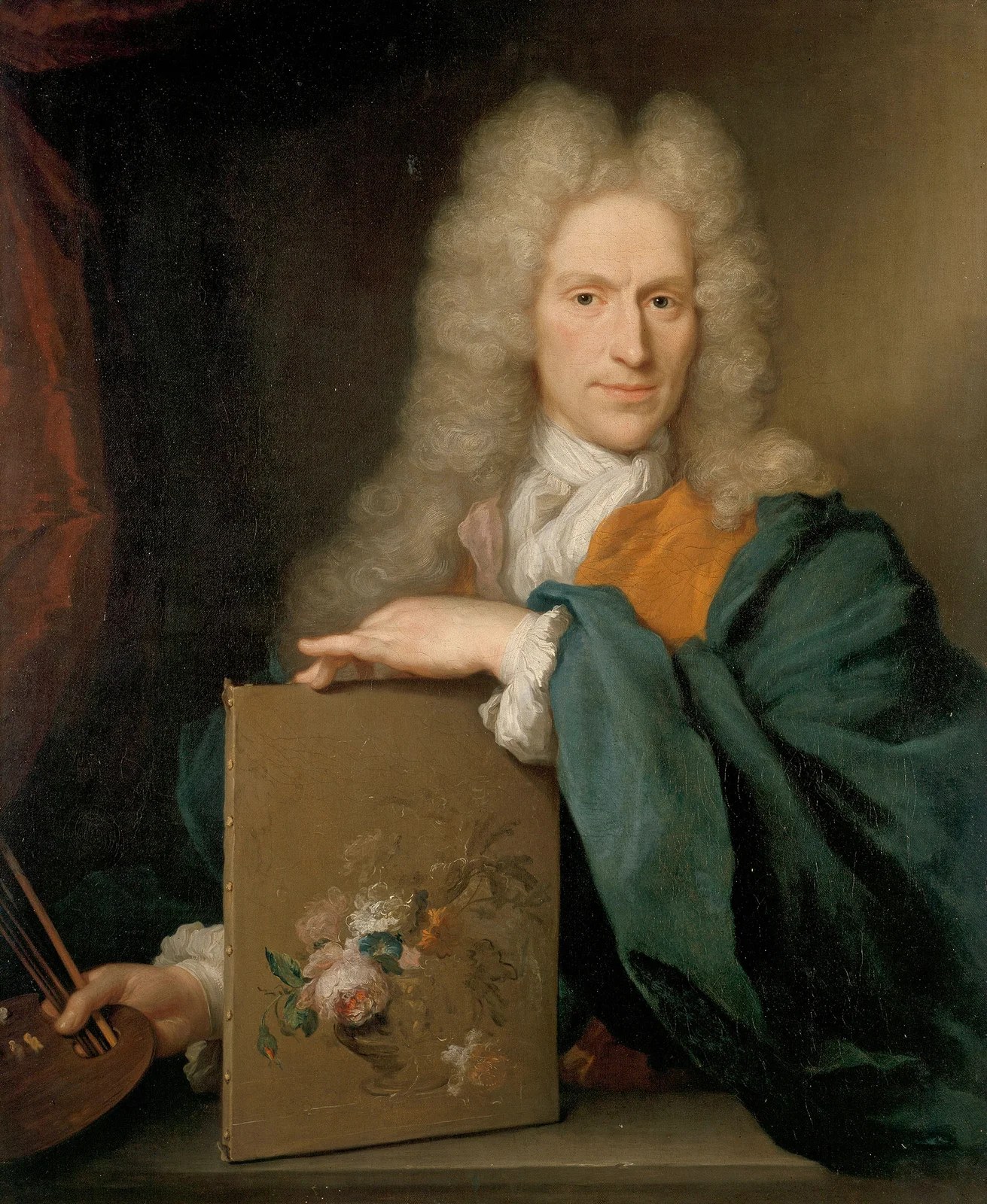
The provenance of the pendant pair traces major European collections across three centuries. The pictures first appear in recorded documentation in 1783 within the inventory of Landgrave Frederick II of Hesse-Kassel. They passed to his eldest son, Wilhelm IX, before French military forces seized the property in 1806 and presented both panels to Empress Joséphine Bonaparte.
Alexander Baring, later 1st Baron Ashburton, acquired the works by 1835, installing them at Bath House on Piccadilly. In 1907, Alfred de Rothschild bought the pair, later passing them to his nephew Lionel Nathan de Rothschild at Exbury House in Hampshire. The Rothschilds displayed them alongside another pair of Van Huysum still lifes that now hang in the J. Paul Getty Museum in Los Angeles.
Sir Edward Mountain, the founder of Eagle Star Insurance, purchased the panels in 1946. The paintings have stayed within the Mountain family until this winter. The public will have an opportunity to view both works during the pre-sale exhibition at Christie's London galleries from 4 to 8 December 2026, leading directly into the evening auction.
Read more about collecting here.