
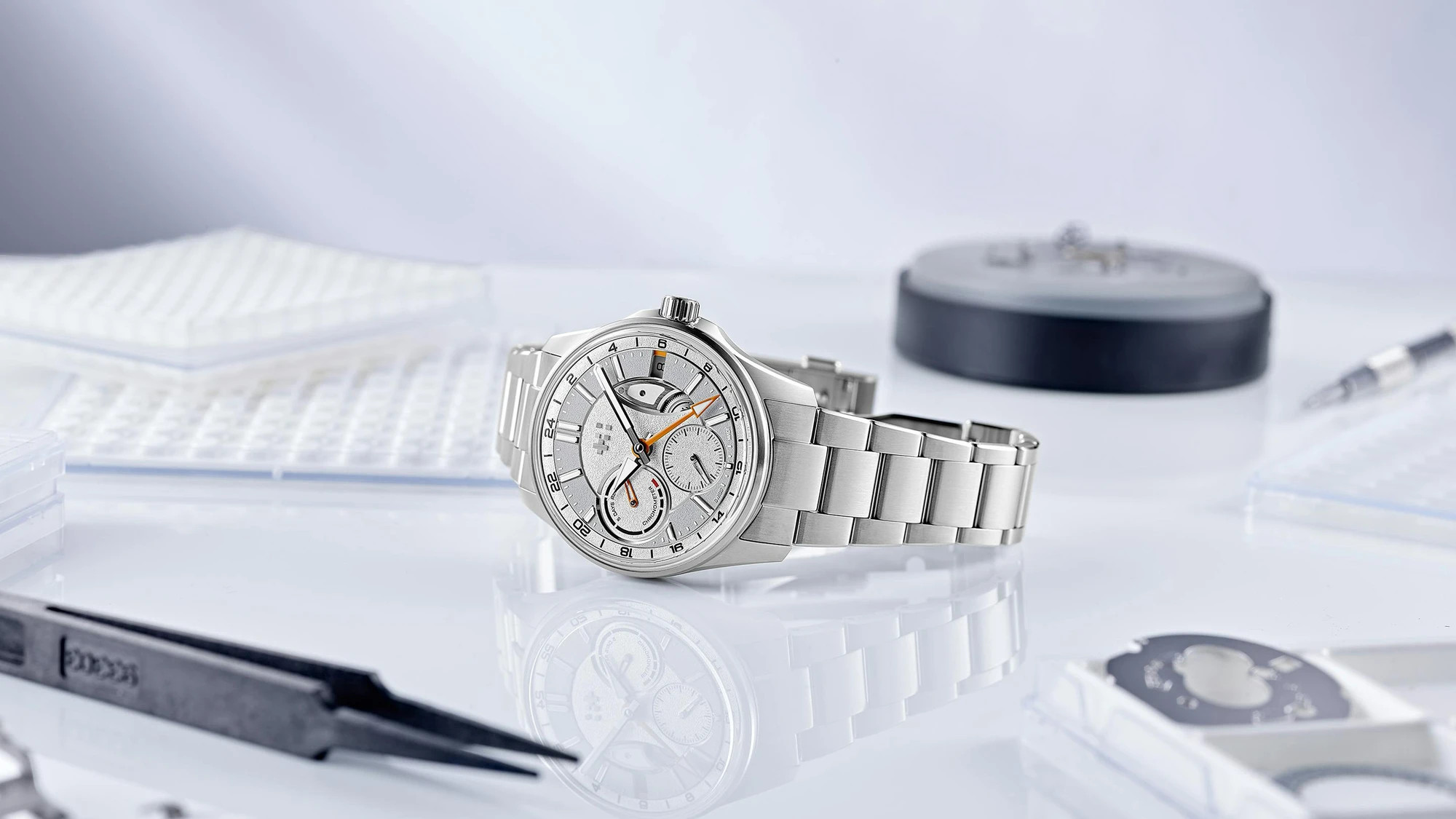
Christopher Ward puts a local jumping hour hand on the new C63 True GMT, the kind that lets the main hour click forward as you land in a new city.
Today Christopher Ward adds a flyer GMT to its core range. The brand calls the work to build the movement trying and even “painful,” and says the process took longer than expected. For a company that now describes itself as the UK’s biggest watch brand, the decision to pursue this path reads like a line in the sand. Do the travel watch the hard way, or not at all.
A local jumping hour hand GMT is built for movement. You adjust the main hour in hourly steps when you change time zones, while a 24-hour display keeps home time steady. No stopping the watch. No fuss with the minutes. It is the traveler’s version of the complication, and it lives or dies on clarity and feel.
The new model sits inside the C63 family, which has become the brand’s most direct, everyday canvas. That choice is telling. Rather than wrapping the feature in something loud, the company puts a flyer GMT where people actually wear watches that need to work. It treats the complication like a tool, not a trophy.
Why the flyer route matters
Engineering a proper local jumping hour system is not a weekend project. Gears, tolerances, and the way the hand reindexes with authority all have to feel exact. The brand’s own framing of the development as difficult and drawn out is noteworthy. Companies do not usually tell you that something hurt unless it changed how they work.
A flyer GMT is about rhythm. Arrive, click, carry on. The experience should be as unremarkable as checking a boarding gate. That is the whole point. When a manufacturer chooses to build it this way, they are saying the behavior of the watch matters as much as the headline feature.
Built for the way people actually travel
Most time away from home does not look like a lounge ad. It is queues, quick meals, laptop bags, and one eye on the clock. A GMT that handles the local jump cleanly fits into that routine without asking for attention. You change zones and keep moving. The second time display is there when you need it, and quiet when you do not.
Putting this function into the C63 True GMT suggests a focus on legibility and simple control. Big claims are not required here. Just an hour hand that jumps when asked, a clear read on home time, and a layout that stays readable when you are jet-lagged and half-lit by a seat lamp.