The maison has dressed its facade with a Wheel of Fortune, a luminous framework that nods to traditional Italian Luminarie di Natale. The light is soft and warm rather than blinding, casting a honeyed halo across the stone and catching on glass as cars roll past.
Dior has scattered its vocabulary across the facade and windows: delicate flowers, Monsieur Dior’s “lucky” stars, butterflies, and other talismanic symbols. Inside the vitrines, the brand reaches into its archive of house codes and Parisian references. You spot the Medallion chair that echoes the house’s salon heritage, a perfume kiosk that recalls the ritual of scent, and chandeliers that feel more like cast light than decor. The effect is less fantasyland and more a quiet conversation between object and city. Metal, crystal, and silk throw back muted reflections that shift as you move.
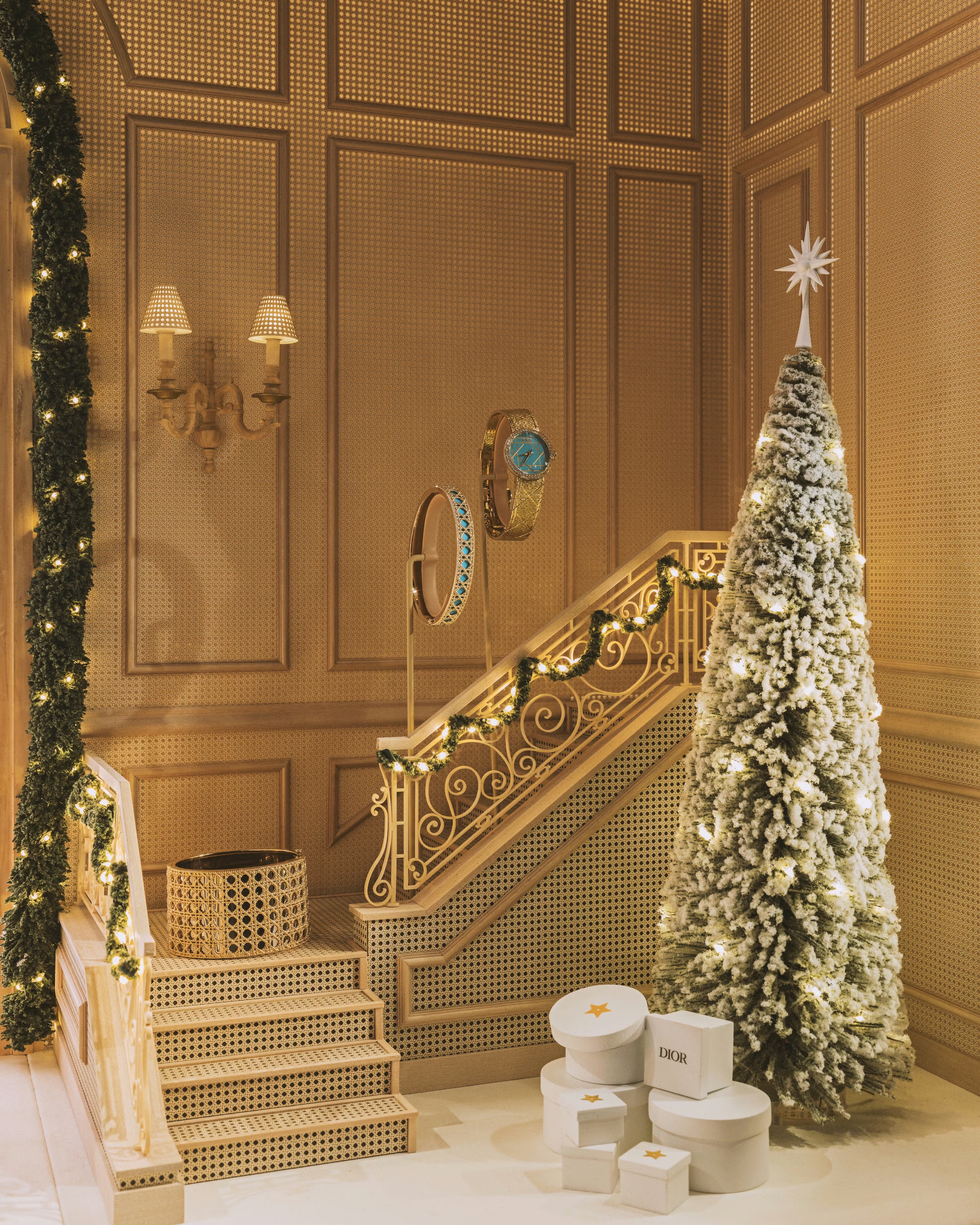

At the heart of the address, a Christmas tree spirals around the central staircase. It is not a maximalist gesture. The tree is trimmed with miniatures of Dior icons: the Bar jacket and the Junon dress appear like couture talismans, joined by pieces from the 2026 Cruise Collection. The staging is poetic but legible. You can read the line from postwar tailoring to present-day travel dressing without being told what to feel. There is a faint scent of pine and polished wood in the air, and shoes on stone steps add a measured rhythm to the scene.
Le Jardin, the outdoor space, takes the theme further with a Pegasus figurine and a cluster of snow globes among tall firs. It is an elegant tension: mythology and winter kitsch, handled with a French lightness of touch. The glass domes catch the cold daylight, and at dusk their interiors glow like small theaters. It is an interlude for anyone passing through, whether they buy a belt or simply pause to look.


This kind of holiday staging is more than decoration. In luxury retail, December windows are a city’s annual theater. They draw locals, visitors, and phones. Dior’s approach affirms a trend across top maisons: use the flagship as a cultural instrument, not only a point of sale. A wheel of light rooted in Southern European craft, couture references rendered as miniatures, and the house’s own symbols looped into a coherent visual language. It is brand literacy in public space.
The takeaway is simple. Dior has used the holidays to make its codes legible to the city, not just its clients. The work is confident without shouting, clever without gimmickry. If you are in Paris, go at blue hour when the sky holds a trace of color and the luminaires settle into their best register. Even five minutes will reset your eye.
Read more about fashion here.
