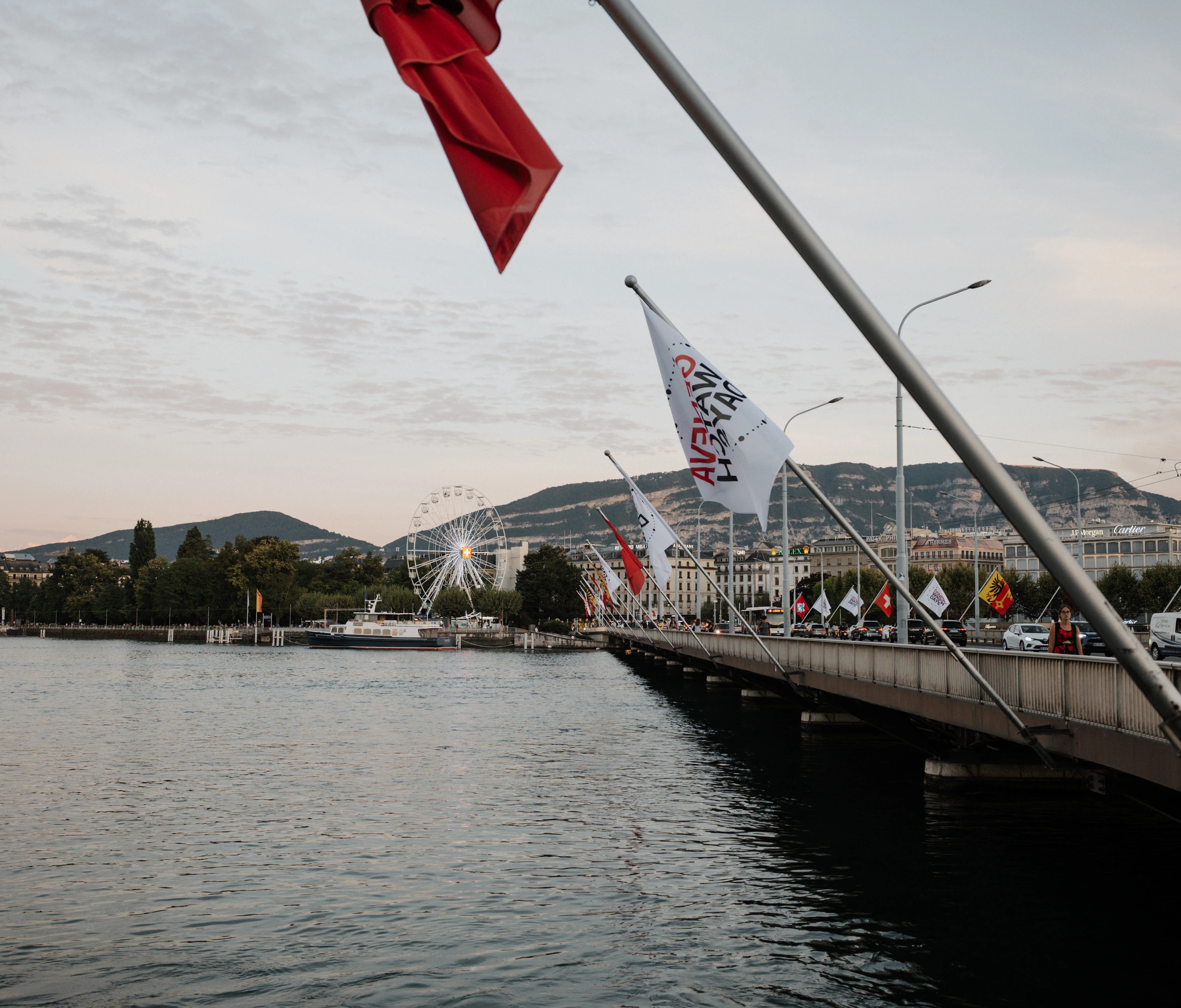
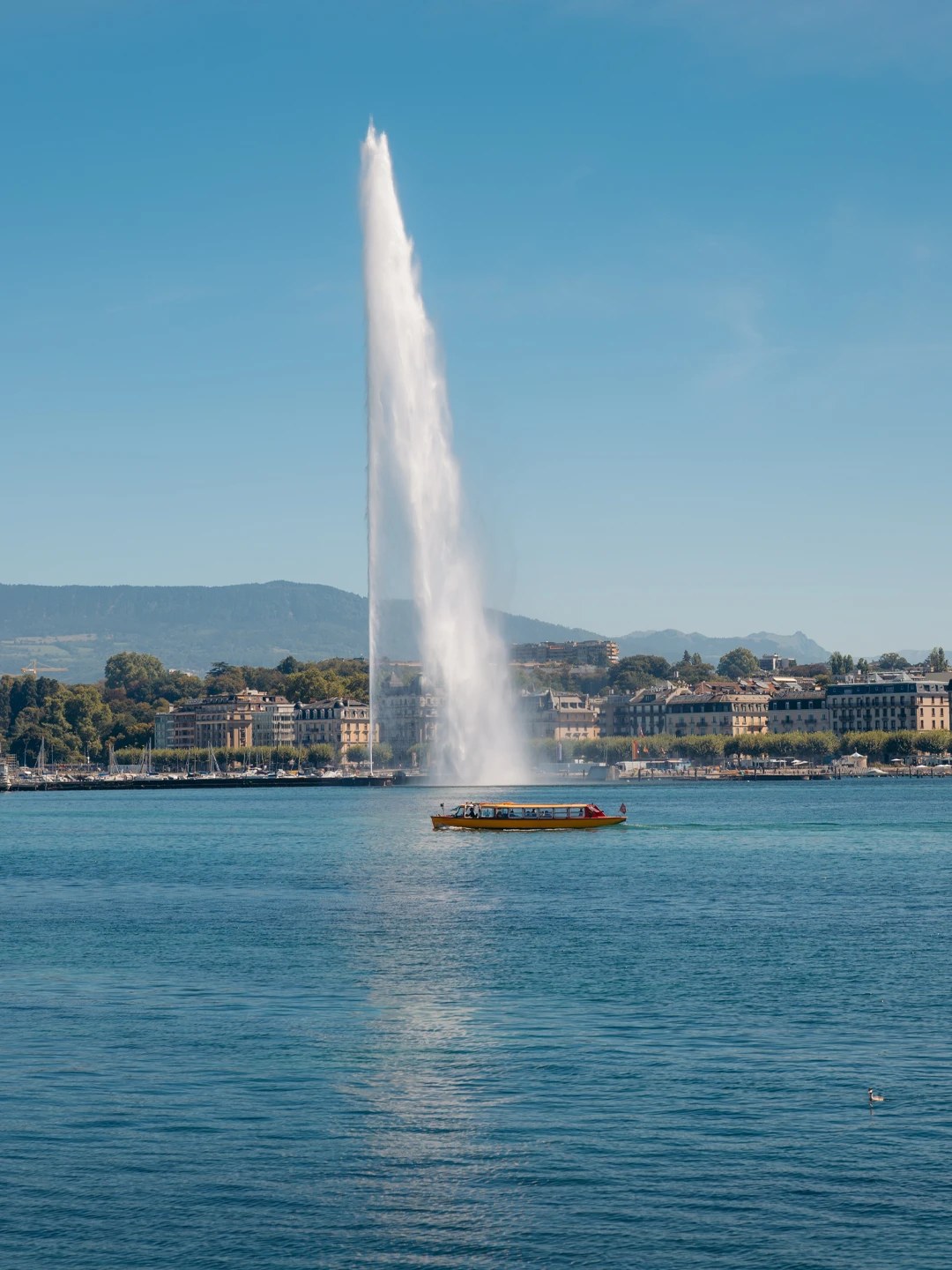
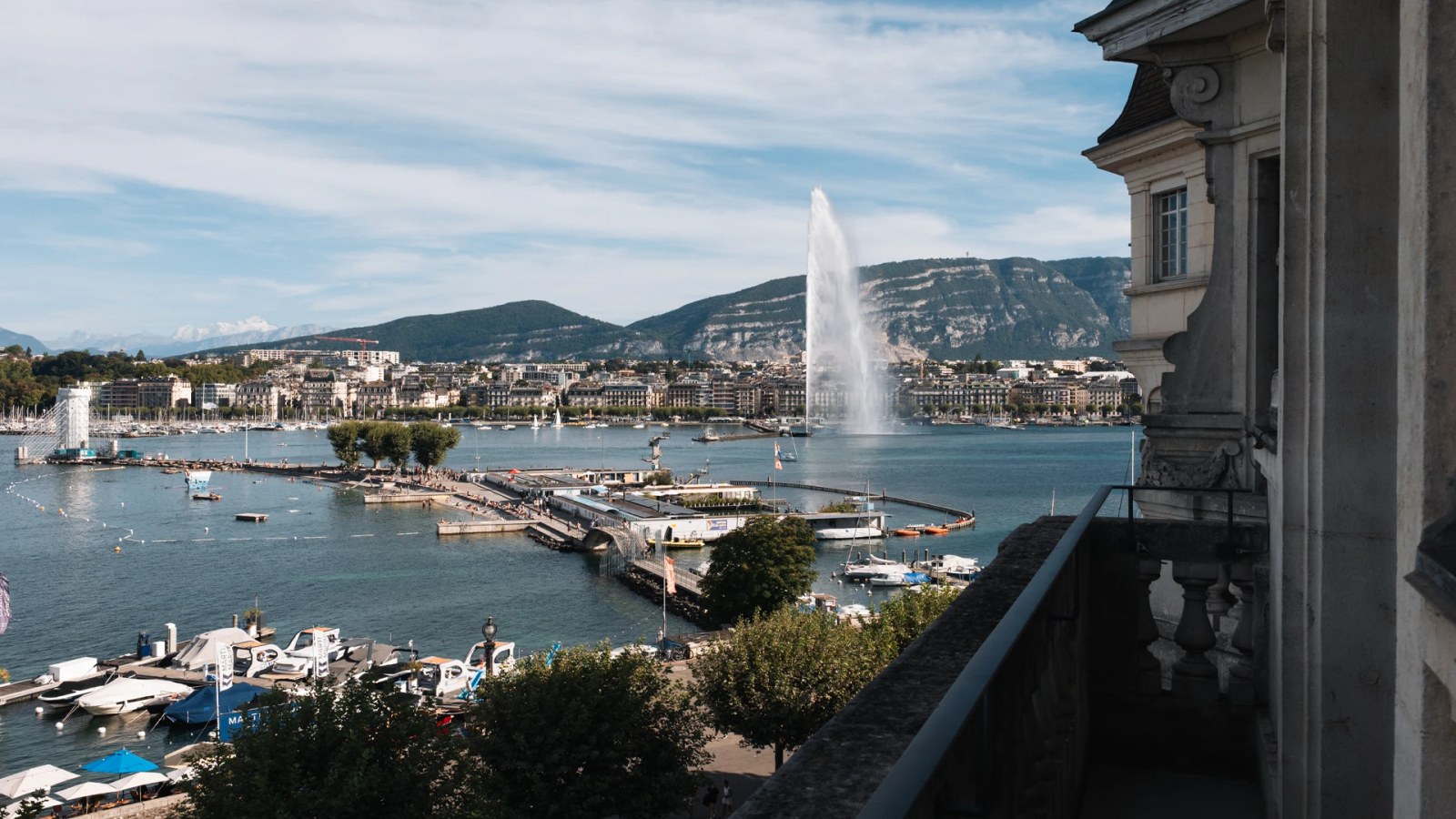
Geneva Watch Days does not gather the industry into a hall. It scatters it across a city and lets you find it. The Pavilion at the Rotonde du Mont-Blanc anchors the week, but the meetings happen in hotel suites along the quai, in boutiques on Rue du Rhône, in showrooms tucked into the Old Town. You book, then you walk. The weather held all week, which turns the walking from a tax into the best part of the day.
Seventy-one brands this year, a record, up from seventy last year. Nobody frames this as a pandemic workaround anymore.
We did the official inauguration, the auction and a run of private dinners and events, among them Breitling's jazz night, where new CEO Jean-Marc Pontroué gave his first speech since taking over in May. Throwing a jazz night in the same week you launch a Miles Davis Navitimer is not subtle, and it did not need to be.
The format is what makes it. No trade-only badge, no ticket for the public areas, run largely by volunteers as a nonprofit. A collector who flew in for the week and someone who wandered off the quai on a Thursday afternoon look at the same watch in the same room. Watches and Wonders cannot do that and does not try to.
As for the watches, the theme was subtraction. The most interesting decisions this year involved taking something away rather than piling something on. Zenith removed the chronograph from the Chronomaster. Daniel Roth built a dial by masking and removing instead of printing and applying. Doxa introduced titanium by making it permanent rather than staging it as a limited event. Sizes came down almost everywhere. In a year when the market is still finding its feet, restraint reads as confidence.
Collaboration became the default alongside it. Bulgari opened the Octo Finissimo to Vianney Halter. MB&F built its third M.A.D. around Vincent Calabrese. Massena LAB worked with Atelier Wen and again with Halter. MING went to J.N. Shapiro. The pattern is not new. The density this year was.
And the dead came back. Gallet at two hundred, Universal Genève heading home to Rue du Rhône, Dennison making watches instead of cases for other people. Revivals are usually the least interesting story at any fair. This year they were among the best.
It is always a pleasure to be back in Geneva. This was no exception.
Highlights of Our Week
Universal Genève
The Watch Couturier is back, and this was the best half hour of the week.
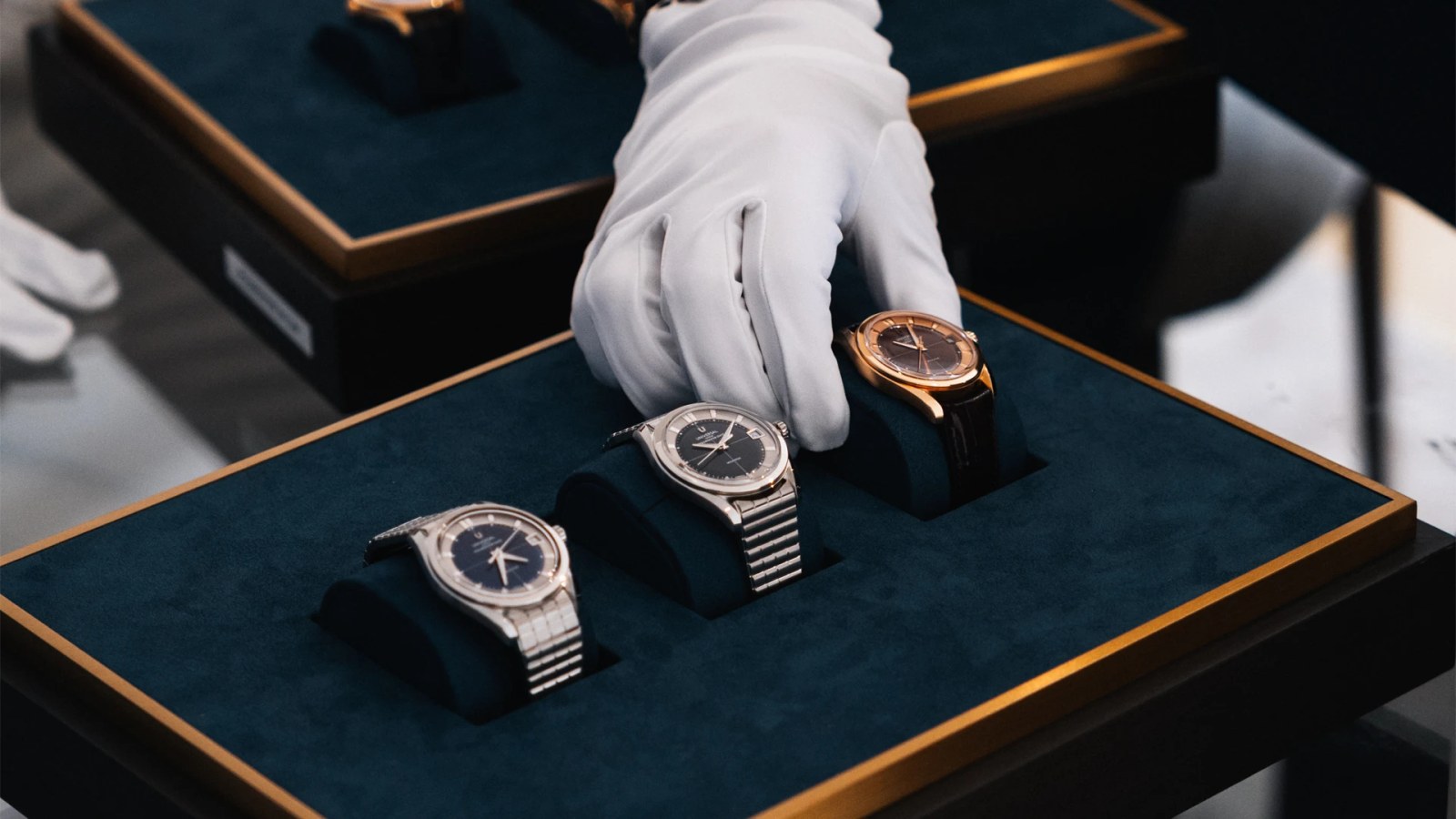
The Polerouter Date in blue is a modern reading of the design Gérald Genta drew in 1954, following the Polerouter and Compax launched in April on the new in-house UG-110 micro-rotor.
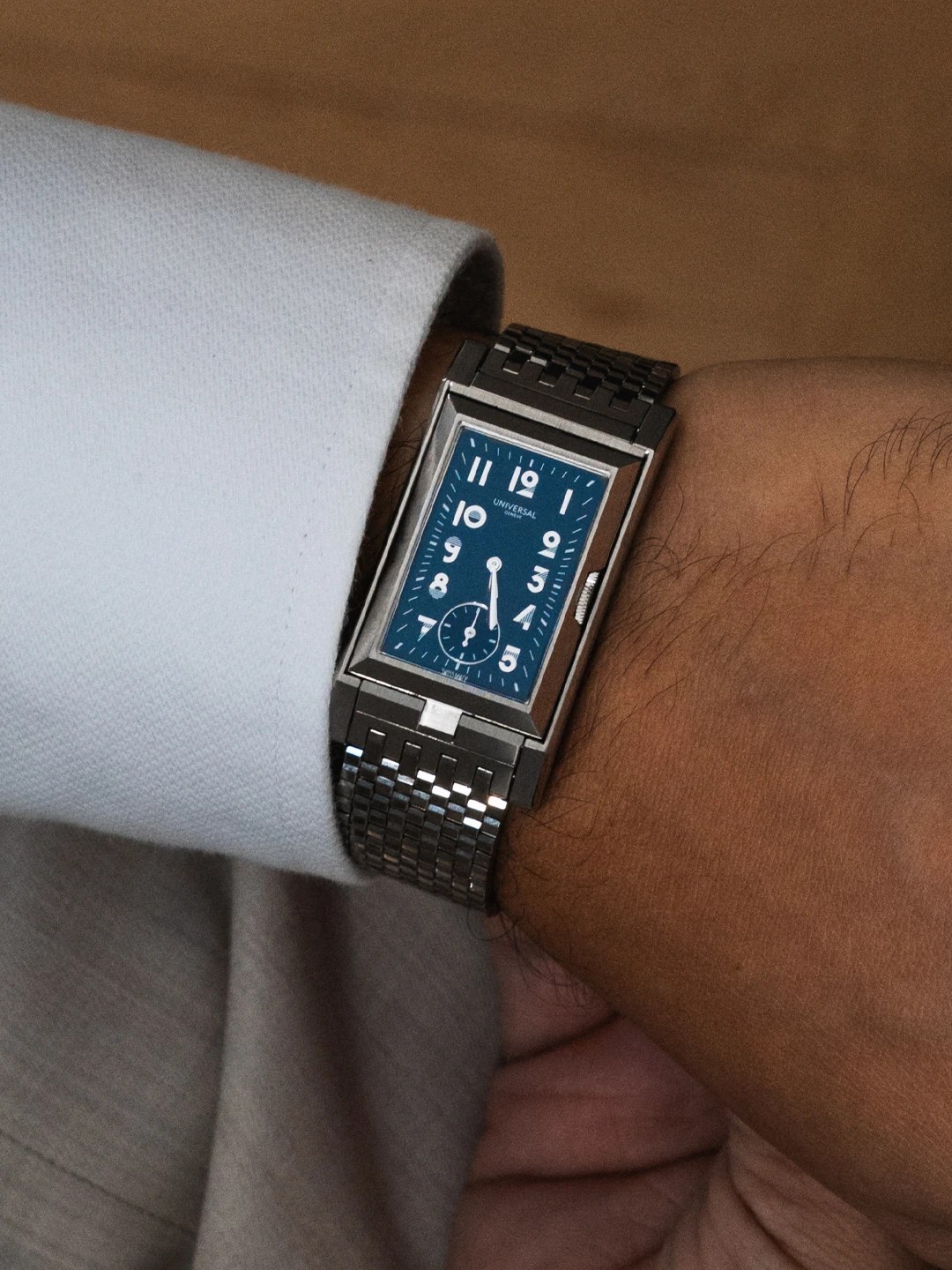
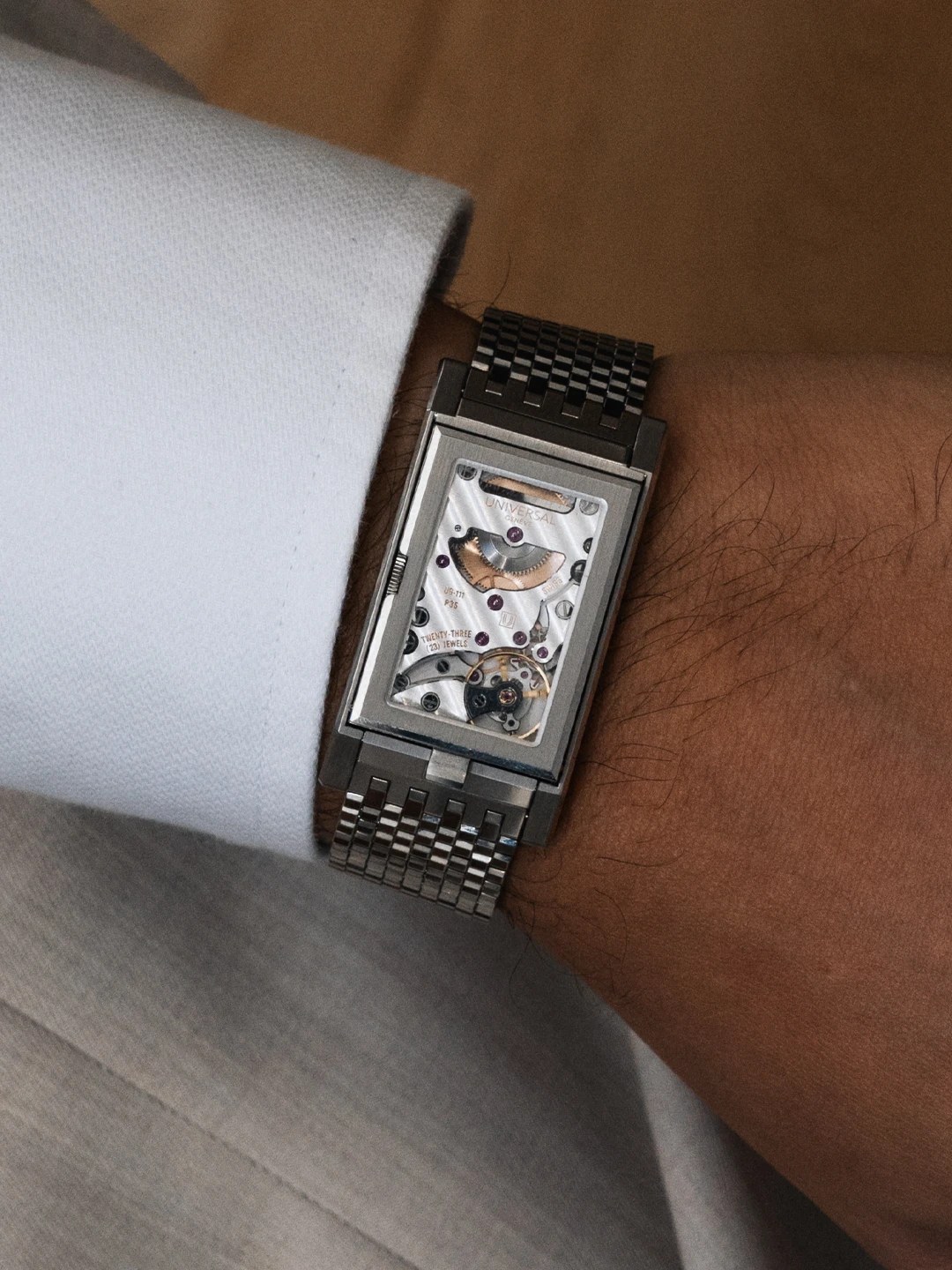
But the one I keep thinking about is the Cabriolet in stainless steel, revived from a 1933 original. The case is hinged and reversible, so it turns within its carriage, which is where the name comes from. Flip it and a transparent back puts the hand-wound UG-111 on full display, or you can have that surface engraved or hand-painted instead. Blue lacquered dial, numerals inlaid in Bifur, the Art Deco typeface A. M. Cassandre drew in 1929, on a nine-row steel bracelet. Nothing on it that does not need to be there. A perfect watch, and one of my two favourites of everything I tried all week.
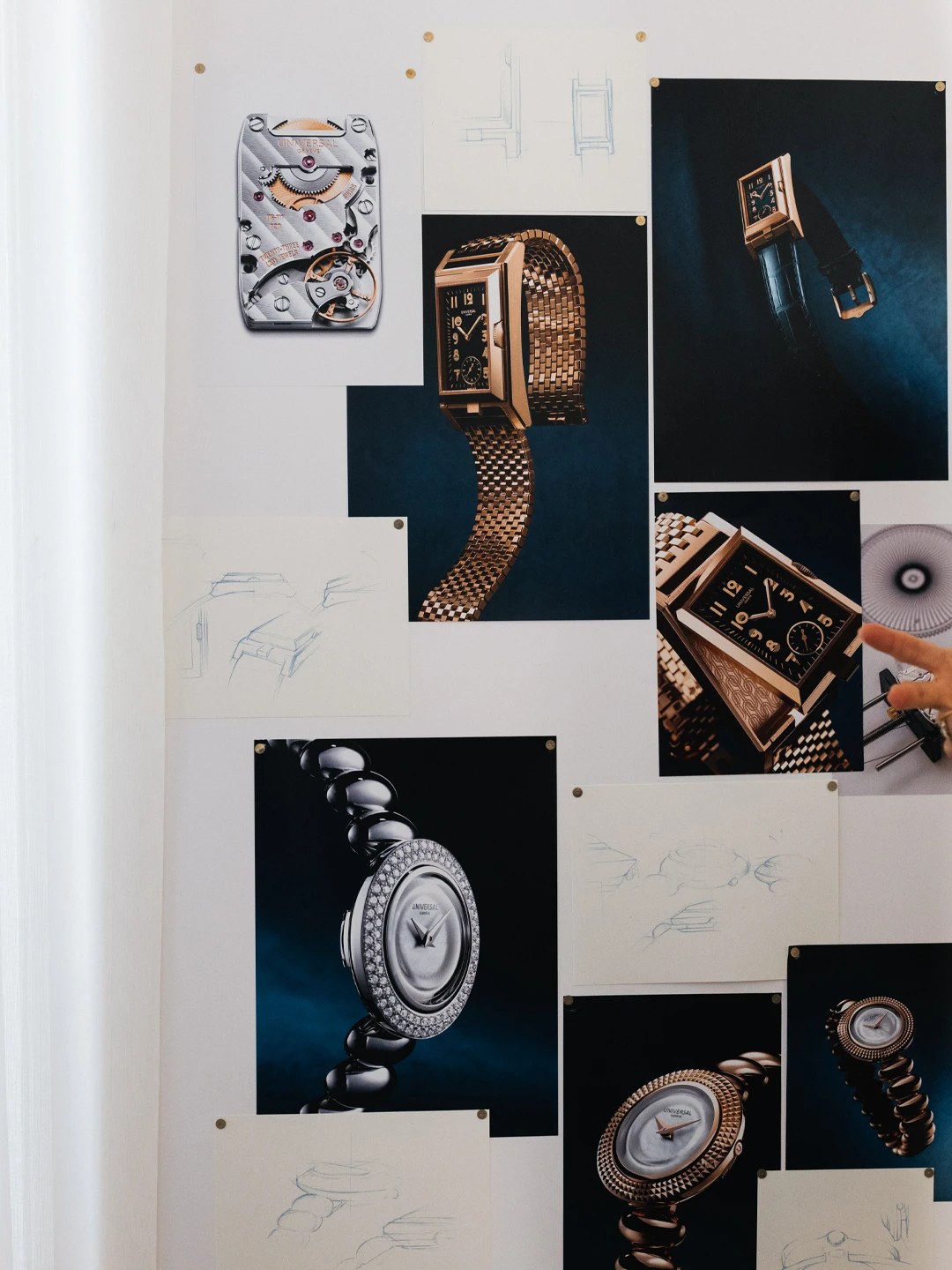
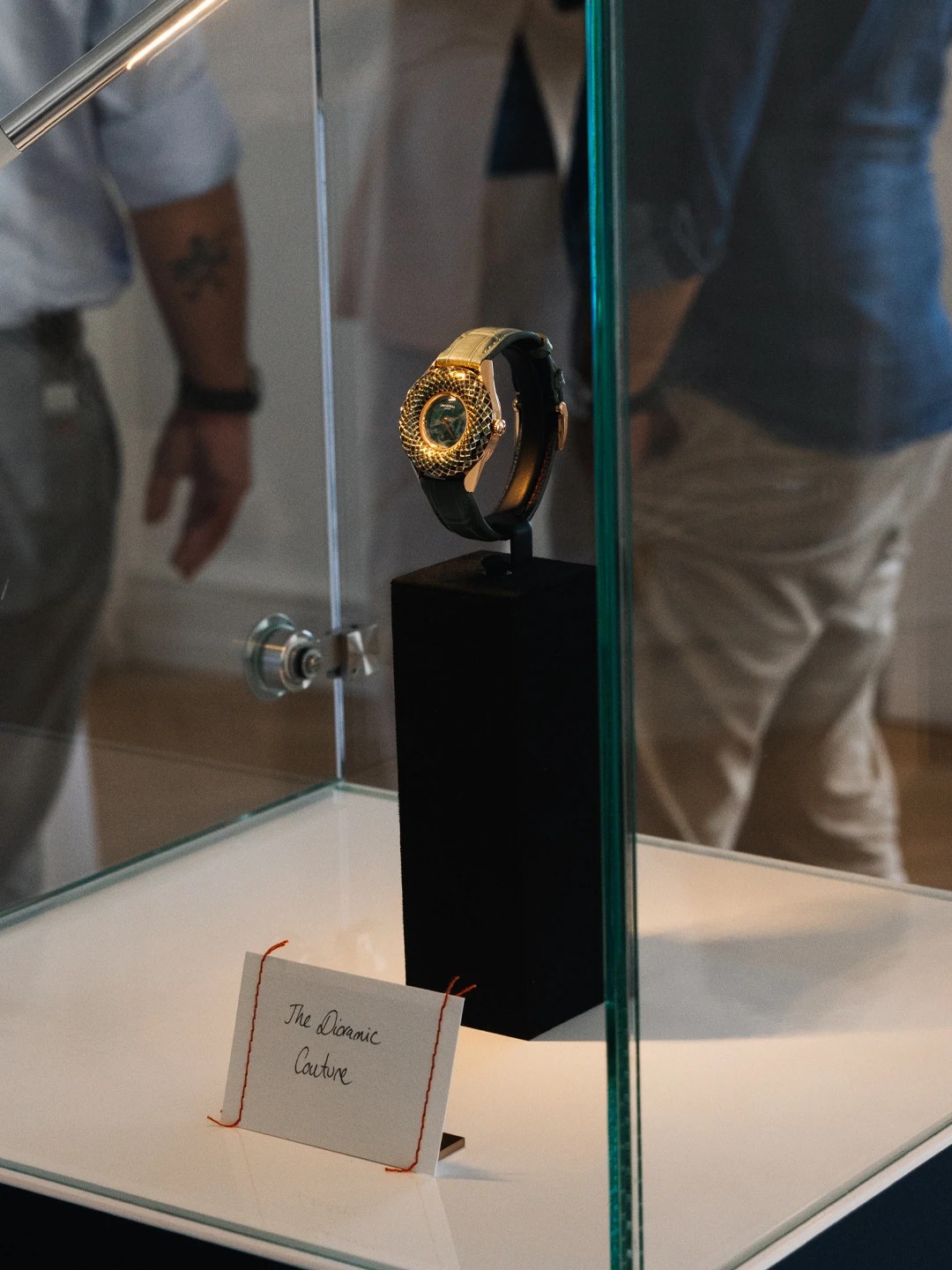
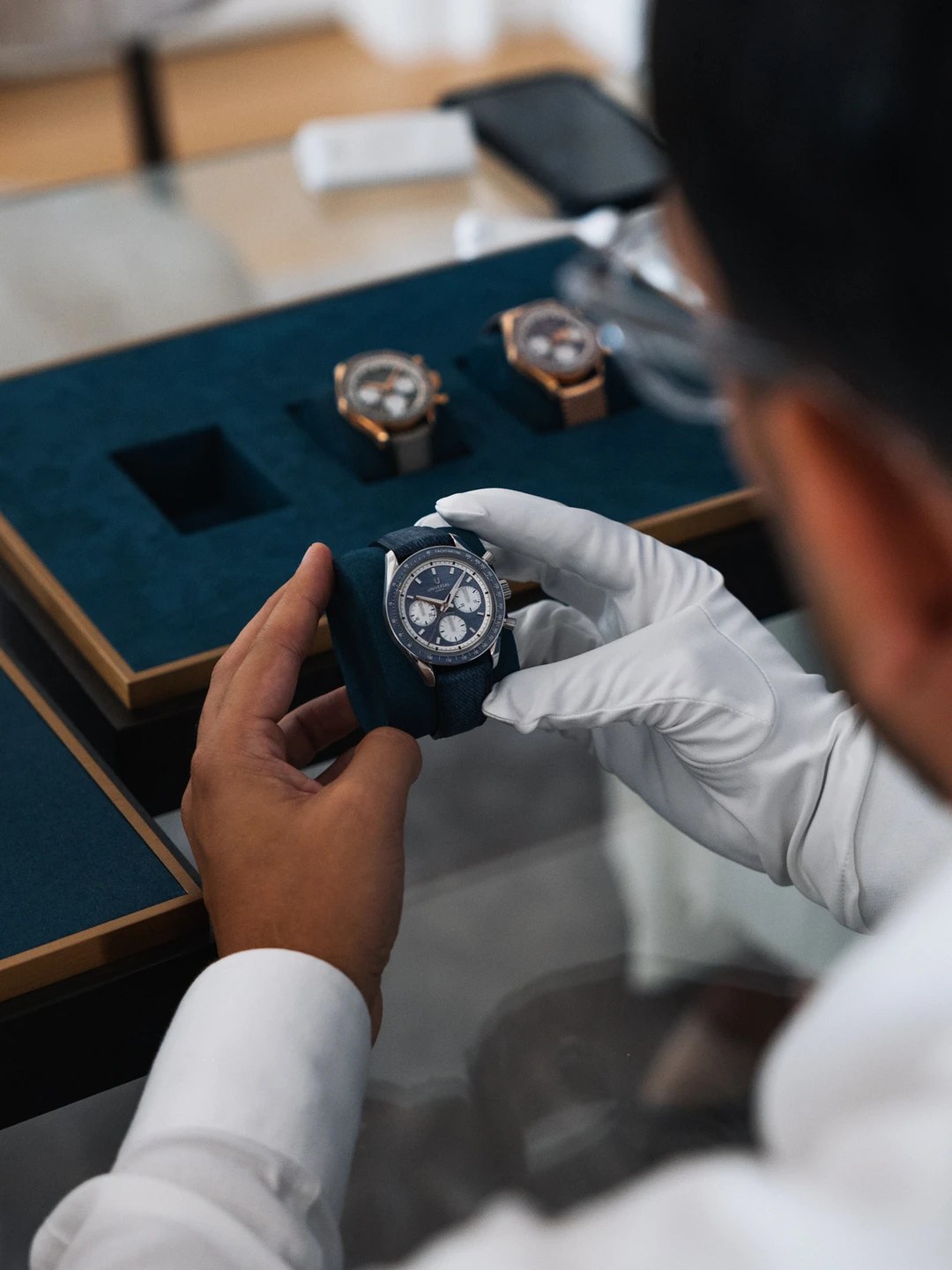
The brand now sits alongside Breitling and Gallet under one roof, which makes this a bigger year for that group than any single release suggests.
Gerald Charles
The sharpest argument of the week about what a hand is still for.
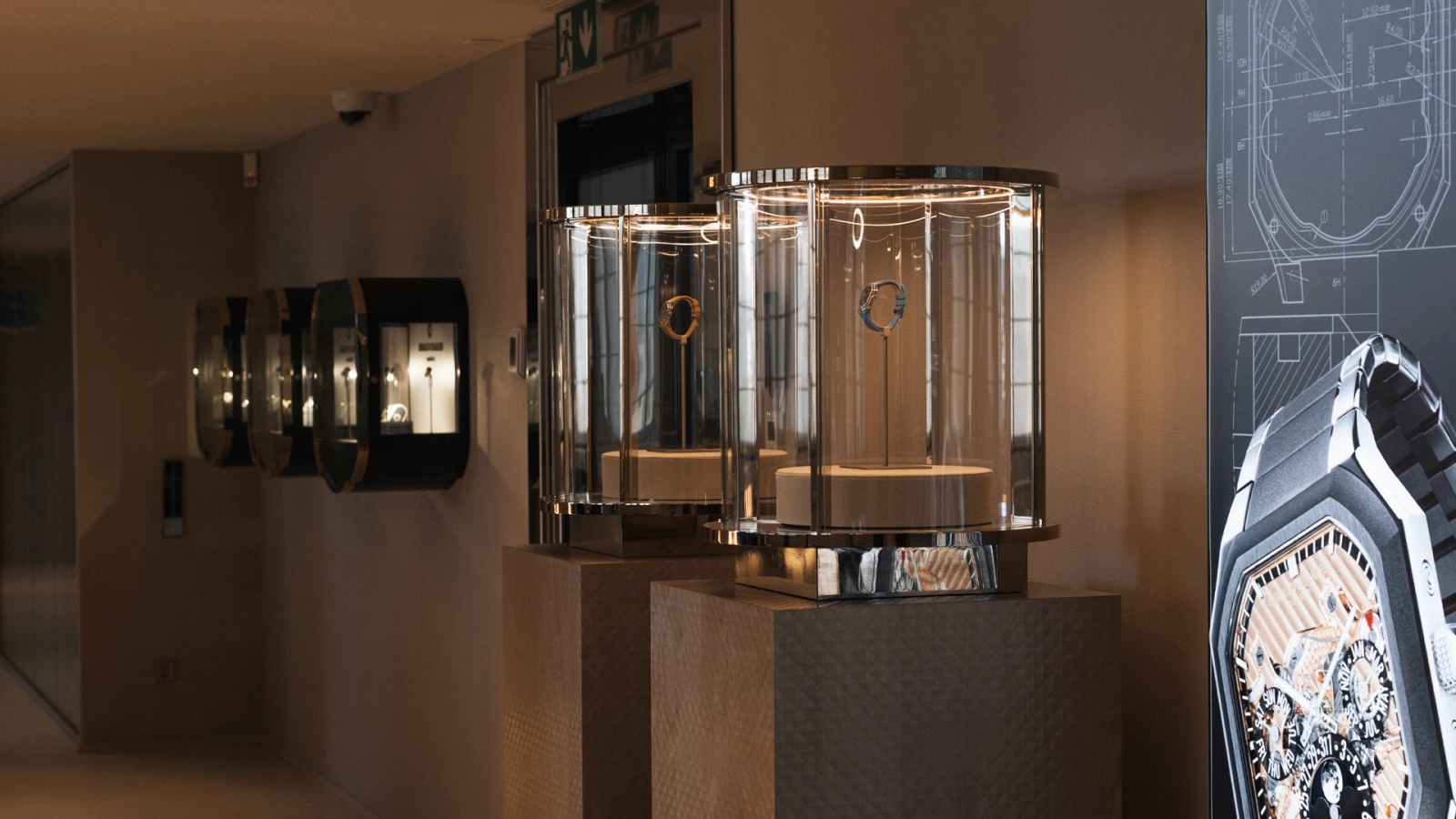
Masterlink is the brand at its most engineered: integrated bracelet, tight tolerances, 38mm case under 8mm thick, a shape that only resolves because every dimension is controlled. The Atelier Edition drops a hand-hammered Maillechort dial into the middle of it. One artisan in Geneva, hundreds of individually controlled strikes, facet by facet, no two dials the same and none correctable once struck. Twenty-five pieces in each of Golden Rose, Rhodium and Golden Yellow.
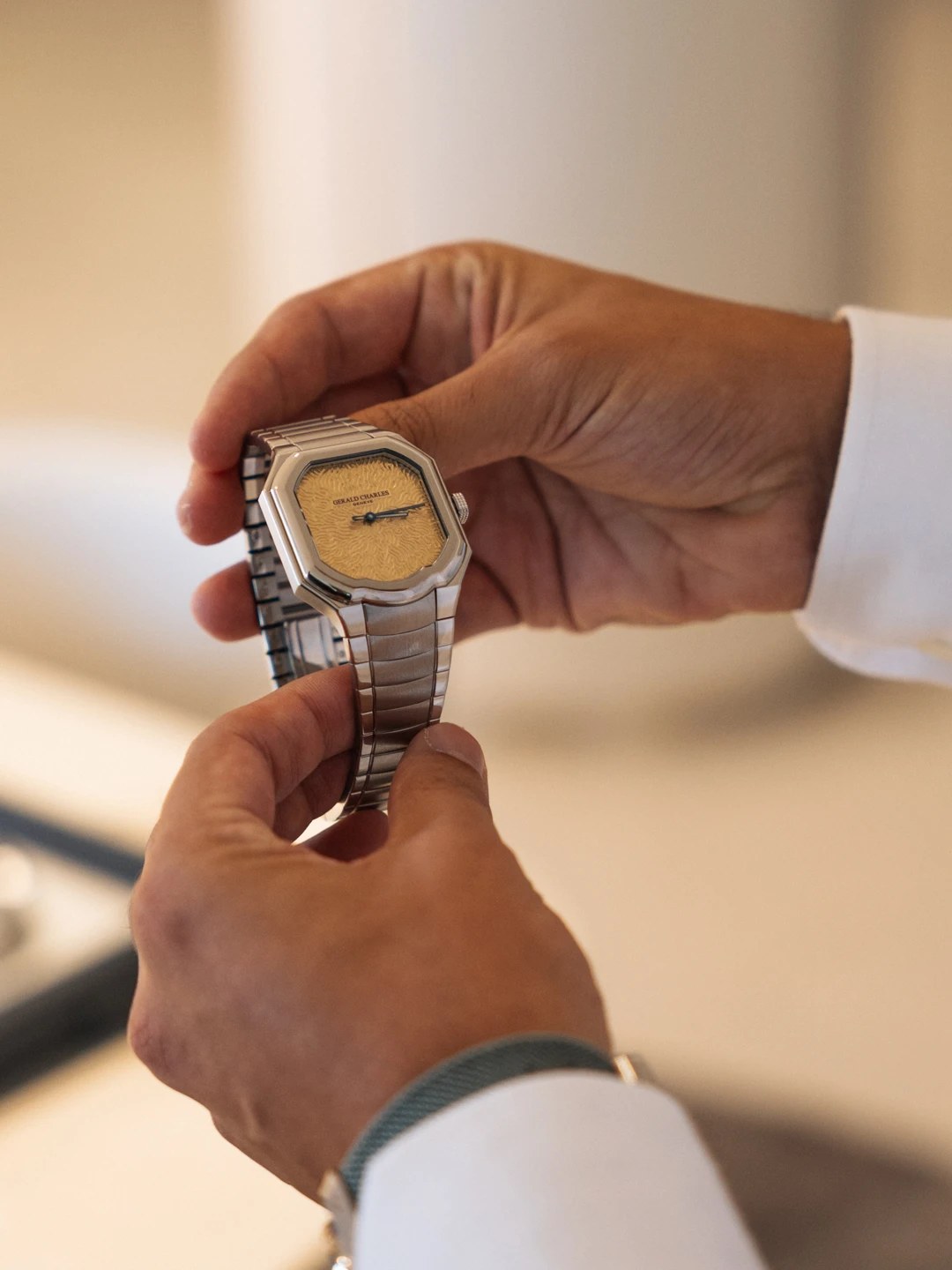
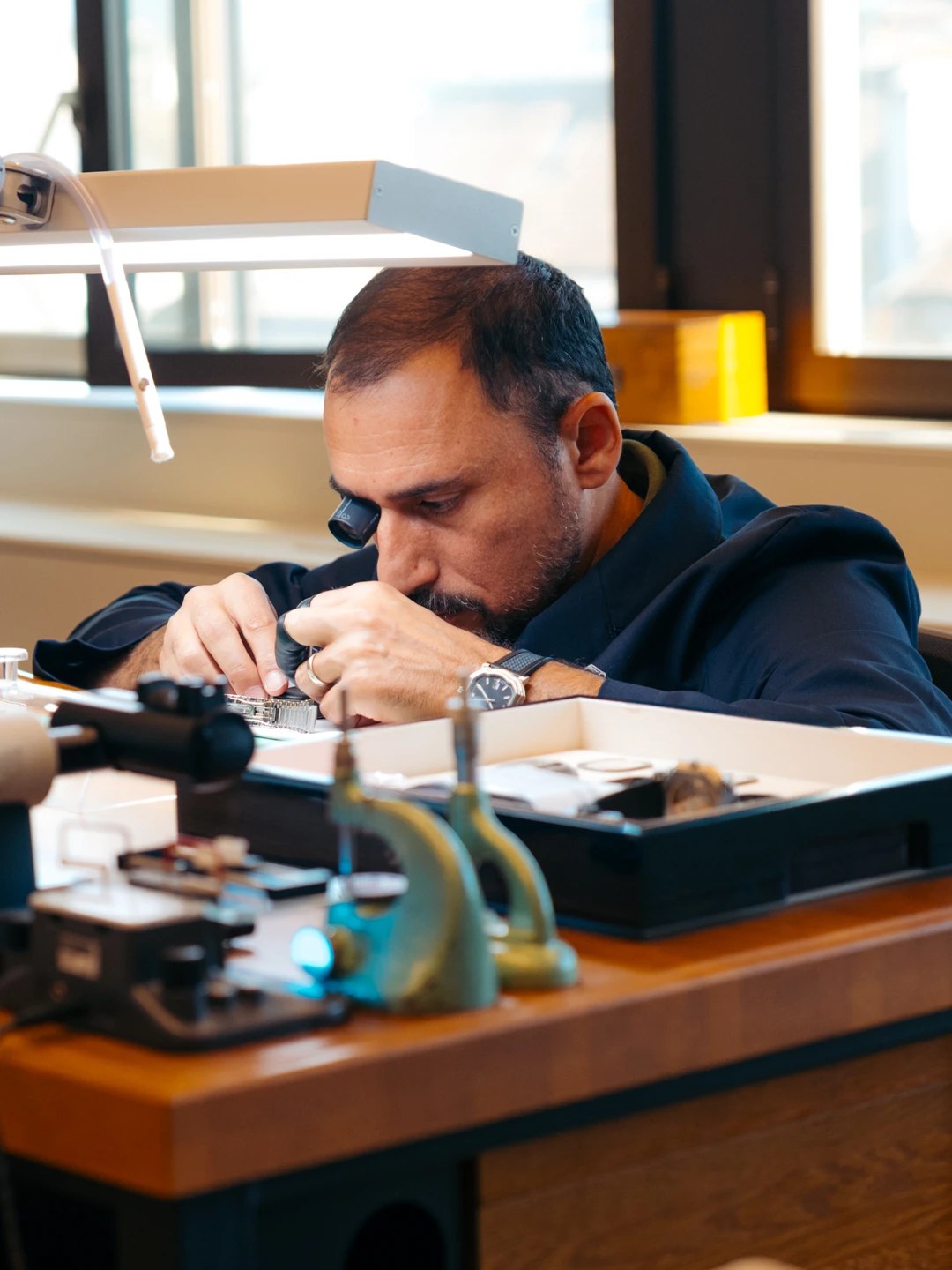
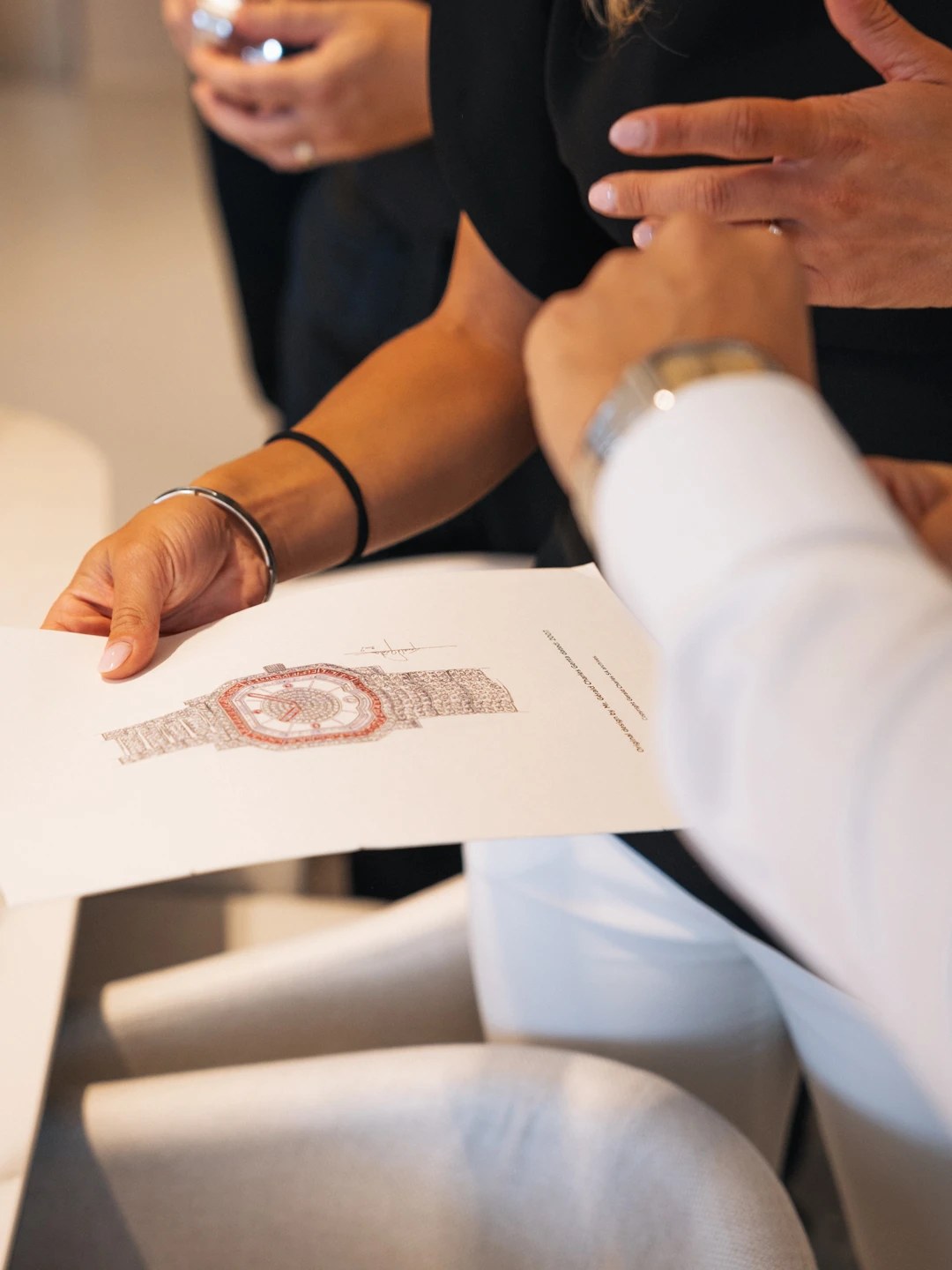
Get the ratio wrong on something like this and it reads as texture applied to a finished object. Here it reads as two disciplines holding their ground.
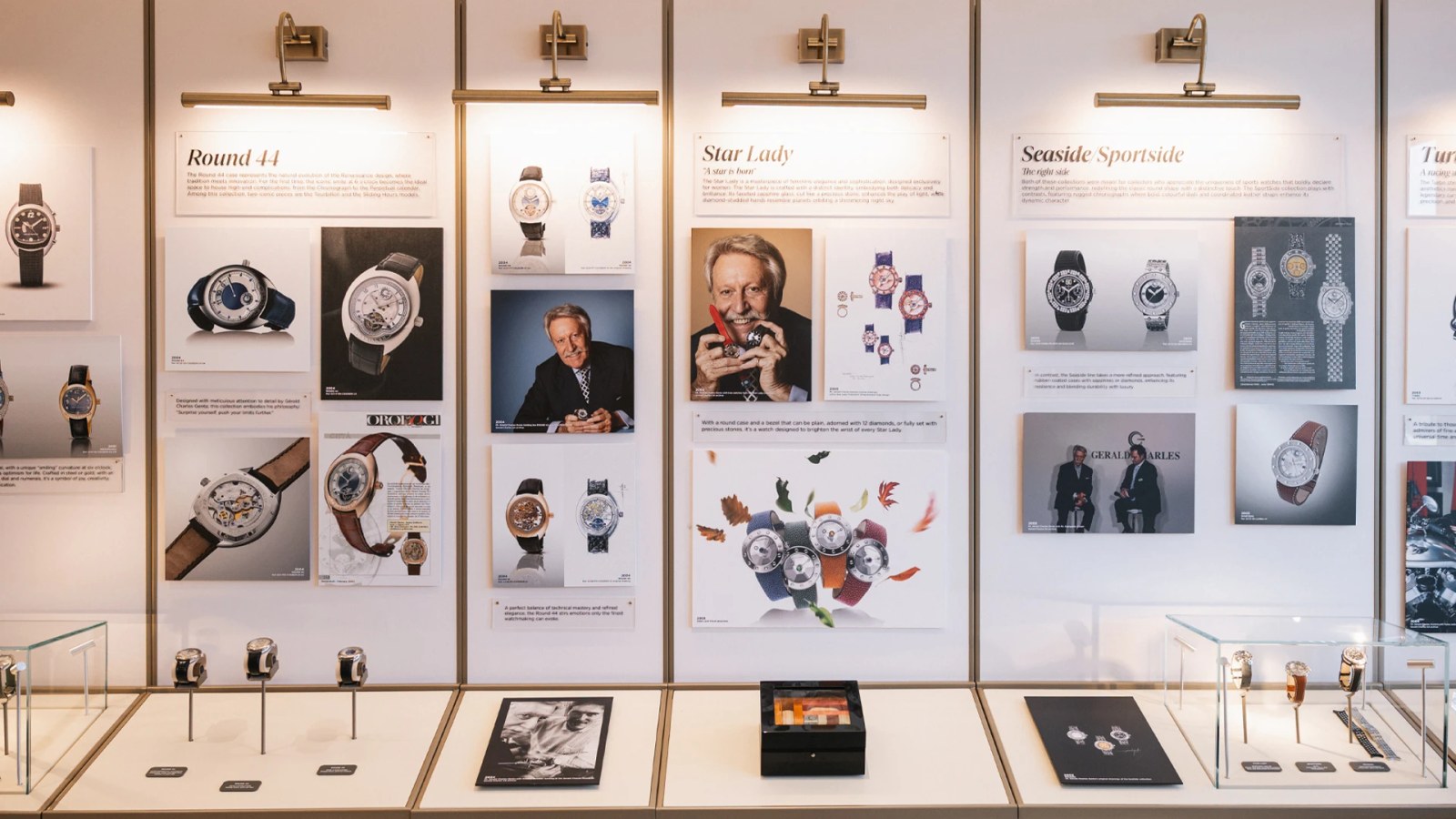
The Maestro 2.0 Ultra-Thin was my other favourite of the week. In black on rubber it is the one that stays on the wrist: steel case, black sunburst dial that runs warmer or cooler with the light, HNBR vulcanised rubber carrying the Clous de Paris motif on top and the GC logo tapisserie underneath. Genta's asymmetric polygon is assembled from thirty-five separately machined components rather than cut from a block, which is why the corners catch the light the way they do. Case back, lugs and strap sit on one straight line, so it lies flat on the wrist. Rubber on a Genta case should feel like a compromise, except the strap is Genta's design too. It is the reason the thing works seven days a week.
Bvlgari
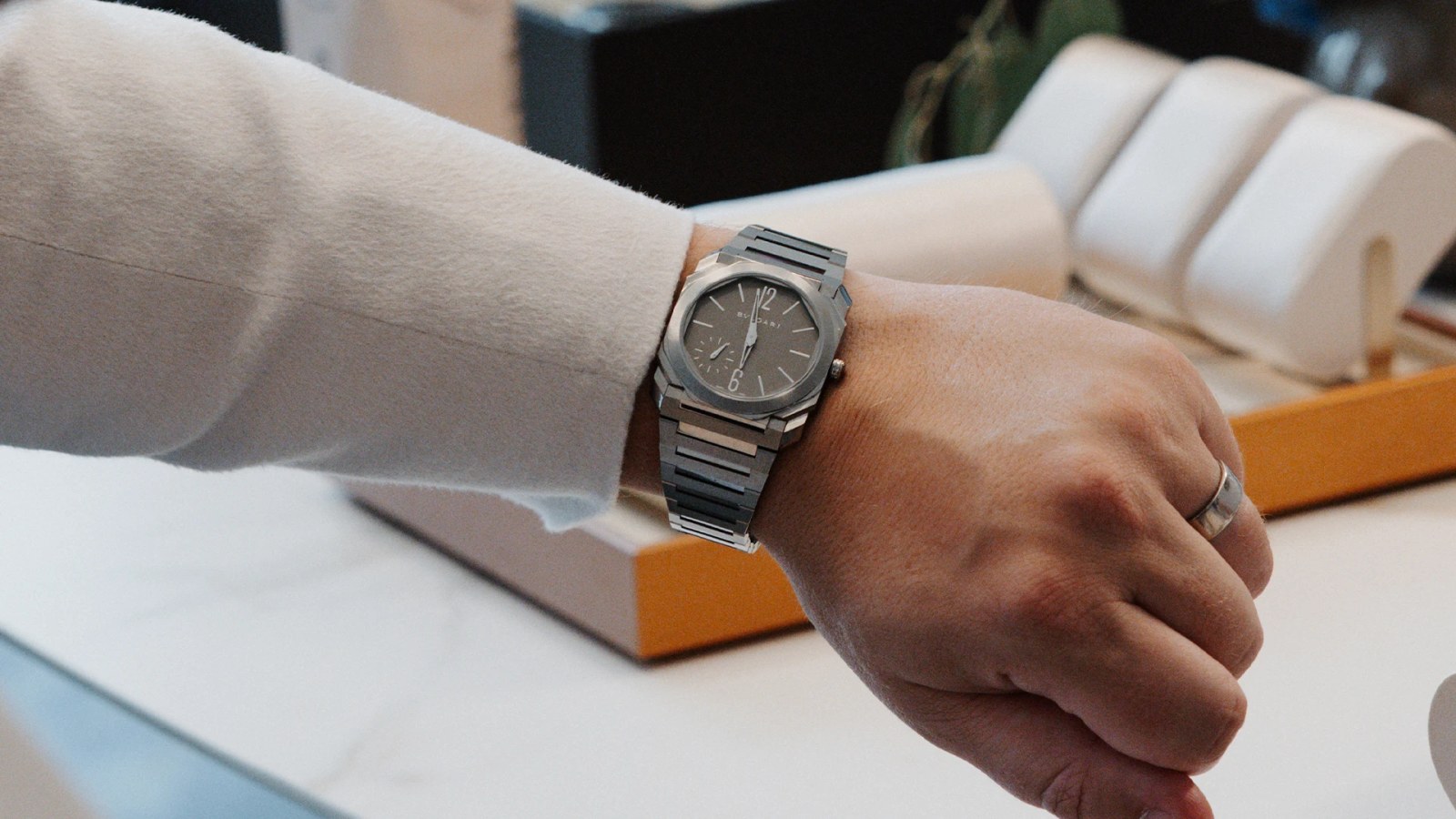
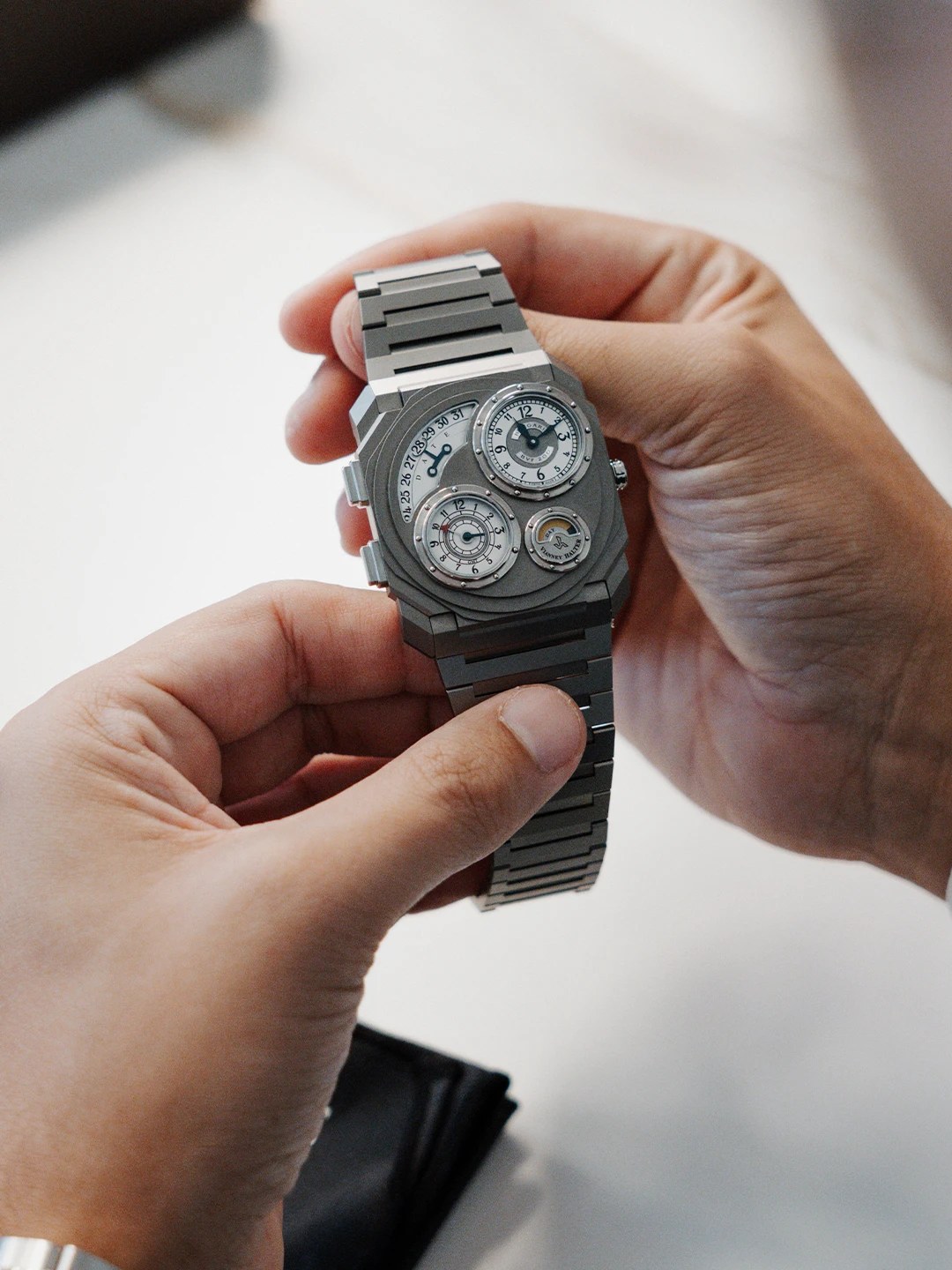
Titanium ran through everything, and the headline is the Octo Finissimo Dual Time x Vianney Halter. First time the collection has opened to an outside watchmaker, and both parties gave something up to make it work. Halter's Antiqua language, all porthole apertures and split indications, sits inside Octo Finissimo geometry without either winning. At 9.7mm it is thick by Finissimo standards, and that is the correct trade. Thirty pieces in titanium, fifteen in pink gold.
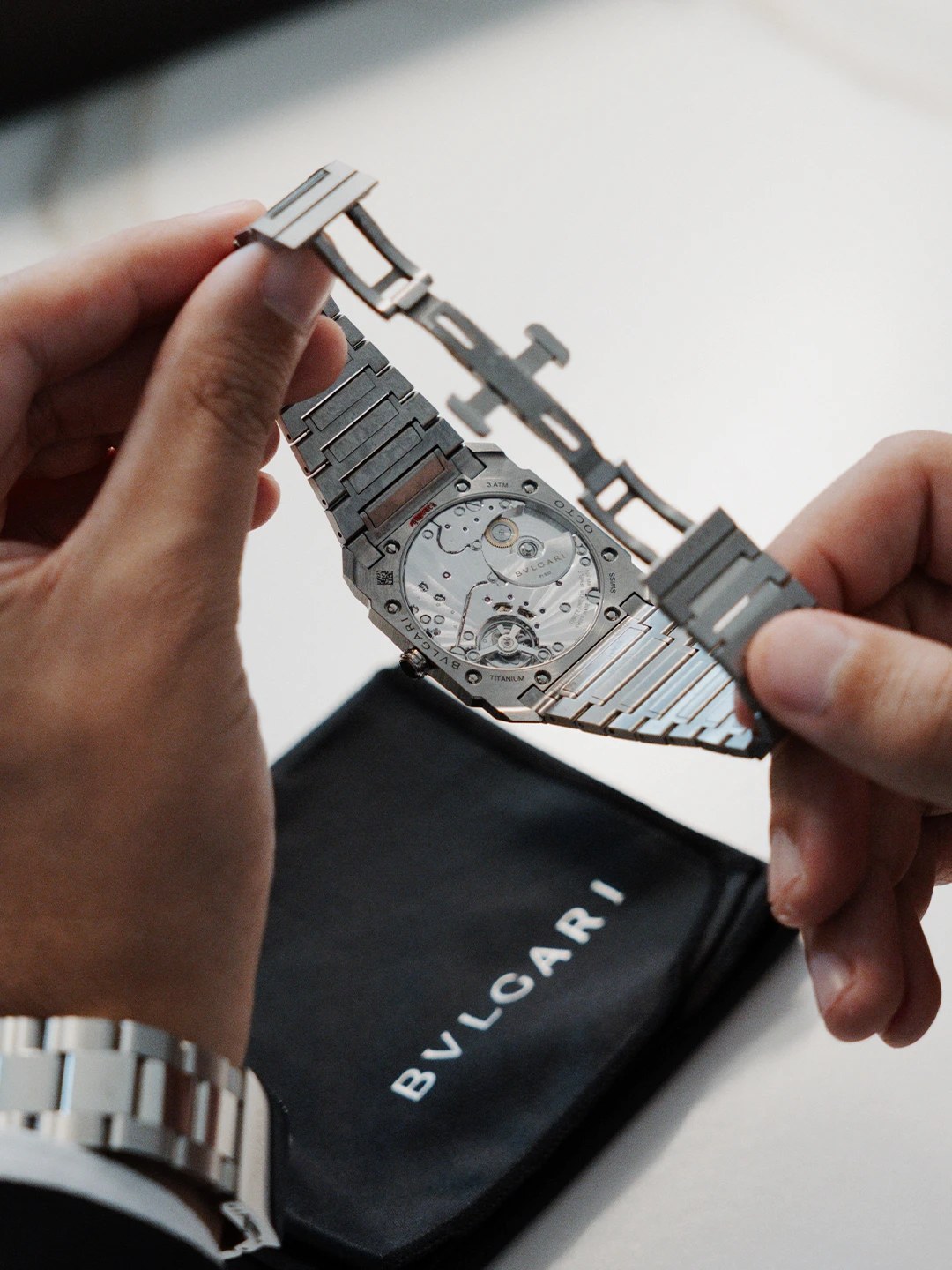
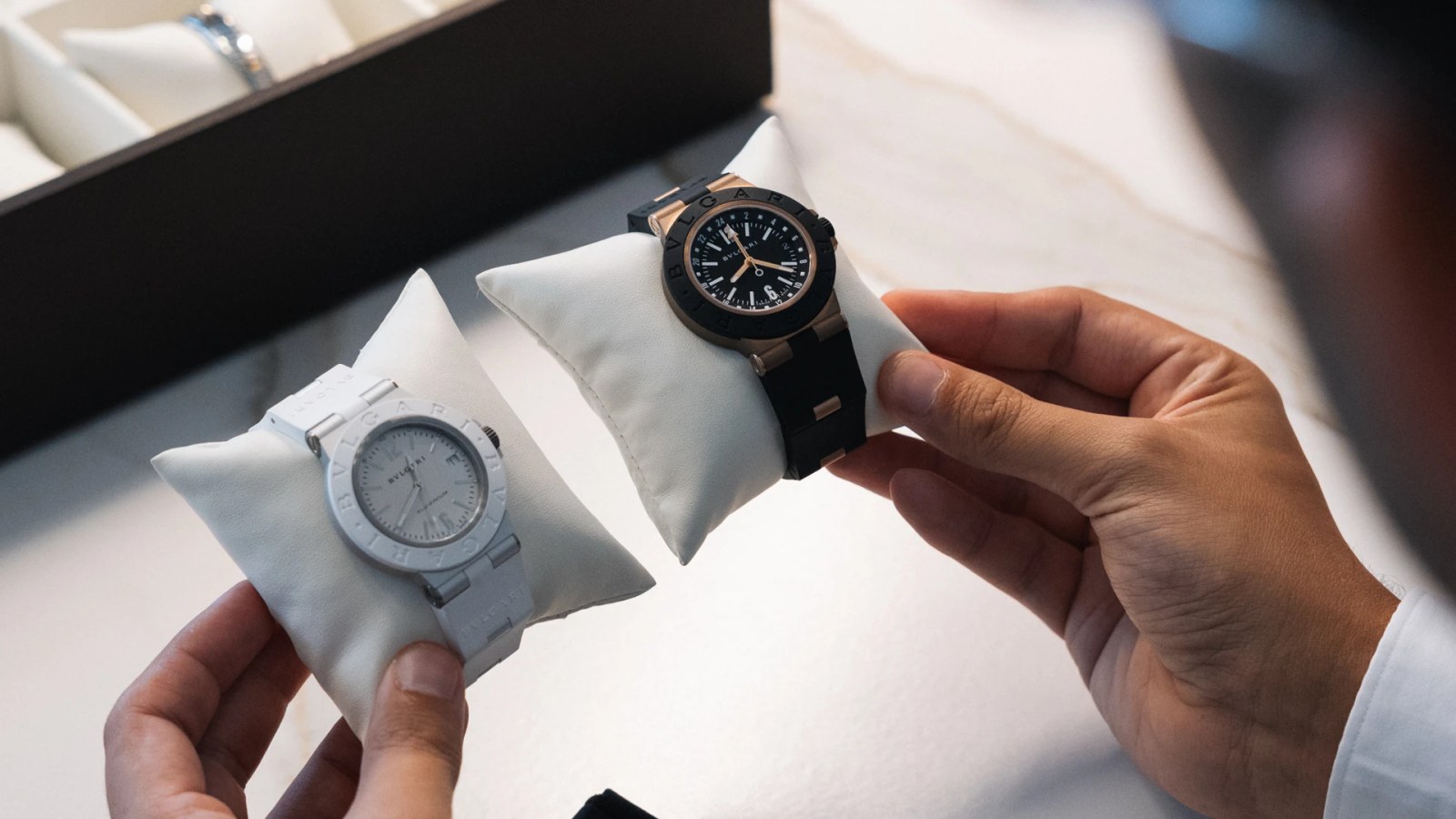
The Octo Finissimo Dazzle went the opposite direction, with nearly every surface laser-engraved in a fragmented pattern lifted from the camouflage wraps carmakers use to hide a silhouette during road testing. Bulgari describes it as defying its own legibility, which is a rare thing to say out loud about your own product. Eighty pieces, still 5.15mm thin. The Aluminium line also arrived in titanium as the Titanio GMT and Chronograph.
Breitling
Miles Davis owned a mid-1960s Navitimer ref. 806 Mk5. For the centenary of his birth, Breitling built the tribute around that watch rather than around the man, and it is far stronger for it.
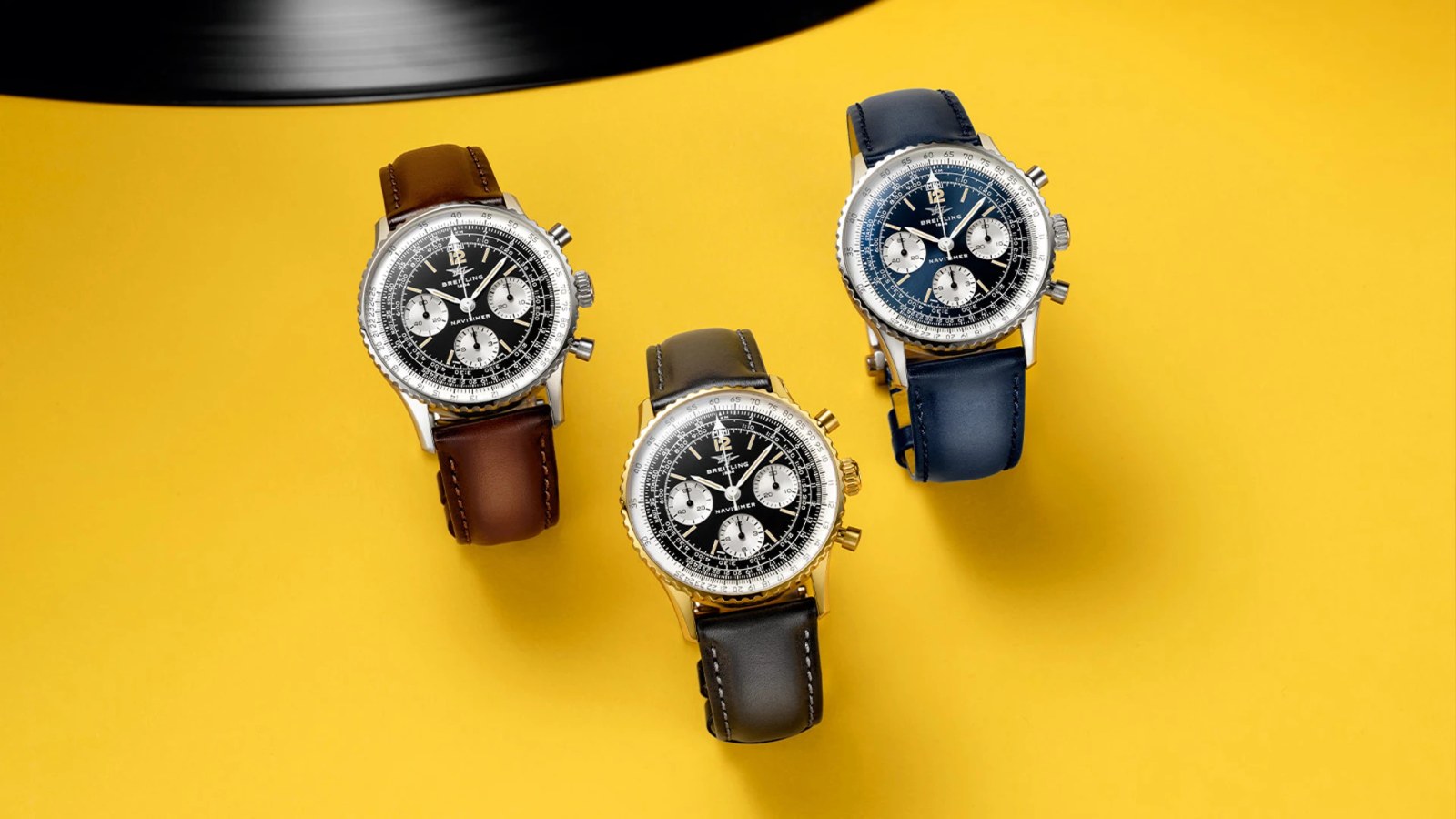
The Navitimer B09 Chronograph 41 is 41mm steel and 13mm thick, the same dimensions Davis wore, with a reverse panda dial, cream Old Radium Super-LumiNova, and the Twin Jet emblem Breitling introduced around 1965 on watches sold through its own retail network to set them apart from the AOPA versions. Davis's Mk5 was the first Navitimer to combine that logo with the reverse panda dial. Hand-wound COSC-certified calibre B09, with a quiet nod to Davis engraved in the caseback surround. Five hundred pieces, plus a fifty-piece set in steel, yellow gold and platinum.
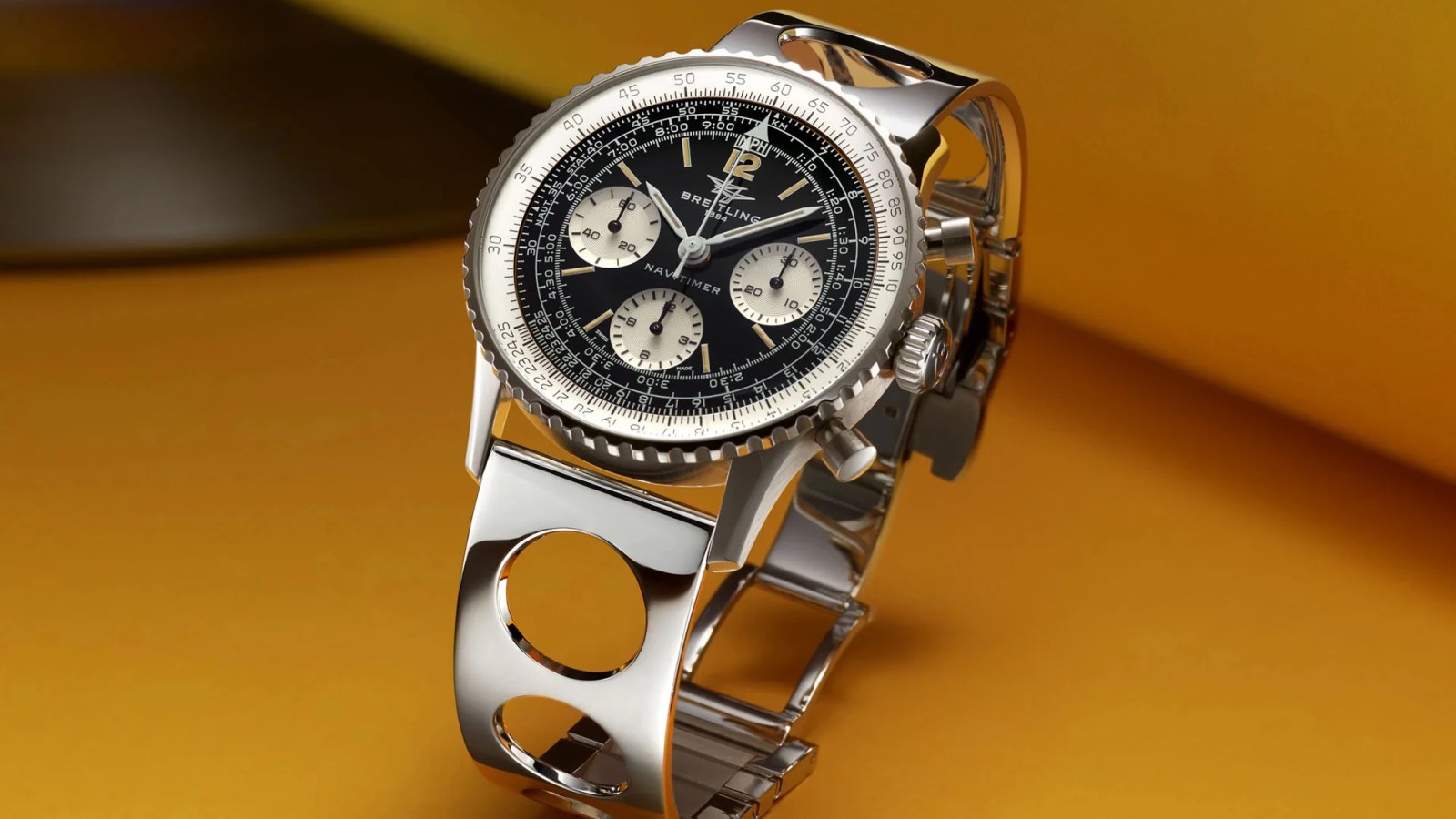
Most tribute watches reach for the person and end up with a signature on a caseback. This one reached for the object.
The Novelties
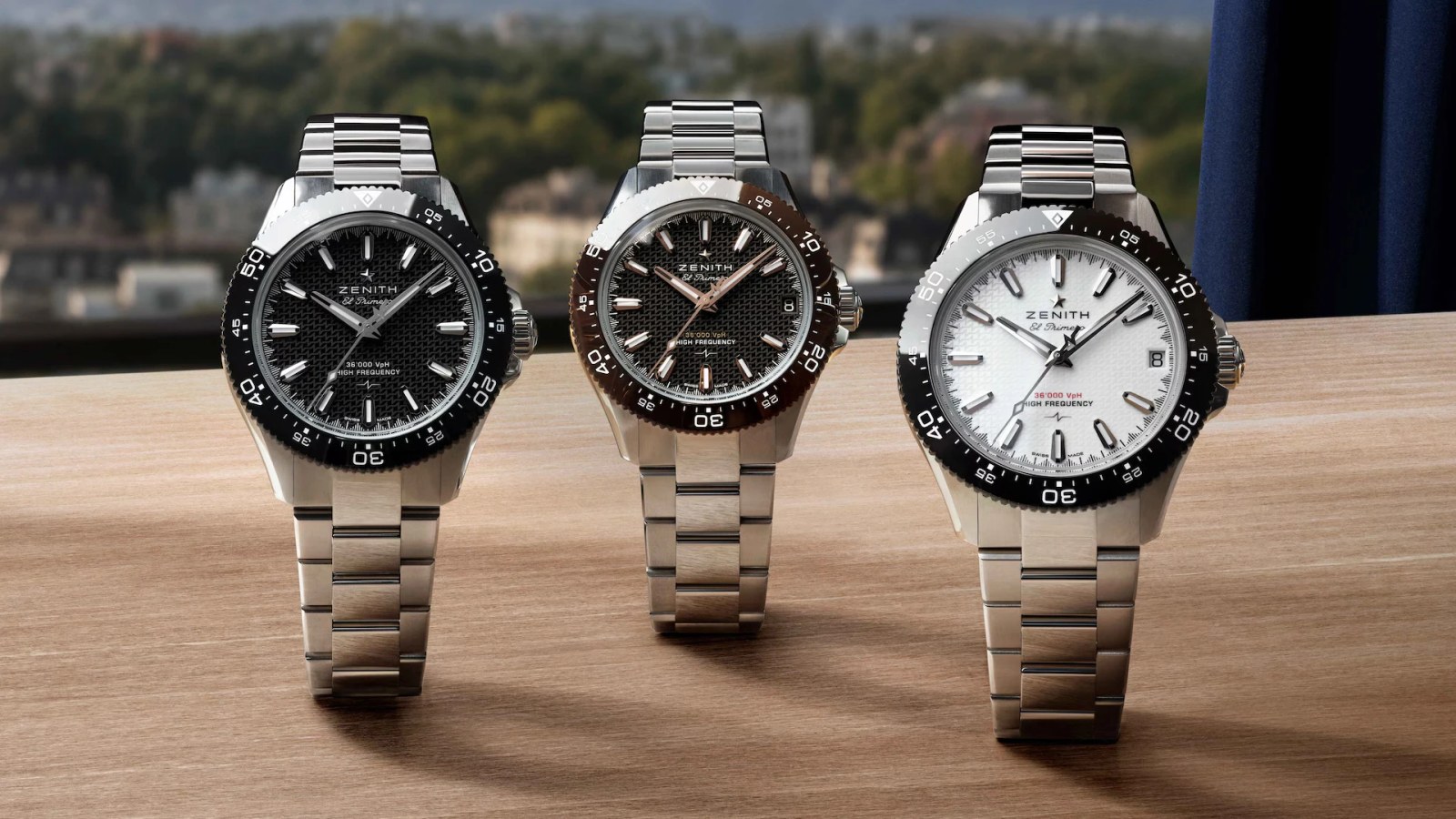
Zenith took the chronograph out of the Chronomaster for the first time. The Solo Sport asks whether frequency alone can carry the identity, and answers yes. Calibre 3620 at 5Hz, 40mm steel, ceramic bezel, and a ceramic dial repeating a 45-degree Z motif that is essentially frequency drawn as a graphic. Shark-tooth minute track from the archive.
Konstantin Chaykin brought the best backstory of the week. The SC02C is a chronograph developed with Roscosmos, tested outside the ISS across four spacewalks since 2018, most recently on 27 May this year. Twenty-eight civilian pieces, with owners asked to keep reporting on how they perform. Built on the Poljot 3133 deliberately, because proven architecture was the right call for something going into vacuum. The strap extends to fit over a spacesuit.
MING showed the cleverest watch of the show. The 57.05 Comet splits worldtimer cities across two rings, inner for places that ignore daylight saving, outer for those that observe it.
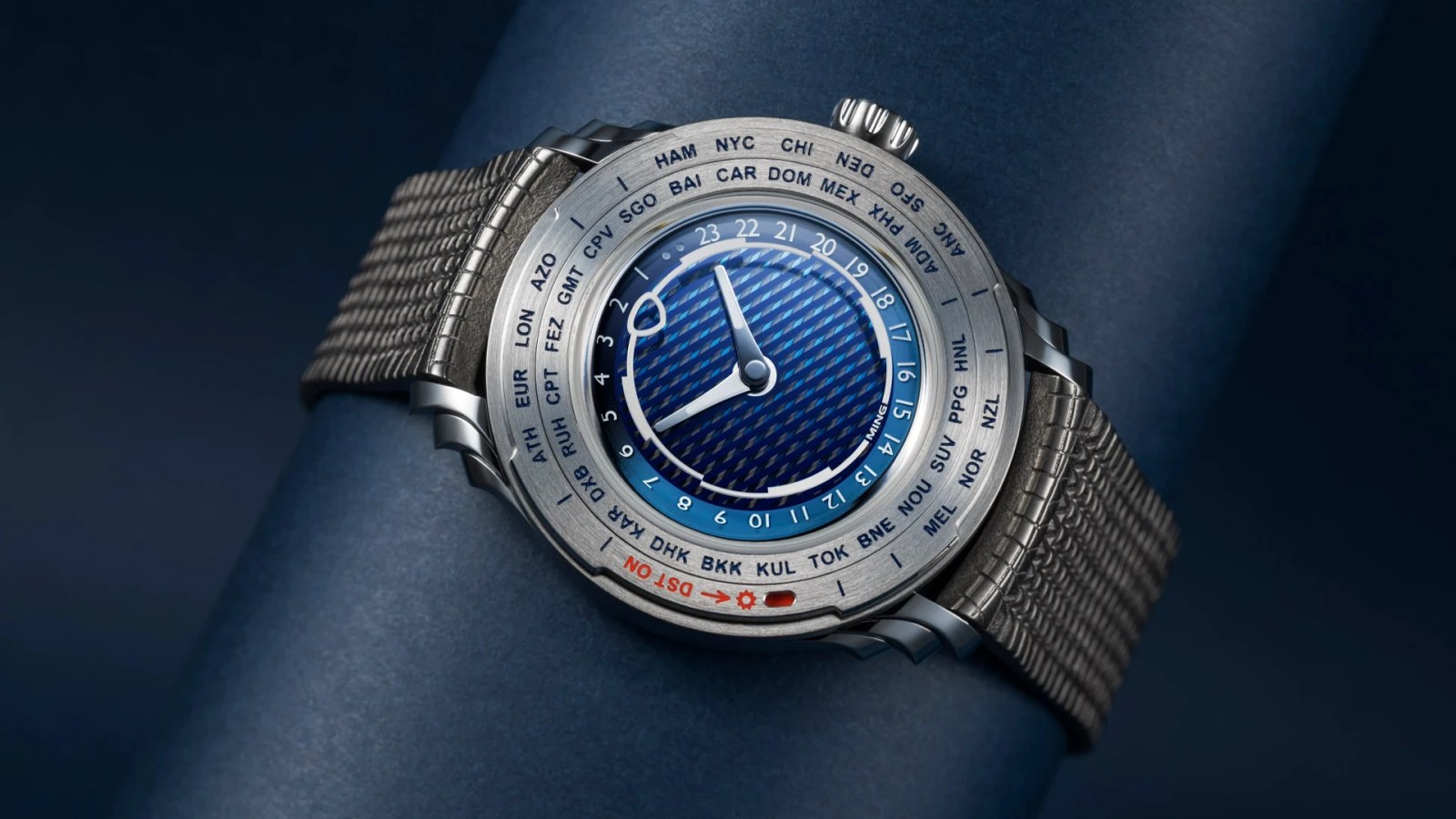
One click moves only the latter forward an hour. Patent pending, and the obvious question afterwards is why every worldtimer does not do this. Also the 37.06 Lightning with J.N. Shapiro, titanium dials engine-turned in Los Angeles then heat-coloured by hand in Kuala Lumpur, where roughly one in three survives.
De Bethune made the most beautiful object of the week in the DB25 Digitale. A random guilloché centre worked to mimic the ripple of the lake outside, interrupted by a blued titanium Starry Varius field, with a spherical moonphase at the heart of it.
MB&F headlined with HM12 The Guardian, a transformer wristwatch with face-shield complication, jumping hour and flying tourbillon. M.A.D.Editions brought the M.A.D.3, built around Vincent Calabrese's Baladin, where the hour aperture travels around the dial rather than snapping.
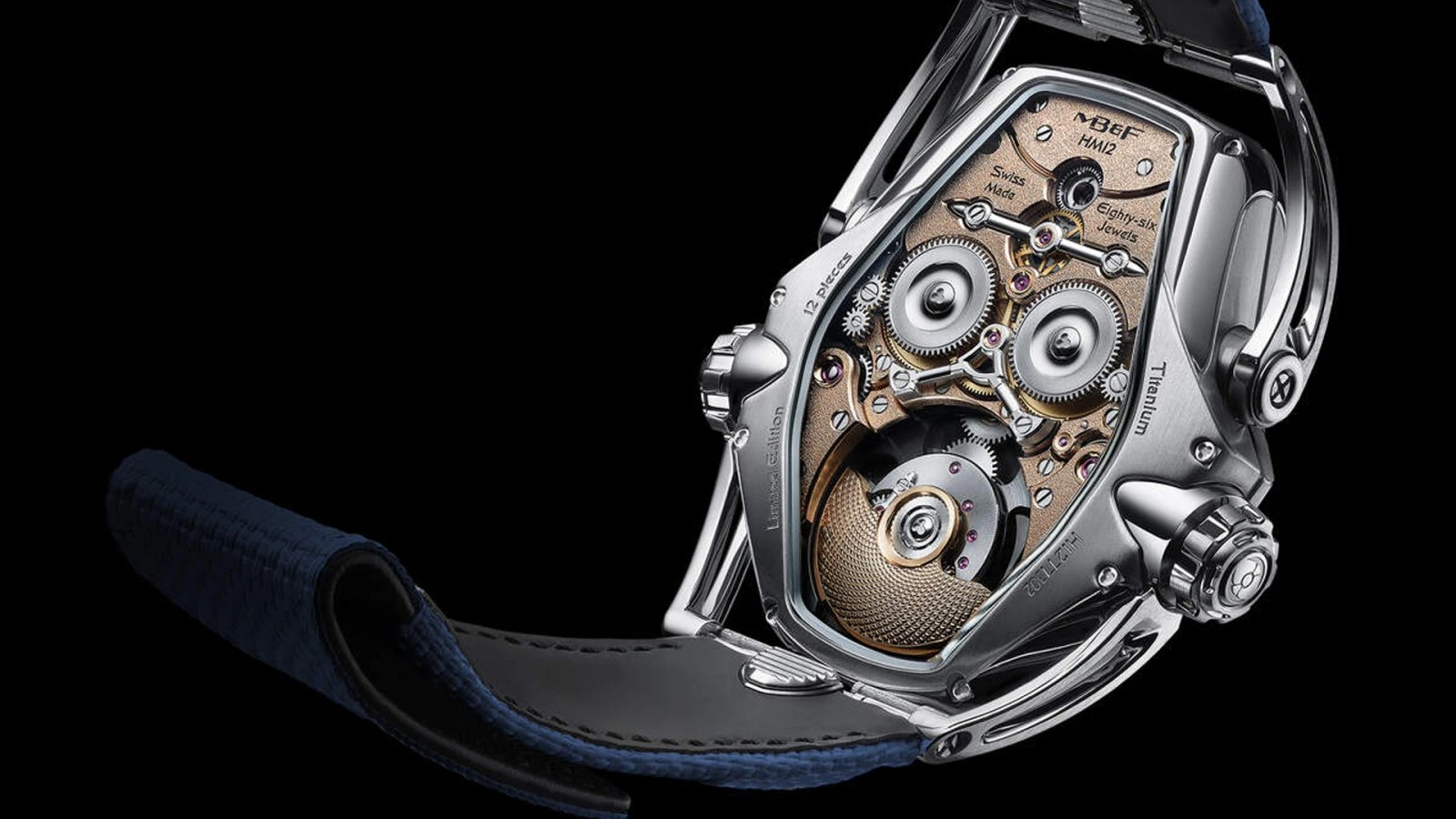
Calabrese is 82 and invented the Golden Bridge. Turn it over and the rotor gradually reveals a line: it is fairly easy to please others, far more difficult to be proud of oneself.
Bremont extended the Terra Nova Jumping Hour with an all-new 35mm case, the collection's first dress scale, and burgundy as the second British colourway. Separately, the Supernova Chronograph is going to the lunar south pole aboard Astrolab's FLIP rover, and staying there.
Gallet returned at two hundred, manufactured by Breitling. The Flying Officer is back as the world traveller's watch it originally was, alongside the Multichron Pilot and Multichron Sport, plus Classics tributes to the Yachting Big Eye, the Multichron 45 and the Silverlight on the hand-wound B09.
Girard-Perregaux extended an anniversary a year past the anniversary and earned it. The Laureato Fifty Tourbillon puts a new in-house micro-rotor calibre and the tourbillon front and centre at 39mm, with Clous de Paris on dial and caseback and a choice of blue grand feu enamel or rose gold.
Daniel Roth made subtraction literal. On the Extra Plat Rose Gold Gilt the numerals and signature are negative space, masked while the surrounding surface is electroplated black, then revealed when the masking lifts, over a pinstripe guilloché hand-cut on a rose engine by one artisan.
Laurent Ferrier proved a colour change can transform a watch. The Classic Moon Dusk moves to yellow gold with a taupe-to-chocolate gradient, but the reason to care is the moonphase: a gold-sheen obsidian disc under an anise-yellow plique-à-jour enamel bridge, enamel with no backing, held by its own frame alone. Twenty pieces.
Greubel Forsey brought the GMT Balancier Convexe down in size and up in usability, and showed the Tourbillon 24 Secondes Architecture, built over five years, whose movement retires this year.
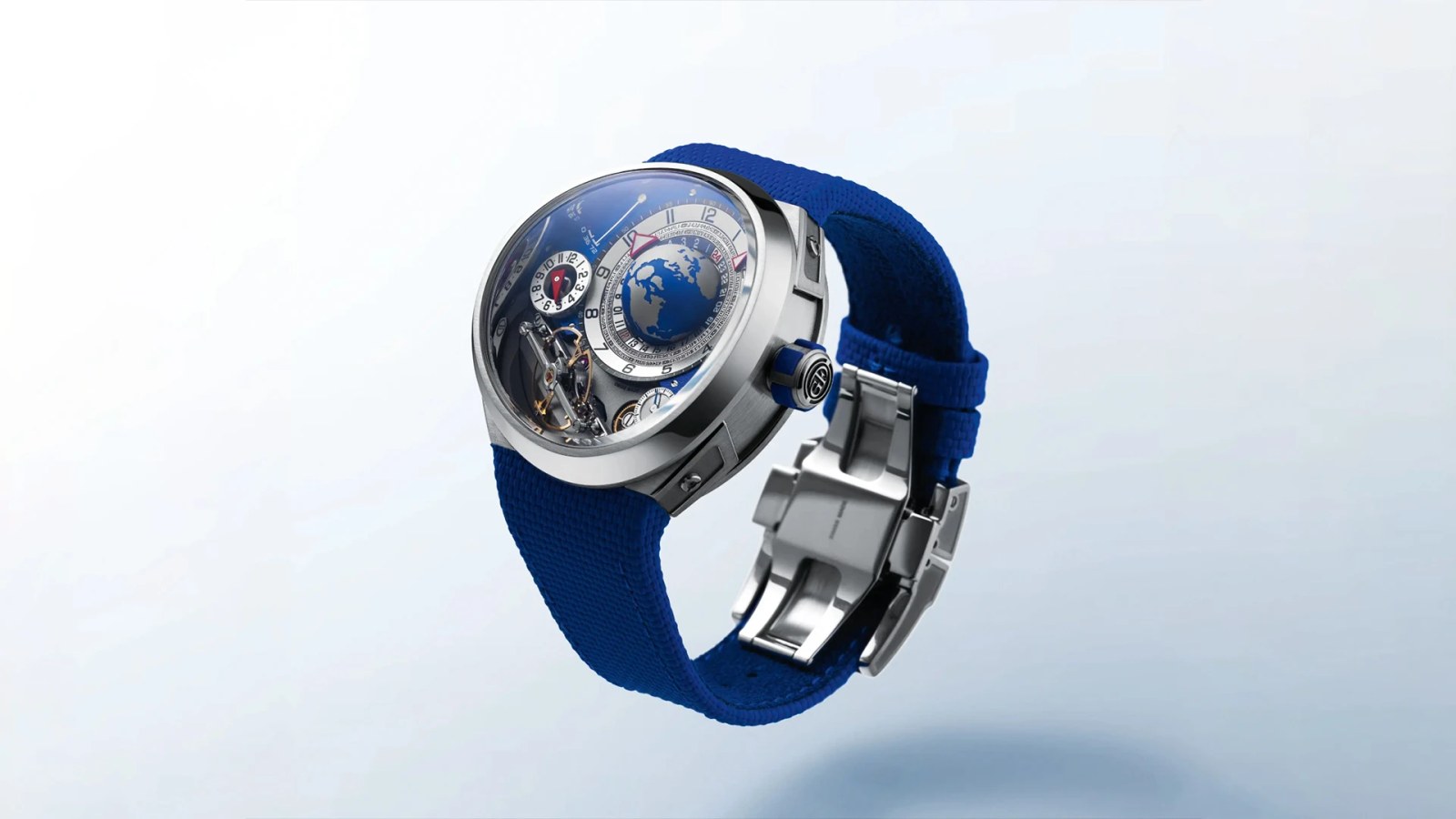
Ferdinand Berthoud opened a new decade with Mesure du Temps 1787 and its first chapter, the Chronomètre FB 2TV, revealing almost the whole movement dial-side on the new FB-TV.FC. The FB 3SPC.4-1 took the house somewhere more contemporary in ceramised titanium.
Doxa put titanium into the permanent collection rather than staging it as a limited edition, which is the more interesting decision. Five SUB 300 Ti5 references, and the WhitePearl's fully luminous dial genuinely lights a room.
Corum brought ceramic to the Admiral for the first time in three interpretations, including a skeletonised anthracite. A collection built on signal flags finally has a material that suits the brief.
Mauron Musy marked ten years of its gasket-free nO-Ring seal by printing fragments of founder Christophe Musy's handwritten development notes across the open-worked dial, unedited, so no two watches show the same working-out. The strap carries the same handwriting.
Massena LAB and Atelier Wen made the Inflection Shuò, the first Atelier Wen with a Swiss-made dial, hand-tremblage engraved on solid gold with Chinese calligraphy replacing the Roman half of a California layout. Fifty pieces. Massena also showed Old Soul with Vianney Halter, who had a busy week.
Louis Moinet put three meteorites on the dial of the Moon Meteor, with the moon running its cycle on two more fragments and a hand-painted astronaut as the fixed reference point. Twelve pieces. Stellarium took the same instinct into luminescent miniature painting.
Speake-Marin showed the Tourbillon Royal Blue, 42mm of red gold with a flying tourbillon at 1:30 and power reserve at 7:30. Five pieces.
Czapek set twin balance wheels beating in opposite directions in the Place Vendôme Complicité, with sapphire bridges set with rubies in gold chatons. Ten pieces, born out of a friendship with Bernhard Lederer.
Urwerk returned the UR-150 in yellow gold as the Golden Scorpion, its retrograde minute hand crossing a 240-degree arc before snapping back in a hundredth of a second.
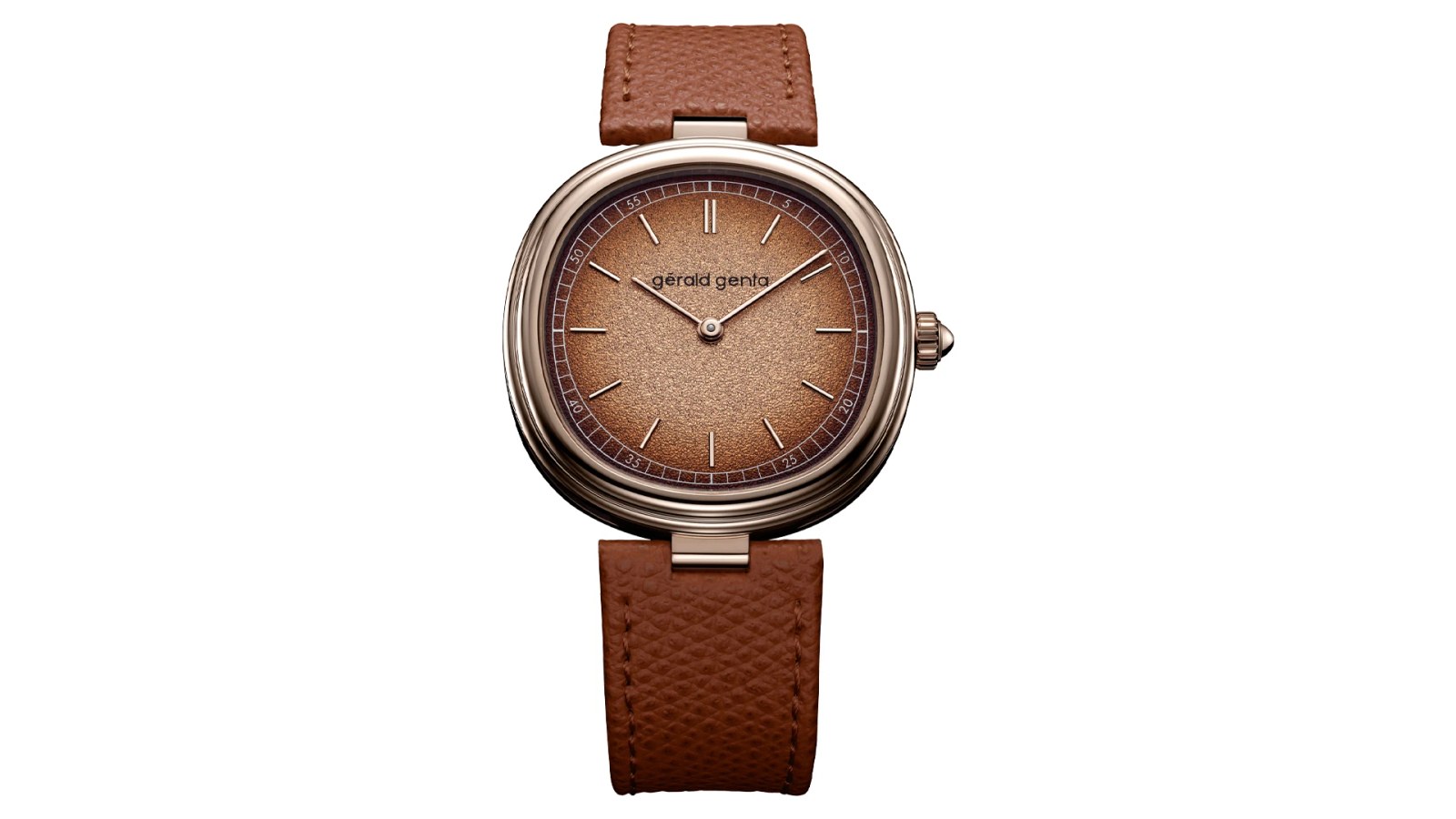
Gérald Genta built the Geneva Minute Repeater Golden Obsidian around sound, with thin case walls and a refined internal architecture to let the chime breathe, on the in-house GG-002 with hand-tuned gongs.
L. Leroy revived an 1810 tact watch as the Vox Temporis, a single hand over a rotating dial with minutes revealed on demand. Minute repeater and flying tourbillon, fifteen pieces.
Renaud Tixier completed the Organica triptych with Monday in Black and Bordeaux, the botanical dial curves drawn from three components of the RVI2023 calibre, so the ornament is structural rather than decorative.
Alto delivered the ART 02 as one uninterrupted form, case and bracelet and sapphire merged, on a new micro-rotor calibre developed with Cercle des Horlogers driving the seconds counter-clockwise.
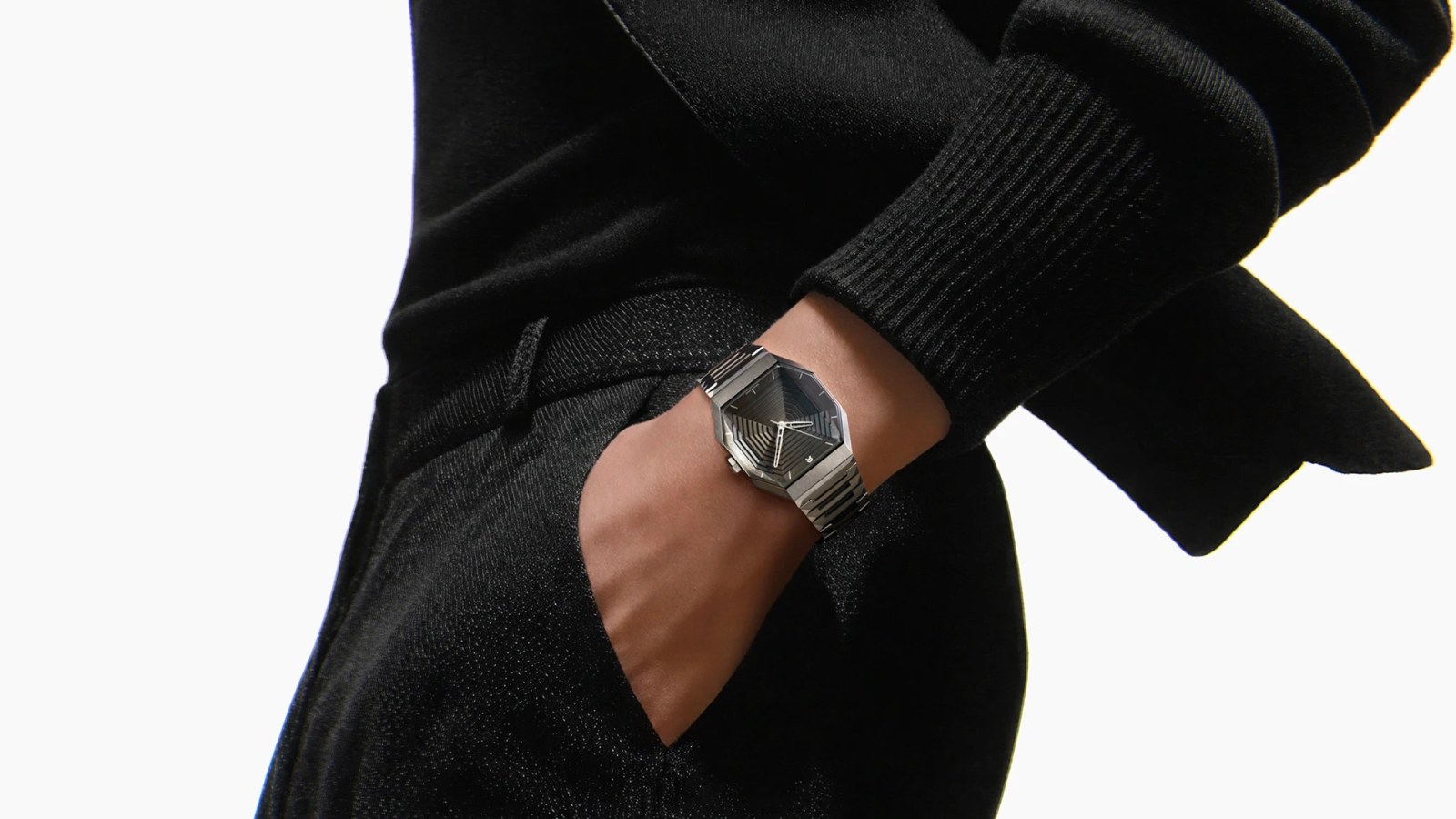
Frédérique Constant put a mechanical movement into the Moneta for the first time and let you see it. Grained salmon-to-black dial, fluted bezel under the sapphire. Quietly one of the most sensible watches of the week.
Oris brought the Big Crown Pointer Date to 29mm, its smallest in modern history, and kept it mechanical rather than defaulting to quartz on the way down.
Bianchet showed two ceramic readings of the UltraFino Tonneau on the 3.85mm UT01, engineered to 5,000G. A tourbillon built for a life with movement in it.
Quick Updates
Alpina ran the Startimer Pilot Solarmetre for ten months on light. Hautlence reversed its own method with KUBERA, form first, complication second. L'Épée 1839 made The Football, a full-scale ball in 882 components. Krayon showed Parhelion Anywhere, a sapphire gradient drawn from an optical phenomenon in Greenland. Louis Erard handed a dial to straw marquetry artist Bernardo d'Orey. Trilobe unveiled Château Trente-Deux, the first hundred paired with a grand cru. Perrelet turned the turbine into a roulette wheel. Emmanuel Bouchet marked a decade of Complication One with the Fusion, its first in sapphire. Beda'a opened its first boutique in Doha with two Angles editions. Bell & Ross put meteorite in the BR-X5. Réservoir gave the case its own identity with Mark II. Dennison returned with the ALD Collection by Emmanuel Gueit. Otsuka Lotec showed No. 8. NAOYA HIDA & Co. brought the hand-engraved NH TYPE3B. Maurice Lacroix showed the AIKON-IC Frozen Carbon. MicroMilSpec presented the Fieldmaster. Furlan Marri showed the Disco Onyx Diamonds. Fears brought the Brunswick 39 Perpetual Calendar. BA111OD showed the Chapter 7 Skeleton. Beauregard continued the Ulysse with the Saint-Pétersbourg dial. Singer Reimagined hosted at its Geneva workshop with the Heritage V72. Tutima showed the Patria 6600-23. Claude Meylan brought the Tortue 6085 AV. Unimatic kept to the Classic collection. Byrne showed a set of two. Bimbu led with the Patrium.
Completing the roster: Akhor, Amida, Artisans de Genève, Beaubleu, Behrens, Cédric Johner, David Candaux, Kerbedanz, Keris, Lederer, Linde Werdelin, MARLI New York and Stollenwurm SA, plus Phillips in Association with Bacs & Russo. Some are small enough that a launch is not a given. Stollenwurm makes around twenty watches a year, a maximum of twelve of any design. Not every brand here needs a novelty to justify the room, which is another thing this fair gets right.
Final Thought
The most important mechanism of the week was MING's daylight saving bezel, because it solves a problem a real person actually has. The boldest decision was Zenith's. The best object was the De Bethune DB25 Digitale. The best backstory, comfortably, was Chaykin's chronograph coming home from the ISS.
My two favourites of everything I tried were the Universal Genève Cabriolet in stainless steel and the Gerald Charles Maestro 2.0 Ultra-Thin. Neither is the most complicated watch in this article. Both are the kind you would actually wear.
Five days, no exhibition hall, and a lot of walking between the quai and the Old Town. The watches were good and several were important. What stays with me is the same thing every year: the ateliers doing the most interesting work are run by the most interesting people, and in Geneva you get to walk between them.
Read more about watches here.