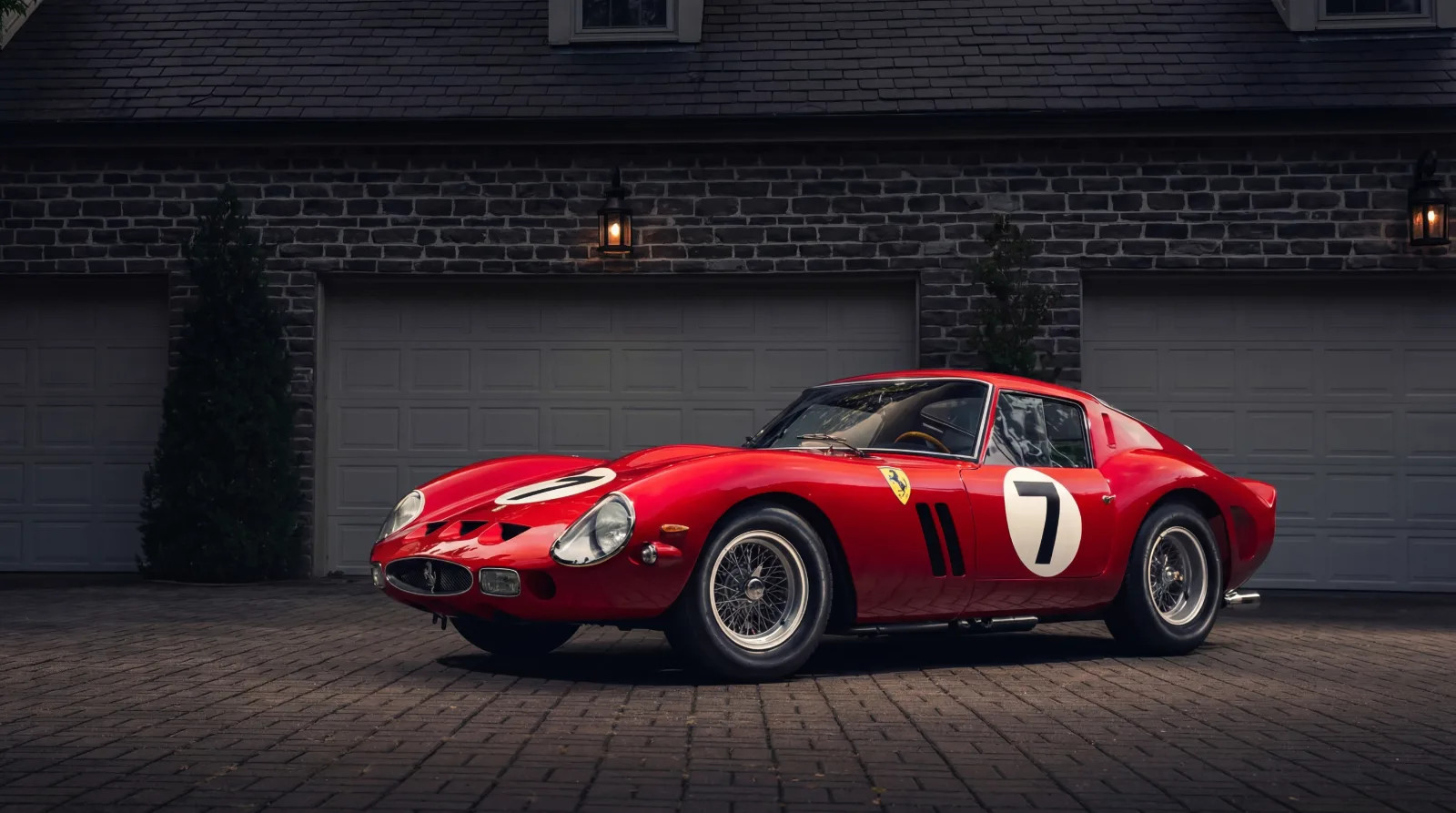
A halo car is more than a flagship. For a brand like Ferrari, it is a generational statement of intent, a rolling definition of what the company believes a supercar should be at a single point in time. Looking back at the lineage, from the 288 GTO to the LaFerrari, reveals a conversation about performance, technology, and identity. It is not a straight line of progress. It is a series of arguments, each one a reaction to the last.
The story begins almost by accident. The Ferrari 288 GTO was conceived for the FIA’s Group B rally category, a famously dangerous and short-lived racing series. When the series was cancelled, Ferrari was left with a homologation special and no competition to enter. The company built 272 of them for the road instead, and in doing so, created the blueprint for its modern halo car strategy.
The Founder’s Final Word
If the GTO was an accident, the F40 was pure intention. It was the last car personally approved by Enzo Ferrari, and it carried the full weight of his philosophy. The F40 was a direct, almost brutal machine. It used a twin-turbocharged V8 and its construction was famously spartan. There were no luxuries, no electronic aids, no distractions from the act of driving. It was a declaration that raw, unassisted performance was the ultimate goal.
Its successor, the F50, represented a fundamental pivot. The company’s new objective was to build a Formula 1 car for the road. The F50 abandoned the F40’s twin-turbo V8 for a naturally-aspirated V12 derived directly from the 1990 F1 car. Its carbon fiber monocoque was a piece of motorsport exotica. This was a different kind of challenge. The goal was no longer just raw power, but the transfer of a specific racing technology and sensation to a road car.