Speed in watchmaking is usually discussed as a measure of control. Precision, stability, resistance to error. With God of Time, Jacob & Co. treats speed as something more existential. A question of how far a fundamental idea can be pushed before it becomes something else entirely.
The starting point was not decoration or legacy, but the tourbillon itself. One of the most established mechanisms in watchmaking, often revered, rarely challenged. Here, it was taken apart conceptually and rebuilt from the ground up. The goal was not to reinterpret tradition, but to move past it.
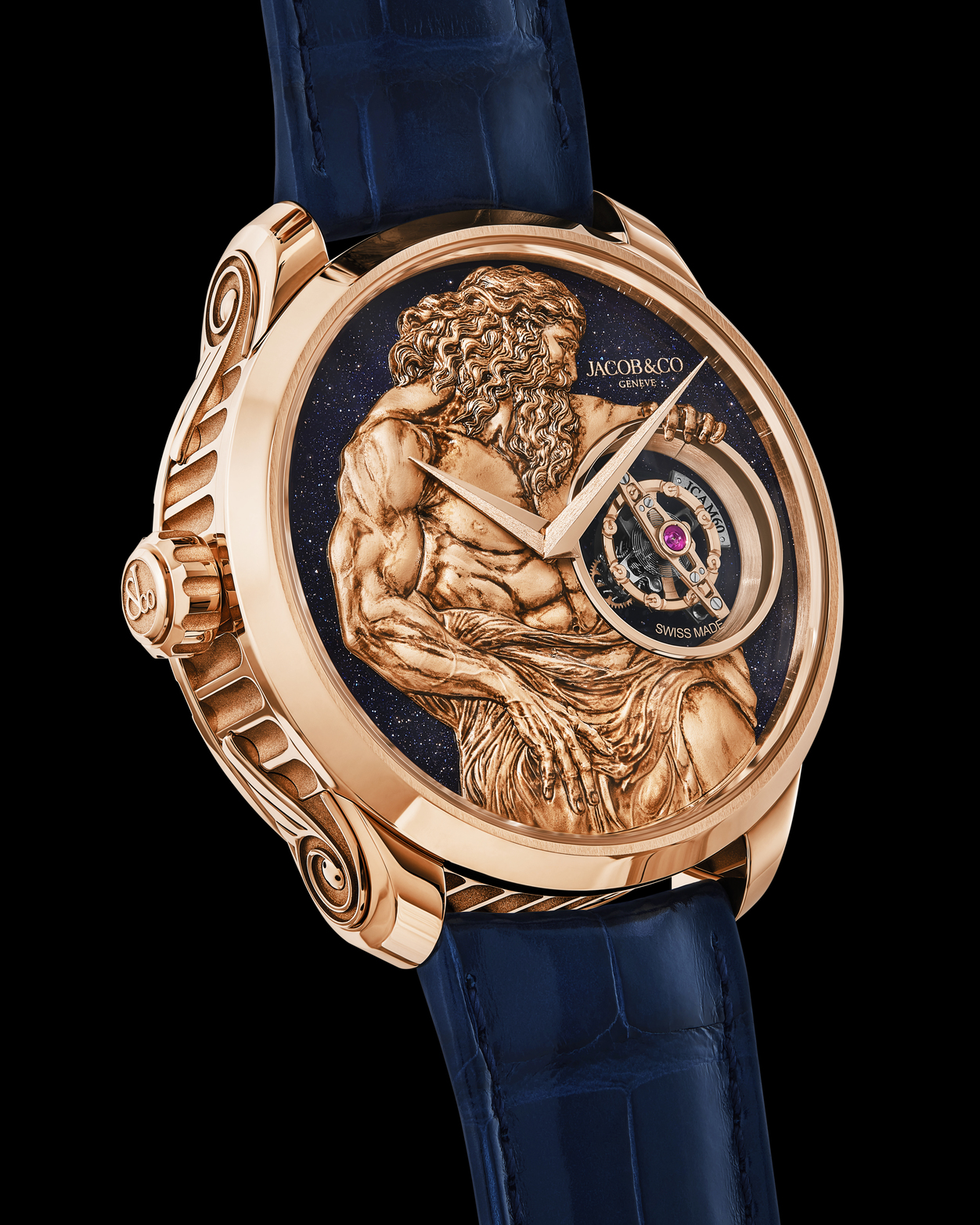
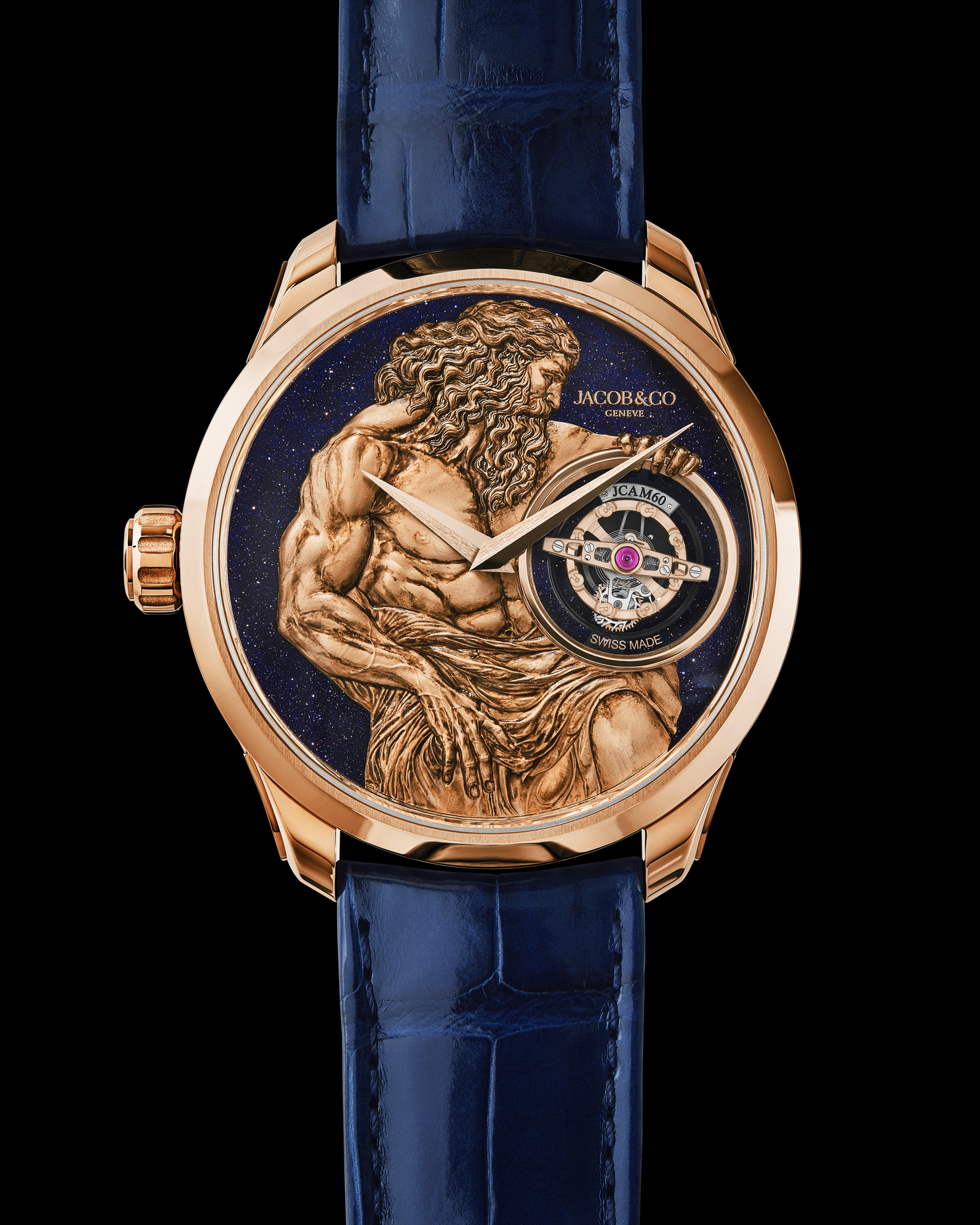
At the centre of God of Time, the tourbillon completes a full rotation every four seconds. The fastest ever achieved. That figure matters, but not because it breaks a record. It matters because of what it demands. At this speed, energy becomes volatile, mass becomes an obstacle, and conventional solutions no longer apply. Stability has to be engineered directly into the mechanism, not added around it.
To achieve this, the movement was developed entirely from scratch. A constant-force system regulates power delivery directly within the tourbillon, maintaining composure despite the unprecedented velocity. Even the weight of the carriage was reconsidered, reduced to just 0.27 grams. Not as an exercise in minimalism, but as a requirement for balance.
What makes God of Time compelling is how this intensity is framed.
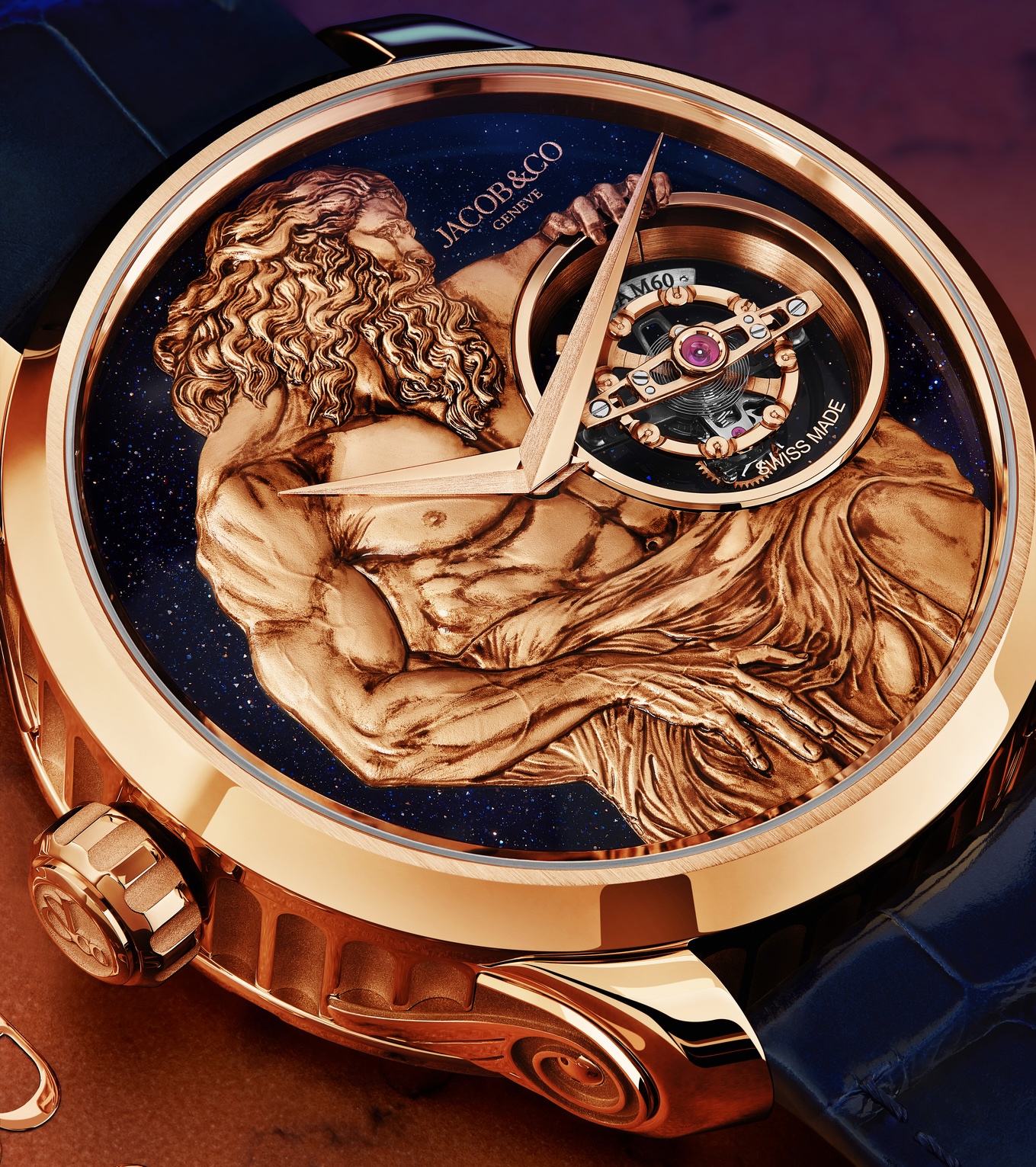
The dial is dominated by the figure of Chronos, the ancient god of time, rendered as a three-dimensional rose gold sculpture. He is not ornamental. He is central, both visually and conceptually. Set against a deep blue aventurine sky, the composition creates a sense of space and distance, reminding the wearer that time here is treated as a force rather than a function.
Chronos does not compete with the mechanism. He watches over it.
The case continues this dialogue between meaning and structure. Inspired by ancient Greek temple architecture, the rose gold form echoes the proportions of an Ionic column. Sculpted lines and ribbed detailing recall stonework designed for permanence. The silhouette is commanding, but carefully balanced. It feels deliberate, not aggressive.
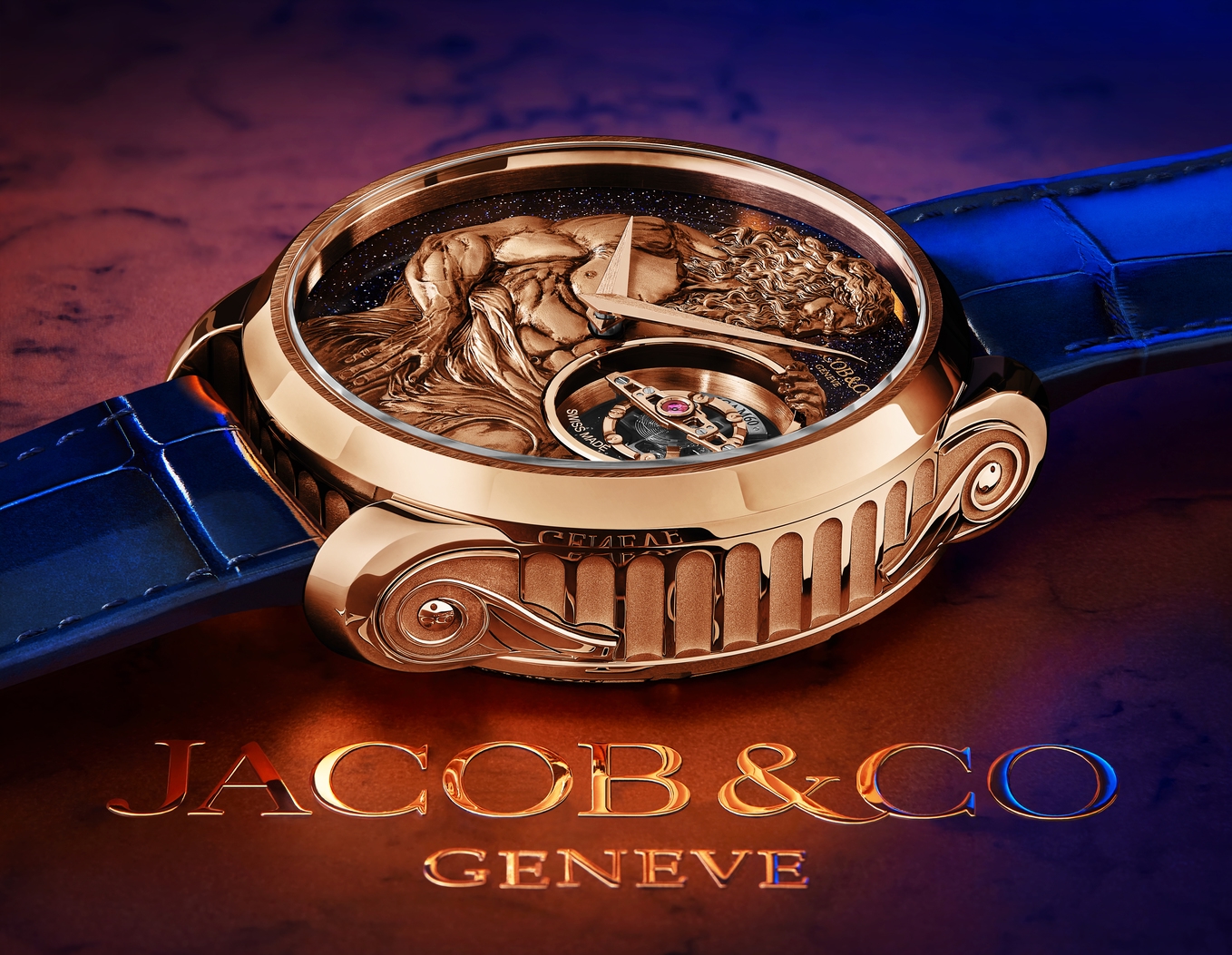
Importantly, the case is not simply a container. It defines the watch’s identity as much as the movement inside it. In God of Time, structure and mechanics exist in partnership. Remove one, and the narrative loses coherence.
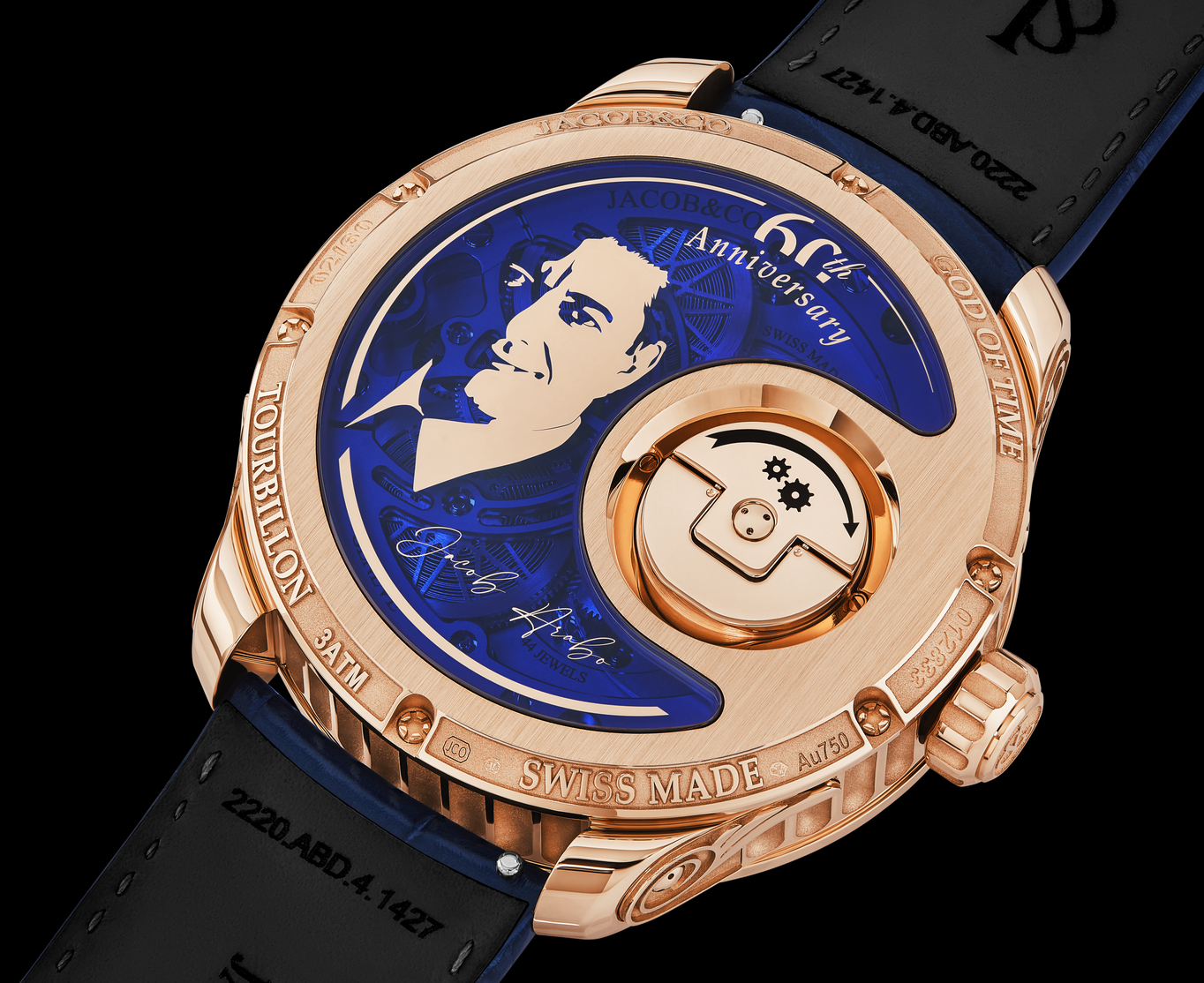
Turn the watch over and the tone becomes more personal. A sapphire crystal reveals the signature of Jacob Arabo, marking the creation of the piece on the occasion of his 60th birthday. It is a quiet gesture, but a meaningful one. A reminder that even at this scale, watchmaking remains human, driven by obsession, curiosity, and conviction.
We were able to experience God of Time firsthand with a unique hands-on preview during Dubai Watch Week, where its sense of balance becomes immediately apparent, not just visually, but emotionally.
God of Time is not about excess for its own sake. It does not chase complexity as spectacle. Instead, it presents a technical record through form, mythology, and restraint. Speed is pushed to its limit, then held there with composure.
It is a watch that treats time not as something to be displayed, but as something to be confronted.
Read more about watches here.