
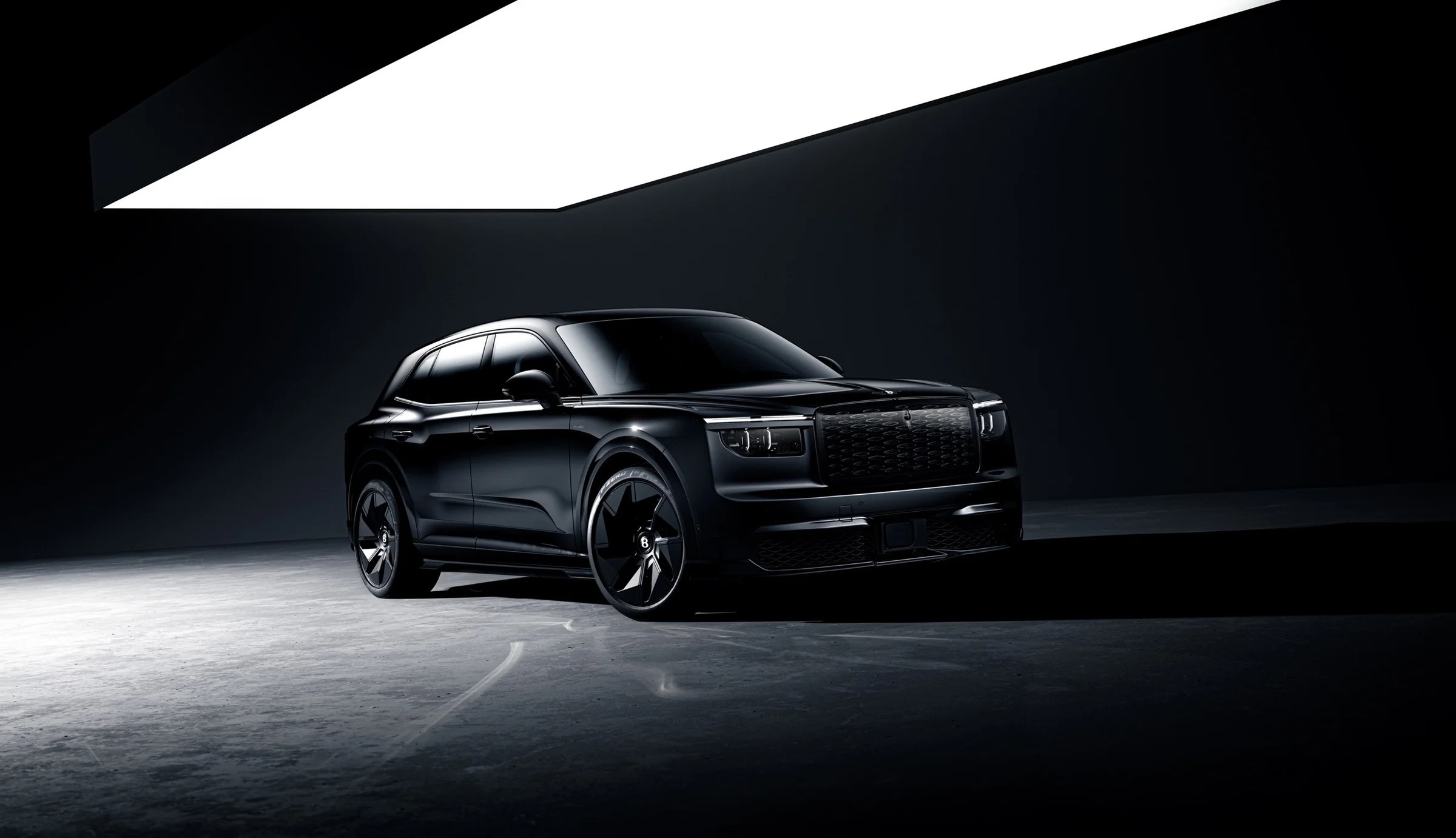
Bentley chose Hiroshi Fujiwara as a Global Brand Ambassador to signal an intentional shift in modern coachbuilding. Fujiwara spent four decades directing the pulse of Tokyo streetwear, beginning with the Ura-Harajuku movement before establishing Fragment Design in 2003. When his creative label FRGMT partnered with Mulliner, the British marque's bespoke division, they directed their attention to the Torcal. The resulting machine limits production to twenty examples worldwide, applying sharp graphic control to Crewe's latest silhouette.
Automotive luxury often defaults to excess ornament when attempting to prove value. Fujiwara approached this project through his long-standing method of calculated reduction, treating the car as a functional canvas where every addition must justify its presence. The Torcal serves as the foundation for this exercise, carrying proportions that welcome deep visual tension.
The External Geometry of the Bentley Torcal
The exterior specification relies entirely on solid Beluga paintwork. By committing to pure gloss black, the body surfaces absorb the surroundings and highlight the car's physical form. Mulliner executed darkened trim elements across the entire exterior, replacing typical bright metalwork with Anthracite Satin accents that sit flush against the body panels.
At each corner, the build features 22-inch Vortex wheels finished in deep black. The dark finish gives the large wheels a grounded stance, pulling the eyes directly to the mechanical architecture beneath the arches. Fujiwara placed minimal FRGMT branding on the fender and rear fascia, applying subtle emblems that mark the project as a collector piece.
Fujiwara's design sensibilities took root in New York City's hip-hop culture during the 1980s before he returned to Japan to shape Tokyo's musical and fashion identity. Across four decades, his collaborations have succeeded because he preserves the integrity of his partners while leaving a definitive cultural signature. His work on the Torcal follows that exact philosophy, allowing Mulliner's sheet metal to speak through clear, monochromatic planes.