
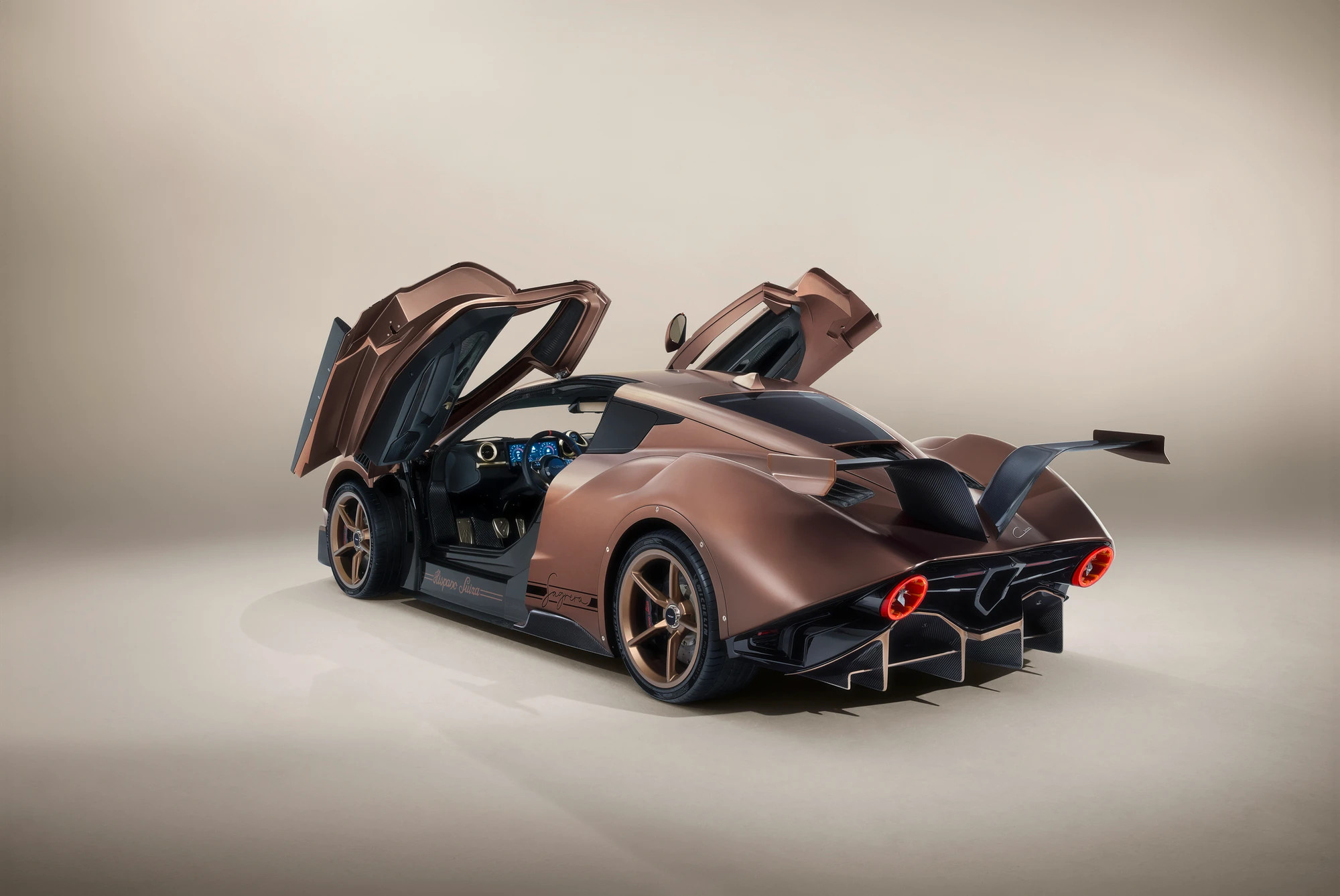
The software inside the Hispano Suiza Carmen Sagrera processes over 200 million instructions per second. It analyzes the steering wheel's position, the yaw angle of the chassis, damper travel, and acceleration across three axes in real time. This constant stream of data is not used to add more functions or fill more screens. It is used to make the technology disappear.
For Hispano Suiza, the goal is a different kind of automotive technology. One that remains in the background, at the service of the driver, enhancing the connection between the person and the machine. This philosophy is embodied in the Carmen Sagrera, the third hypercar in the Carmen range. It is a fully electric vehicle that produces 820 kW, or 1,115 horsepower, and 1,160 Nm of torque. It moves from 0 to 100 km/h in 2.6 seconds.
Empowering the Driver
The car's performance is managed by a proprietary system called Hispano Suiza Driver Dynamics, or HSDD. This is the central brain that coordinates stability, torque management, power distribution, and the vehicle’s driving modes. It integrates a suite of functions, including the Grip Enhancement System for traction and an Active Yaw Modulation system for stability control.
HSDD also includes an Electronic Torque Stabiliser, which manages energy regeneration from braking. It can apply negative torque to the rear wheels independently to improve stability and help extend the car’s range. A thermal management layer oversees the motors and battery to balance performance during use.