
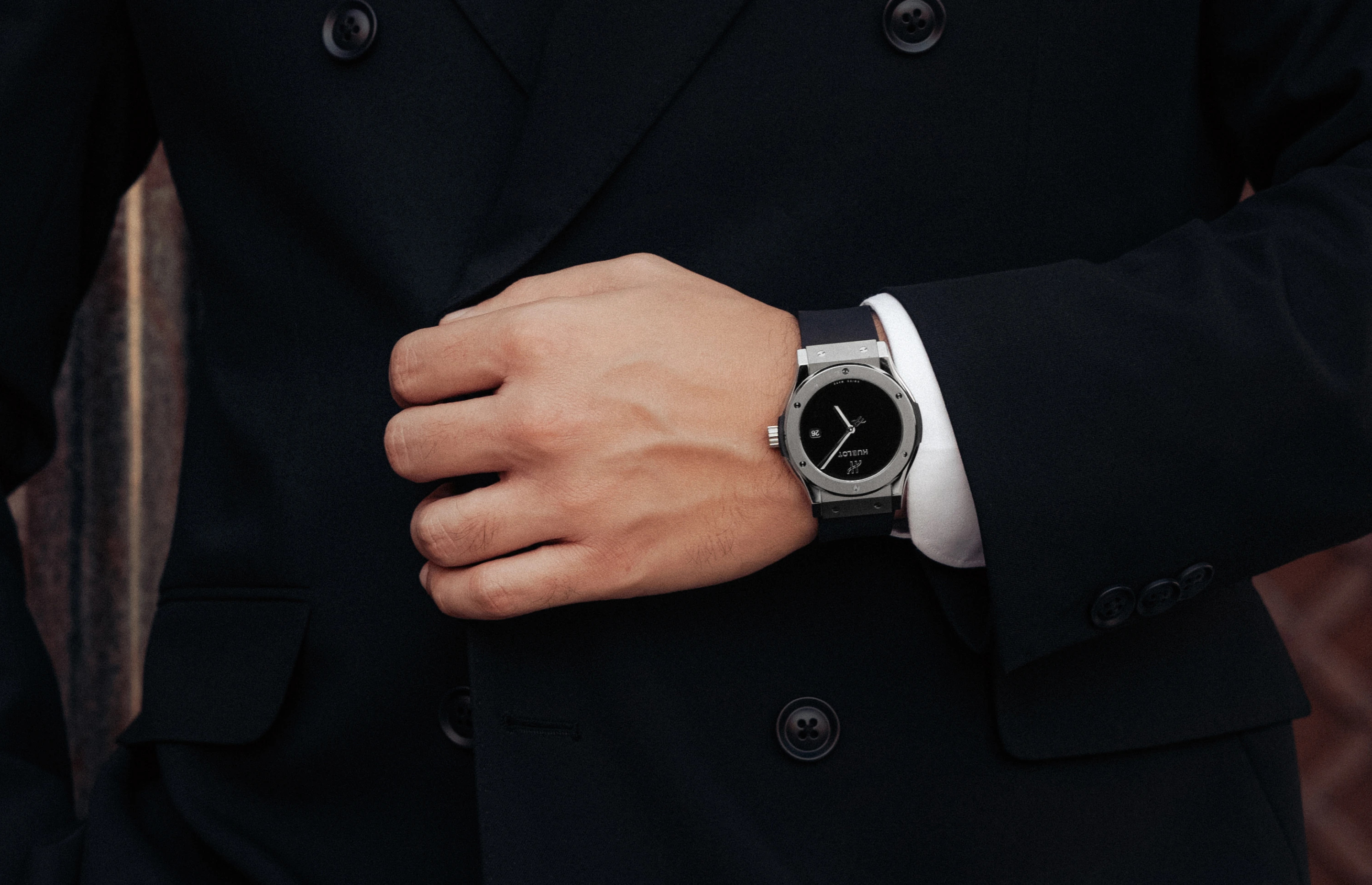
In 1980, at the Basel Fair, Carlo Crocco presented a watch under the name MDM Genève. It had a gold case on a black rubber strap, which fine watchmaking at the time considered unthinkable. Twelve screws held the bezel like a ship’s porthole, and the dial carried almost nothing. He called the watch Hublot, and the brand that grew from it still builds on that one decision.
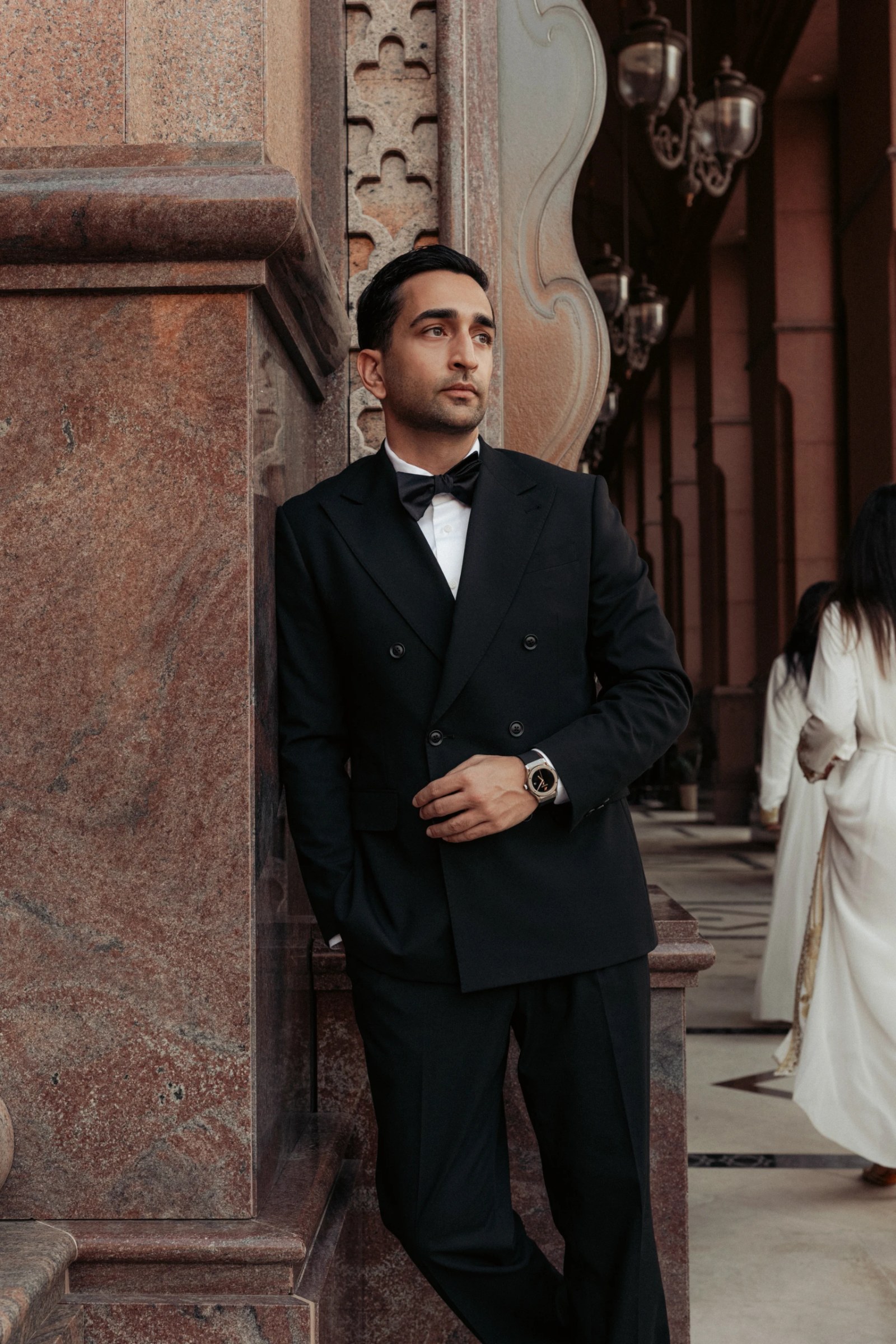
Forty-six years later, the Classic Fusion Original Titanium is one of the clearest places to see that decision today. Its reference, 542.NX.1270.RX.MDM, ends in three letters that lead straight back to the signature on the very first Hublot.
The Quiet Version Of A Loud Idea
Gold and rubber made the original a statement of contrast. Replace the gold with satin-finished and polished titanium and the contrast changes character. A clash of materials turns into a study in tone: grey metal, black lacquer, black rubber. Hublot works only in grade 5 titanium, the strongest grade of the metal, which keeps a slightly bluish sheen once polished. On the wrist, that sheen catches the light on the polished surfaces and the satin finishes stay calm, a role gold once played.
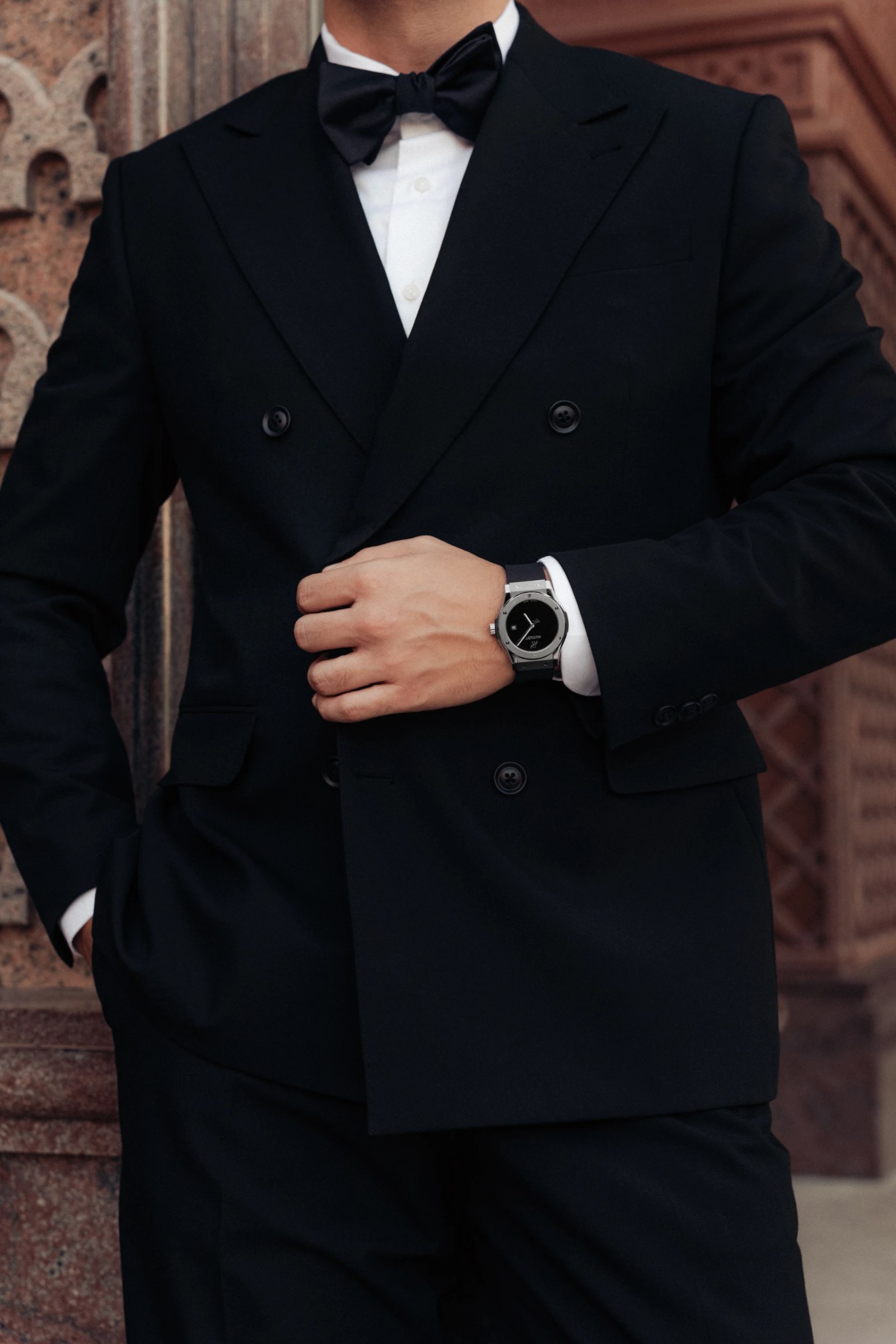
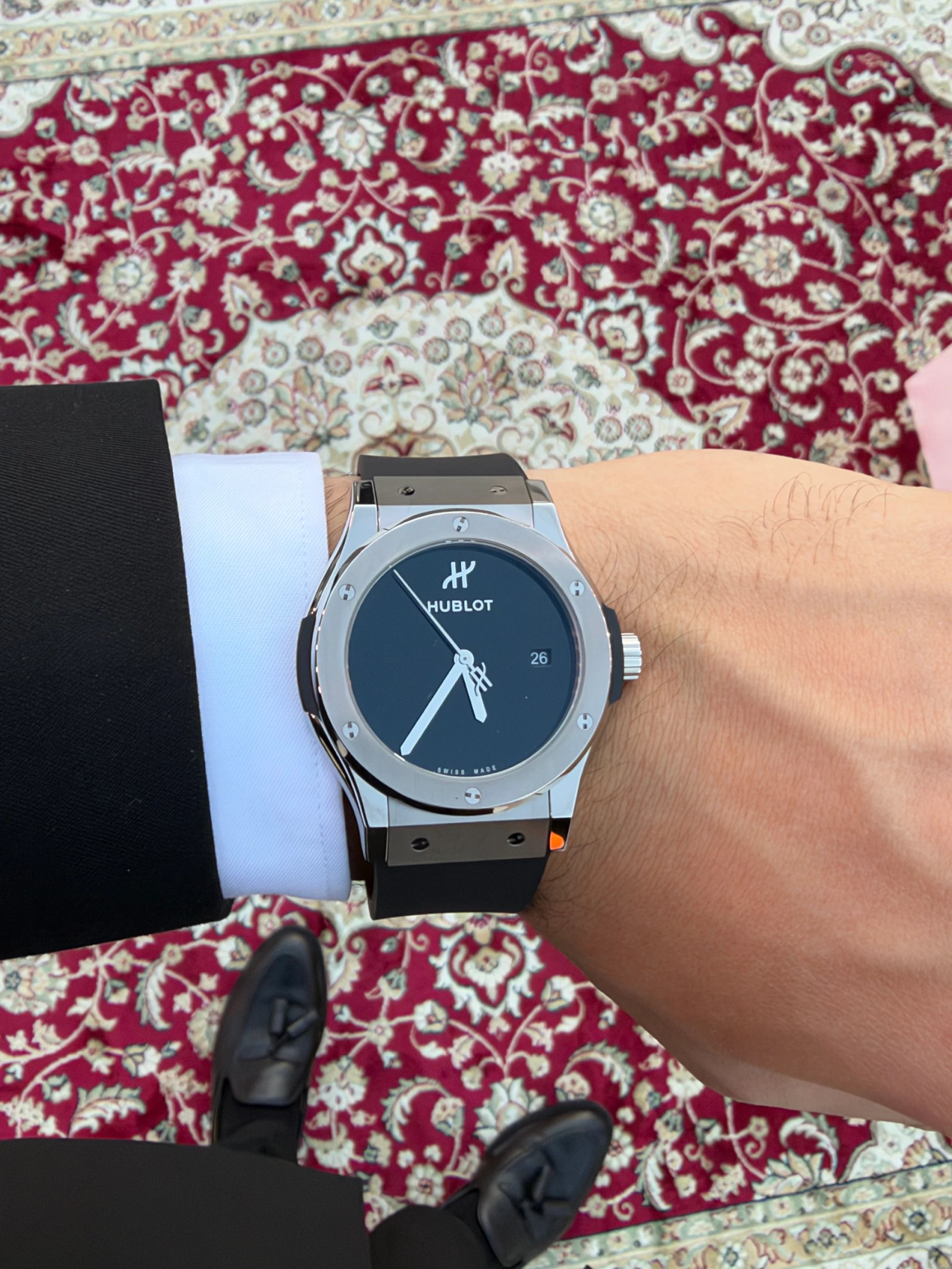
Without gold to do the talking, the design has to stand on its architecture alone, and it does. The porthole bezel, the exposed screws, the rubber strap and a polished black lacquered dial without indices all read as Hublot from across a room. A design language proves itself when you can take away the material story and people still recognise it instantly.
Function Over Ornament
Very little happens on the dial, and that makes it the boldest part of the watch. It has no indices and no numerals, only hands over deep black lacquer. The reduction to essentials that defined the 1980 watch survives intact.
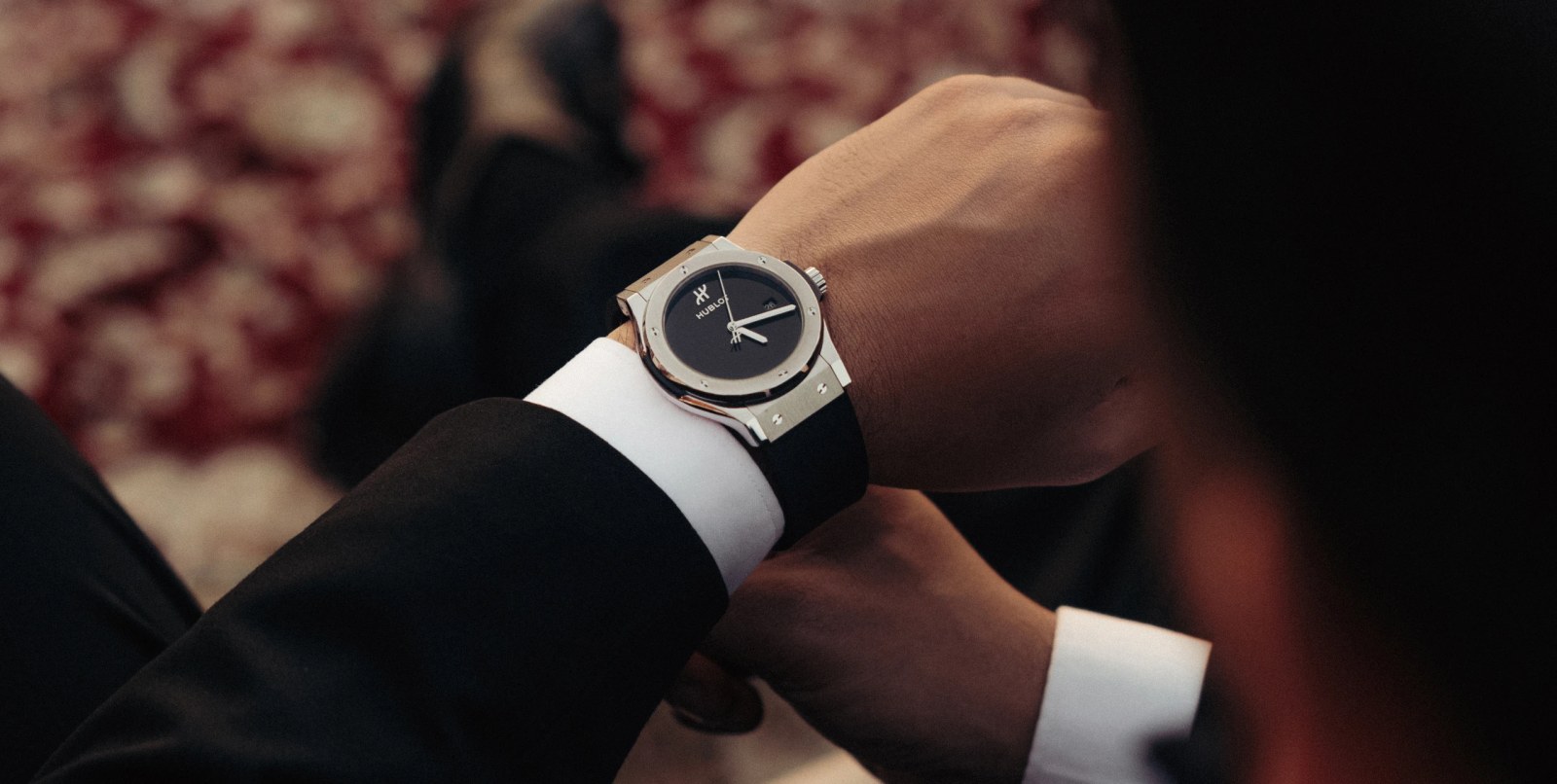
The inside has moved further than the original ever could. The first Hublot ran on quartz, while the Original Titanium uses the self-winding HUB1110 movement with a power reserve of approximately 48 hours. It sits behind sapphire with anti-reflective treatment, is water resistant to 50 metres and closes on a titanium and black-plated titanium deployant buckle. At 42 mm it is sized for today’s wrist, while the first watch measured 36 mm. For something closer to the original proportions, Hublot also makes the Original Titanium in 38 and 33 mm.
Why The Origin Still Matters
In October, Hublot unveiled the Classic Fusion Tributo in yellow or white gold, its most literal return to 1980 so far. CEO Julien Tornare described respecting the brand’s origins as honouring them “not by freezing it in time, but by keeping it in motion.” The Tributo is the archival statement. The Original Titanium is the founding idea in a form you can wear every day, without ceremony.
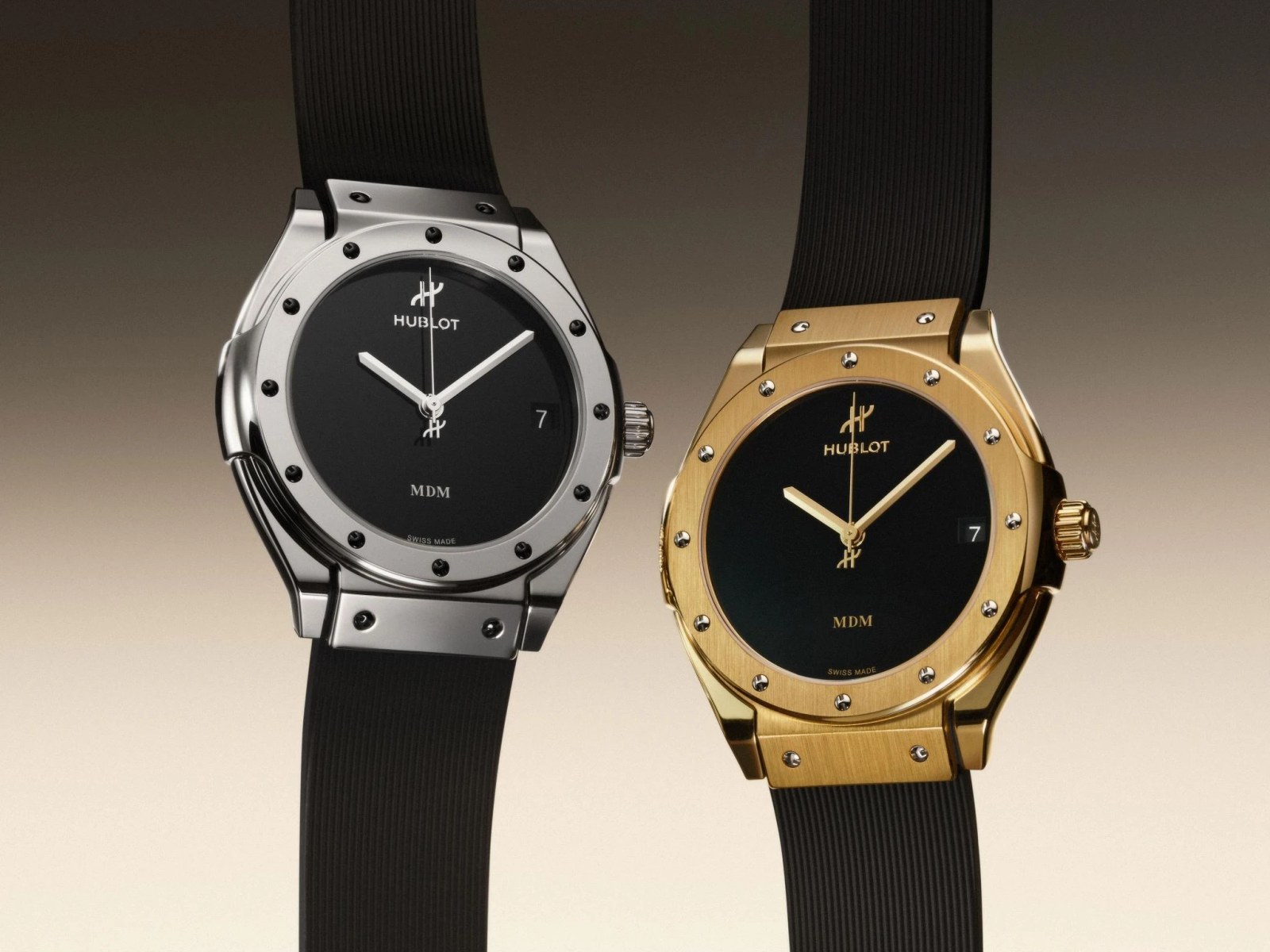
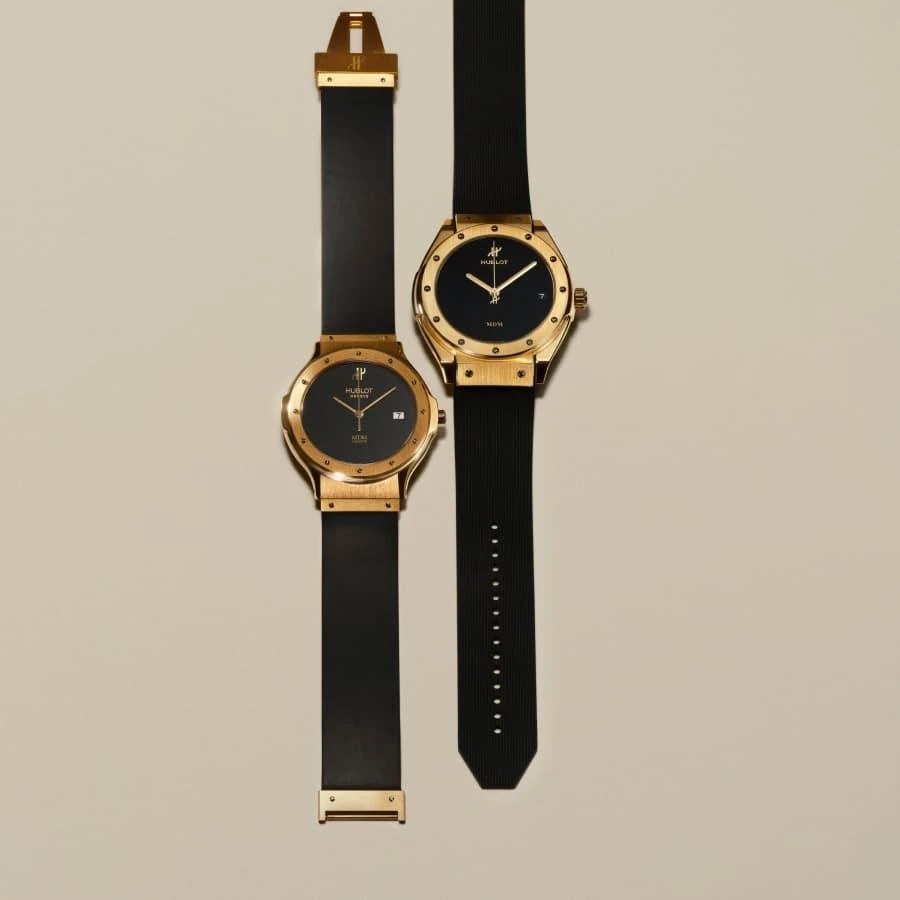
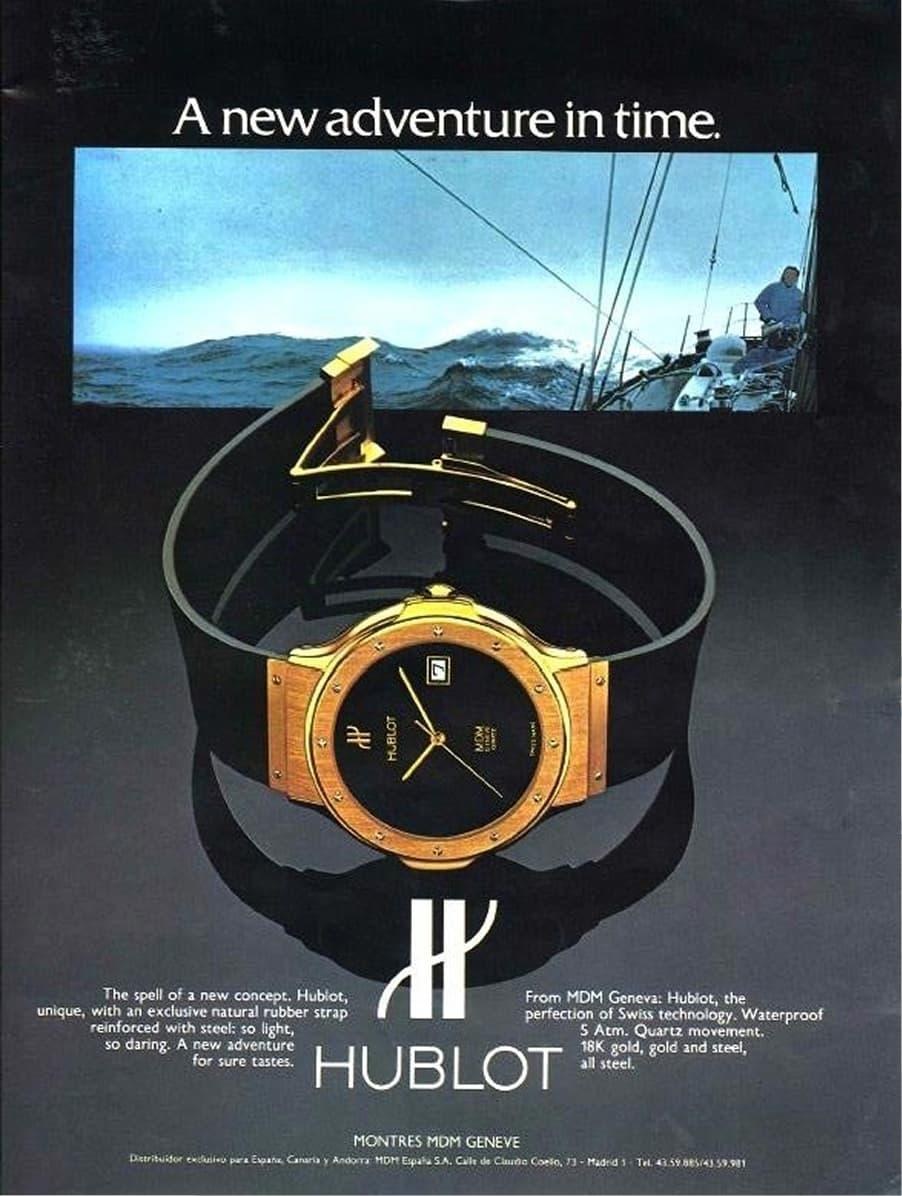
Few houses can point to one object as the source of their entire identity. Hublot can, and it keeps that object in production in more than one form. An origin story is worth most when people can still wear it, not when it only comes out for anniversaries.
In 1980 the provocation was rubber on gold. In titanium, it is how little the watch needs.