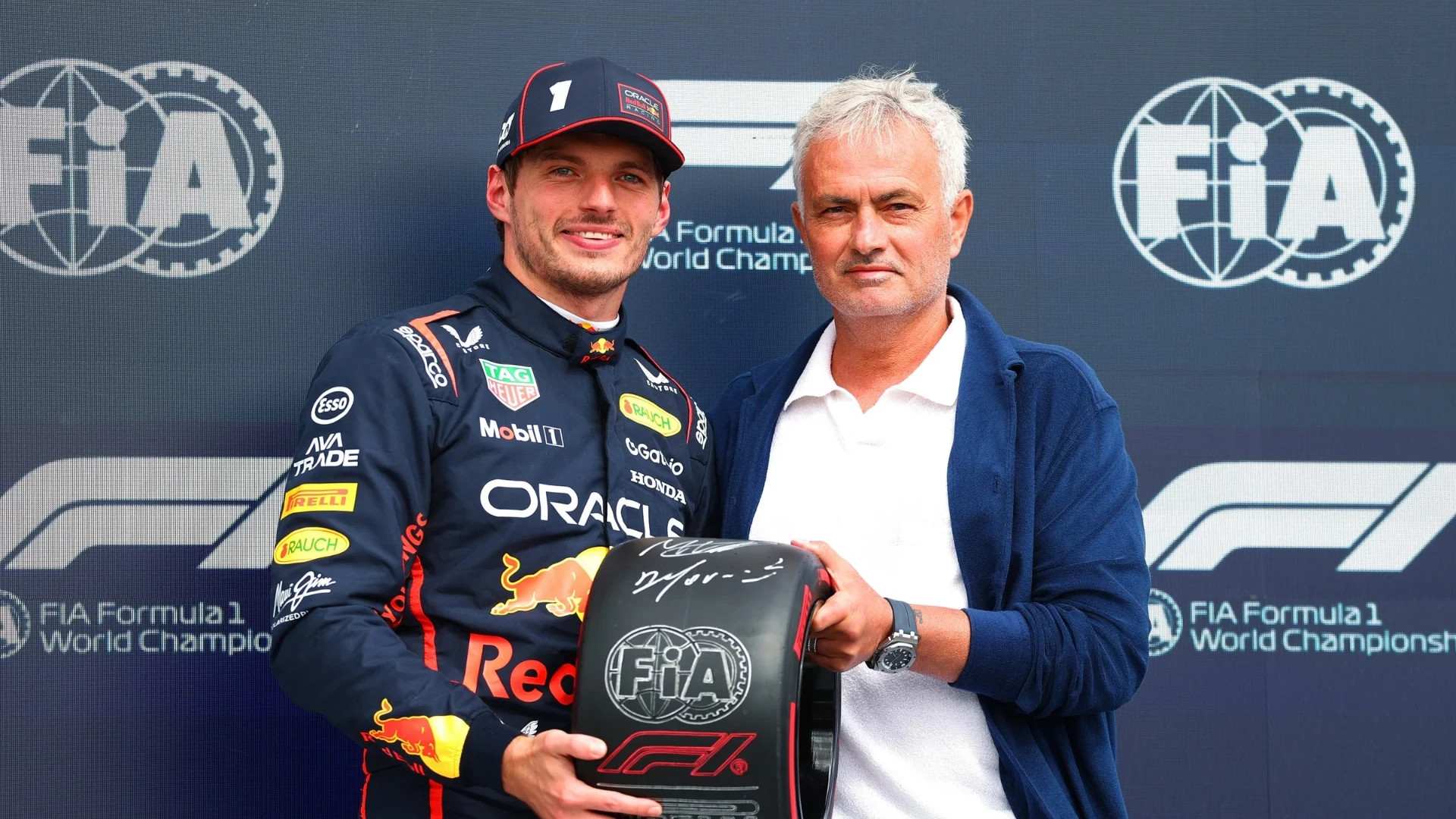
For José Mourinho, the new Madring circuit was not just a destination. It was part of his daily commute. The Real Madrid manager watched the hybrid track take shape each day on his way to the club’s nearby training ground, a constant reminder of the Spanish Grand Prix arriving on his doorstep.
His visit to the race, then, carried a different weight. Mourinho is a long-time fan of Formula 1 and a familiar face in the paddock, with previous appearances at events like the British Grand Prix. Yet this was the first race at a track he had seen grow from the ground up, a collision of his professional world and his personal passion.
The weekend schedule was a portrait of a life lived at the peak of competitive sport. On Saturday, Mourinho led Real Madrid to a 4-1 victory, with goals from stars like Kylian Mbappé and Jude Bellingham. Twelve hours later, he was on the grid. It was here, moving between two arenas of immense pressure, that he found his most telling observation.
An Education in Pressure
Mourinho, a man who has managed giants like Chelsea, Inter Milan, and Manchester United, sees a fundamental difference in how the two sports handle their most critical moments. He believes football has something to learn from the culture of Formula 1.
He notes that F1 drivers operate with a certain openness. In the build-up to a race, they are accessible. They meet people, handle media, and engage with their surroundings. Mourinho contrasts this with football’s tendency to create a protective bubble. “We close each other off, I believe, too much, also because of tradition,” he explained.
The ability to transition from a relaxed state to one of intense focus is what he finds compelling. “I think we have to learn with them, the way they can be relaxed, and half an hour later they can be in the car fighting for their lives, because they take risks.” For a manager with more than 25 major trophies, it is a significant insight into the psychology of performance.