When most brands talk about the future of mobility, the conversation usually revolves around electrification, autonomy, or new design languages built around familiar platforms. With Kawasaki Heavy Industries, the future looks very different. Enter Corleo Concept 01 – a bold, almost science-fiction vision that challenges the idea that personal transportation even needs wheels at all.
Unveiled as part of Kawasaki’s forward-looking concepts for EXPO 2025 in Osaka, Corleo Concept 01 is a rideable, four-legged robotic vehicle designed to traverse terrain where traditional vehicles struggle. Instead of tires and suspension, Corleo moves using independently controlled mechanical legs, each ending in rubberized “hooves” engineered for grip on grass, rocks, sand, and uneven ground. The result is a machine that feels closer to riding an animal than operating a conventional vehicle.
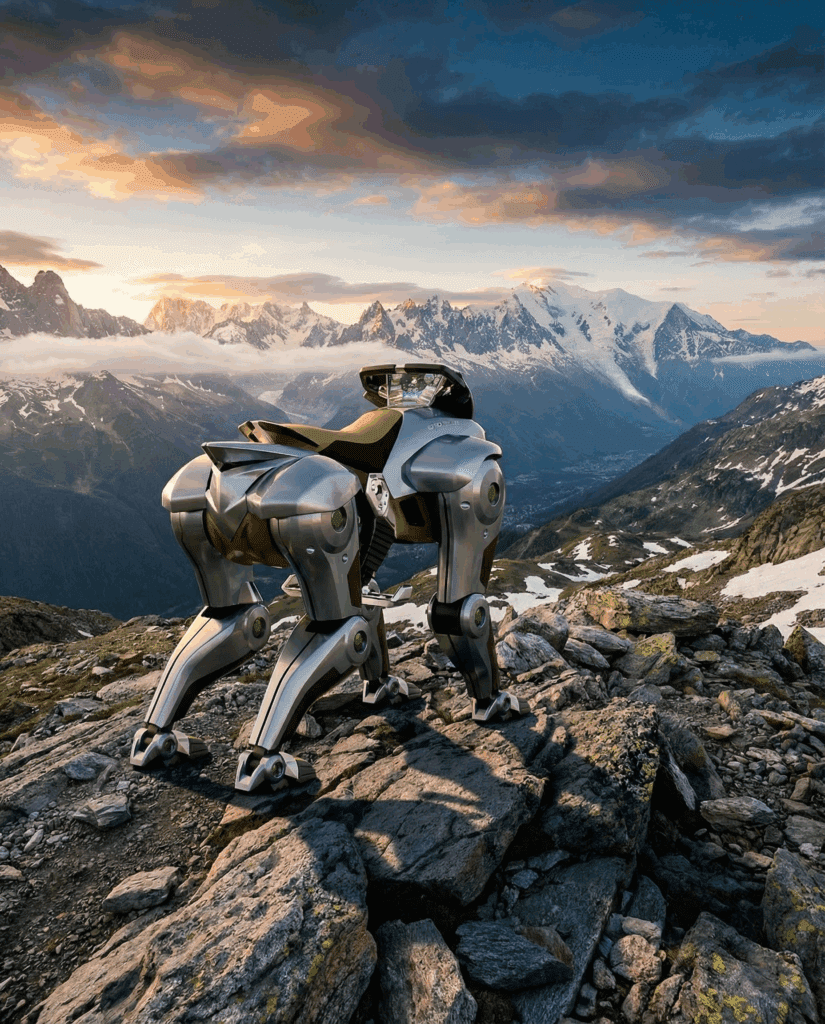
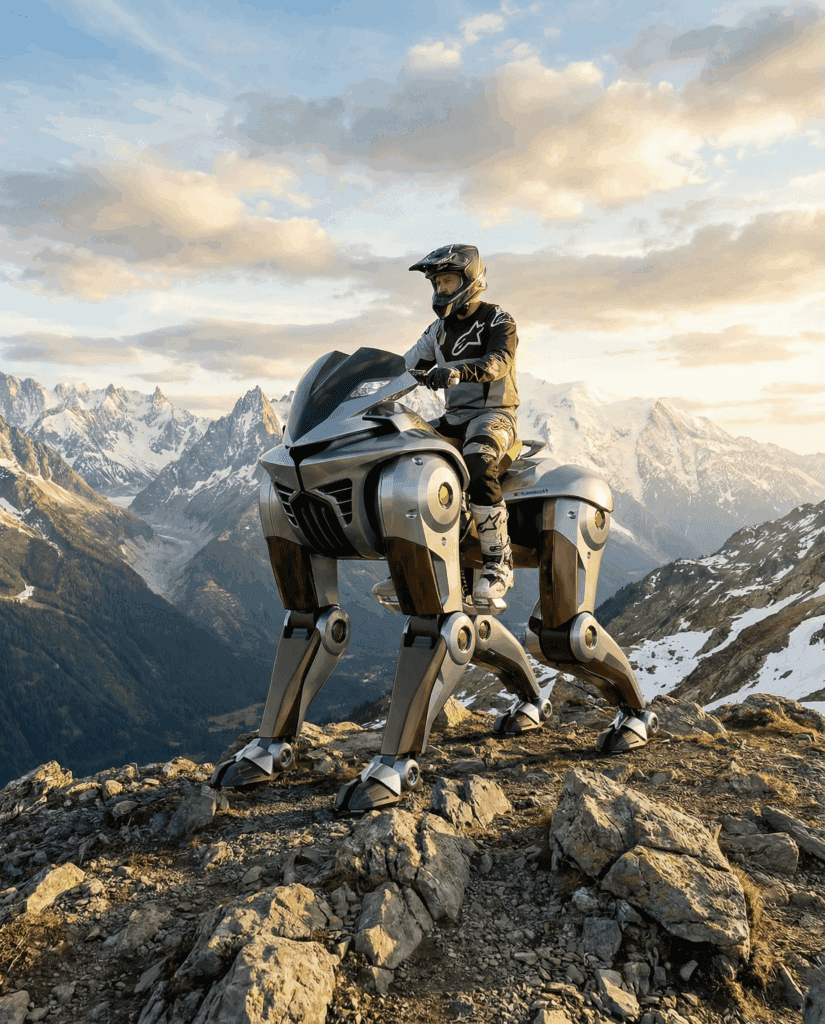
What makes Corleo especially intriguing is how it’s designed to interact with the rider. Rather than relying solely on handlebars or complex controls, the concept responds to shifts in body weight and posture. Lean forward and it advances. Shift your balance and it adjusts its stride accordingly. It’s an approach that feels instinctive, echoing the physical connection riders already associate with motorcycles, horses, or boardsports.
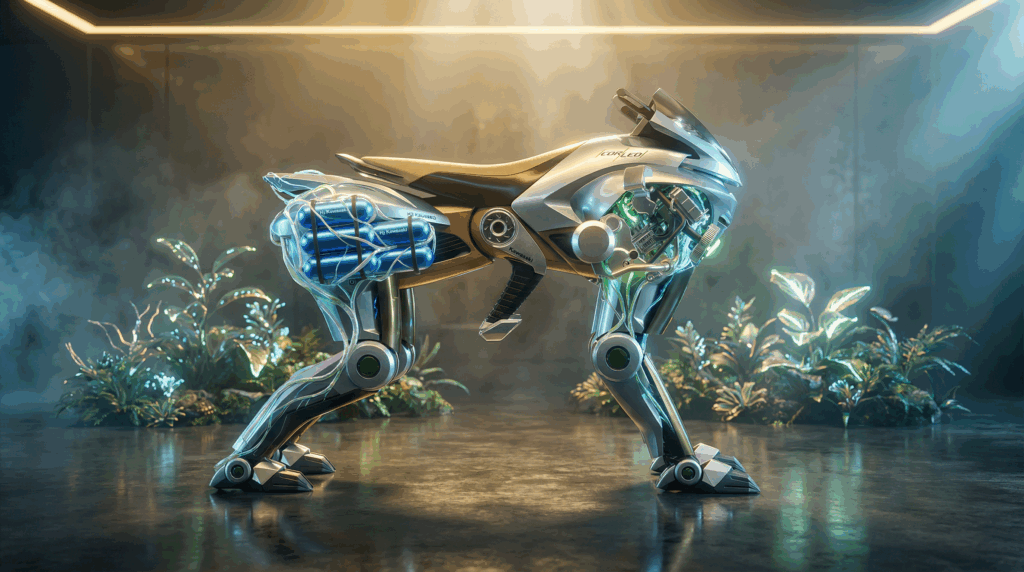
Powering this futuristic mobility concept is a hydrogen-based energy system, reinforcing Kawasaki’s long-term commitment to alternative fuels beyond batteries alone. While Corleo is not a production-ready vehicle, its hydrogen focus highlights a future where clean energy and advanced robotics coexist in personal transportation, particularly in environments where infrastructure is limited or nonexistent.
Visually, Corleo Concept 01 sits at the intersection of industrial design and speculative engineering. Muscular, angular surfaces reference Kawasaki’s motorcycling heritage, while exposed mechanical elements proudly showcase its robotic nature. It’s unapologetically conceptual, yet grounded in real engineering logic rather than pure fantasy.
For Kawasaki, Corleo isn’t about replacing motorcycles or creating a novelty machine. It’s about exploring what mobility could become in landscapes that resist conventional solutions – from disaster zones and mountainous terrain to future cities designed with sustainability and adaptability in mind. The company has hinted that technologies developed for Corleo could influence real-world applications in the 2030s, even if the concept itself never reaches mass production.
In an era where many concept vehicles feel like incremental design exercises, Kawasaki Corleo Concept 01 stands out as a genuine rethink. It doesn’t ask how we can improve what already exists, but whether the foundations themselves should change. And that, perhaps, is what makes it one of the most compelling visions of future mobility today.
More about lifestyle here
