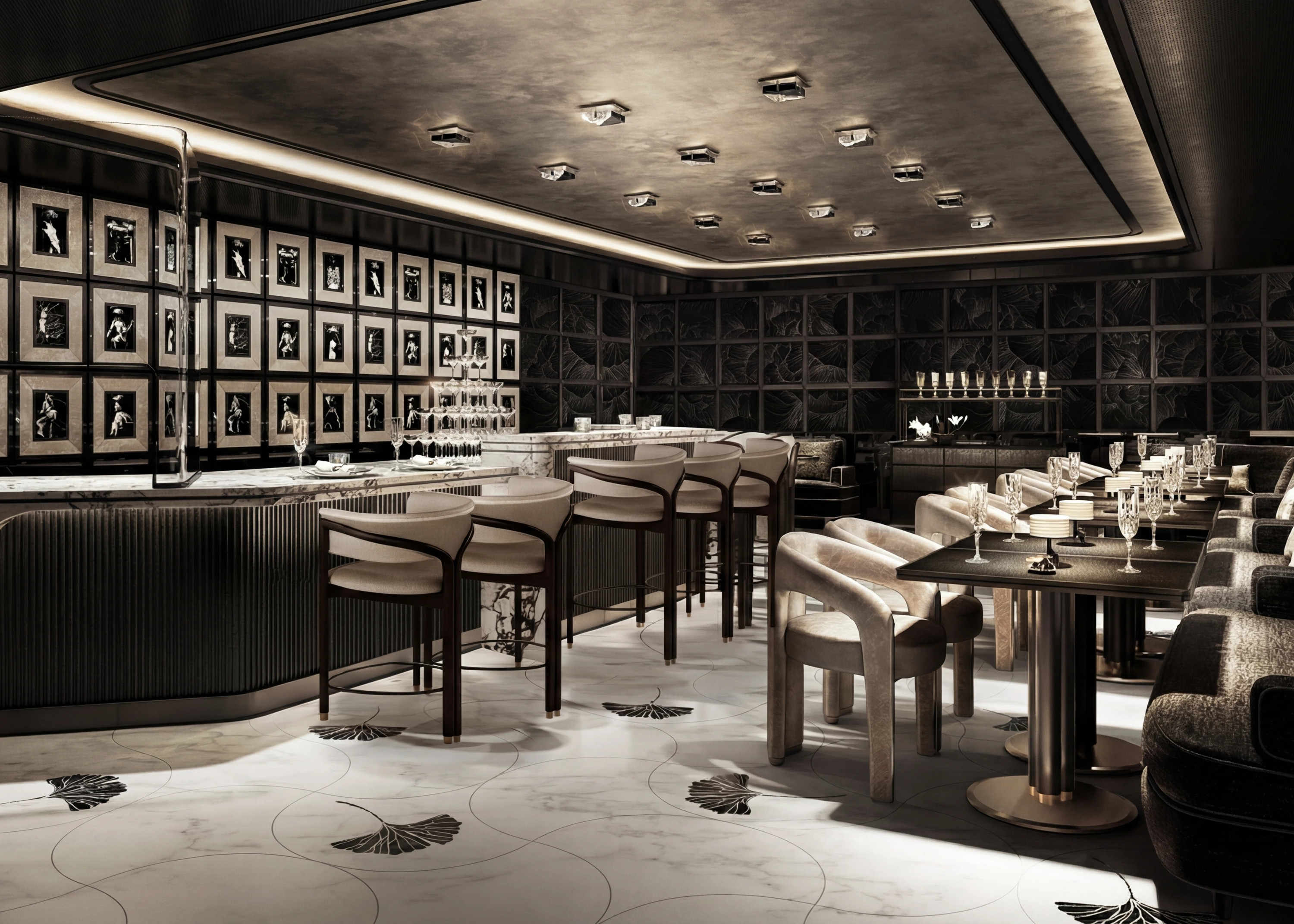
The return of the Mandarin Oriental The Landmark on June 1st marks a significant moment for Hong Kong. It is more than a reopening. It signals a shift in how a hotel can relate to its city, moving from a place of transit to one of residence.
The experience now starts on Queen’s Road Central. A new entrance ushers you away from the city’s pulse into a space designed by interior architect Joyce Wang. The transition is intentional, meant to feel like arriving at a grand private home rather than a hotel lobby.
Wang’s design draws on the architectural memory of Hong Kong’s historic mansions. The warm terracotta and deep green tones are direct references to properties like Yu Yuen and Tai Fu Tai, where Qing Dynasty forms met Western sensibilities. A curved stone staircase ascends through the foyer, its alcoves displaying artworks that reflect the city's skyline.
A Residential Point of View
This residential narrative extends into the 109 refreshed rooms and suites. The goal was clearly to create urban sanctuaries. Lightened timber floors, patinated walls, and silk wall coverings from Fromental create a layered, textural environment.
The L450 rooms, starting at 42 square metres, feel generous. In the L600 rooms and above, the hotel’s signature seven-foot round bathtub remains, enclosed within a curved glass wall that has become a defining feature.
The 167-square-metre Entertainment Suite is the fullest expression of this idea. It’s a complete residence, with a Gaggenau kitchen, dining for eight, and a master bedroom featuring a climate-controlled FreshBed sleep system.