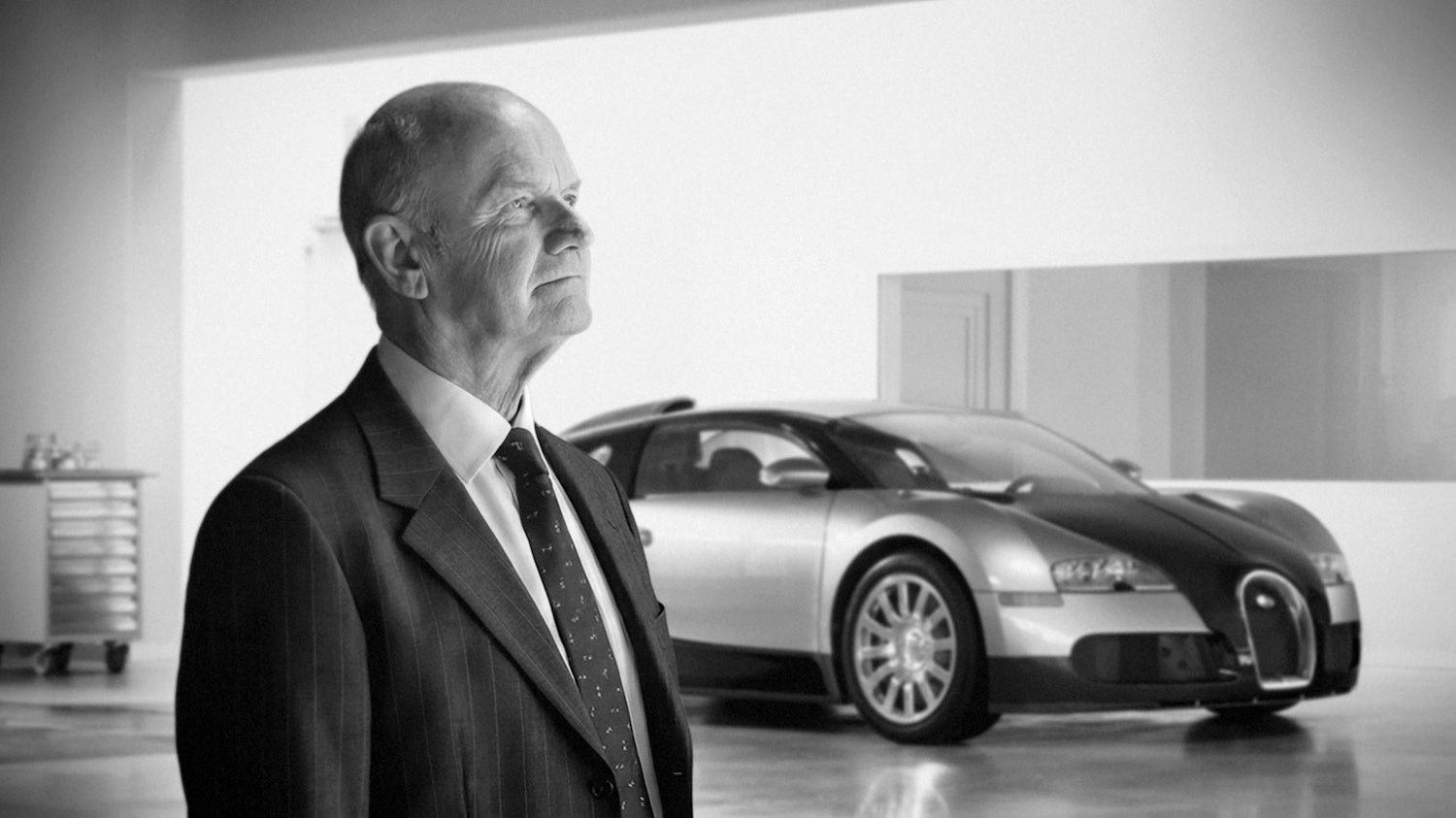
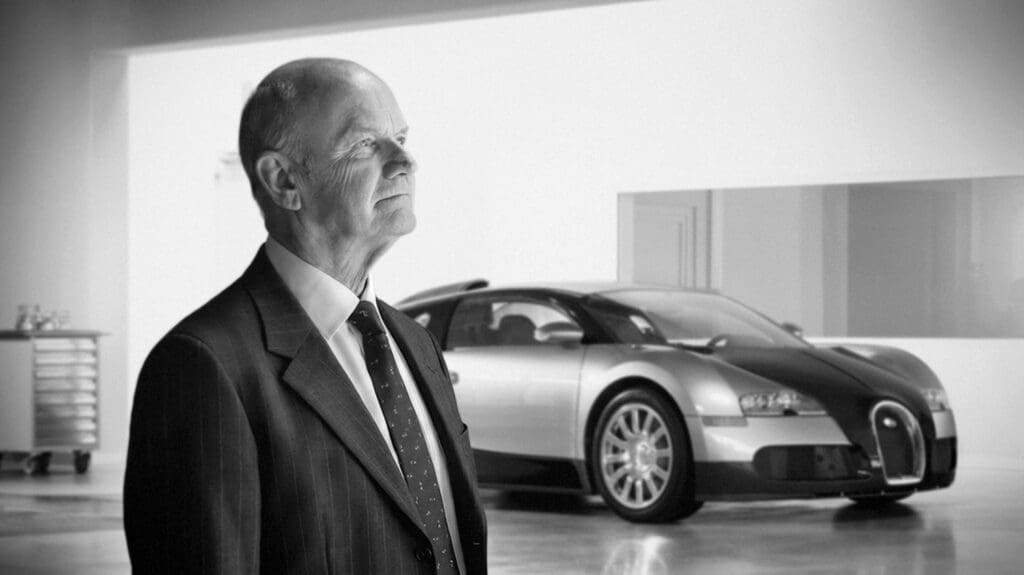
There is something fitting about a hypercar that begins its life at speed. Not on a racetrack, but aboard a Japanese bullet train, where Ferdinand Piëch sketched an idea while the landscape dissolved into motion.
The drawing was not dramatic. It did not need to be. Piëch was solving a problem only he was willing to define. How to create unprecedented power without losing order, balance, or civility. The answer became the W engine, a configuration folded inward with intent.
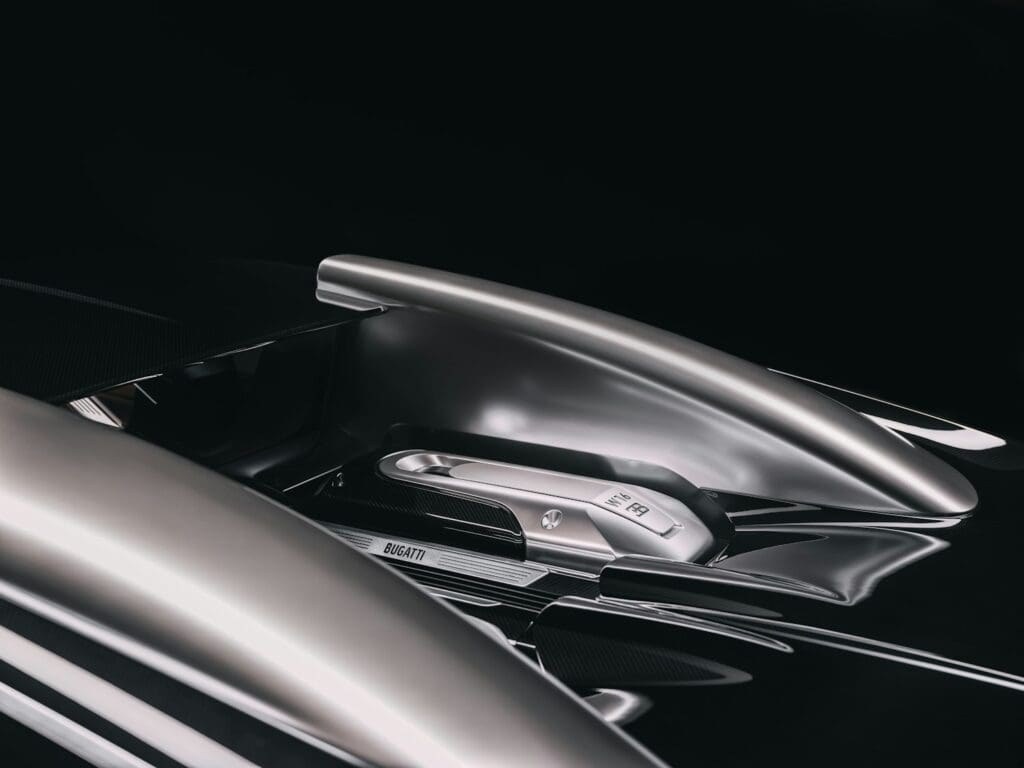
By staggering cylinders into a short, wide architecture, Bugatti’s engineers compressed enormity into control. The W16 was not an indulgence. It was a packaging exercise taken to its logical extreme. Shorter than expectation, heavier with purpose, and disciplined enough to allow a compact wheelbase and real composure on the road.
This mechanical clarity shaped everything that followed. The Veyron was devastating, yes, but never unruly. All-wheel drive, careful weight distribution, and a refusal to chase drama made it something new. A car that could cross continents calmly, then reset what speed meant, without changing its tone.
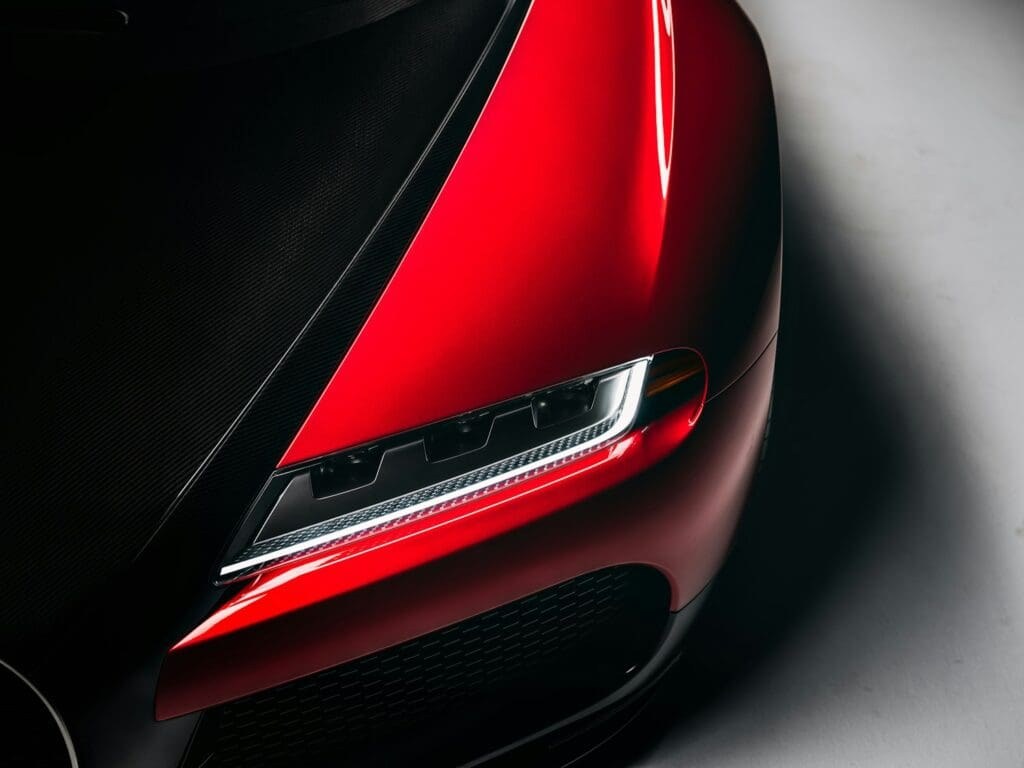
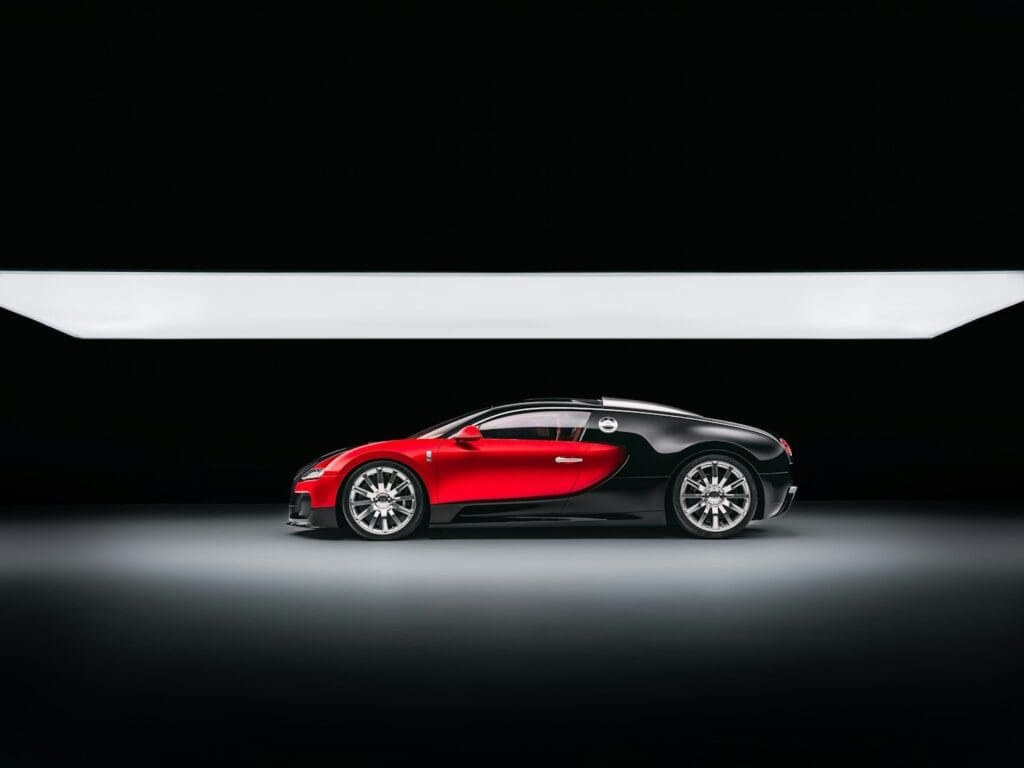
When the Veyron appeared in Tokyo in 1999, its design carried the same restraint. While the world was still fixated on sharp wedges and visual aggression, the Veyron leaned back. It appeared settled, almost relaxed. Power expressed through proportion rather than posture.
That confidence has aged with rare grace. Two decades later, the original form still feels current because it was never designed to impress quickly. It was designed to endure.
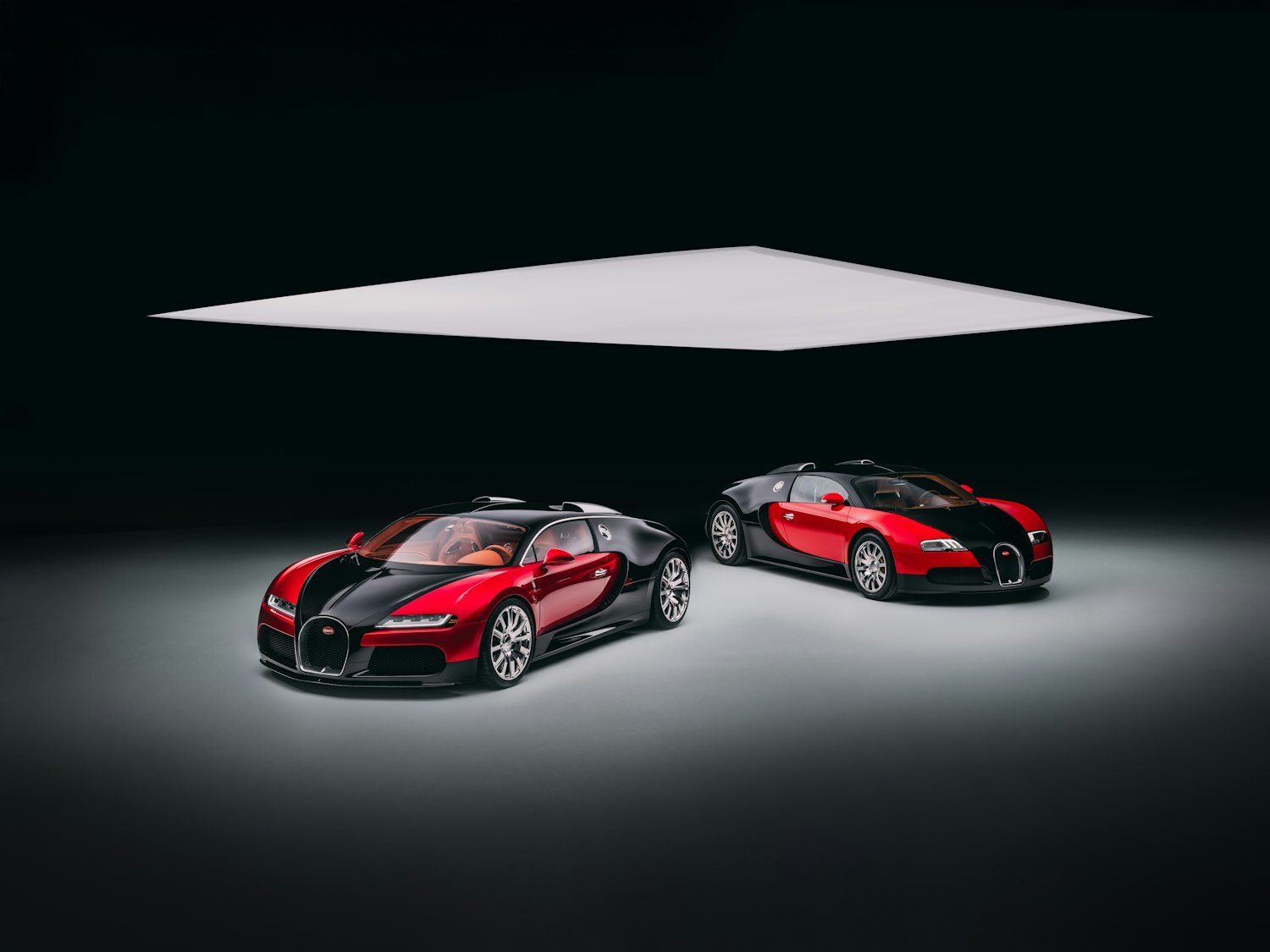
The F.K.P. Hommage understands this lineage. Rather than reinterpret the Veyron, it completes it. Built on the most advanced evolution of the W16, it carries the 1,600 horsepower specification developed for the Chiron Super Sport, the car that finally realized Piëch’s vision of speed without compromise.
This is the W16 at its most resolved. Turbochargers enlarged, cooling systems refined, the gearbox reinforced not for spectacle but for longevity. Every development is the result of use, learning, and consequence accumulated over twenty years.
The exterior evolves with similar restraint. The horseshoe grille gains depth and continuity, machined from solid aluminum and integrated more fluidly into the body. Panel lines and color divisions now align with greater precision, restoring visual calm. Air intakes expand only where function requires it.
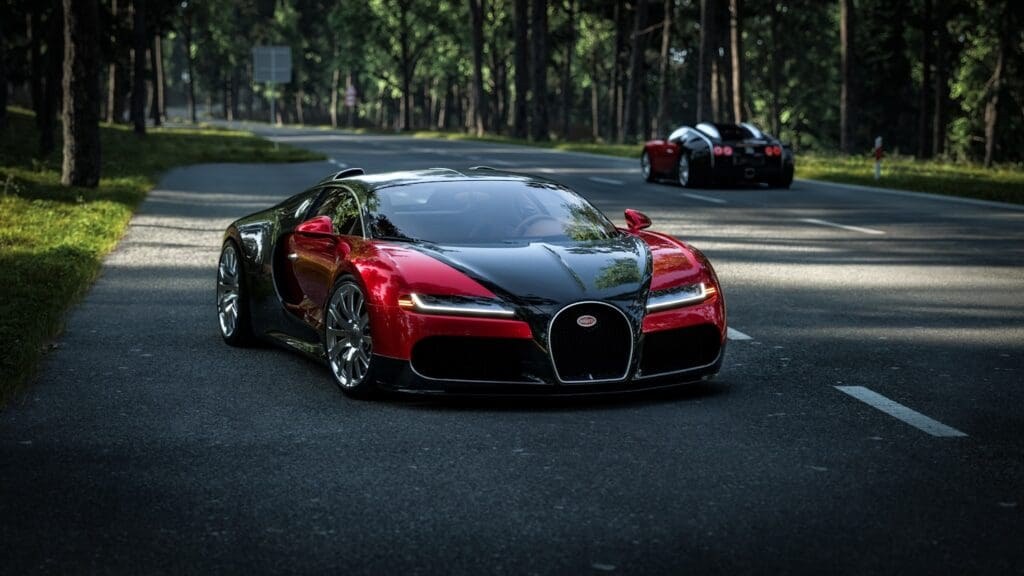
Even the paint speaks softly. A layered red finish reveals silver beneath, creating depth that changes with movement rather than light alone. Exposed carbon fiber is tinted, not painted, its texture visible, its presence intentional.
Inside, the shift is more pronounced. The interior departs from recent W16 cars and looks back to the Veyron’s original logic. A circular steering wheel returns, Bauhaus in spirit. Aluminum dominates, machined rather than shaped, cool and honest to the touch.
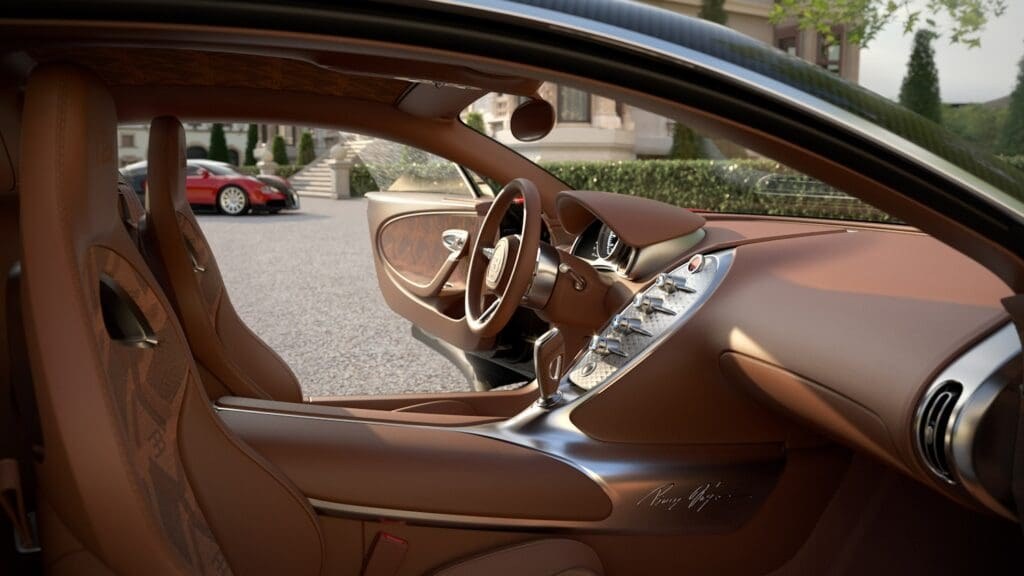
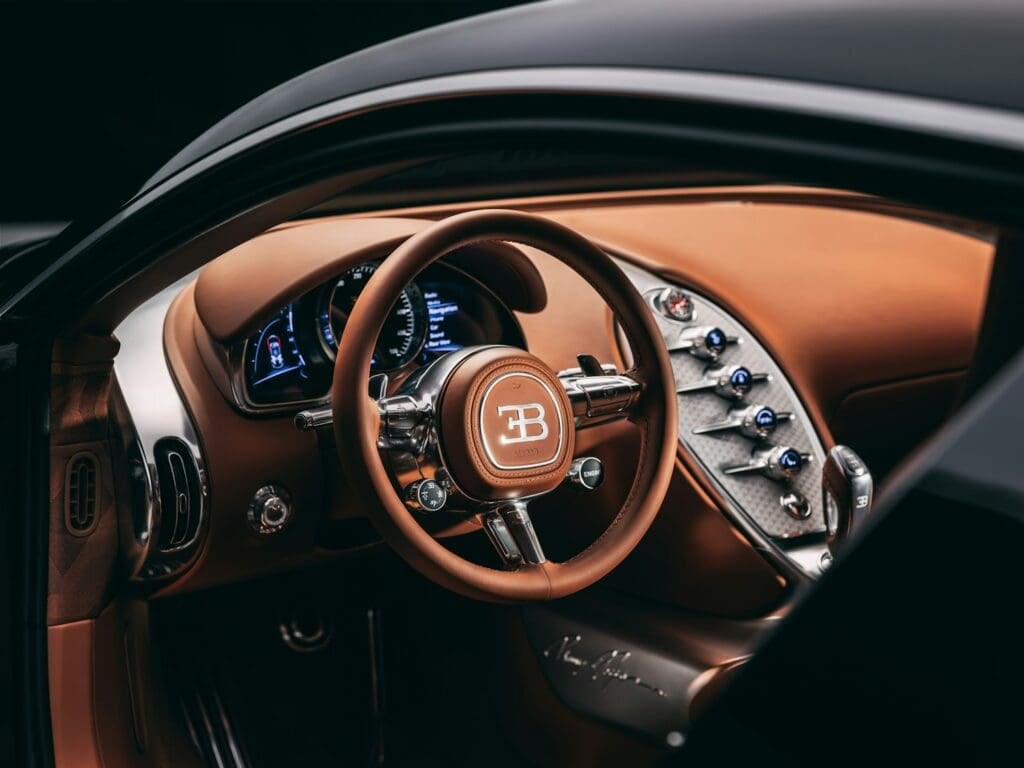
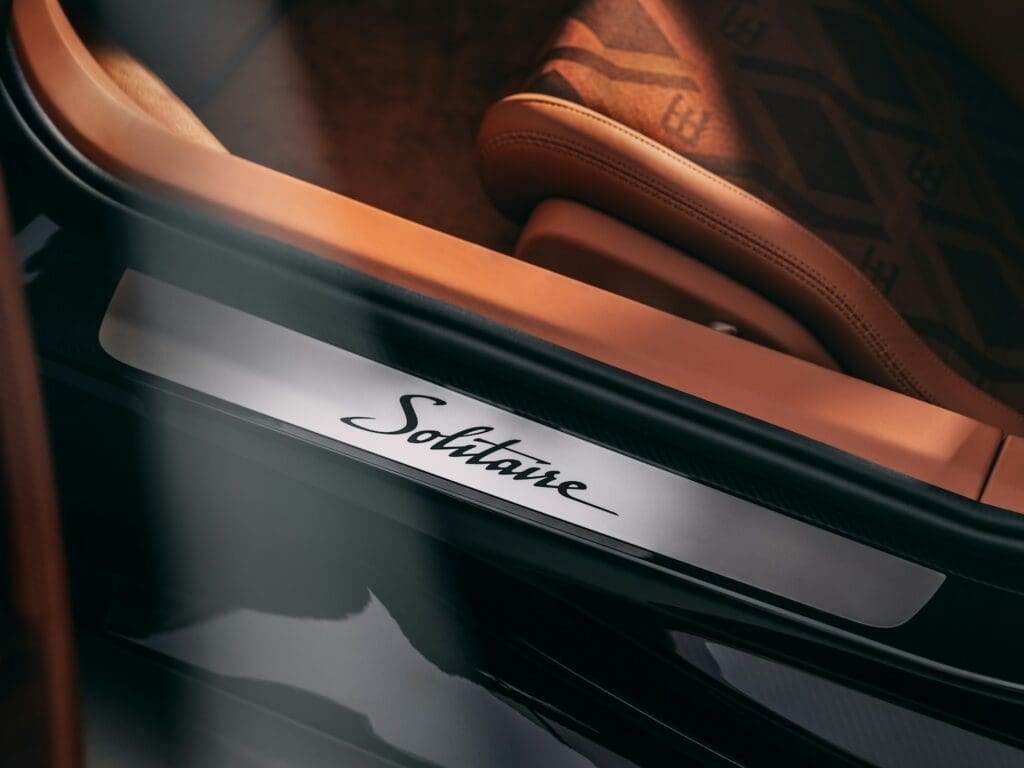
Fabric joins leather, woven exclusively in Paris, adding warmth without nostalgia. It feels contemporary but unforced, an interior designed to be lived with rather than admired briefly.
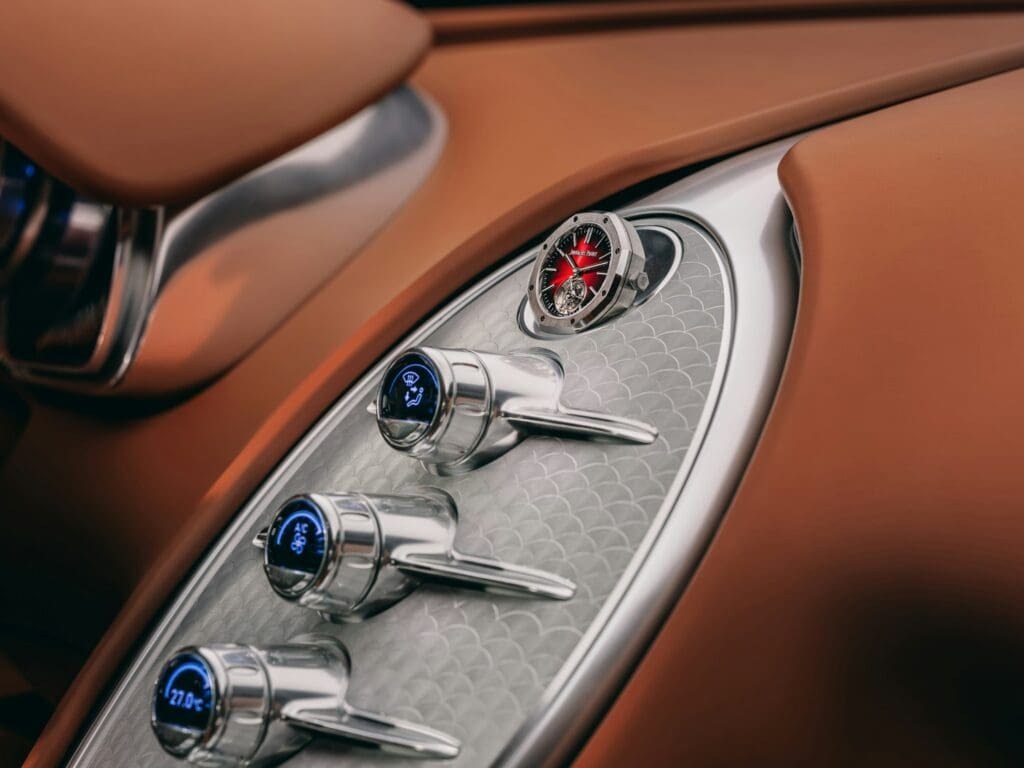
At its center sits a watch, and not as ornament. An Audemars Piguet Royal Oak Tourbillon is integrated into the dashboard, mounted within an engine-turned aluminum island that recalls Ettore Bugatti’s early cylinder heads. The mechanism winds itself through motion, powered by the car without electrical connection. It moves quietly, on its own schedule.
This detail captures the essence of the F.K.P. Hommage. Advanced, but not loud. Complex, but resolved. Personal, without becoming sentimental.
As part of Programme Solitaire, the car represents Bugatti’s most intimate work. Not a limited series, but a singular conversation between brand, client, and history. A chance to refine rather than reinvent.
The bullet train sketch was never about speed alone. It was about precision under pressure, ideas formed in motion, and ambition contained within structure.
The F.K.P. Hommage carries that same energy. Calm on the surface. Immense beneath. Certain of where it came from, and comfortable with where it ends.