
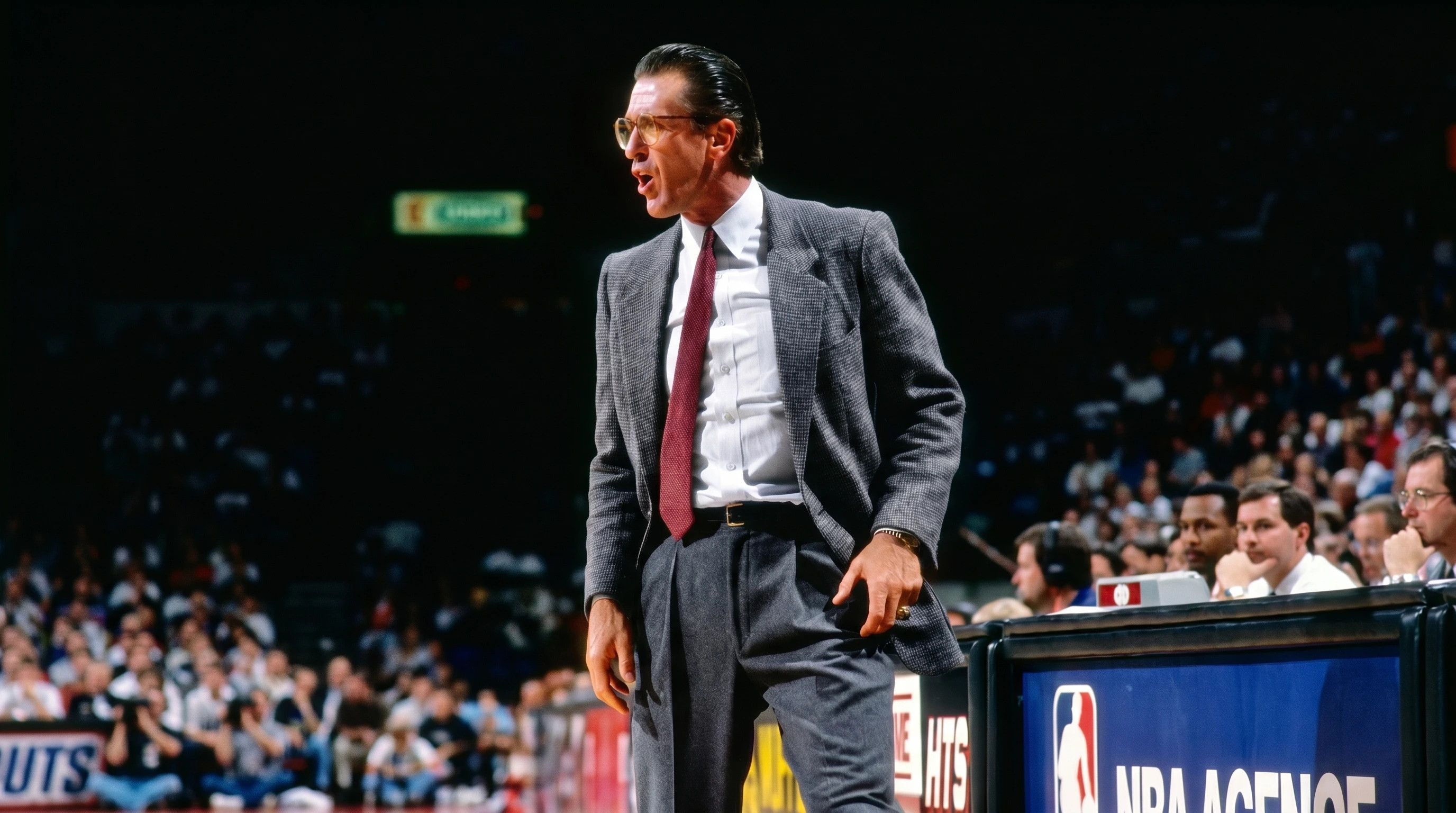
There are moments in menswear history that quietly change culture forever. Not through runways or advertising campaigns, but through the way a single person carries themselves.
For basketball, that person was Pat Riley.
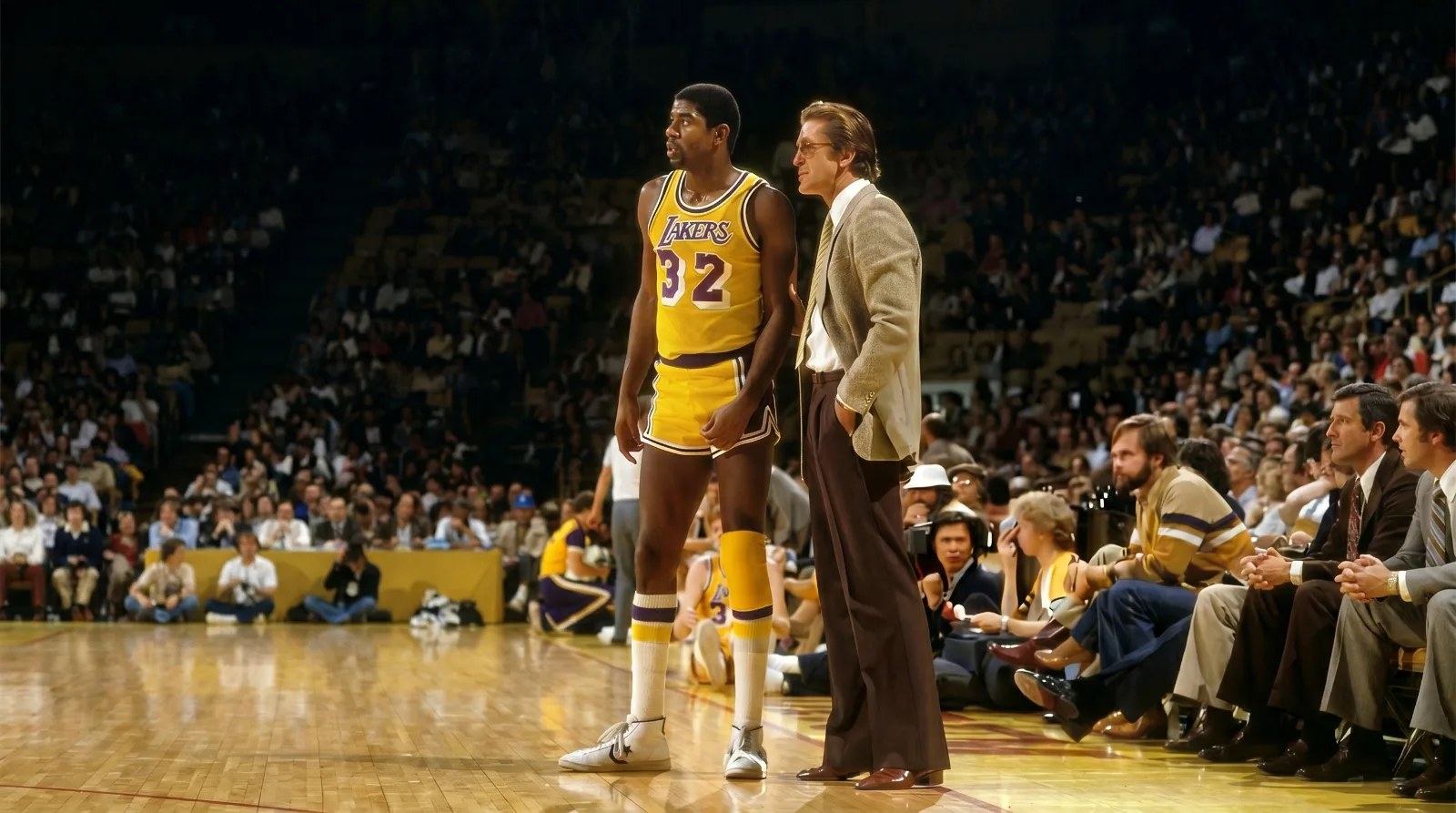
Before the modern NBA became inseparable from fashion houses, pregame tunnel walks and luxury collaborations, Riley introduced something entirely different to the sidelines during the height of the Showtime Lakers era: Italian tailoring with intention.
After meeting Giorgio Armani in Milan in 1982, Riley became deeply drawn to Armani’s approach to menswear. At a time when American tailoring still leaned heavily structured and corporate, Armani represented a softer, more relaxed silhouette. Lightweight fabrics, natural shoulders and effortless elegance replaced the rigid power dressing of previous decades.
Riley immediately understood the power behind it.
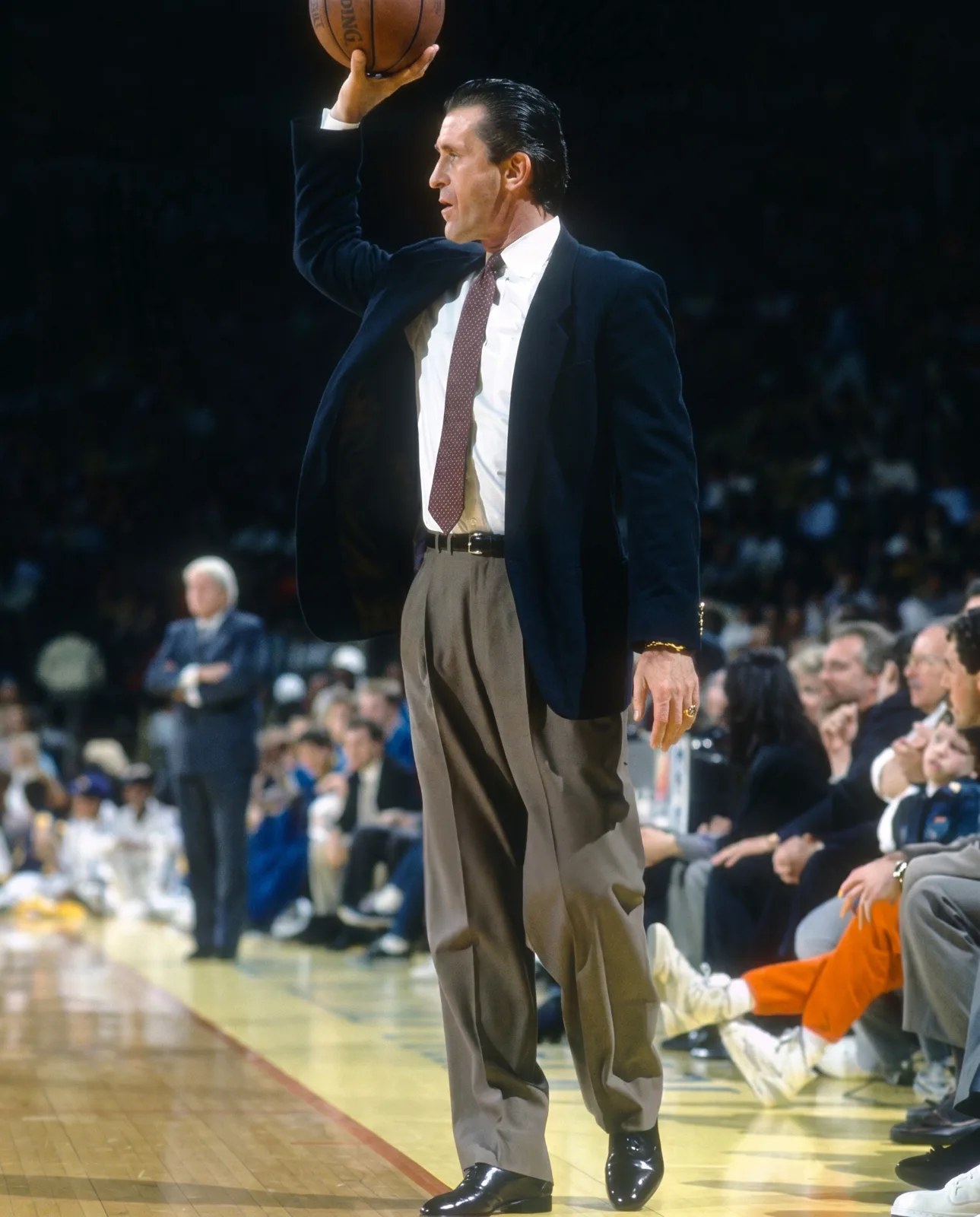
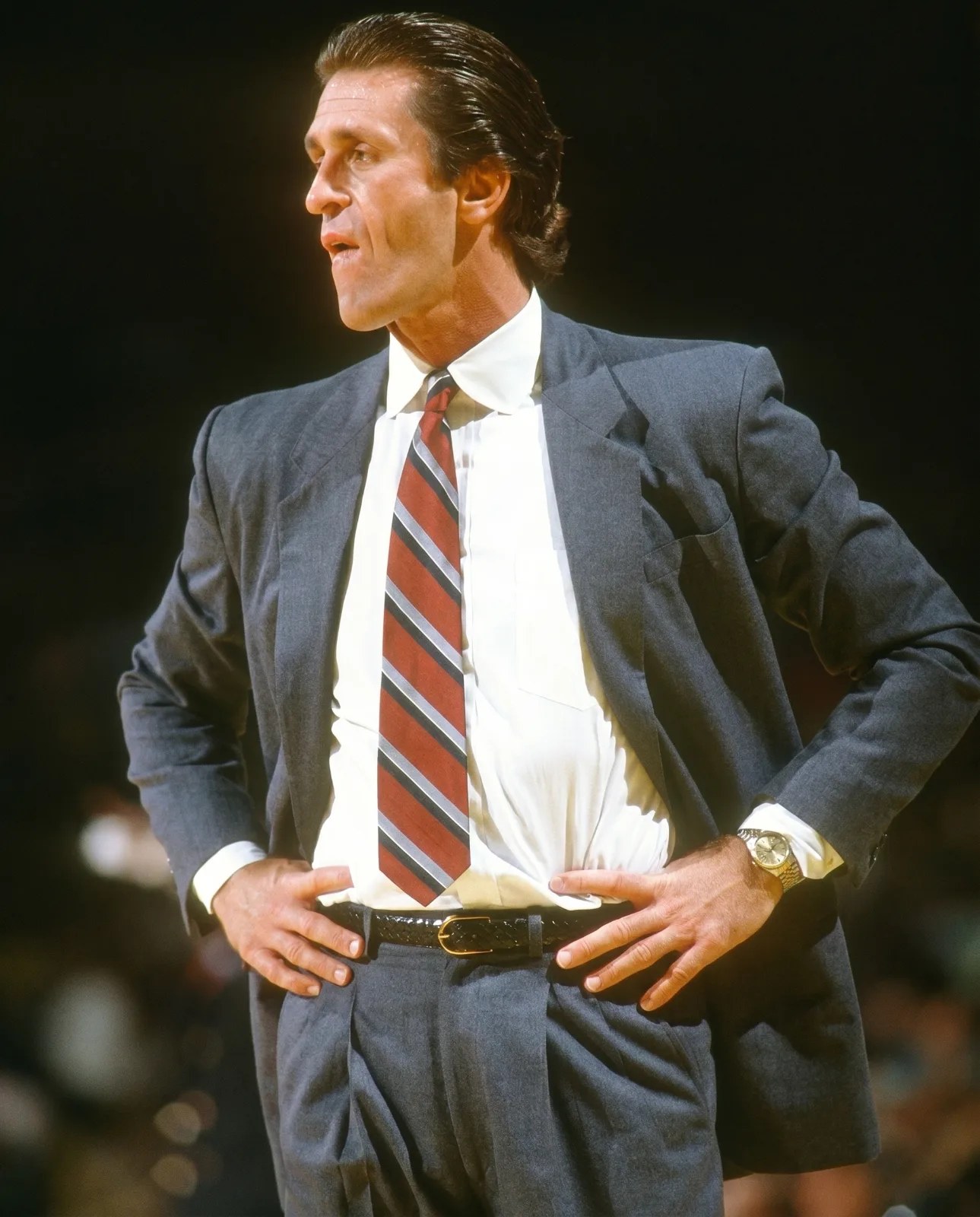
The sharply cut Armani suits became part of his identity as he coached the Los Angeles Lakers through one of the most iconic eras in basketball history. Standing courtside alongside Magic Johnson, Kareem Abdul-Jabbar and the Showtime dynasty, Riley looked less like a traditional coach and more like a Hollywood leading man stepping into a boardroom.
But what made the image resonate was never just the clothing itself.
It was the message behind it.
Riley carried himself with a belief that presence mattered. That leadership extended beyond strategy boards and locker room speeches. The composure, discipline and confidence he demanded from his teams became visible in the way he dressed. The tailoring was not decoration, it was part of the performance.
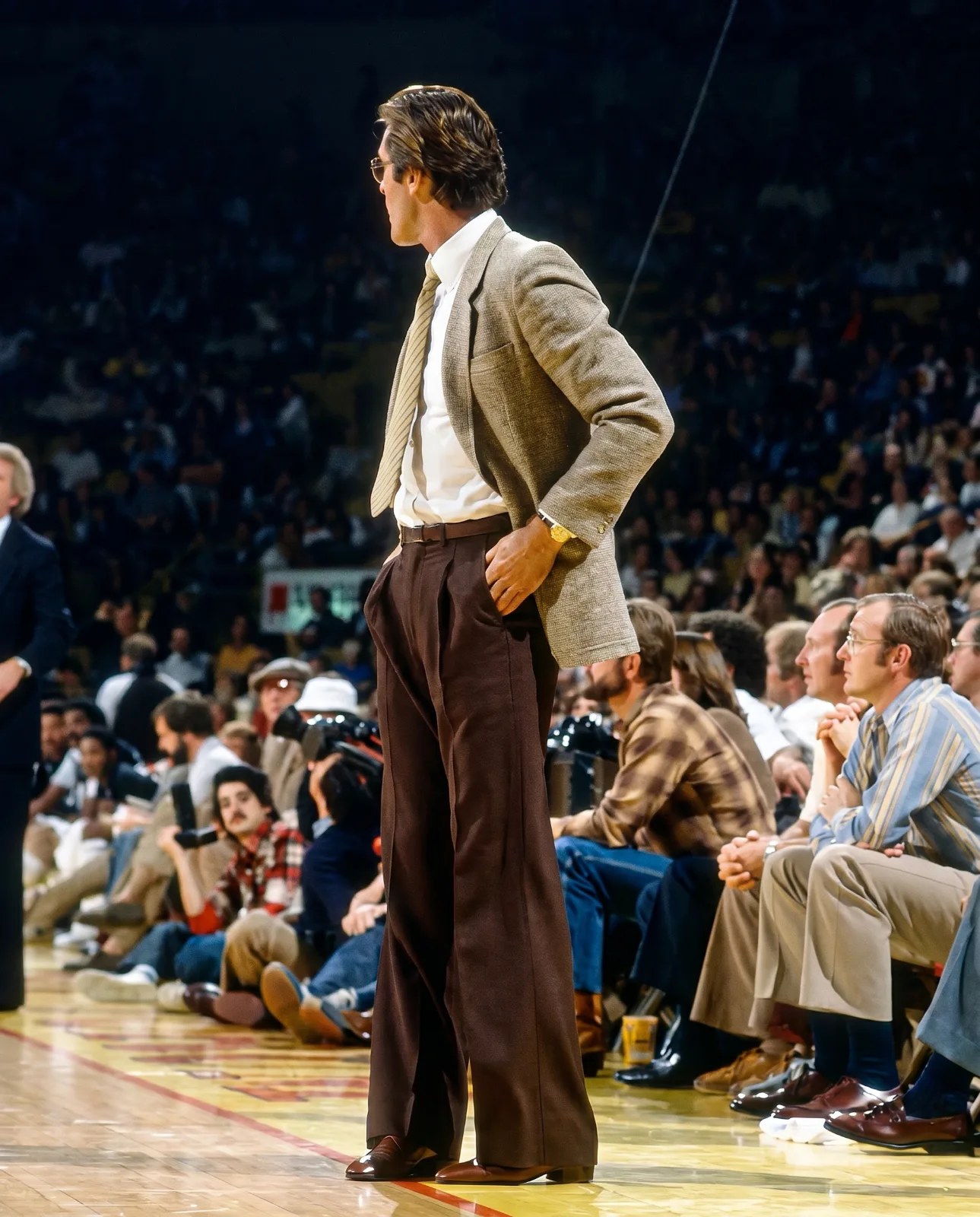
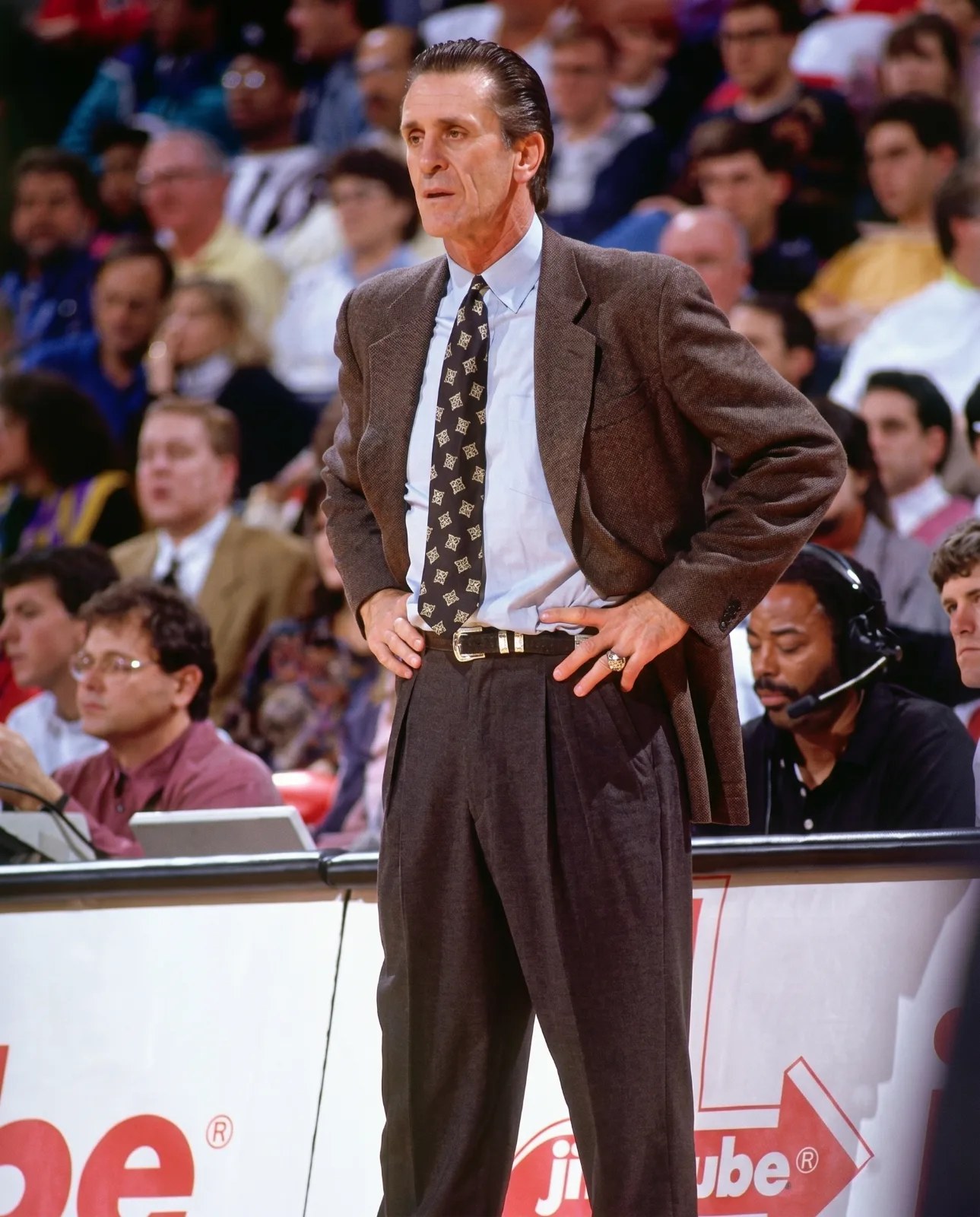
In many ways, Riley created the blueprint for the modern intersection between sports and luxury culture decades before it became mainstream. Long before players arrived in full runway looks and luxury brands competed for relevance within basketball culture, Riley showed that sports figures could embody sophistication without losing authority.
His influence can still be seen today.
The polished confidence of modern NBA tunnel fashion, the rise of luxury partnerships within sports and even the idea of athletes and coaches becoming style references all trace part of their lineage back to figures like Riley. He helped shift the perception of what masculinity in sports could look like: controlled, elegant and intentional.
And perhaps that is why the imagery still feels timeless.
The slicked-back hair. The softly tailored double-breasted suits. The calm expression standing beneath arena lights while chaos unfolded around him. Pat Riley did not simply wear Armani. He understood what Armani represented.
A belief that style is not about excess, but about control.