
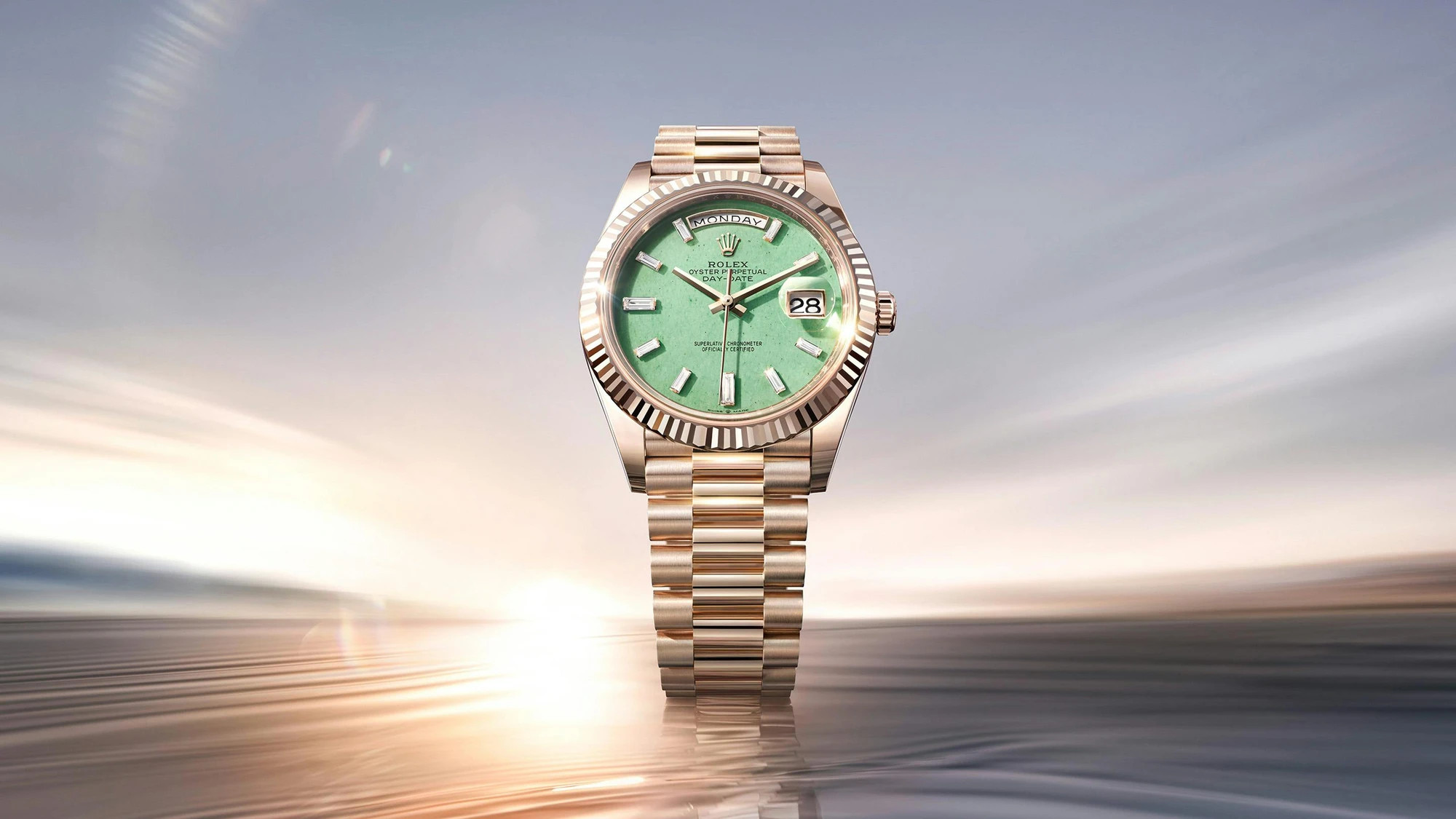
The new Rolex Day-Date 40 introduces a proprietary alloy called Jubilee Gold, a material that challenges the very idea of what gold on a watch is meant to be. For a company that built its reputation on precision and consistency, the act of creating a new precious metal is not a casual one. It signals a deliberate shift in thinking, a recalibration of what luxury looks like at the highest level.
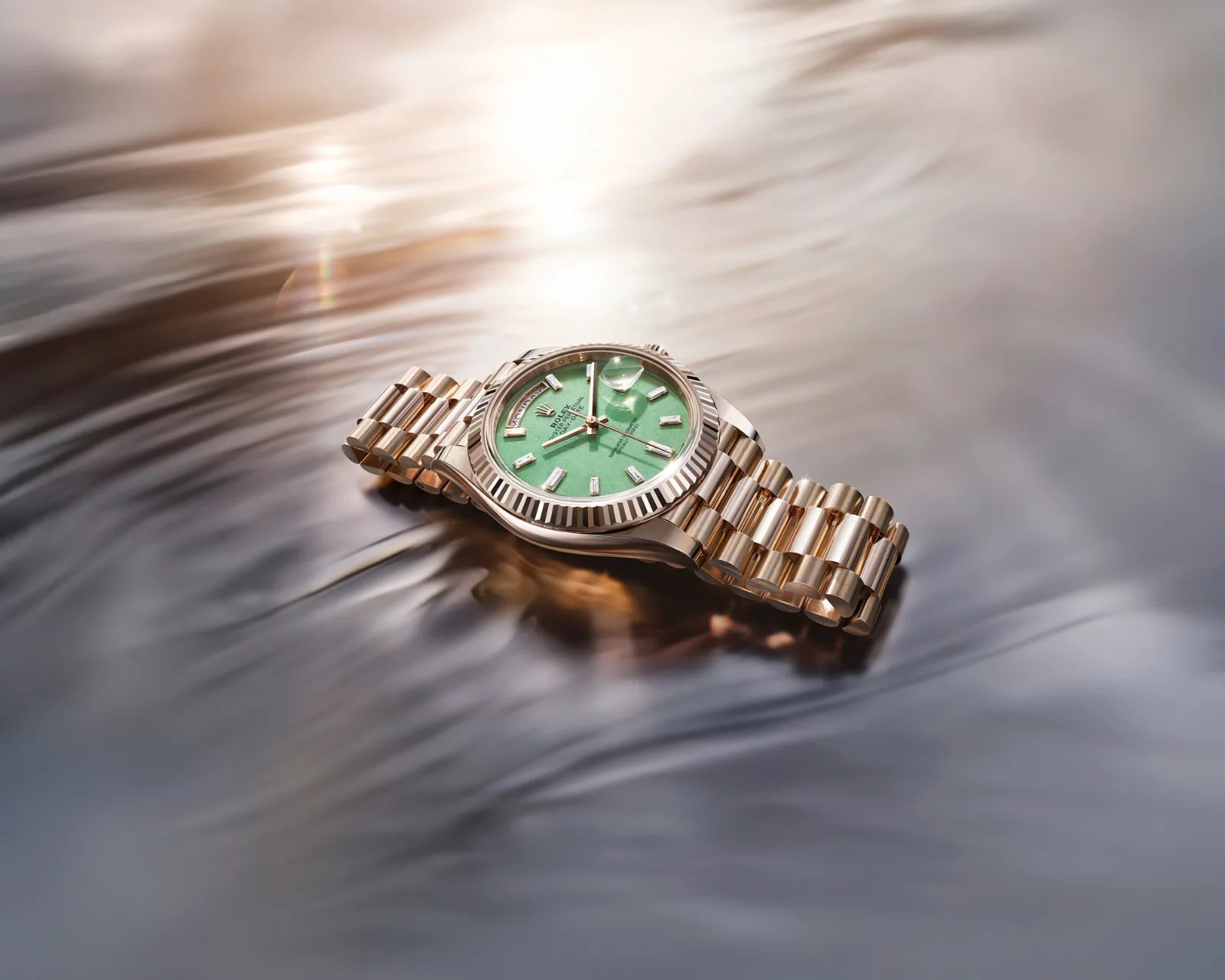
This new 18-karat gold is not yellow. It is not white or rose, either. Instead, Jubilee Gold exists in the space between them. The source material is still pure gold, but the final alloy is engineered to have a more muted, subtle character. It carries warmth, but without the overt flash of traditional yellow or Everose gold. Under light, its color shifts, revealing tones that feel both familiar and entirely new. It is a complex color, one that asks for a closer look rather than announcing itself from across a room.
A Matter of Chemistry
Developing a new gold alloy is a statement of industrial capability. This is the first new gold from Rolex in over two decades, since Everose was introduced in 2005. The process happens entirely within the company’s own foundry at Plan-les-Ouates, a facility that gives Rolex complete control over its materials. Creating Jubilee Gold involved years of work in the brand’s research and development division, combining pure 24-karat gold with specific metals like copper, palladium, and silver to achieve this exact hue and finish.
The result is a metal that is entirely unique to the brand. This level of vertical integration is rare, and it allows for a kind of obsessive consistency that has become a hallmark. The choice to launch this material on the Day-Date 40, the brand’s top-tier model, is significant. It’s a watch historically reserved for precious metals, making it the natural canvas for this new expression of gold.
The Watch Itself
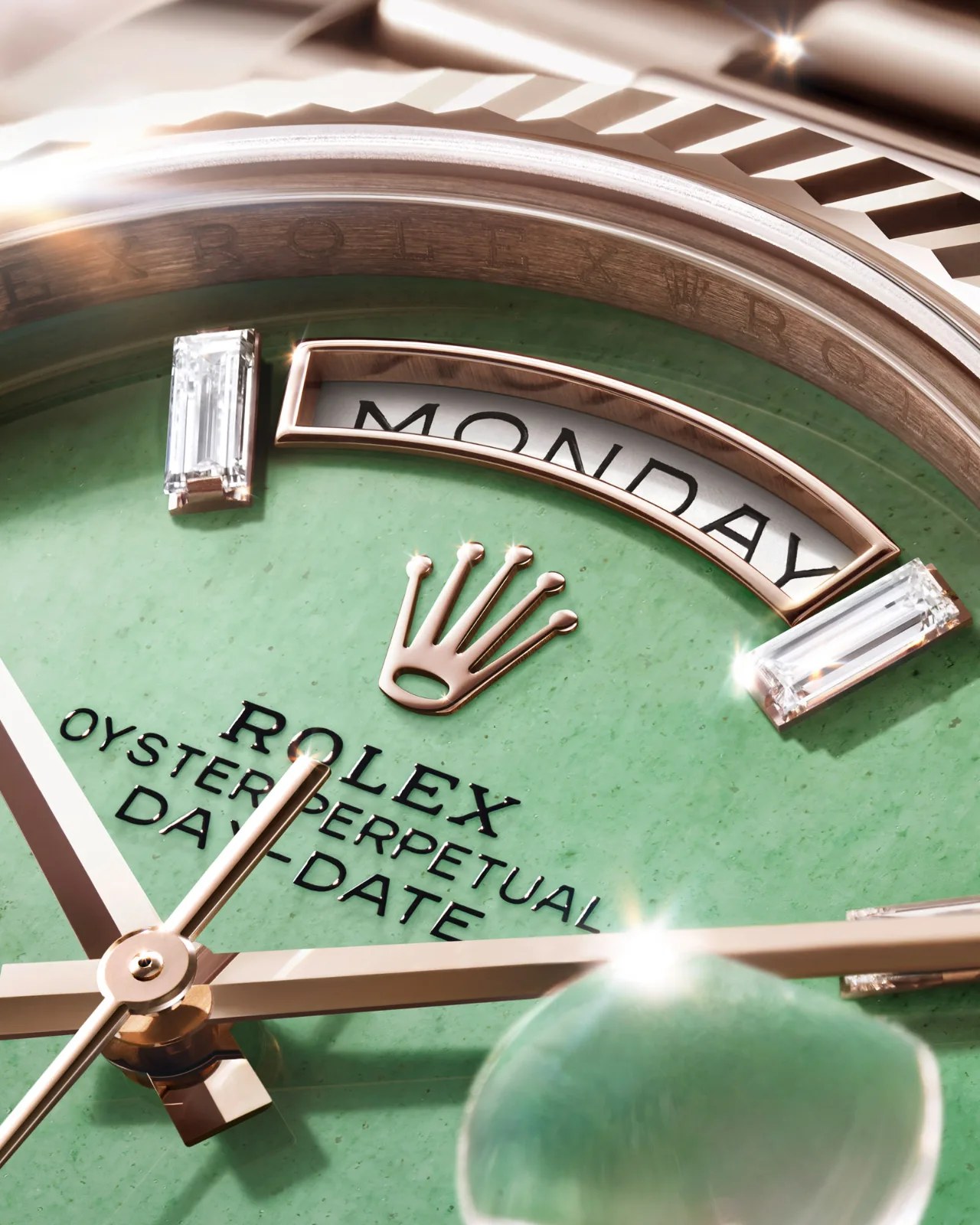
Beyond the metal, the watch is a showcase of the brand’s other crafts. The dial is cut from a piece of light green aventurine, a natural stone with subtle, marble-like streaks. It serves as a quiet nod to the company’s signature color on the 100th anniversary of the Oyster case. In place of standard markers, ten baguette-cut diamonds frame the dial, leaving space only for the day and date apertures.
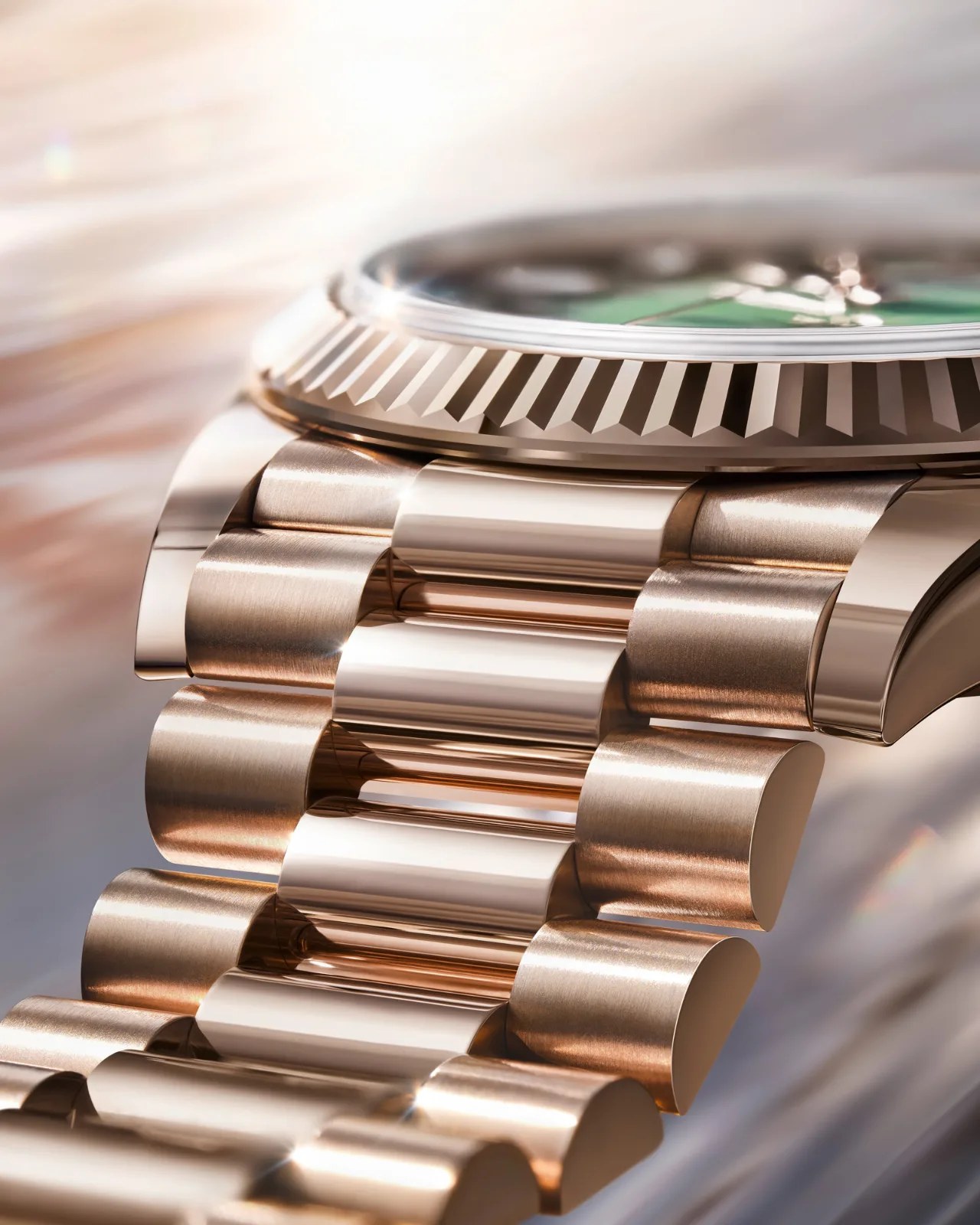
The fluted bezel and President bracelet are classic Day-Date features, but they take on a different quality in Jubilee Gold. The familiar shapes seem to interact with light in a new way. The bracelet, with its polished center links and brushed outer links, highlights the alloy’s ability to shift in appearance depending on the finishing. It is powered by the Caliber 3255, the same robust movement that has driven the model since 2015.
With a price of $62,700 and a designation of 'not in catalog', this watch is clearly positioned as an object of exclusivity. It suggests availability will be limited to a select group of clients. The introduction of Jubilee Gold is not just about adding another option. It is about proposing a quieter, more considered form of luxury. One that is less about declaration and more about detail.
Read more about accessories here.