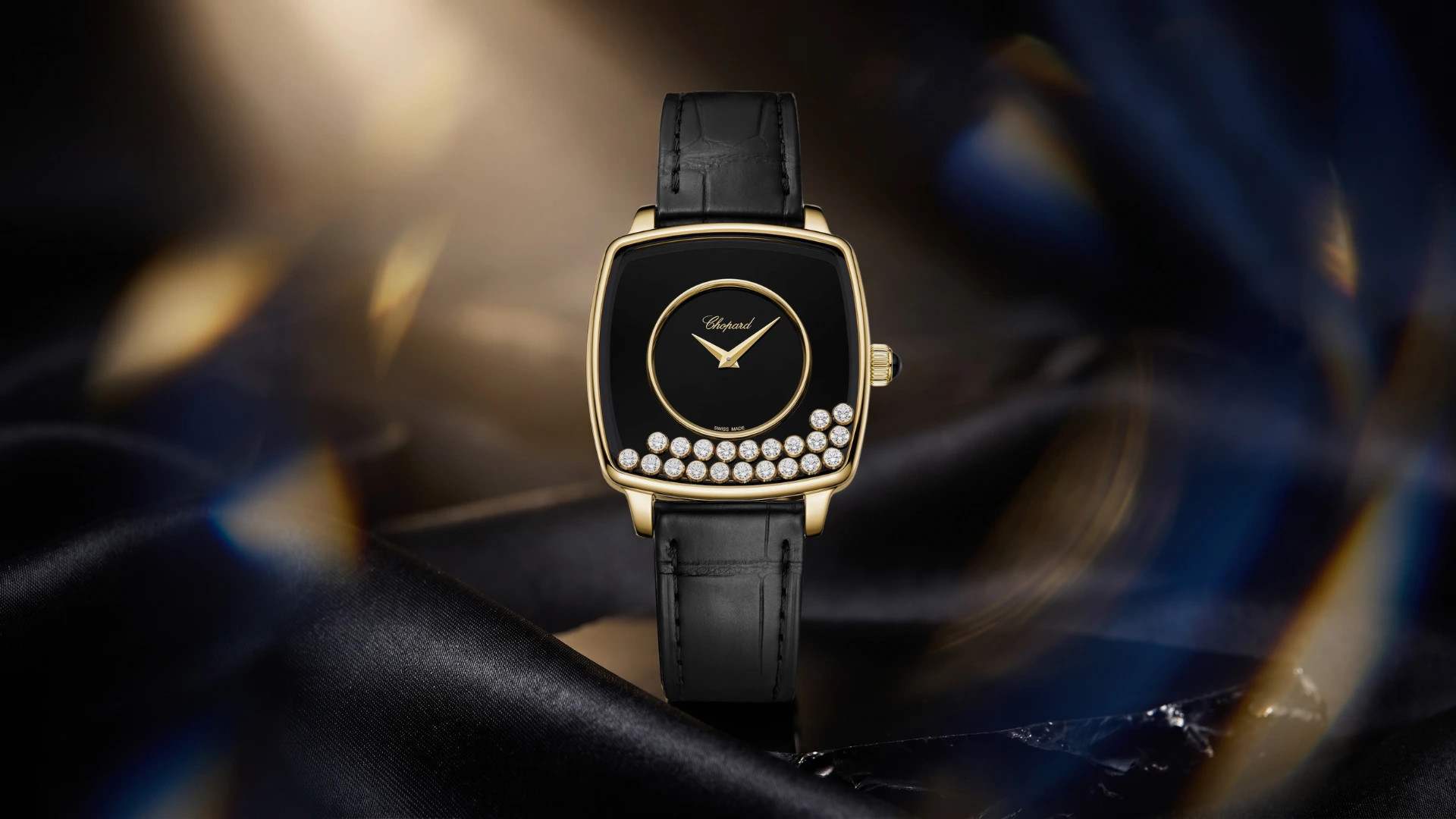
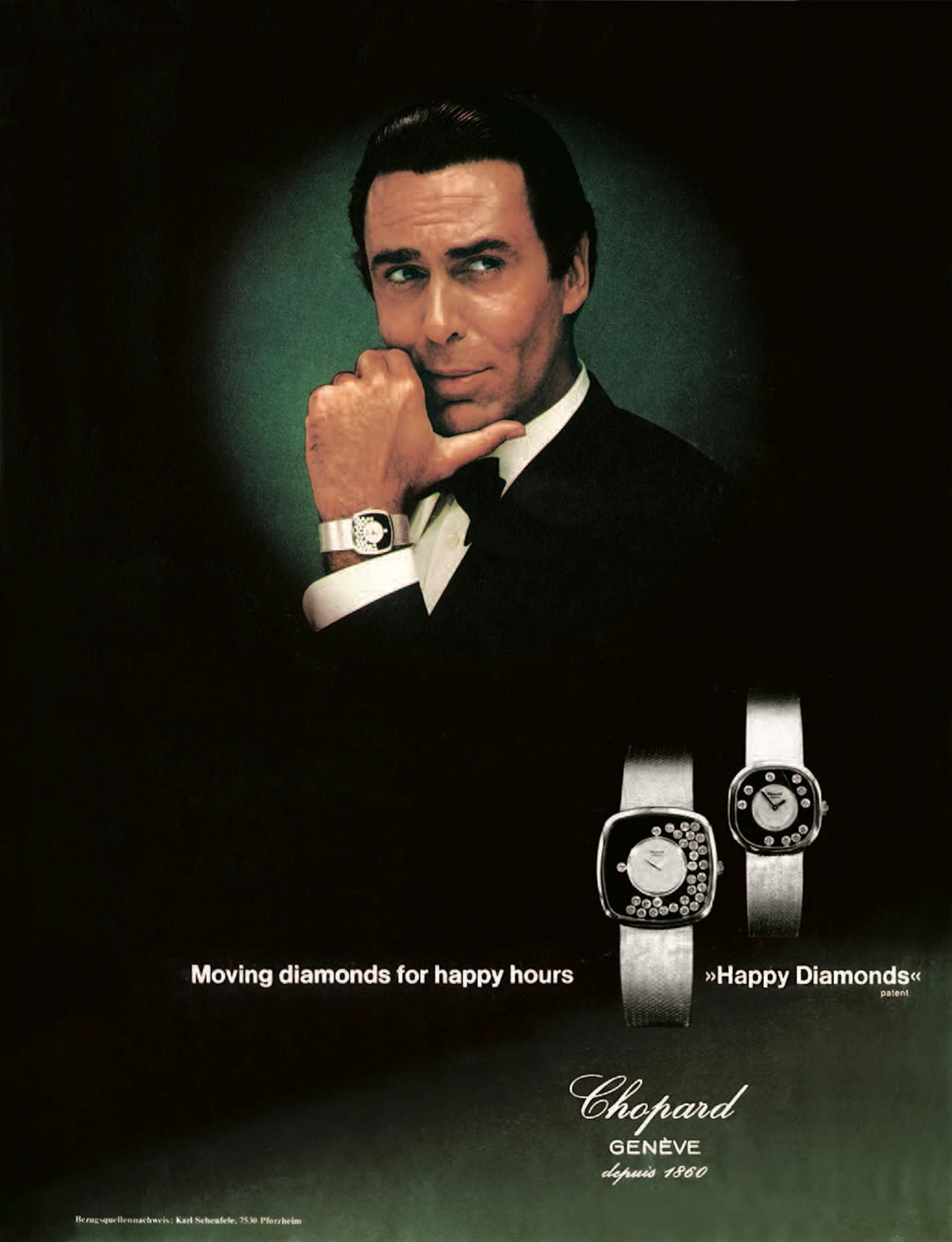
Sunlight breaking on the spray of a Black Forest waterfall makes an unlikely brief for a watch. In 1976 it became one. Chopard took that picture of scattered, moving light and asked what a diamond might look like if nobody held it in place. Happy Diamonds was the result: stones left loose on the dial, sliding with every turn of the wrist.
Caroline Scheufele, Co-President and Artistic Director, traces the idea back home. "I grew up with this idea, first expressed by my mother, that diamonds are happier when they are free," she says. "This deeply poetic vision has never left me."
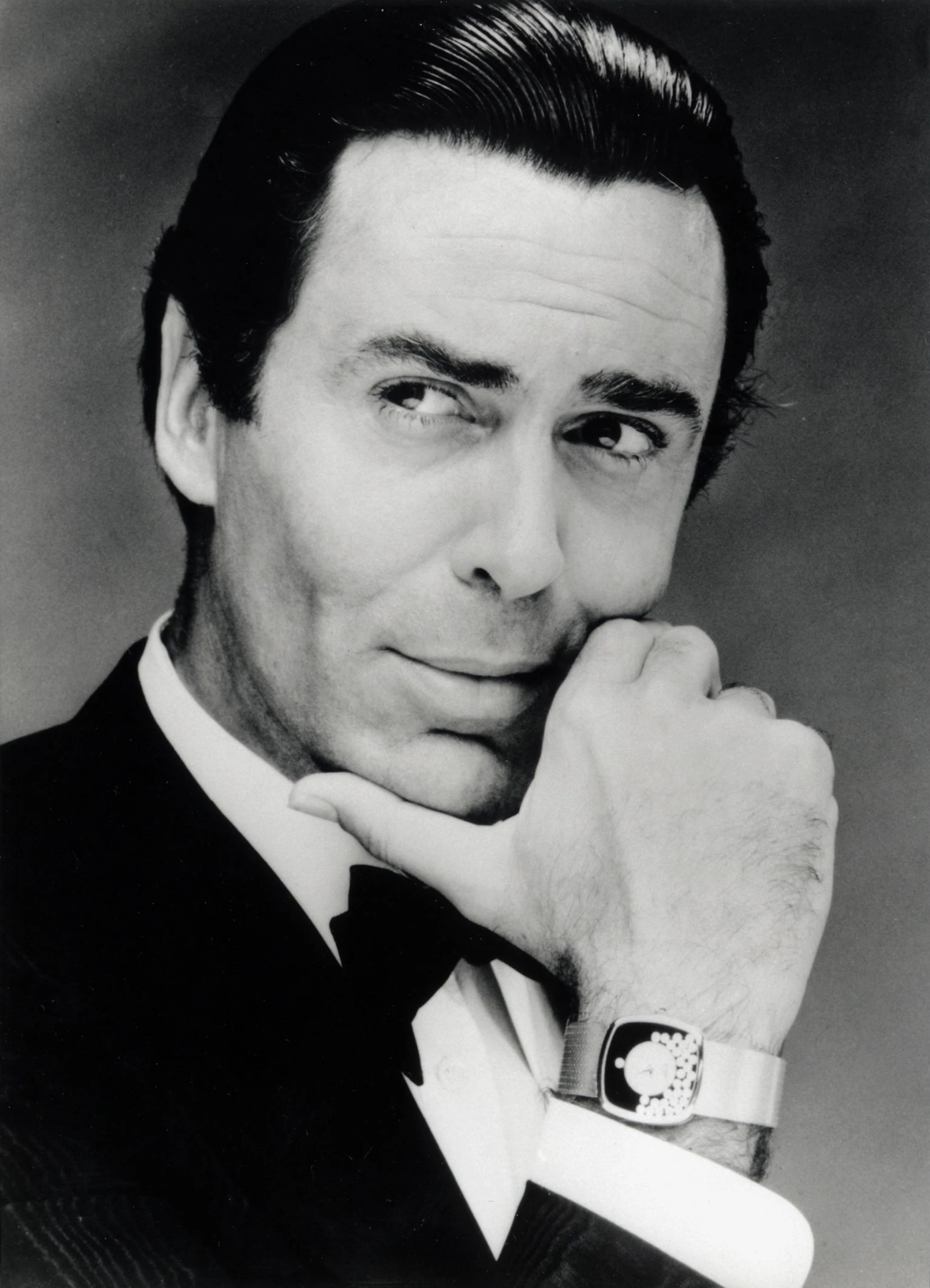
Recognition came the same year, when the original took the Golden Rose of Baden-Baden, at the time regarded as the highest distinction for innovation and excellence in jewellery and watchmaking.
With Happy Diamonds Heritage, Chopard returns to that starting point. Alongside new jewellery, the collection brings back the two earliest watches for the first time, in the same pair of sizes the originals were conceived in.
Two Sizes, One Shape
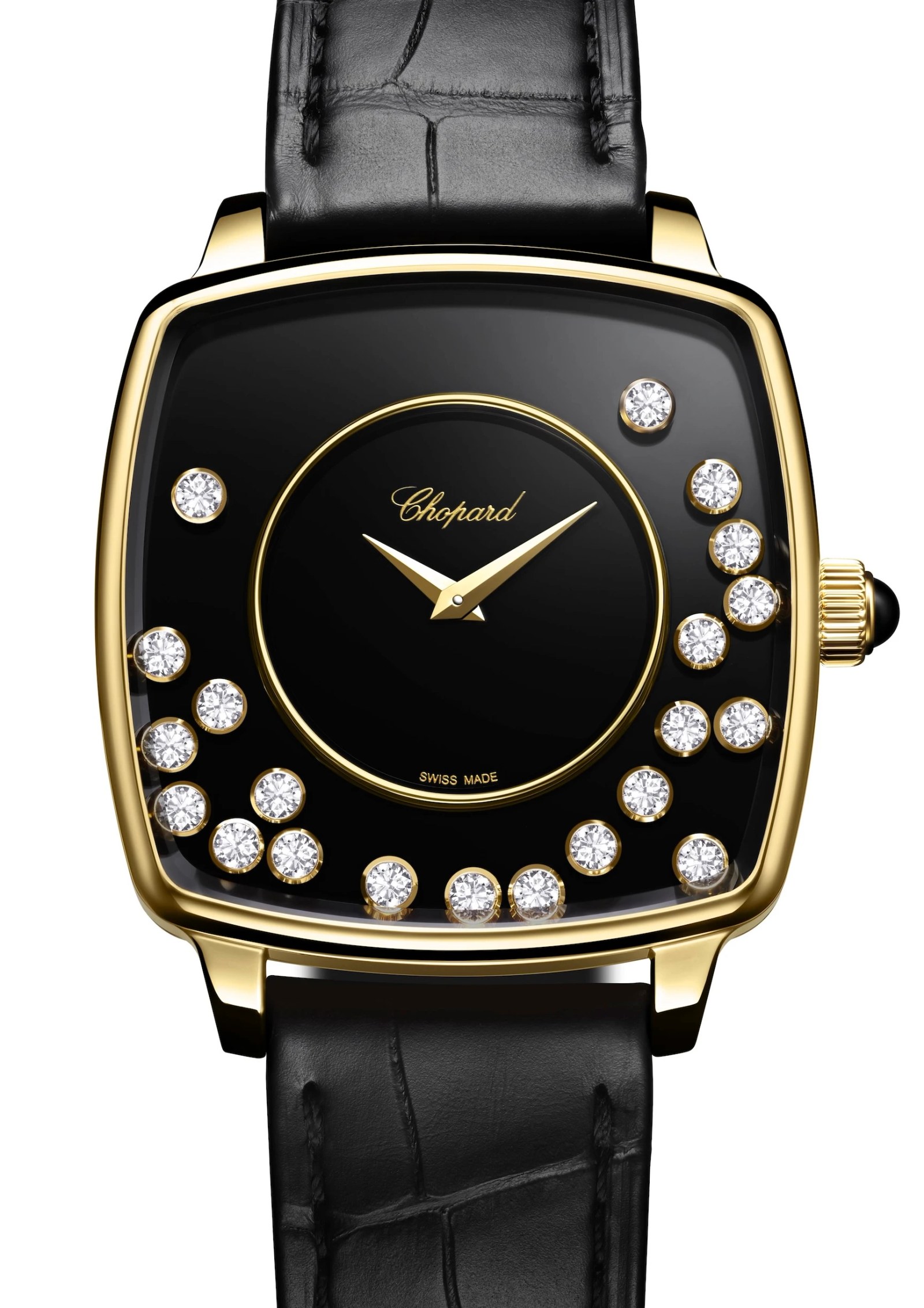
Cushion cases carry the geometry of the 1970s, a form caught somewhere between a circle and a square. Rounded edges soften the structure, and the outline suggests movement before a single stone has shifted.
Black onyx fills the dials, as it did on the first models. Polished to a mirror, the stone absorbs light so the diamonds can reveal it, each one reading as a single point of brilliance suspended in the dark. Sealed between two sapphire crystals, they travel freely across the dial with every gesture.
The 34 mm
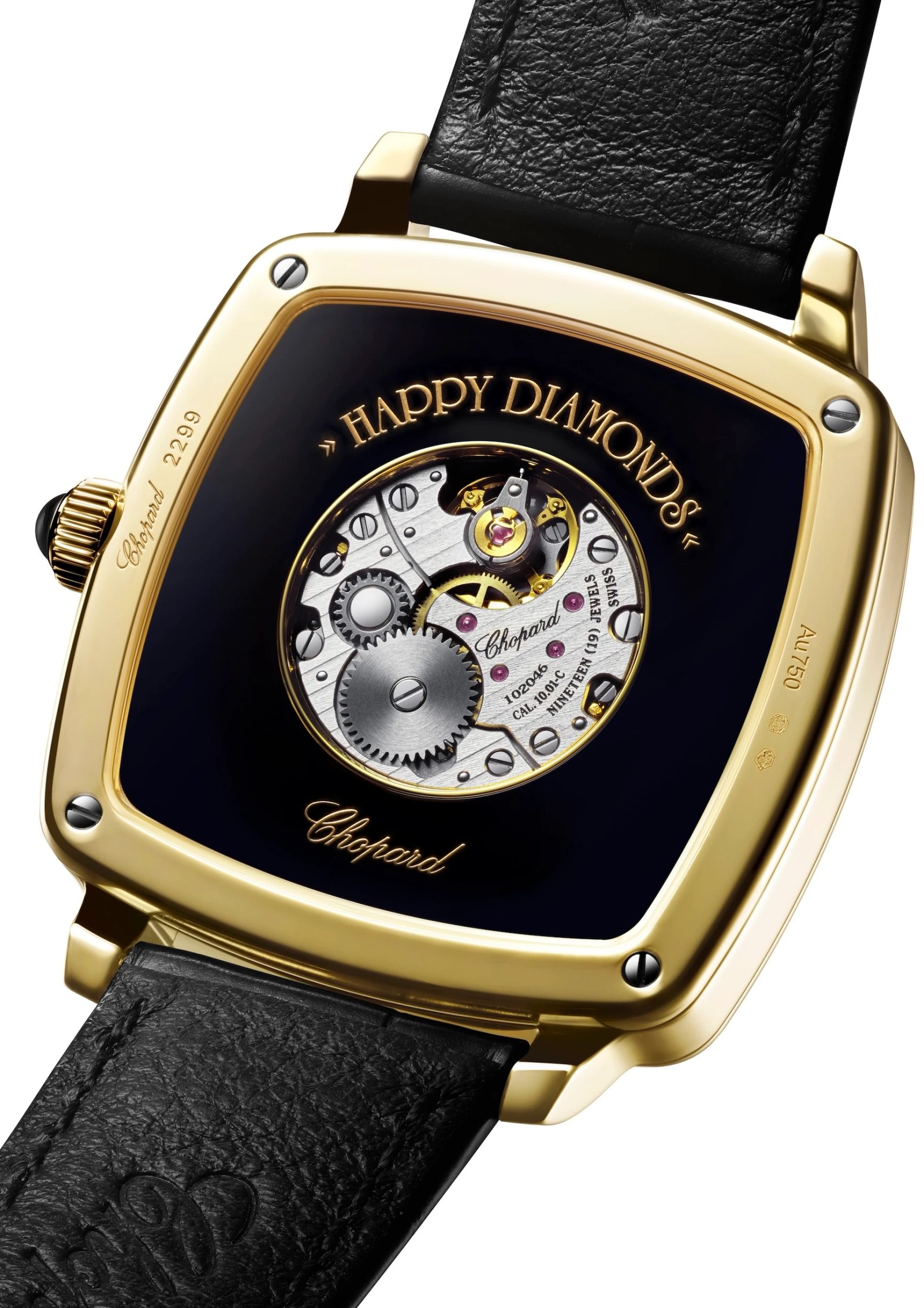
In 18-carat ethical yellow gold, the larger model holds 21 diamonds. Behind them, visible through an open caseback, sits the Chopard 10.01-C, a hand-wound Manufacture calibre introduced in 2024. At 15.70 mm across and 2.90 mm thick, it ranks among the smallest and thinnest mechanical movements in the world, keeping hours and minutes with a 45-hour power reserve. The diamonds ask nothing of it. They run entirely on the wearer.
Smaller and more intimate, the 24 mm carries nine diamonds and a quartz movement, with the same light at a gentler scale.
The Capsule
Most of the work never shows. The metal is first stamped into shape, then polished by hand to a soft finish along every curve, and each component is assembled and refined by hand.
Hardest of all is the setting. The diamonds sit within a proprietary gold capsule between the two crystals, and they must move without effort while remaining perfectly guided. That balance is the whole watch.
Since 1976 the stones have been moving. On a wrist at rest, they wait.