
In the world of hypercars, conversations usually begin and end with numbers. Horsepower, top speed, acceleration. The new Bugatti Tourbillon has all of that, but the more interesting story may be happening somewhere else entirely. It is happening in a design studio in Berlin, where the team is treating the car not as a machine, but as a piece of couture.
The idea is to move beyond a simple option list. Led by Sabine Consolini, the Head of Color, Material, and Finish, the brand is reframing individualization. It is a process that mirrors the work of a Parisian fashion house, where every material is researched, refined, and chosen for a specific client and purpose. This is less about picking a paint color and more about commissioning a personal object.
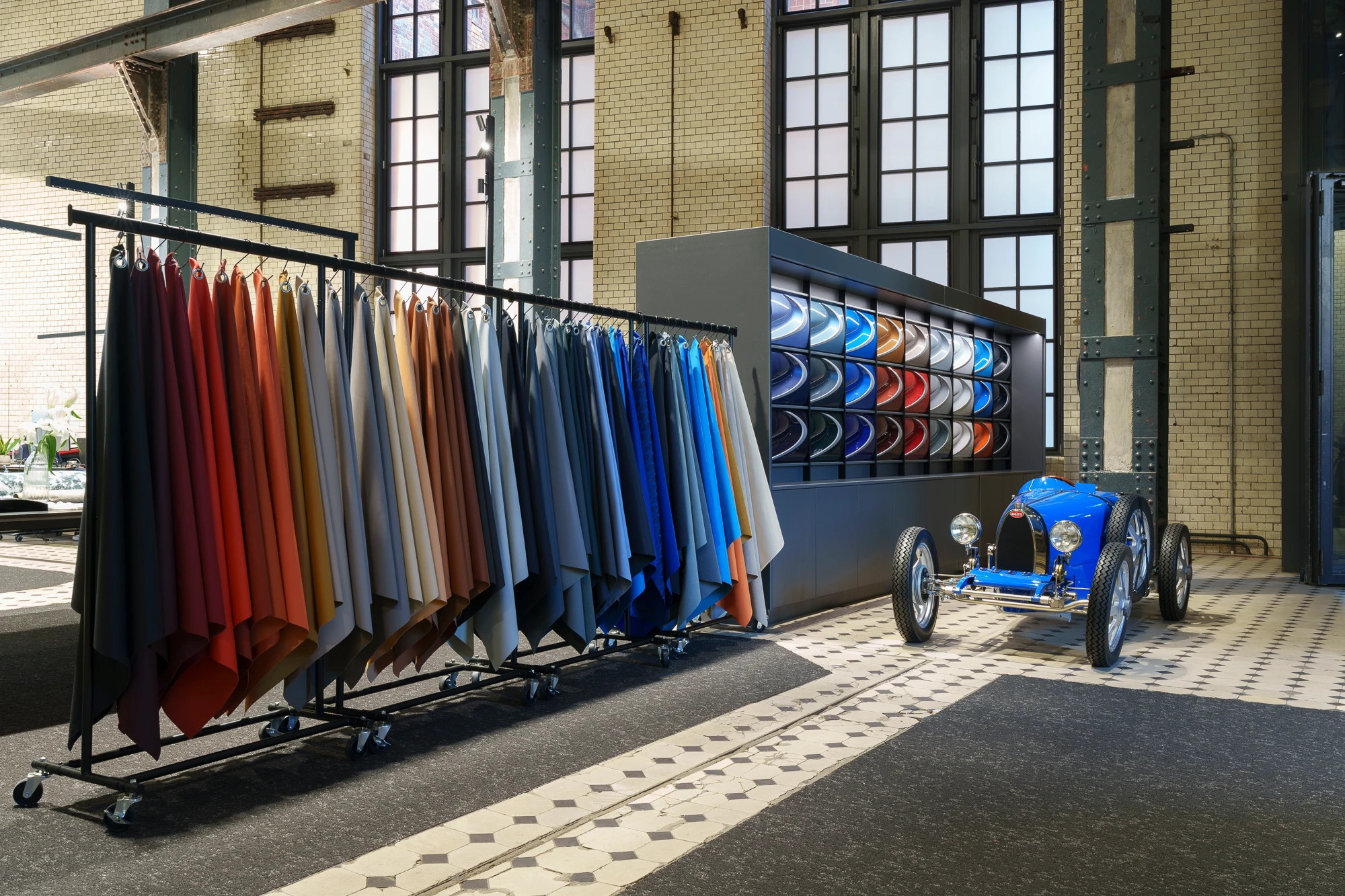
The work takes place away from the factory floor in Molsheim. The Berlin Design Studio is where this philosophy takes physical form. It acts as both a laboratory and a gallery, a space where new materials are developed, tested, and presented to clients in the context of the car they will eventually inhabit. It is a quiet, deliberate process.
A New Material Palette
For the Tourbillon, this thinking has led to choices that would have been unthinkable in a Bugatti just a few years ago. Fabrics, for the first time, are part of the official palette. The team researched textile manufacturers from the world of high fashion, then worked to adapt those materials for the rigorous demands of an automotive interior. It is a decision that fundamentally changes the texture of the cabin.