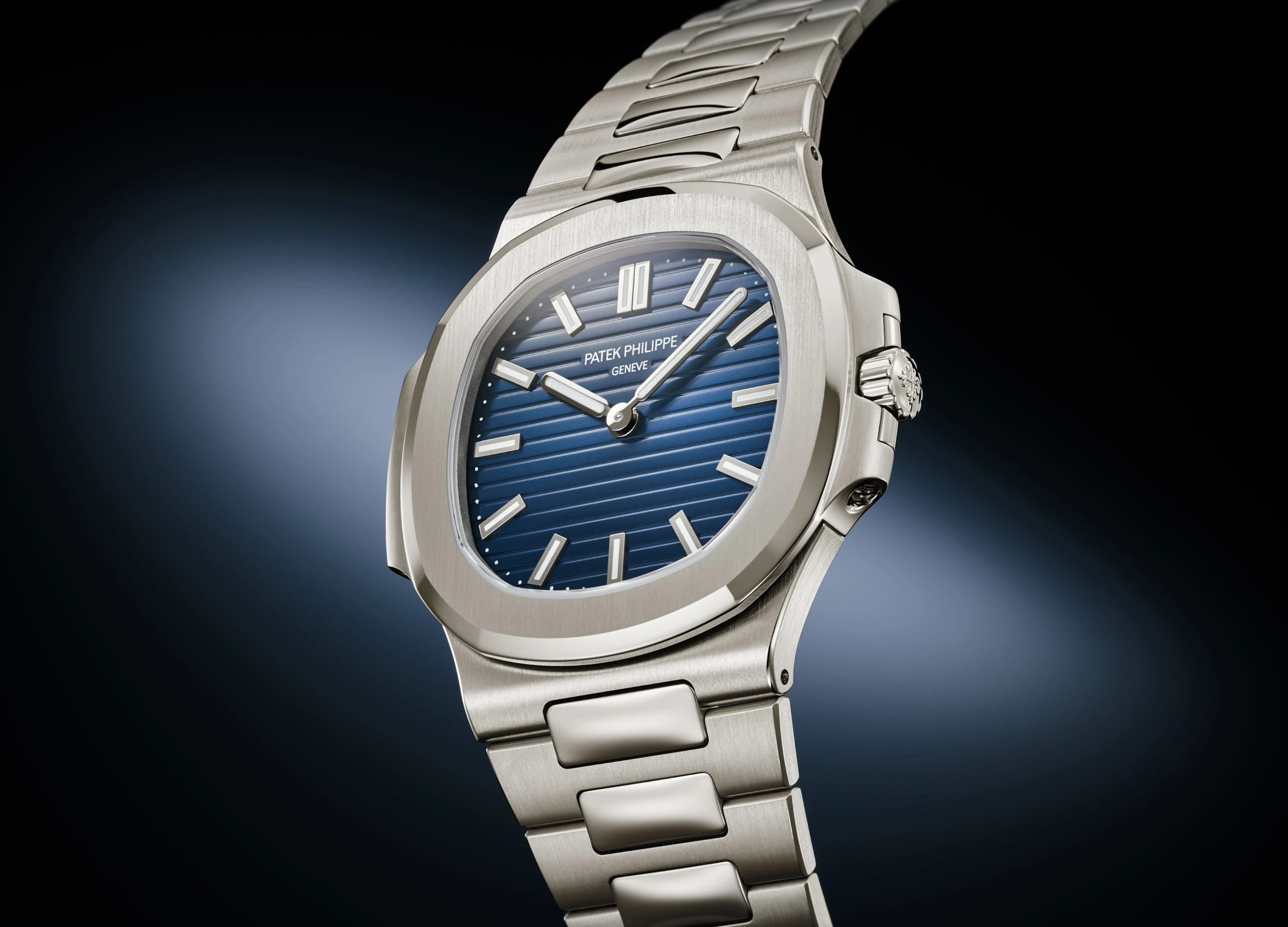
Fifty Years of the Porthole
In 1976, the Swiss watch industry was in the middle of a quiet collapse. Quartz had arrived, and mechanical watches were becoming something people politely stopped buying. The sensible response was to panic. Most did.
Gerald Genta had dinner instead.
He was sitting alone at a hotel restaurant during the Basel fair when he noticed the Patek Philippe executives at a table across the room. He picked up a pen. Five minutes later, he had sketched the watch that would become the Nautilus. The inspiration was the porthole on the wall: the octagonal frame, the hinges at the ears, the gasket logic of something designed to keep water out at pressure. He named it after Captain Nemo's submarine. He handed it to Patek and they built it in steel, which nobody at that price point had ever done.
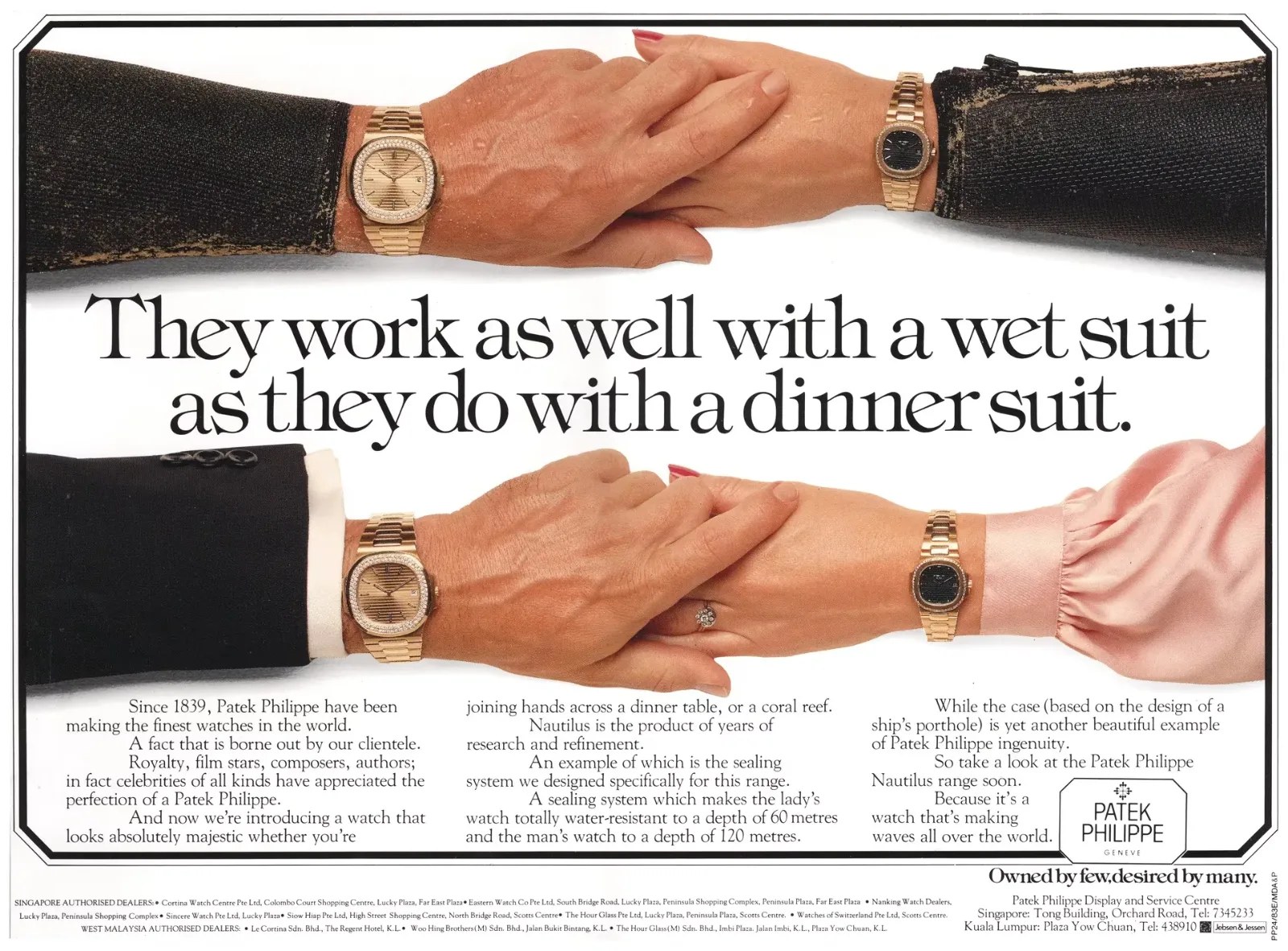
The industry had never seen anything like it.
Fifty years later, Patek Philippe's answer is four new references, each a limited edition, delivered in a presentation case with a cork exterior. The cork is a direct reference to the packaging of that original 1976 model. Some things deserve to be remembered precisely.
The Decision
The three wristwatches, References 5810/1G-001, 5810G-001, and 5610/1P-001, share a single philosophical position: hours and minutes only. No date. No center seconds. The same display as the original Reference 3700, fifty years ago. The Caliber 240, 2.53 millimeters high, sitting behind a sapphire crystal with its 22K gold mini-rotor engraved "50 1976 – 2026," doing exactly what it has done since 1977, the year after the Nautilus launched. The movement is almost as old as the watch.
Handling them confirms what the specifications suggest. The profile is 6.9 millimeters on a 41-millimeter case in white gold, 1.3 millimeters thinner than the current 5811G in the catalog. On paper that sounds like an engineering consequence. On the wrist it reads as a decision. Patek could have added complications to the anniversary edition. They removed them instead. The dials are clean in a way that only happens when someone in the room has the authority to say no. That restraint is harder to achieve than any complication, and it shows.
The Four
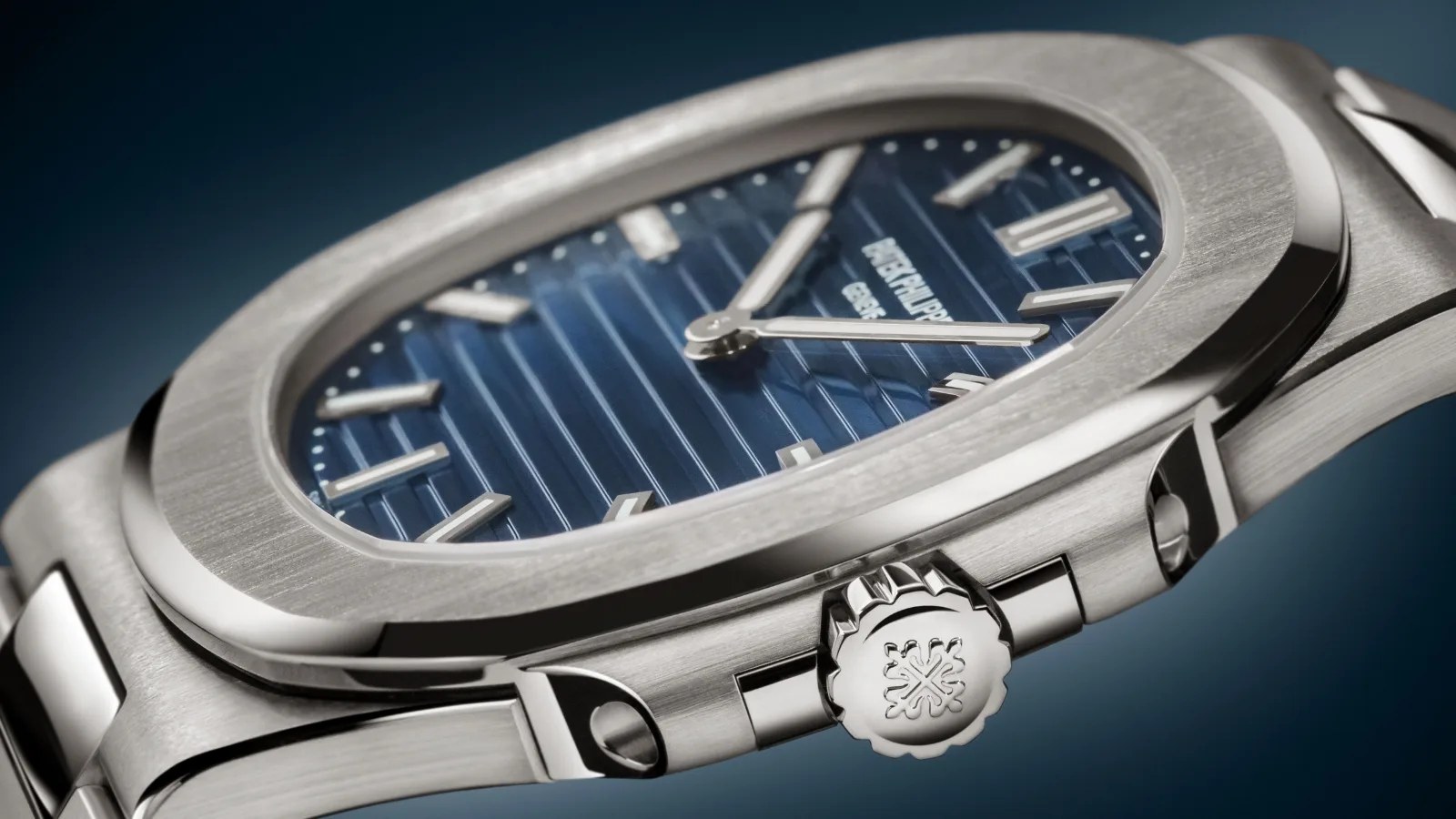
Reference 5810/1G-001 is the Jumbo in white gold on a white gold bracelet, limited to 2,000 pieces. Baton-style hour markers in white gold. The dial sunburst blue, horizontally embossed, the horizontal lines catching light differently at every angle as they have done since the beginning. CHF 75,000.
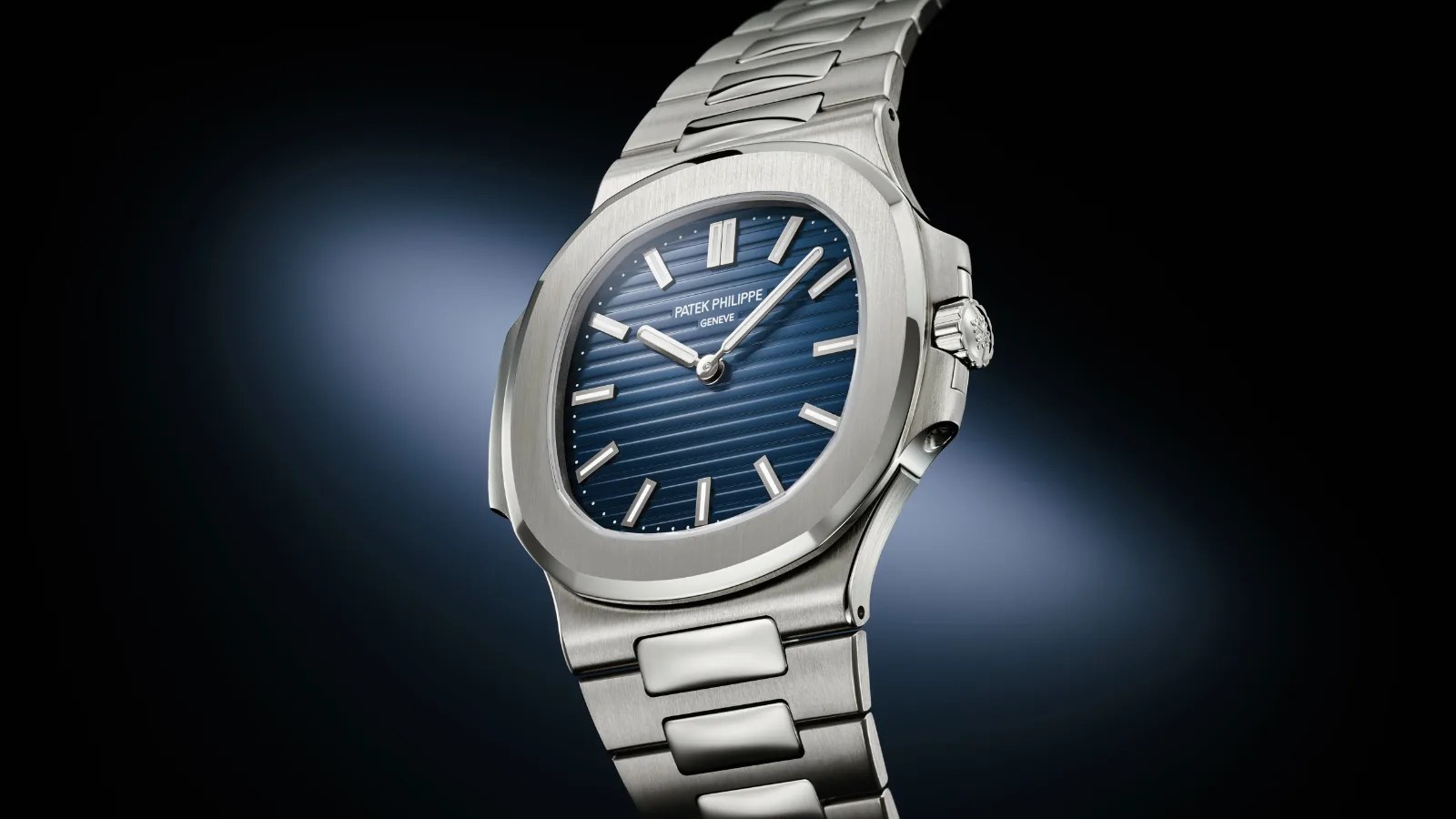
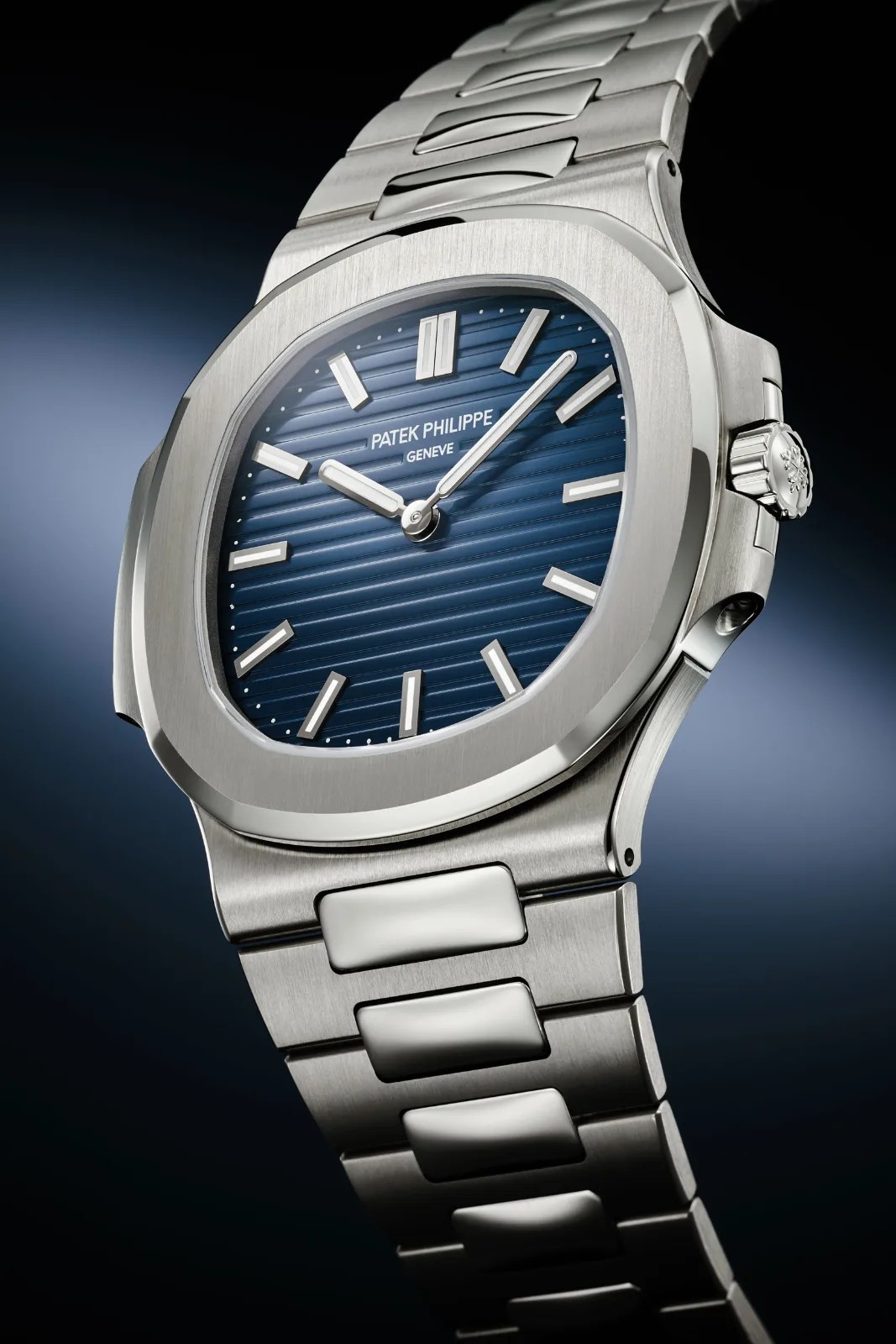
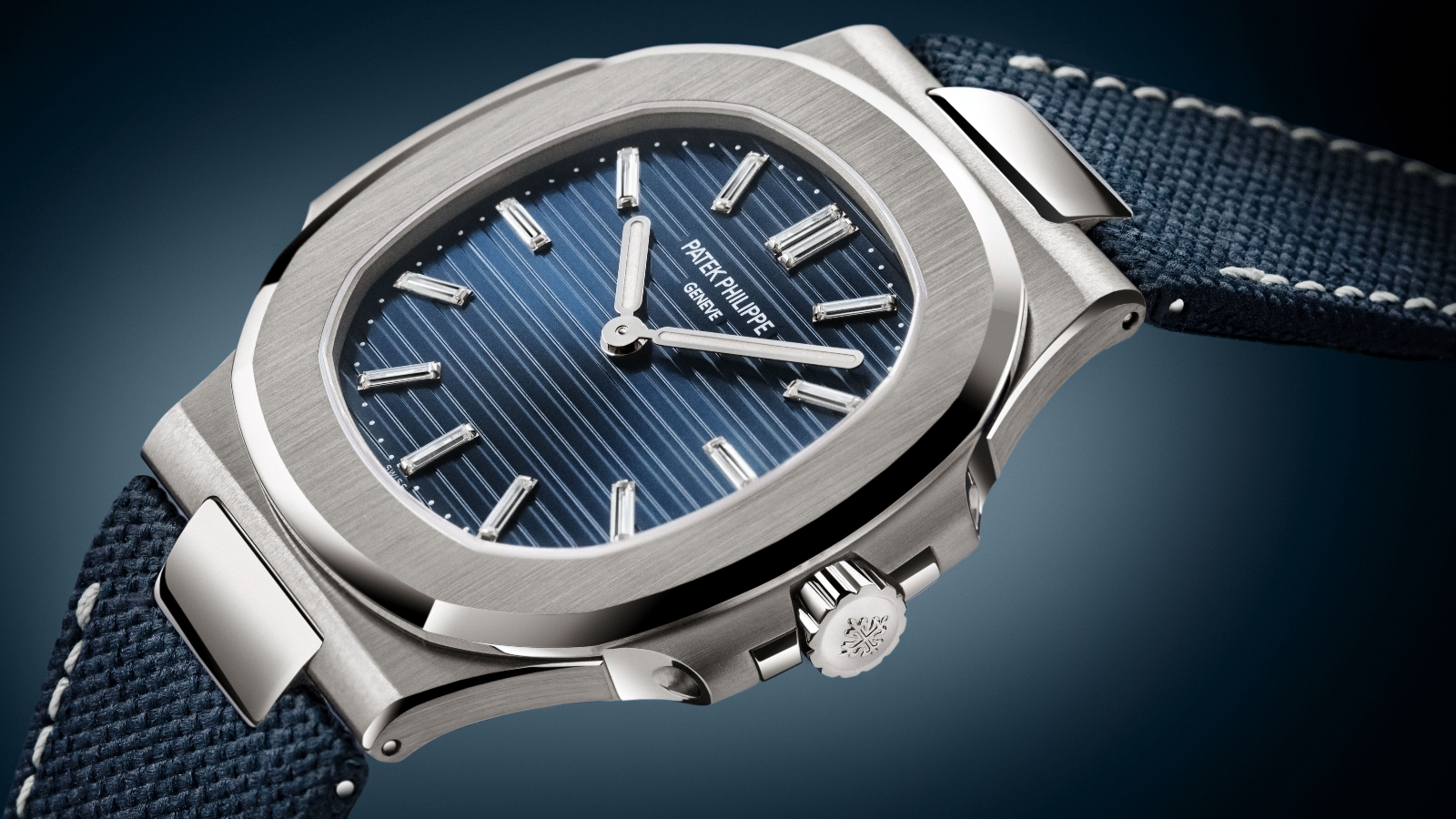
Reference 5810G-001 is the same 41-millimeter white gold case, this time on a navy blue composite strap with cream stitching and a white gold Nautilus fold-over clasp. The hour markers are set with baguette-cut diamonds totaling 0.39 carats. Limited to 1,000 pieces, half the run of its bracelet counterpart, and the most visually distinctive of the three wristwatches. CHF 60,000.
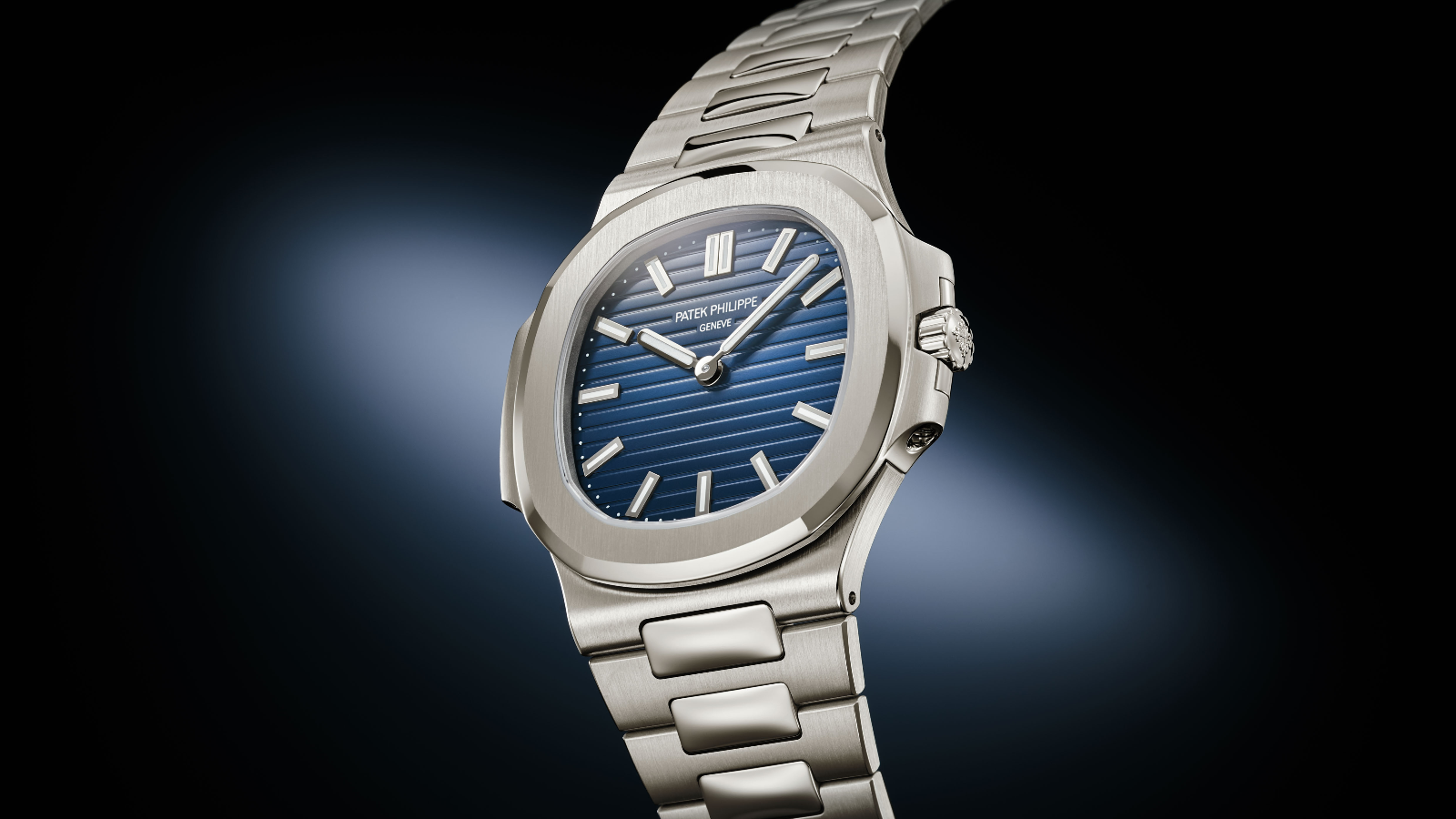
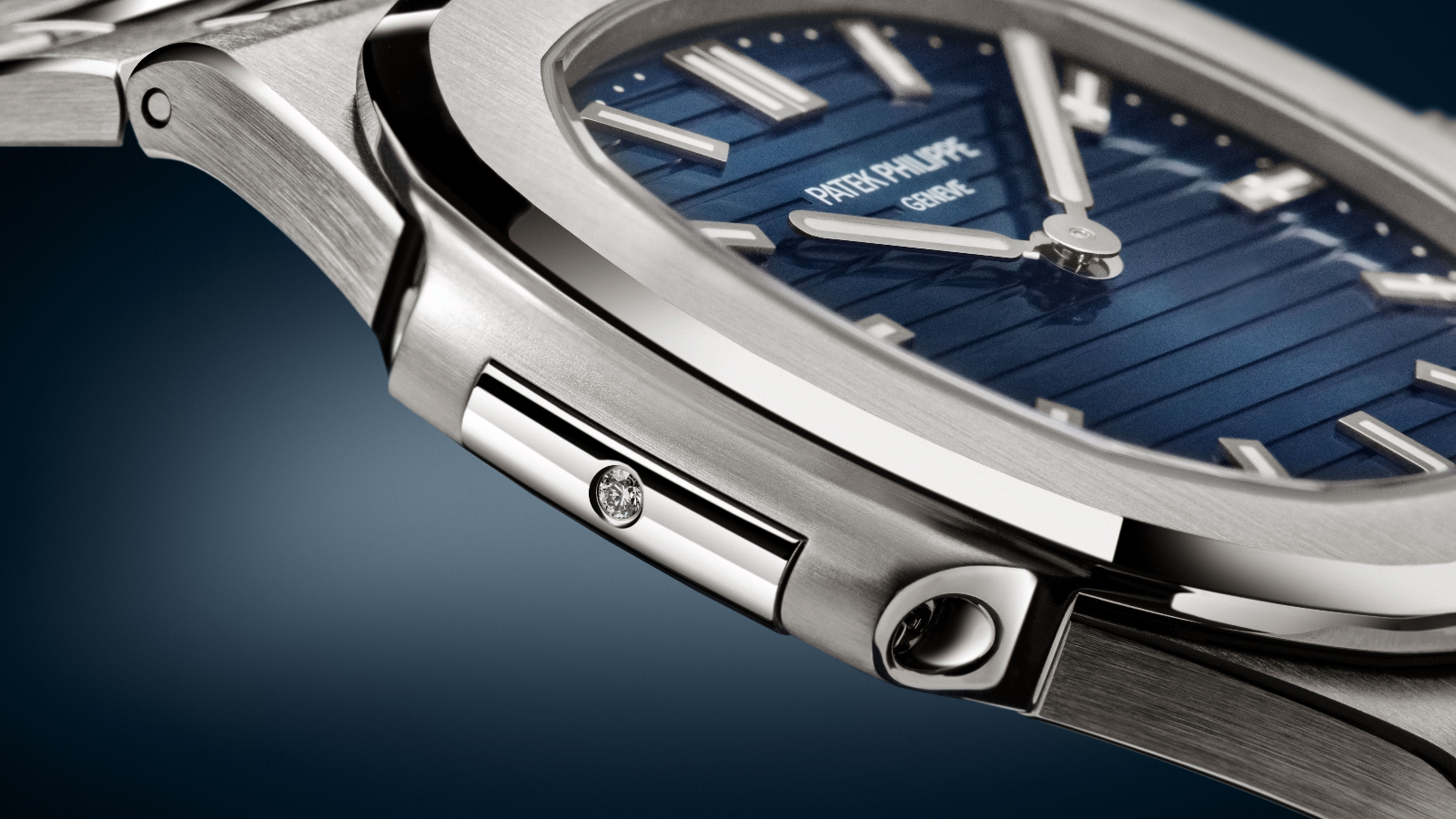
Reference 5610/1P-001 is in platinum, 38 millimeters, and is the reference that will mean the most to people who understand the collection's history. The medium Nautilus, recalling the proportions of the Reference 3800/1 that launched in the 1980s and the Reference 5800/1A that marked the 30th anniversary in 2006, returns here in platinum on a platinum bracelet, with a brilliant-cut diamond set into the case hinge at 9 o'clock. The profile is 6.9 millimeters. Of the three wristwatches, this is the one that stops you. The size, the material, the absence of anything unnecessary. Limited to 2,000 pieces. CHF 90,000.
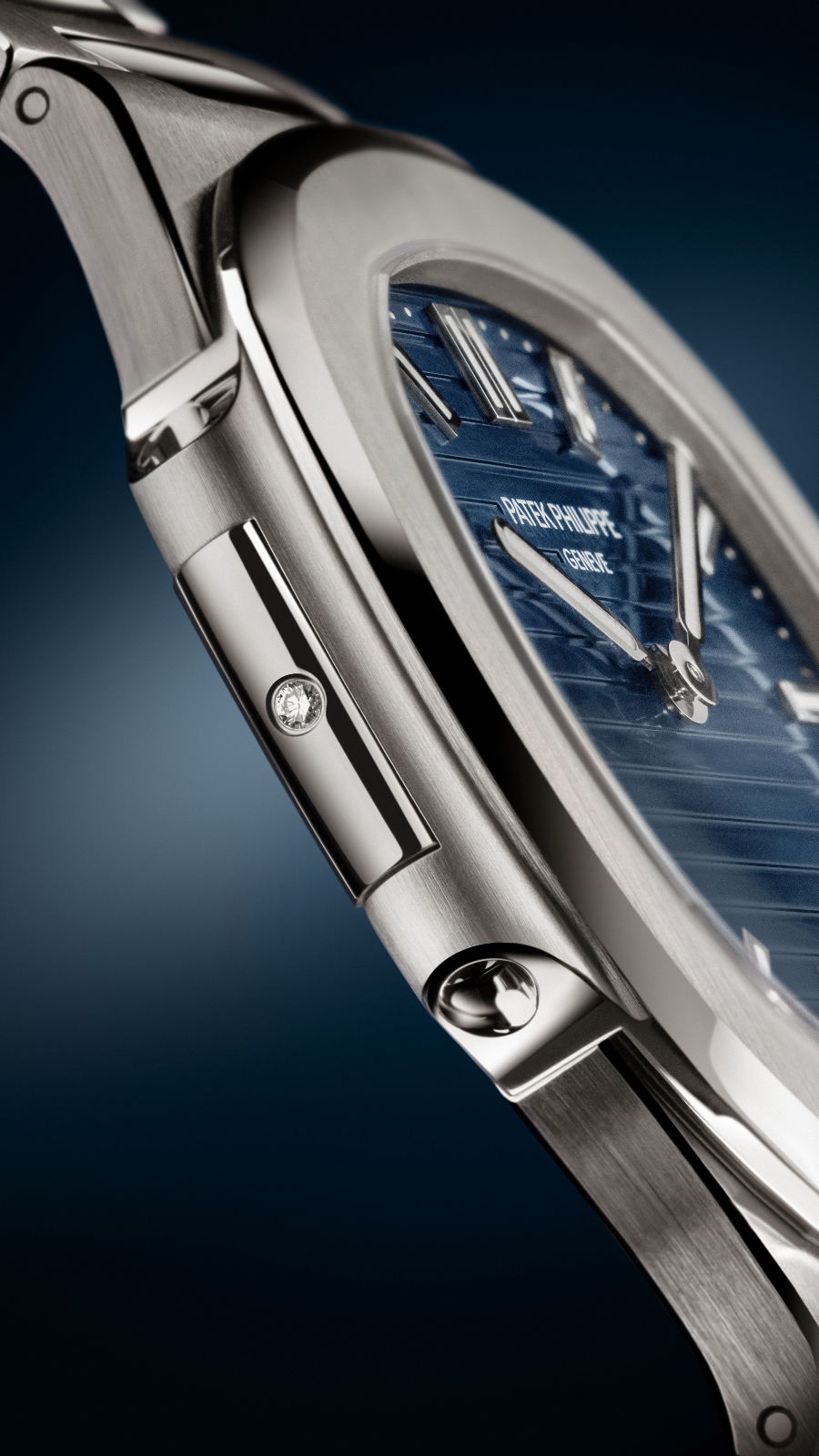
The Desk Watch
Then there is Reference 958G-001.
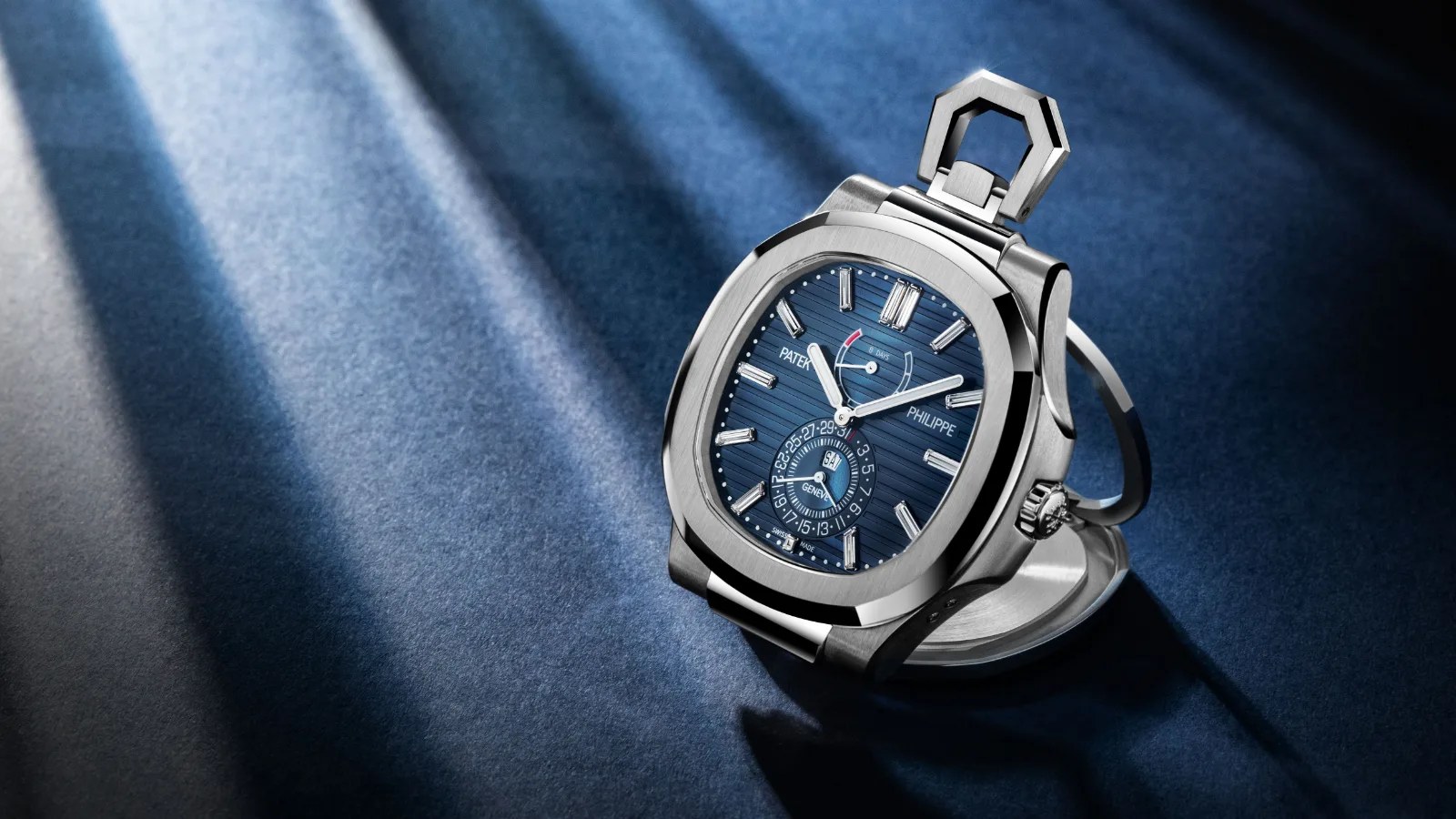
In white gold, 50.65 millimeters in diameter, it is the Nautilus in a form the collection has never previously taken: a desk watch. The silhouette is immediately recognizable, octagonal bezel, softened corners, the porthole logic intact, but without a bracelet, sitting instead on its own hinged caseback cover, which folds out as a support. That cover, protected by sapphire crystal, carries a sunburst blue horizontally embossed decoration centered on an applied Calatrava cross in satin-brushed white gold. Beneath it, the caseback is engraved: "50th Anniversary Nautilus 1976 – 2026 Patek Philippe."
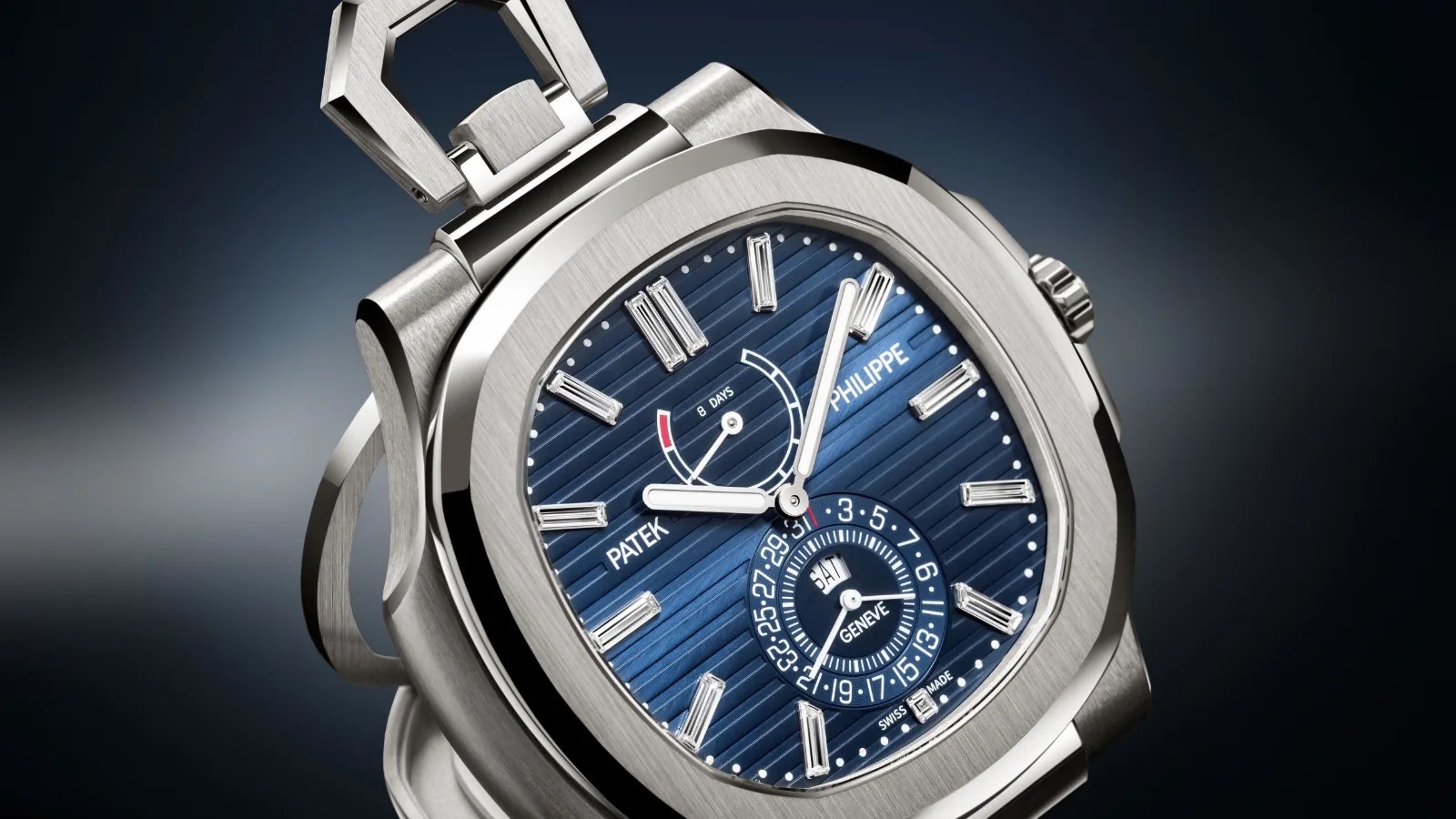
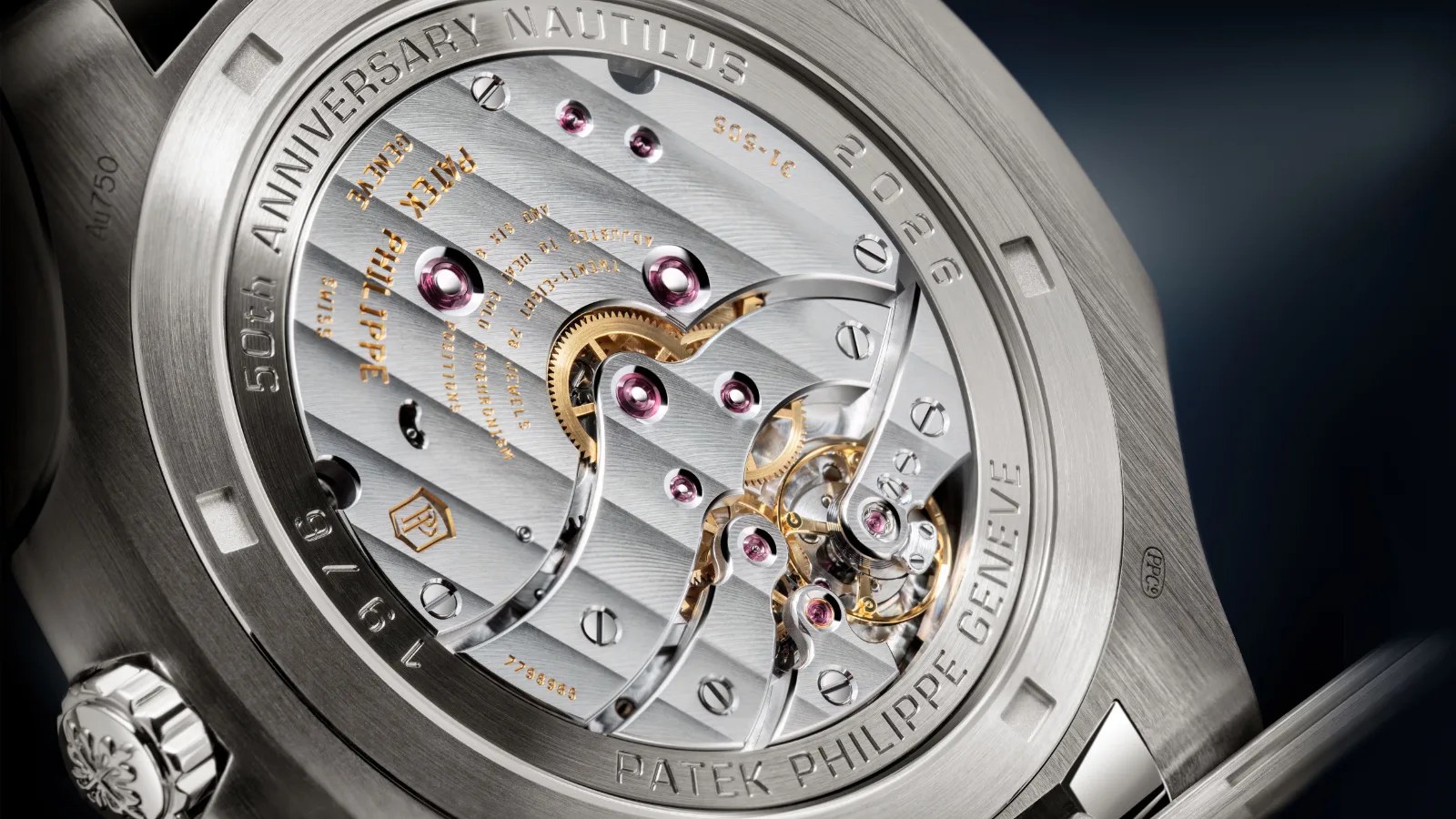
The movement is the manually wound Caliber 31-505 8J PS IRM CI J, first seen in 2025 in the Calatrava 8-Day Reference 5328G-001. Its two going barrels, connected in series, provide a minimum power reserve of eight full days, with a ninth in reserve. In addition to hours and minutes, the caliber displays an instantaneous date by hand, instantaneous day in an aperture, small seconds at 6 o'clock, and a power reserve indicator at 12 o'clock: complications that make practical sense on an object that lives on a desk and needs to be read at a distance.
The hour markers are set with baguette-cut diamonds totaling 0.96 carats. Limited to 100 pieces. CHF 205,000.
It is also, depending on how you look at it, the most honest thing in the collection. A Nautilus that has nowhere to go, sitting on a desk, telling you the time, the day, and exactly how much of its eight days remain. No wrist required. No occasion necessary.
Just the watch, doing its job, fifty years on.