
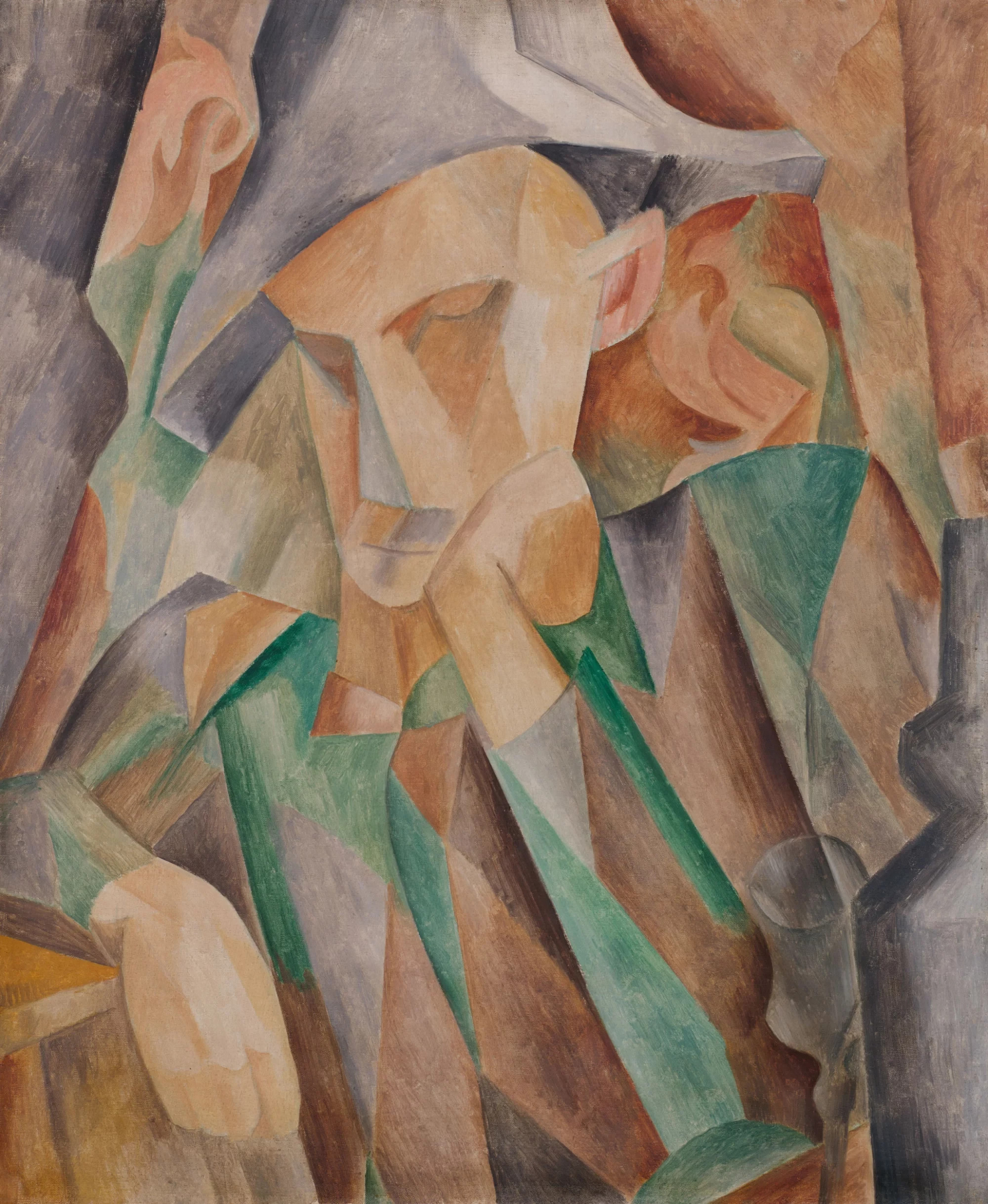
In the spring of 1909, Pablo Picasso stood at a decisive point in his career. He was no longer satisfied with painting the world as it appeared. He began to reimagine what a painting could be, and in doing so, changed the course of modern art.
The work from this extraordinary period is titled Arlequin. Picasso took the familiar figure of the Harlequin and turned it into a laboratory for a new kind of vision. The painting is suspended between what came before and what was about to emerge. It exists in the space between the rupture of Les Demoiselles d’Avignon and the arrival of full Analytical Cubism.
Here, form is compressed. Perspective is fractured. The work operates as a bridge, caught between pure representation and total reinvention. It is a moment captured on canvas.
From Influence to Reinvention
The influence of Paul Cézanne is visible, yet the vision is unmistakably Picasso’s own. This is the work that marks the instant where influence became something else entirely. It is a document of a breakthrough.
The painting’s historical importance is profound. It has a distinguished provenance, passing through the hands of notable collectors before arriving at its current moment. It belongs to The Collection of Adele & Enrico Donati.