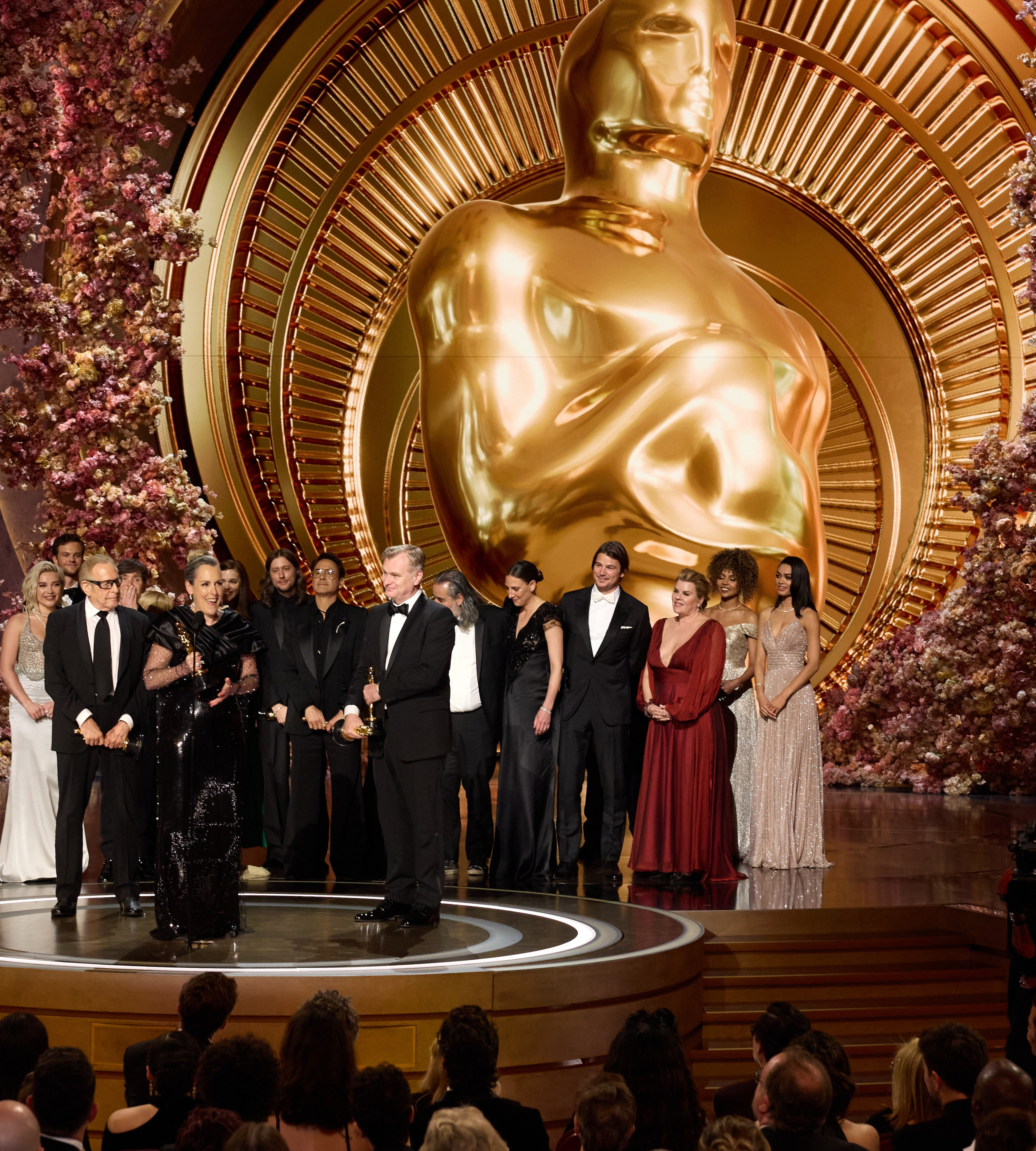
The Oscars always pretend to be about the awards. They are, of course, but the real shape of the night appears in everything around them.
Conan O’Brien understood that from the start. Calling himself the last human host before joking that next year the job would go to “a Waymo in a tux” cut straight to the point. The Oscars still sell grandeur, but everyone in the room knows the machine has become part of the show.
That is why the most revealing moments rarely happen at the podium.
They happen when Timothée Chalamet, Elle Fanning, and Kylie Jenner are deep in conversation between the formalities. When Pedro Pascal and Sigourney Weaver share a laugh that has nothing to do with a category. When Nicole Kidman throws a peace sign and briefly punctures the stiffness the ceremony works so hard to maintain. Even the Bridesmaids reunion landed because it felt larger than a bit. It reminded the room that Hollywood still trades on memory as much as momentum.
That is what the Oscars really are at their best: not just an awards ceremony, but a live display of proximity. Old names, current names, future names, all placed in the same frame. The stage provides the winners. The room provides the hierarchy.
That is also why these off-stage moments matter more than they seem to. Not because they are secret, and not because they are always profound, but because they show the industry in its natural habitat: watching itself, greeting itself, reaffirming itself.
The red carpet is still controlled. The speeches are still rehearsed. But between those polished surfaces, something more useful appears. You get a better sense of who is comfortable, who is central, who belongs instinctively, and who is still arriving.
That is the real show at the Oscars.
Not the envelopes. Not the headlines the morning after.
The feeling of the room.