
A 1938 Delahaye 165 Cabriolet sat on the lawn at Fort Adams, its Figoni et Falaschi coachwork looking as purposeful as it did the day it was built. The car, part of the Pearl Collection, earned the Vanderbilt Cup for “Best of Show” at the 2026 Audrain Newport Concours d’Elegance. Presenting the award was Wilhelm Schmid, the CEO of A. Lange & Söhne.
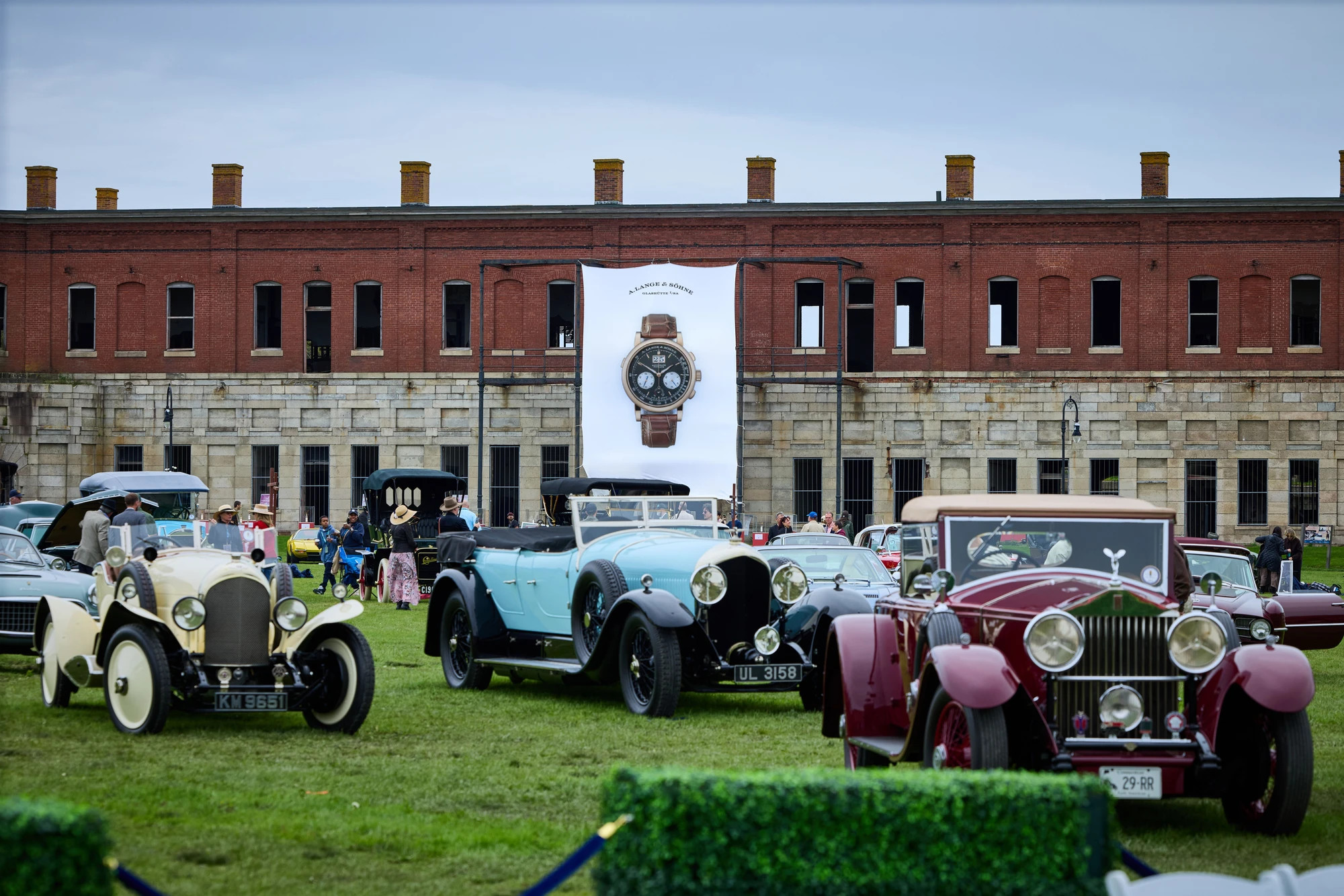
The moment captured a relationship that runs deeper than simple sponsorship. For the German watchmaker, appearing at concours events is a long-held tradition. The house has supported the Concorso d’Eleganza Villa d’Este for fifteen years and the Concours of Elegance at Hampton Court Palace for nine. Its four-year affiliation with the Audrain Concours is part of a consistent pattern. These are not marketing experiments. They are declarations of a shared philosophy.
The easy explanation is to point to common values like craftsmanship or heritage. But the connection is more specific. It has to do with how an object earns its permanence. “There are no shortcuts to excellence,” Schmid says. He speaks of the designers, engineers, and owners whose collective dedication creates “something more than just a car.” The same could be said for a watch. It is an argument about the power of refusing to compromise.
A German Approach to Time
That refusal was on display in Newport. The company presented a gallery of its chronograph collection, linking the function of short-time measurement to Newport’s own history as the site of America’s first circuit race. Yet the watches themselves suggest a purpose beyond pure utility. The DATOGRAPH, a modern classic, sat alongside the TRIPLE SPLIT in 950 platinum, a movement capable of comparing multiple times for up to twelve hours.
These are not simple stopwatches. They are intricate machines, expressions of a distinctly German approach to horology. They represent a quest for mechanical perfection that has produced thirteen different chronograph movements since 1999. Each one is a complex solution to a complex problem, engineered and finished with an intensity that seems to defy market logic.