
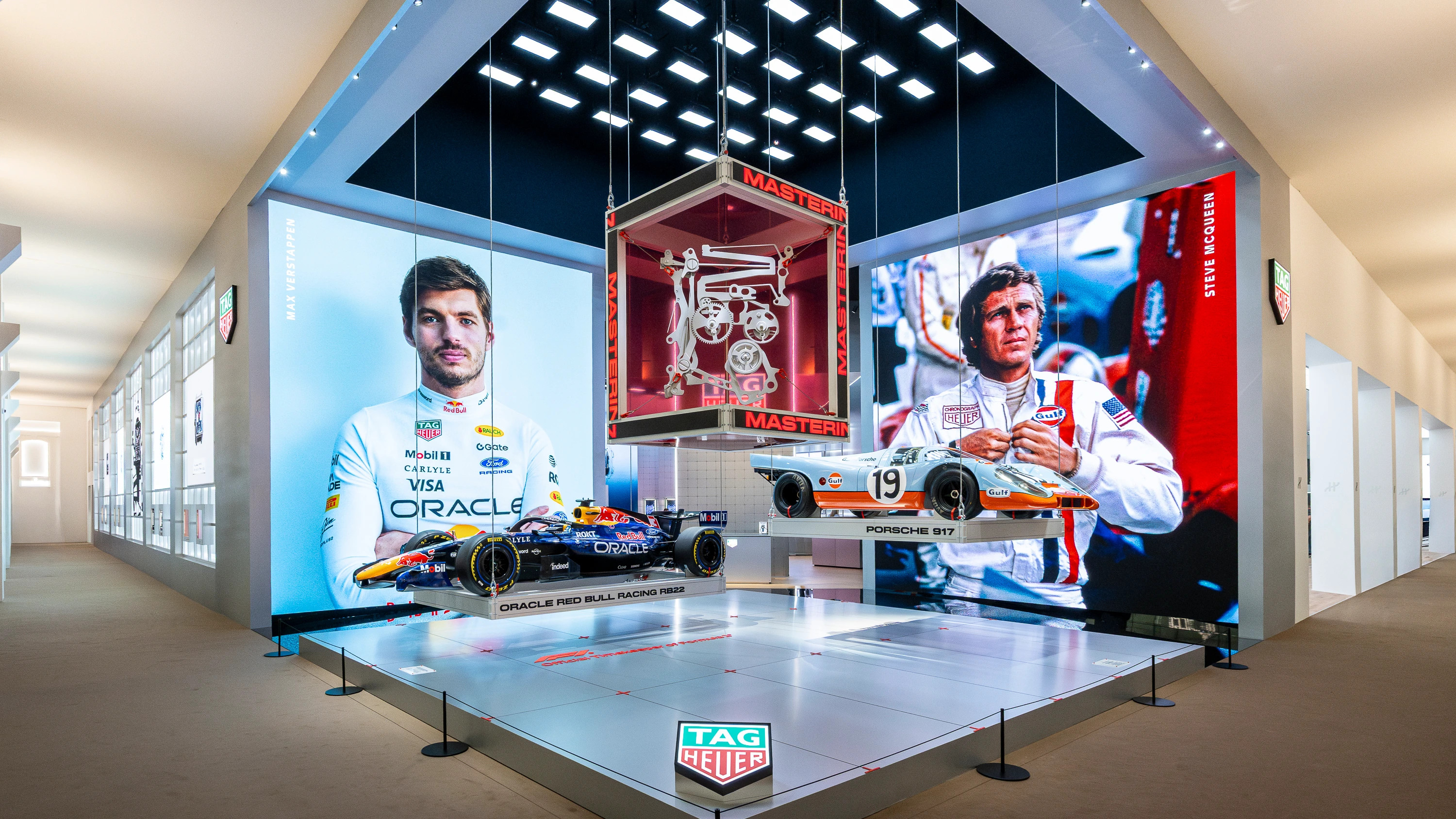
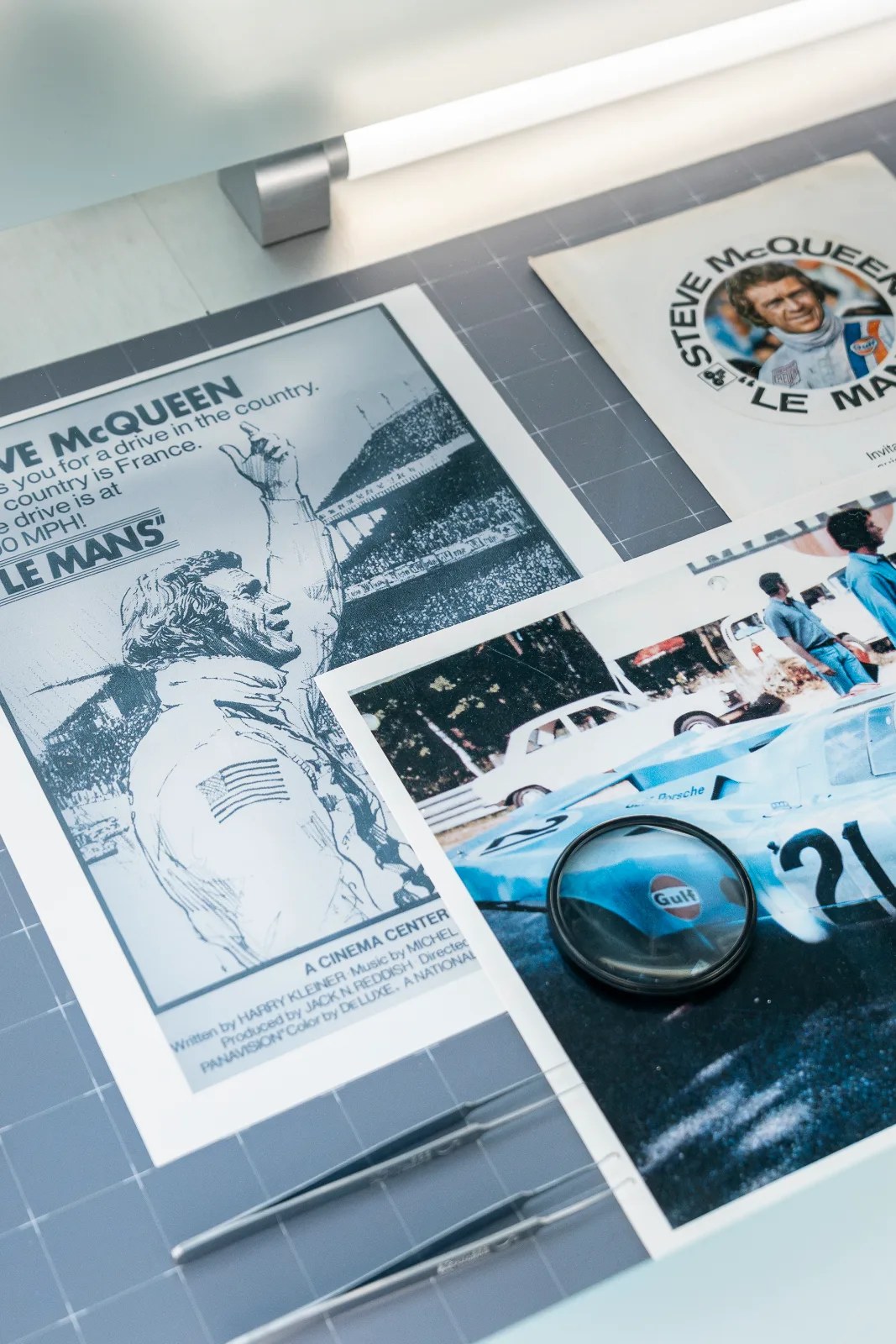
There is a version of this story that begins with Steve McQueen. It always does. A man in a racing suit, a blue square on his wrist, a 1971 film called Le Mans. The watch outlasted all of it.
But the more interesting question isn't why the Monaco survived. It's why TAG Heuer keeps returning to it. At Watches & Wonders in Geneva this April, the answer arrived in two parts.
The familiar made strange
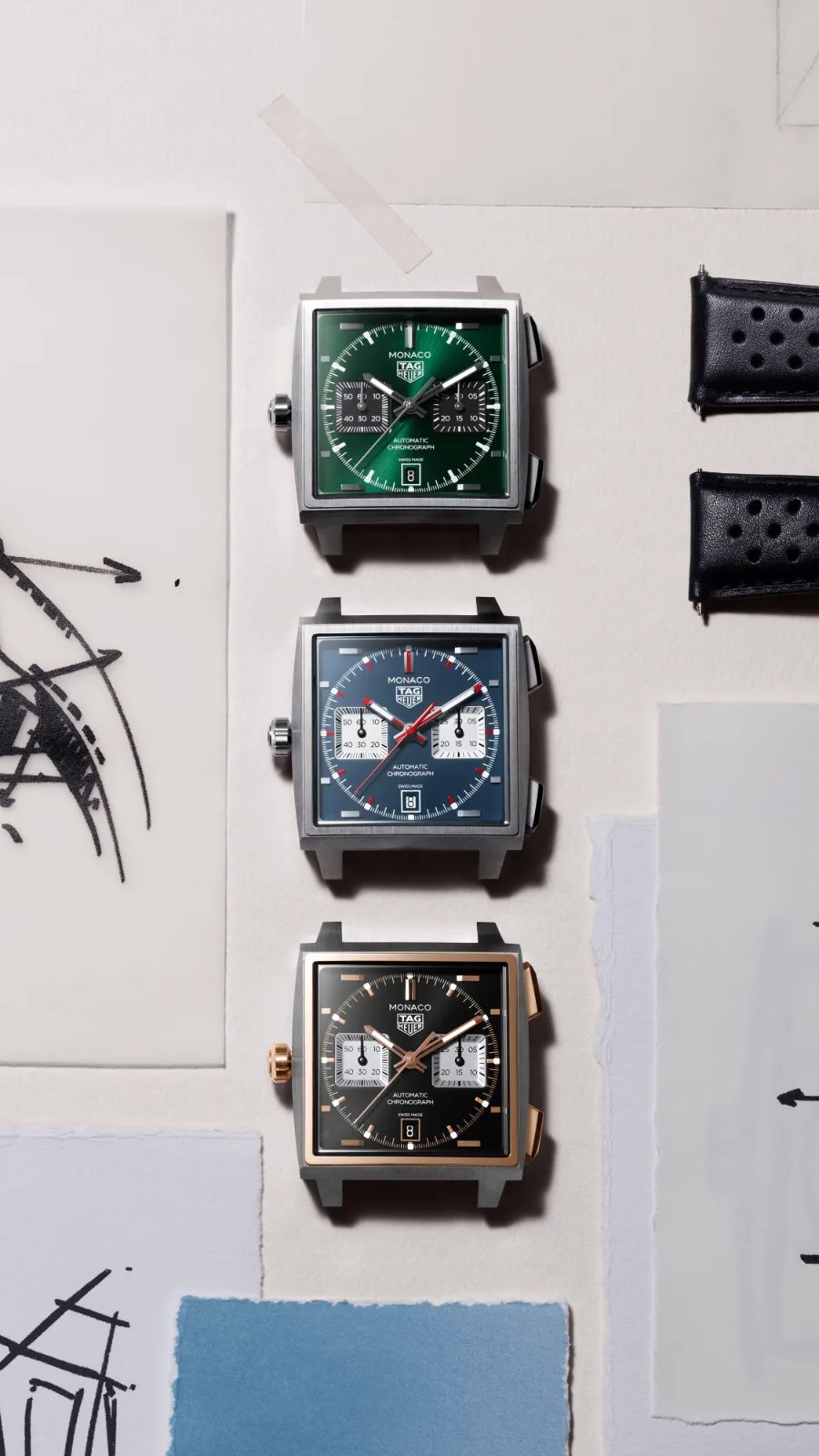
The Monaco Chronograph is the easier of the two to understand, and the harder one to dismiss. A new 39mm grade 5 titanium case, drawn back toward the original 1969 reference 1133, where the post-1997 versions had drifted. The crown still sits at nine o'clock, a placement that began as a technical necessity when the Calibre 11 was developed under the collaborative effort known as Project 99, a micro-rotor winding base from Buren, a chronograph module from Dubois-Depraz, a crown position that couldn't go anywhere else. The constraint became the signature. It still is.
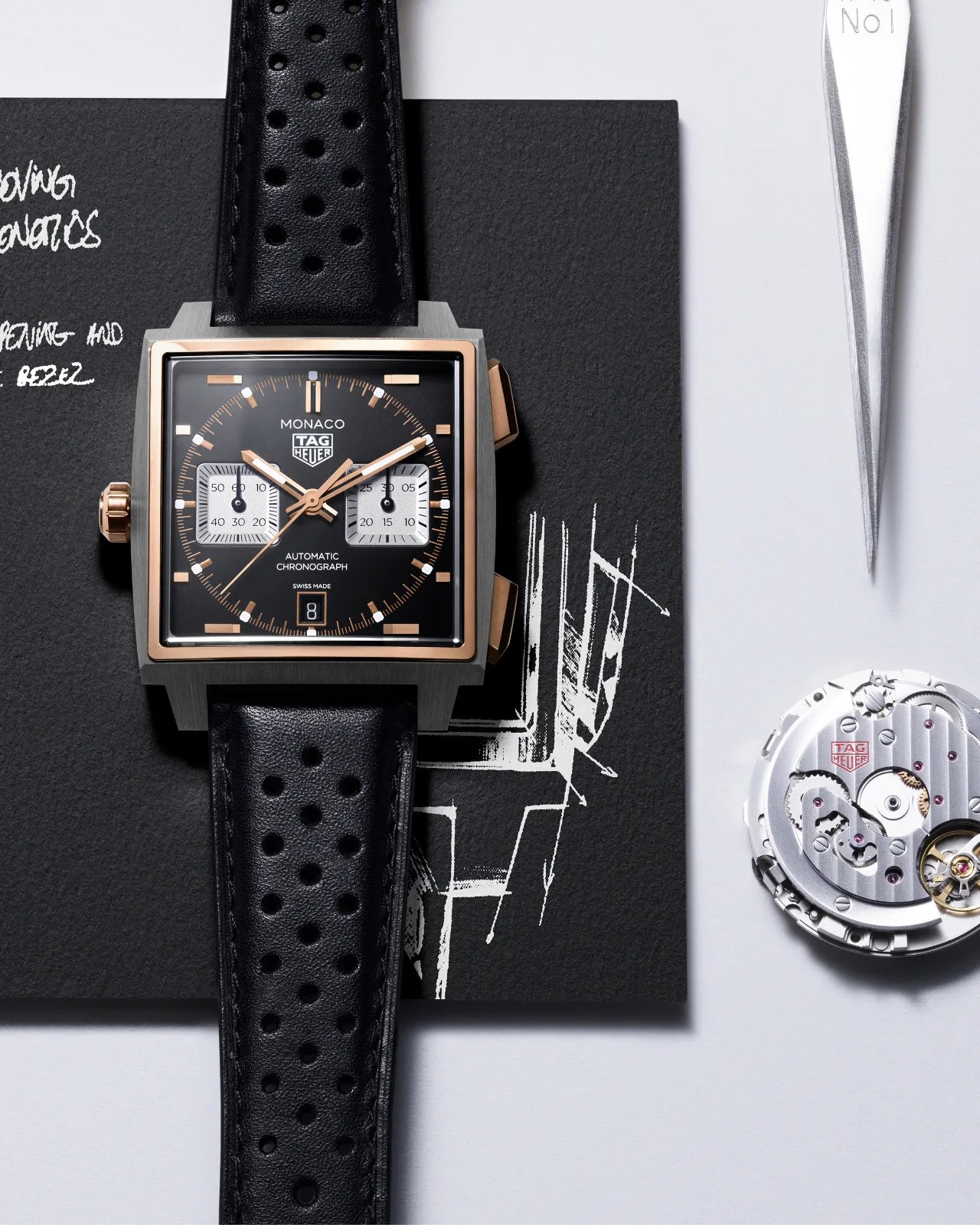
Inside, the new in-house Calibre TH20-11 carries 80 hours of power reserve and a five-year warranty. The bi-compax layout, counters at three and nine, date at six, was chosen deliberately: a nod to the Calibre 11 that started all of this, name included.
Three colourways. The blue that needs no explanation. A sunray-brushed dark green for anyone who finds British Racing Green more honest than nostalgia. And a titanium and 18K 5N rose gold variant in black, priced at 13,050 USD, for those who find restraint in the most conspicuous option available.
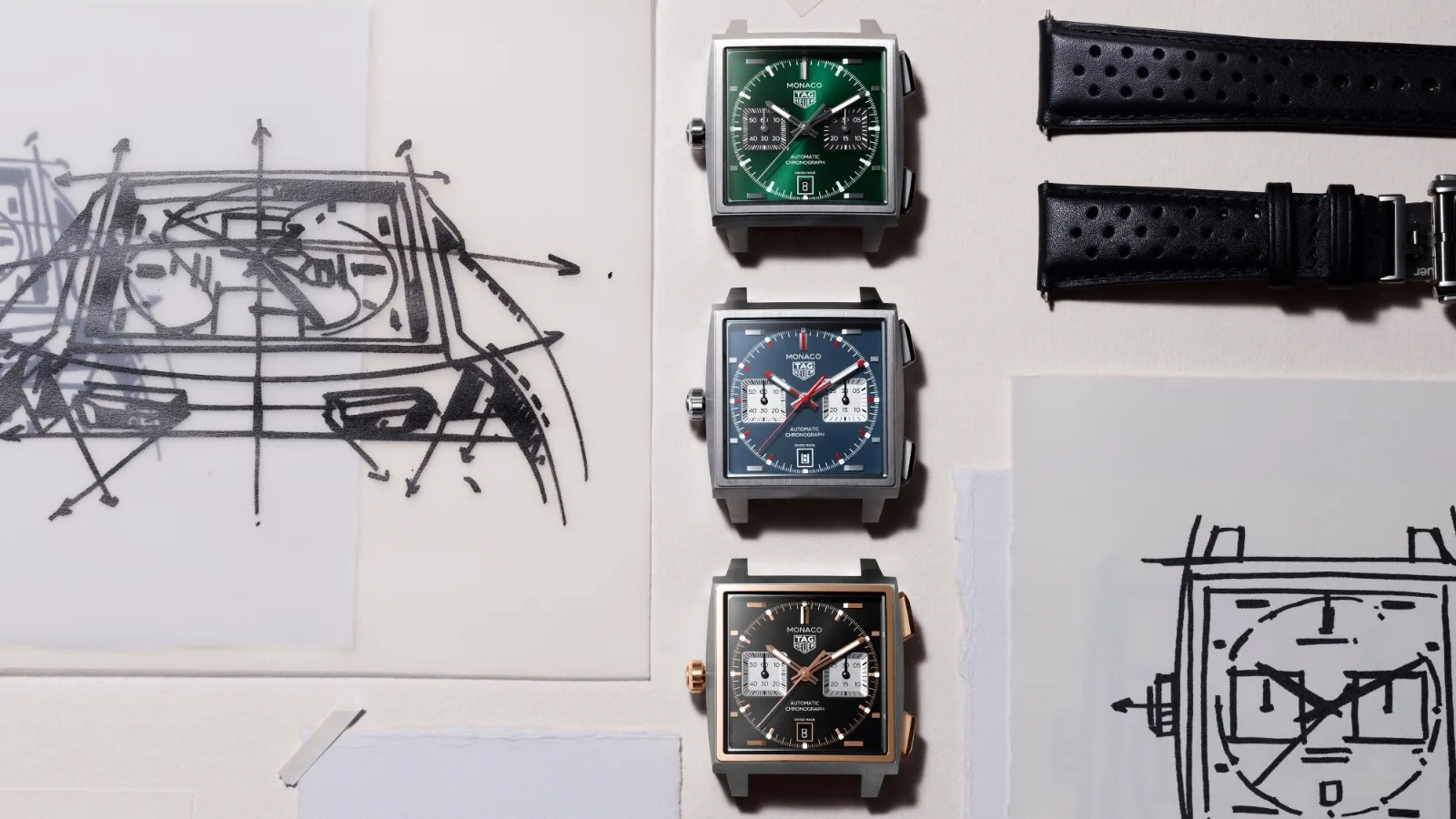
What five years in a laboratory looks like
Then there is the Evergraph. This one requires more patience from the reader, and rewards it.
The Calibre TH80-00 at its centre discards virtually every lever and spring that has governed chronograph mechanics since the complication's origins. In their place: two flexible bistable components, one governing start and stop, the other reset, produced using high-precision LIGA technology and developed over five years within the TAG Heuer LAB in close collaboration with Vaucher Manufacture Fleurier. The mechanism bears no resemblance to the constructions that have defined the chronograph since its origins.
The practical consequence is specific. Whether the pusher is pressed for the first time or the ten-thousandth, the sensation and accuracy are identical. No wear. No deviation. The movement runs at 5 Hz, holds 70 hours of power reserve, carries COSC certification, and is housed in a 40mm grade 5 titanium case, DLC-coated in black or left in natural titanium with blue accents drawn from the McQueen reference 1133B.
The transparent acrylic dial gives the impression that the counters are floating inside the case rather than sitting on a surface. The inverted movement construction places the barrel, gear train, and TH-Carbonspring oscillator visible from the dial side, so what you are looking at when you read the time is also the mechanism producing it. The effect is less decorative than diagnostic.
At 25,000 USD, the Evergraph costs almost three times the standard Chronograph. The gap between them is not primarily price.
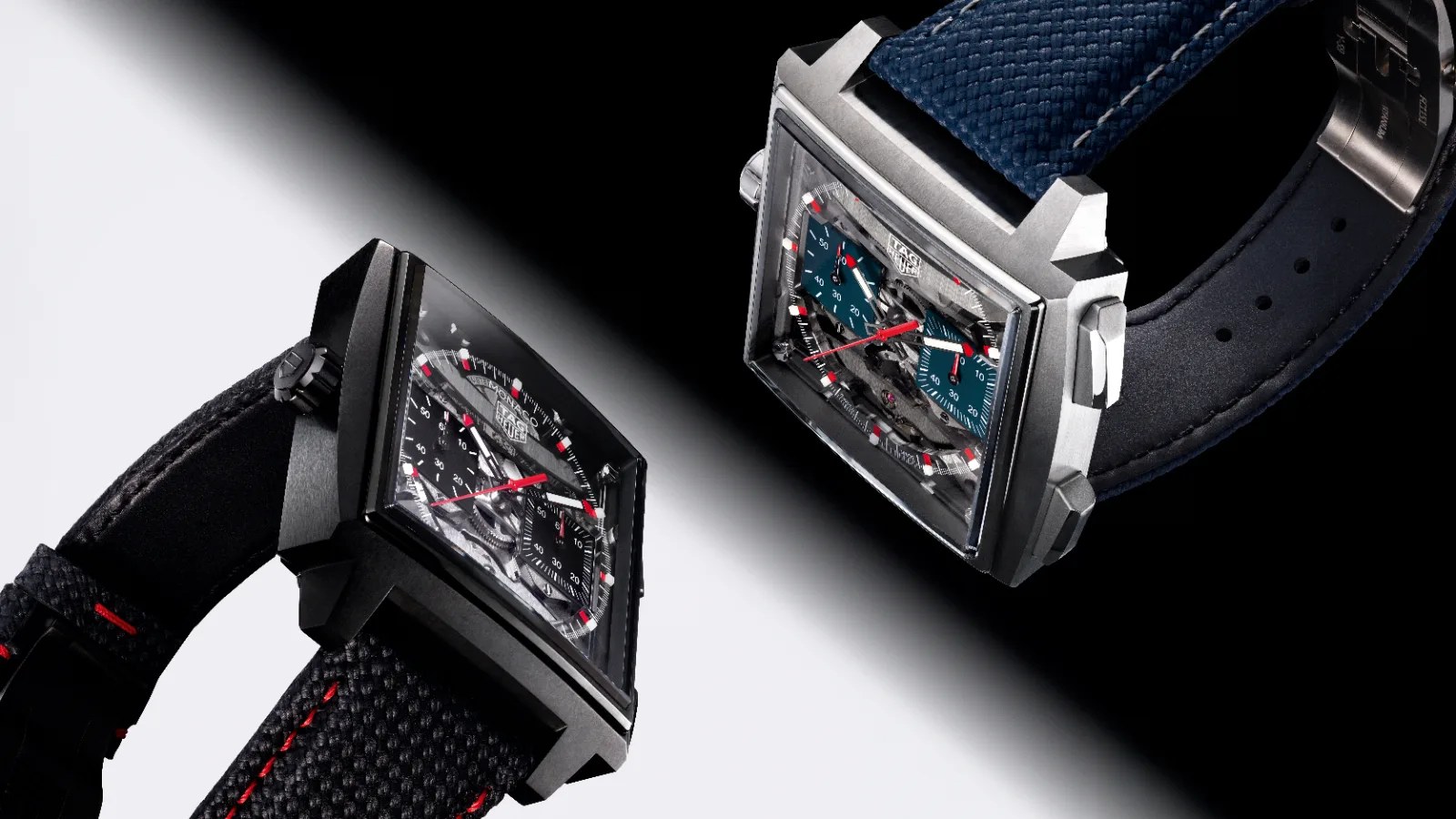
Two watches, one question
What TAG Heuer has released in 2026 is effectively a statement about who this collection is for, and in what register. The Monaco Chronograph is a proposition about belonging: to a lineage, to a moment in cinema, to the kind of taste that knows when not to explain itself. The Evergraph is a different kind of proposition entirely, about what a chronograph can be when the people making it decide the old way of doing things isn't good enough.
The original Monaco was introduced in 1969 because the movement inside demanded a case equal to it. Fifty-seven years later, the same logic holds.
The crown is still on the left.