The engravers do not wait for the celebration to end. The second the final point lands on Centre Court, a small team begins engraving the new name. The work is finished within minutes, often before the champion has left the court. It is one of those quiet details that tells you what Wimbledon actually values: the record matters more than the moment, and the moment is shorter than you think.
Because the champion does not keep the cup. He never has.
The Gentlemen's Singles Challenge Cup was first presented in 1887, and it was built from the start so that no one could own it. The two trophies before it had both been won outright and carried home (William Renshaw kept one after winning three years running, then kept the next), so the All England Club made a third that could never be taken.
The winner holds it on court, brings it to the champions' dinner that night, and then hands it back. What he takes home is a three-quarter-size replica. The original is polished once a year and spends the rest of its life behind glass in the Wimbledon museum.
Sit with that, because it is the most interesting thing about the most famous prize in tennis. You spend a life chasing a cup, and the reward for catching it is one evening of holding it before you give it back.
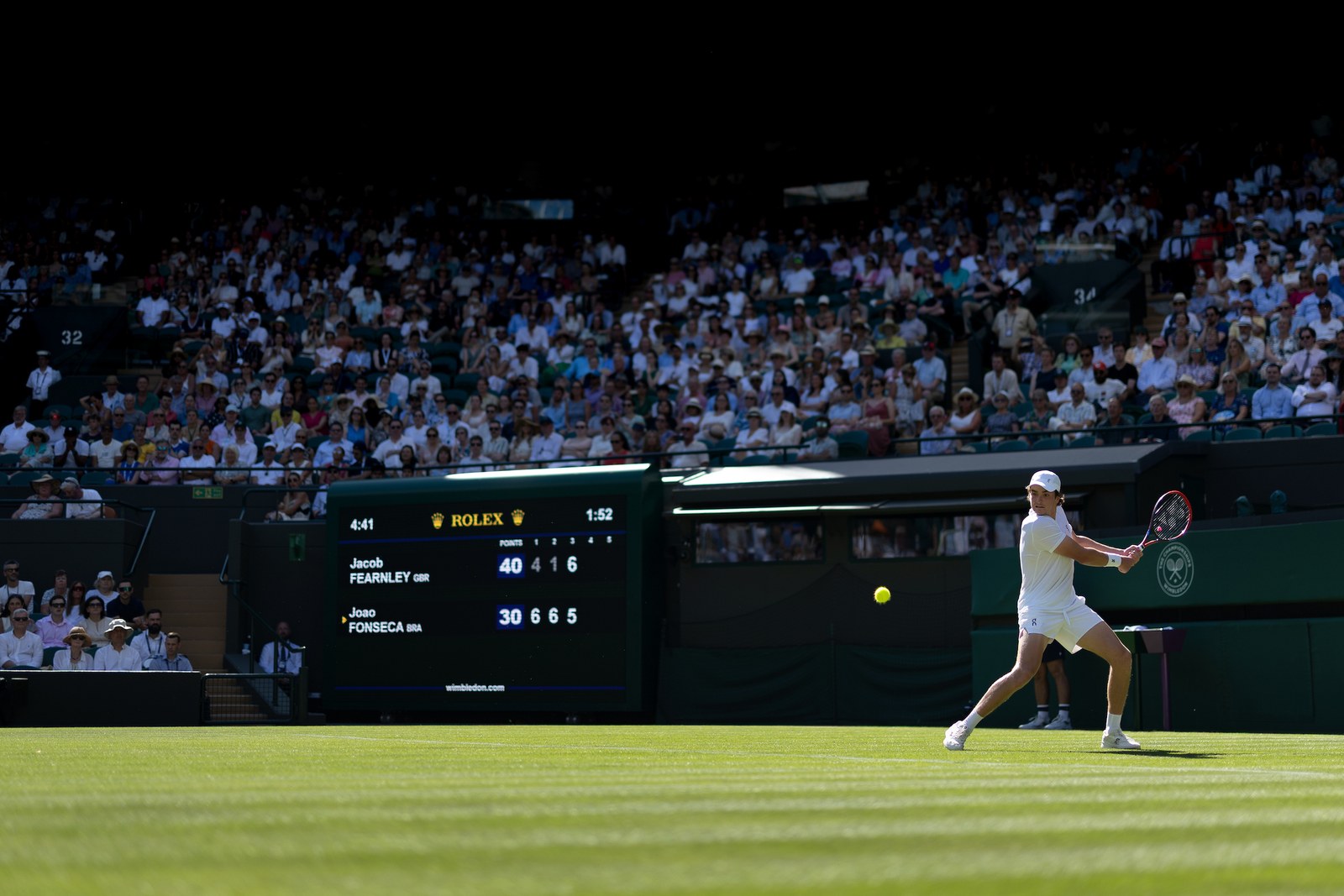
Every champion since 1877 is engraved on that trophy. The names ran out of room on the cup itself by 2009, and new winners are now cut into a black plinth at the base, but the principle has not changed in almost a century and a half. You do not win an object. You join a line of people, and you become its newest custodian until the next one arrives.
You can read the whole evolution of the men's game in that line.
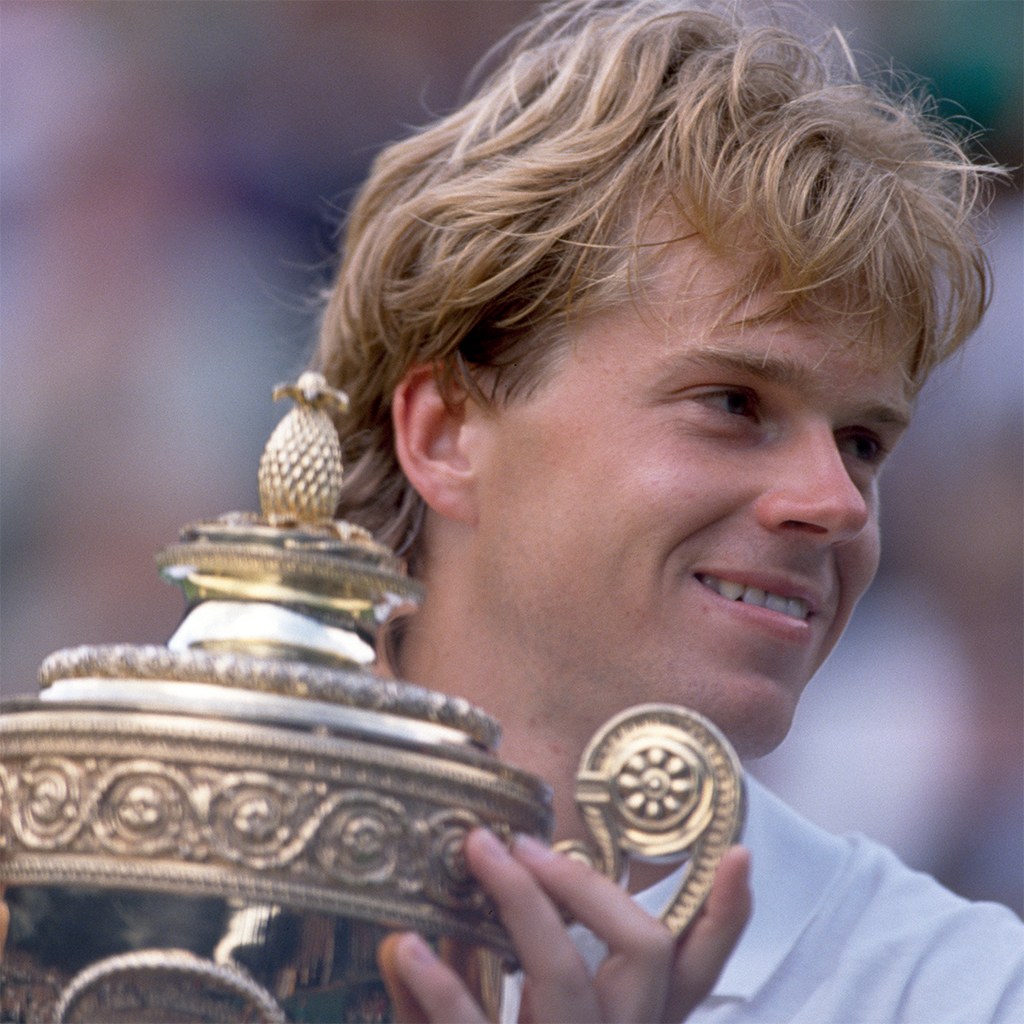
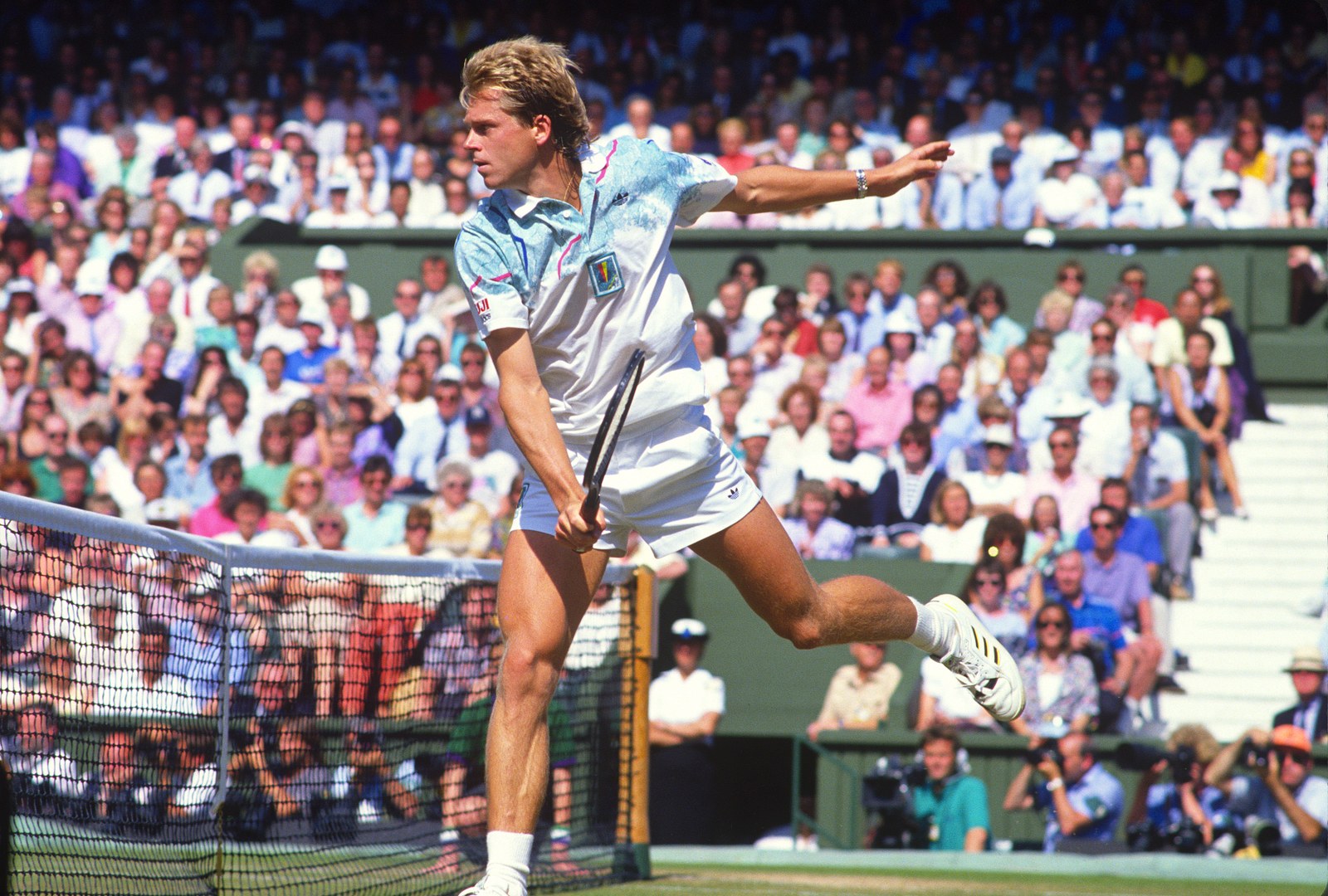
Stefan Edberg is on it twice, for 1988 and 1990, from an era when the way to win Wimbledon was to follow your serve to the net and end the point in three strokes. Serve and volley was a craft, and it was the right craft for grass. It has almost entirely vanished from the modern game, which is worth remembering whenever people talk about progress in sport as if it only ever adds and never takes anything away.
Roger Federer is on it eight times, more than any man in history. He is the bridge between the old game and the new one, the player who kept the artistry of the net era alive inside a baseline age. He became a Rolex testimonee in 2001, nearly a quarter of a century ago, and for the better part of two decades the sight of Federer holding silver at Wimbledon did more for the brand than any advertisement could.
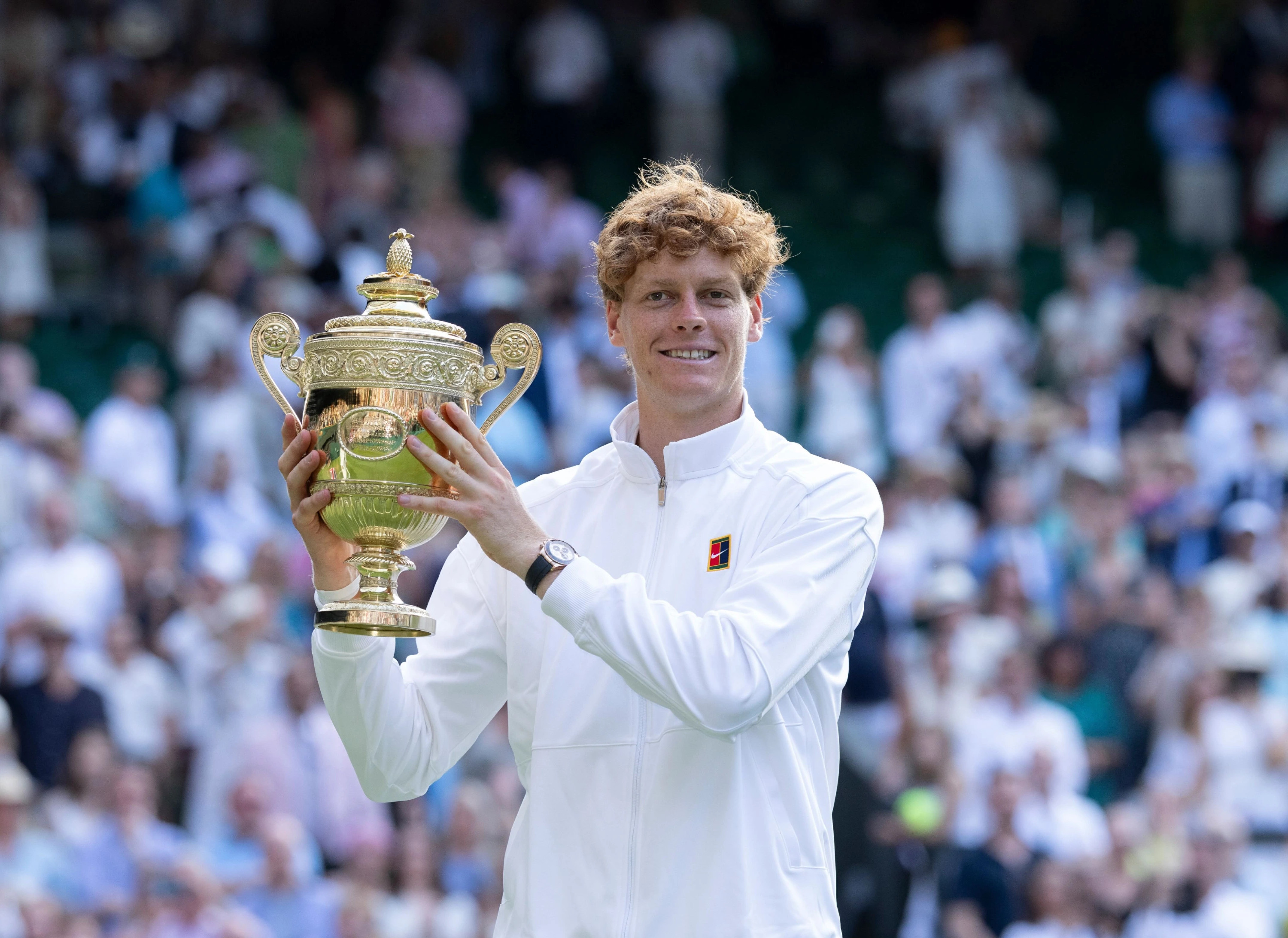
Jannik Sinner is the newest name, from 2025. He won it with a different game again: precision from the back of the court, margins measured in centimetres, almost no wasted motion. When he lifted the cup he was wearing a Rolex Cosmograph Daytona in Everose gold with a Sundust dial, which the watch world noted at once and has not stopped discussing since.
Three men, three eras, one surface, one cup. None of them owns it.
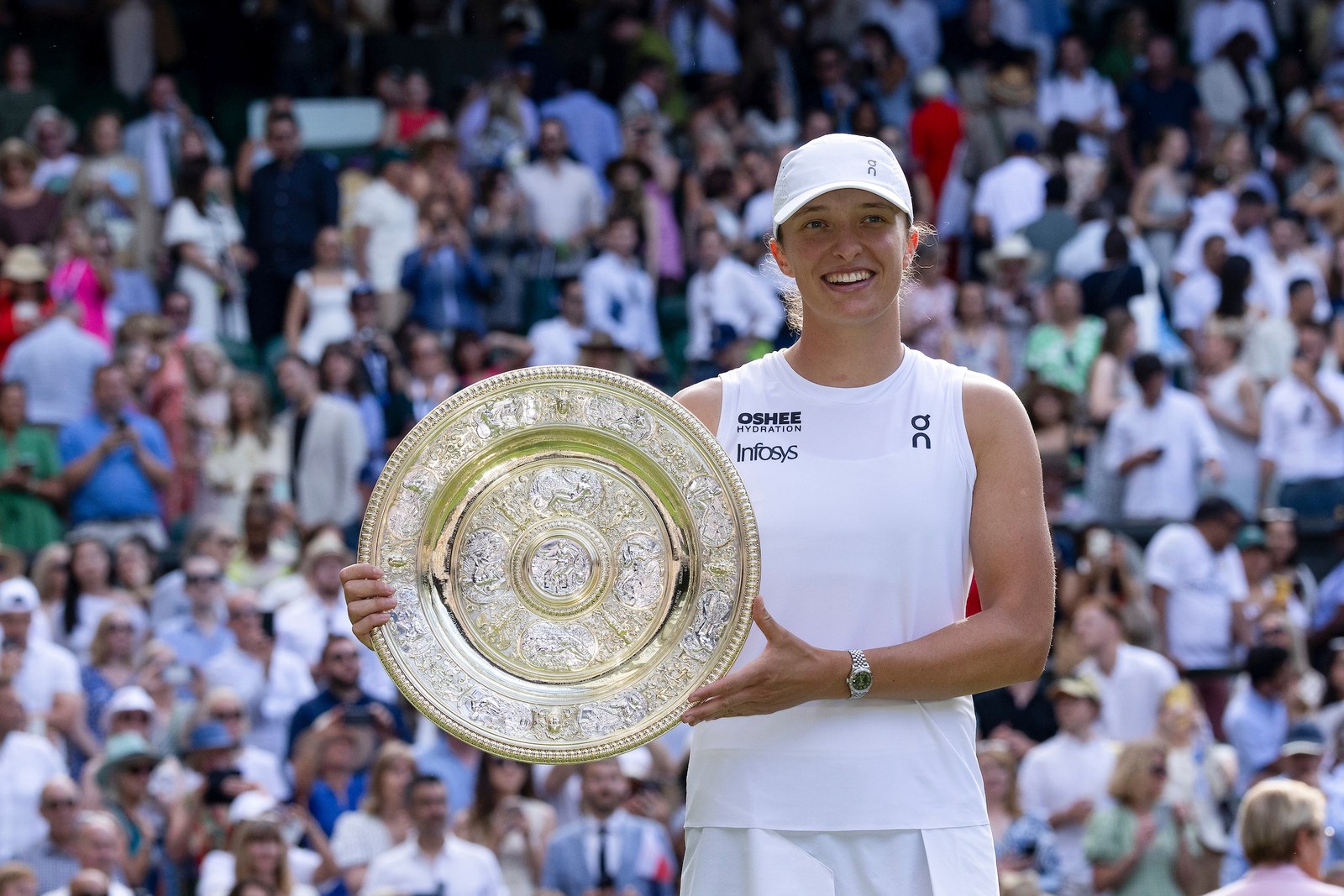
It works the same way on the other side of the draw. When Iga Świątek won her first Wimbledon in 2025, she lifted the Venus Rosewater Dish, a silver salver modelled on a Renaissance basin and made by the same Birmingham firm that built the men's cup. She does not keep that one either: the original stays at the club, the champion leaves with a replica, and her name joins the long line of women who held the dish for a year and handed it back.
There is a watchmaker at the centre of this, and it is not an accident. Rolex has kept official time at Wimbledon since 1978, and the names of its tennis testimonees are engraved on these trophies too: Björn Borg, Rod Laver, Federer. The relationship is older than most of the players in the draw this fortnight. But the more interesting connection is not the sponsorship. It is the idea underneath it.
A serious watch runs on the same logic as that cup. You do not really own a great timepiece. You service it, you wear it, you keep it running, and at some point you pass it to whoever comes after you, ideally still keeping perfect time. The value was never in possession. It was in being trusted to look after something for a while, and in handing it on in better shape than you were strictly required to.
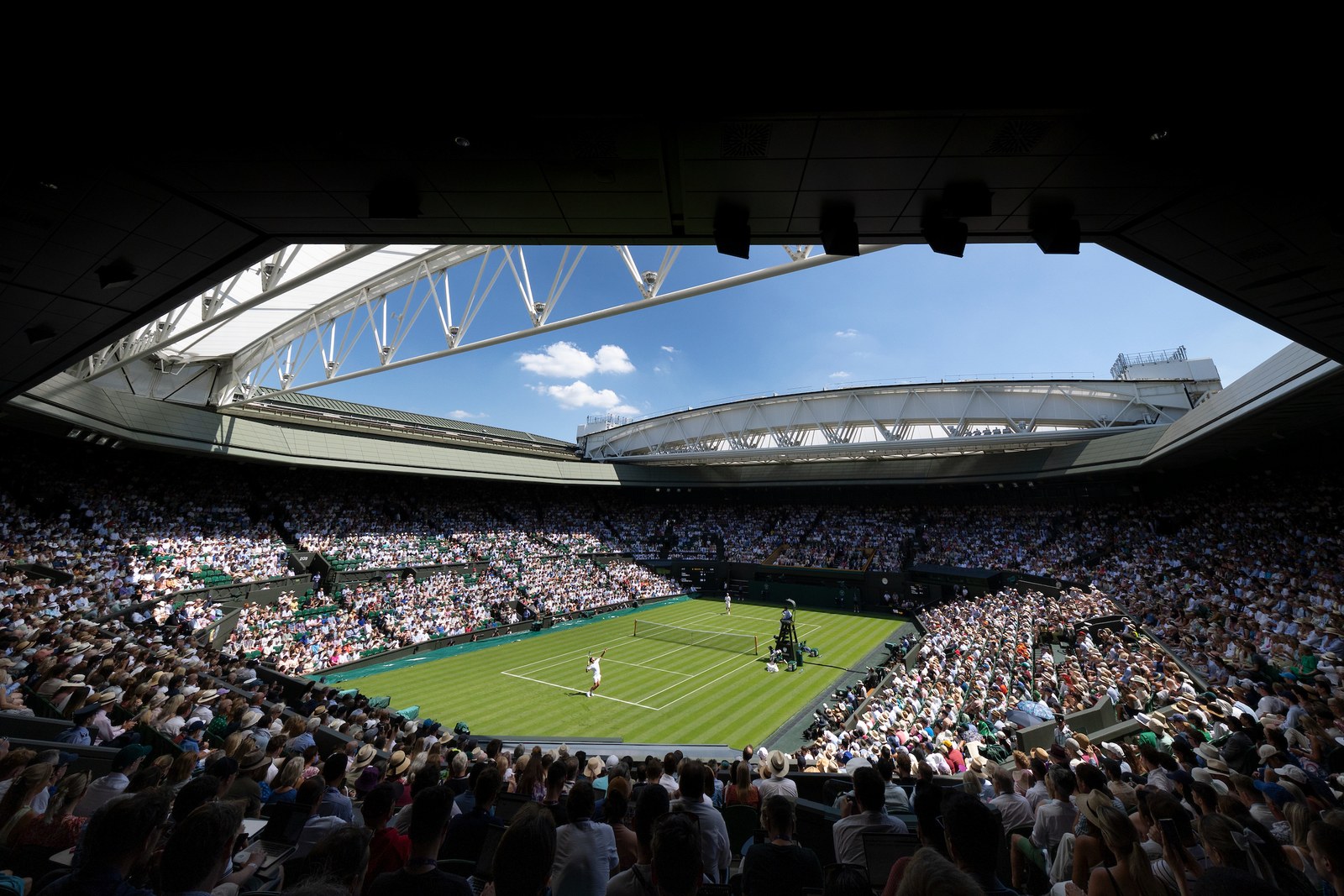
That is the quiet lesson sitting on top of Centre Court every July, under a small gold pineapple that nobody has ever fully explained. The champions understand it without being told. They lift the cup, they hold it for one night, and they give it back. The name stays. The object moves on.
Everything worth inheriting works this way.