
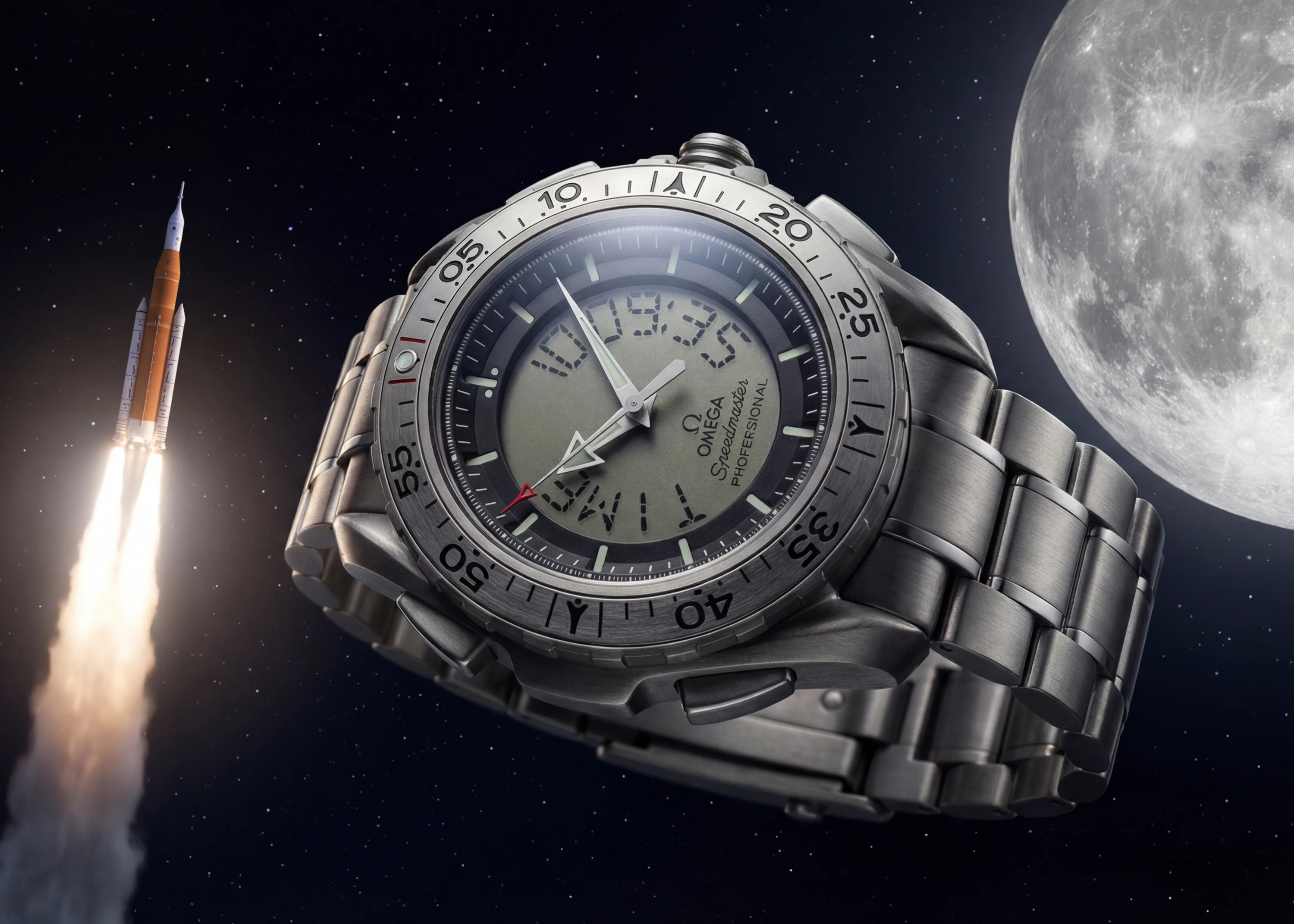
As NASA prepares for the historic Artemis II mission, the watches worn by its astronauts reveal a clear evolution in space-bound timekeeping. While the Speedmaster remains part of NASA’s DNA, the official watch for Artemis II is now the modern and highly functional Omega X-33.
The Official Watch: Omega Speedmaster X-33 Skywalker

The Omega Speedmaster X-33 Skywalker represents a new chapter in space horology. Developed in collaboration with astronauts and agencies like the European Space Agency, the X-33 is built specifically for modern missions.
Unlike the purely mechanical Moonwatch, the X-33 is a high-precision quartz instrument housed in lightweight titanium. It combines analog hands with a digital display, offering mission-specific functions such as multiple time zones, mission elapsed time, phase timing, and programmable alarms.
In an era where astronauts rely heavily on advanced onboard systems, the X-33 acts as a versatile backup and personal tool—far more adaptable to the complexities of modern spaceflight than its predecessors.
Reid Wiseman’s Breitling: A Personal Layer
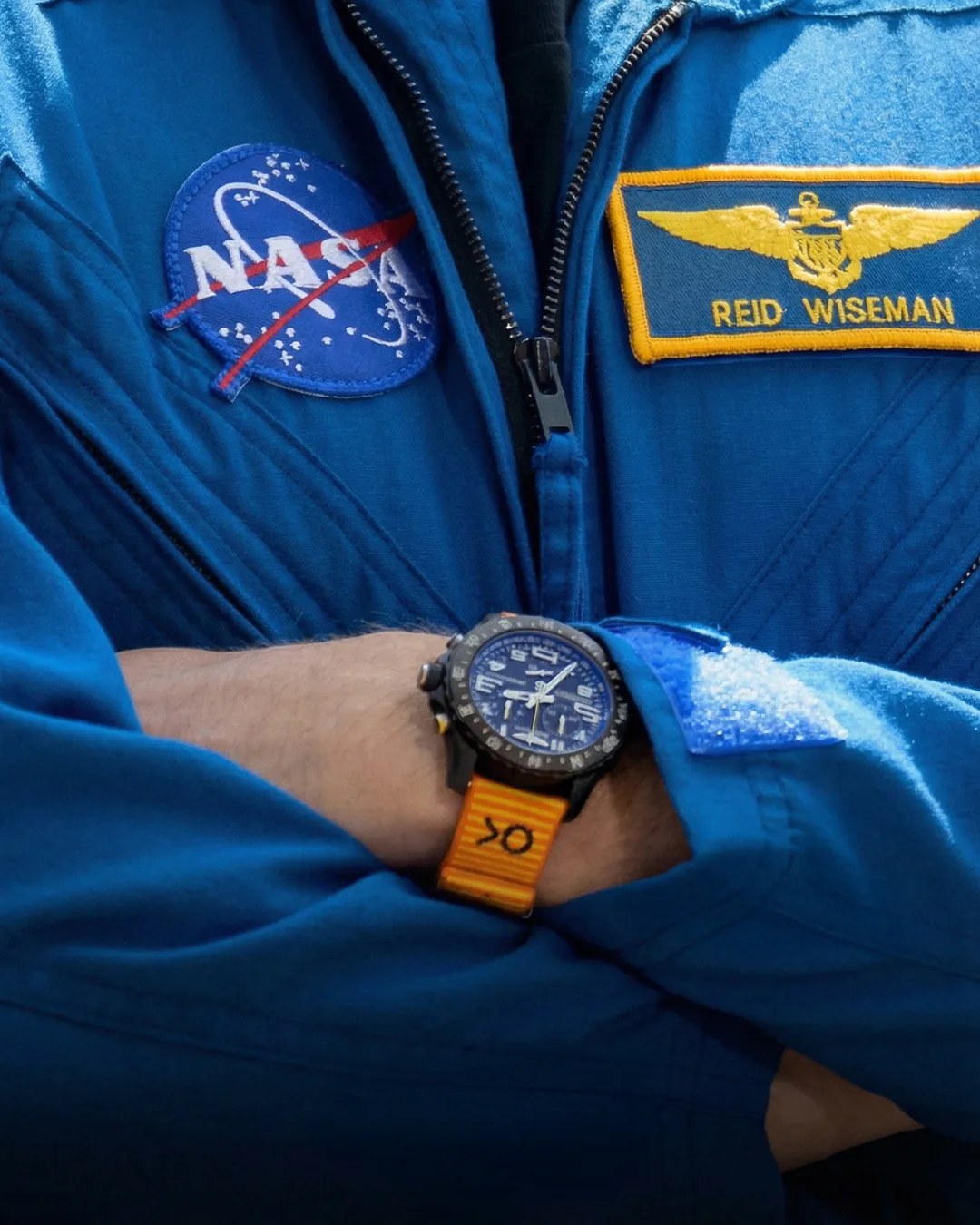
Commander Reid Wiseman adds a personal dimension to the story. In the lead-up to Artemis II, he has been seen wearing watches from Breitling - notably the Cosmonaute and the Endurance Pro.

The Breitling Navitimer Cosmonaute is deeply rooted in space history. Originally created for astronaut Scott Carpenter during the Mercury program, its 24-hour dial remains highly relevant in space, where the concept of day and night becomes abstract.
Meanwhile, the Breitling Endurance Pro reflects a different purpose. Ultra-light, durable, and built for performance, it is ideal for the physical demands of astronaut training. It’s less about spaceflight itself—and more about everything leading up to it.
A Shift in Space Timekeeping
The transition from the mechanical Speedmaster Professional to the X-33 highlights how space exploration has evolved. Today’s missions demand more data, more flexibility, and more integration with digital systems.
Yet, what remains unchanged is the importance of a reliable, wrist-worn instrument. Whether mechanical or quartz, analog or digital, these watches serve as both tools and symbols—representing the intersection of engineering, exploration, and human presence beyond Earth.
Function First, Heritage Always
Artemis II is not just about returning to lunar orbit—it’s about redefining how we operate in space. The Omega X-33 embodies that future, while Breitling’s presence on Wiseman’s wrist reminds us that heritage and personal choice still have a place in even the most advanced missions.
Because in the end, spaceflight is not only about technology—it’s about the people wearing it.