
Audemars Piguet is often understood through a single shape. The octagon of the Royal Oak has become so central to the brand’s identity that it can feel like the beginning and end of the story. It is a watch that created a category and, in doing so, built a shadow large enough to obscure much of what came before and after.
This is the complication of creating a true icon. Its gravity pulls all attention toward it. For collectors, it simplifies the narrative. For the brand, it presents a challenge. How do you remind the world of your other languages when one dialect is all anyone wants to hear?
An upcoming online auction by Phillips in Hong Kong offers a compelling answer. By focusing on pieces from outside the Royal Oak family, the sale acts as a deliberate exploration of the manufacture's other histories, revealing a depth that is easily missed.
The Bridge to Modern Sport
The Huitième collection, for instance, represents a fascinating chapter from the late 1980s. It existed as a bridge between Audemars Piguet’s classical past and the muscular design language that would later define the Royal Oak Offshore. The round cases, prominent bezels, and automatic movements were robust, yet they retained a certain formality.
Classical Forms, Complicated Souls
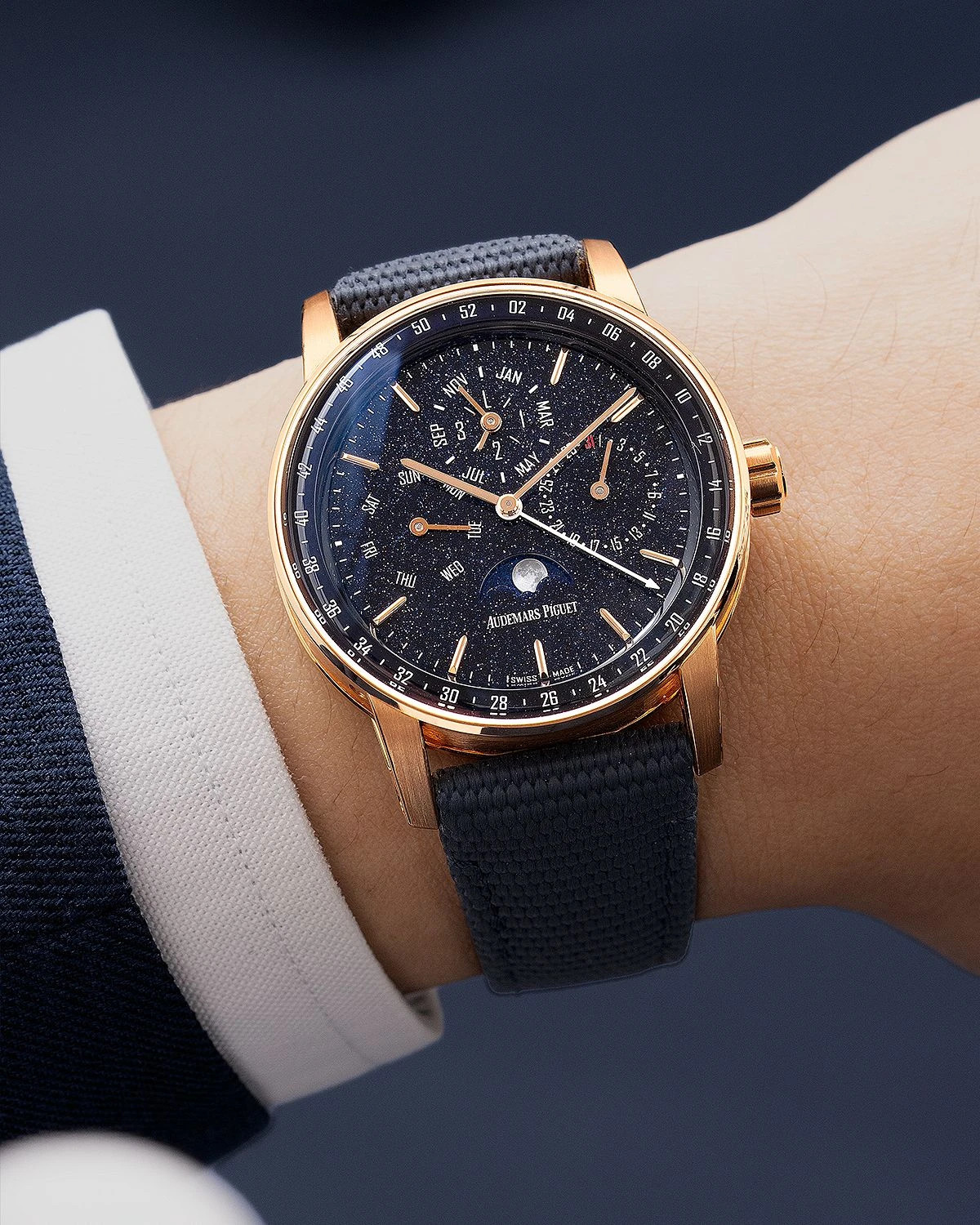
The sale also highlights the brand’s foundational commitment to traditional watchmaking. Pieces from the Jules Audemars and Edward Piguet lines showcase a different side of the company’s character. Here, the focus is on elegant case shapes, intricate complications, and a level of finishing rooted in the Vallée de Joux’s oldest traditions.
These watches are a reminder that before the steel sport watch revolution, Audemars Piguet was a master of the classical form. Perpetual calendars and minute repeaters were housed not in angular steel, but in sculpted precious metals. They represent a fluency in a design language that is quieter, but no less difficult to perfect.