
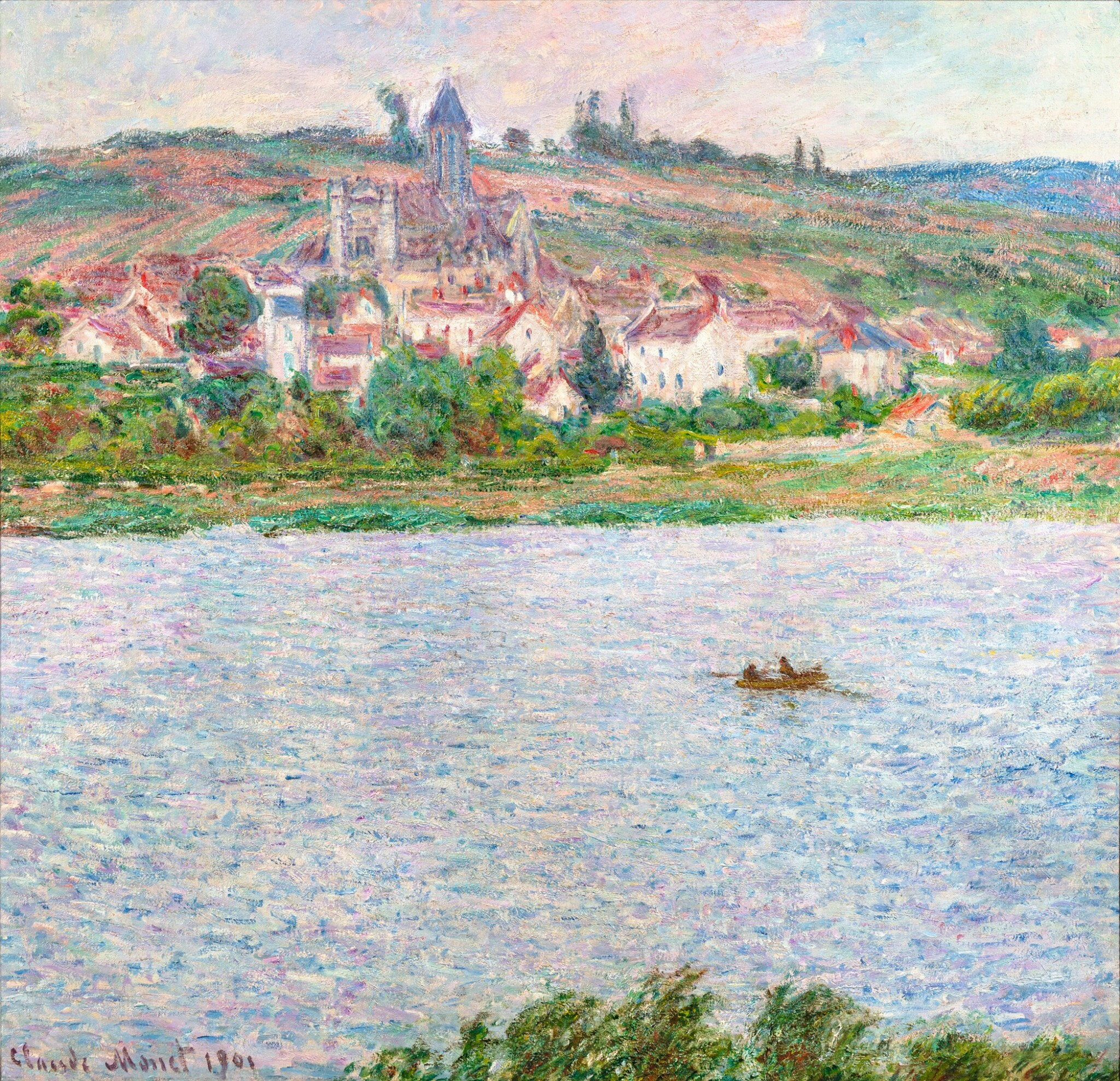
A familiar name can still hold a surprise. For Claude Monet, an artist whose work feels deeply known, the idea of a new discovery seems unlikely. Yet two paintings, kept from public view for more than a hundred years, are set to appear at a Sotheby's auction in Paris this April. Their emergence is less about a lost chapter and more about adding detail to a story we thought we knew completely.
Monet often returned to the same subjects. Water lilies, haystacks, the Rouen Cathedral. It would be easy to mistake this for repetition, but it was really a form of intense study. The subject was not the point. The light was. By painting the same view at different times of day, in different seasons, he was documenting the way perception itself changes. The object was merely the constant against which he measured the variable of light.
The Study of Light
This disciplined approach is what pushed him forward. He began as an Impressionist, capturing the fleeting moment. But his obsession with light and colour eventually led him somewhere else entirely. The forms began to dissolve. The water lilies became fields of pure colour. The distinction between the flower and its reflection blurred into a single, cohesive surface of paint.
His late work is often seen as a beginning point for Abstract Expressionism. He was no longer just painting what he saw. He was painting the experience of seeing. The two canvases now coming to auction are artifacts from this journey, offering another look at how his vision evolved.