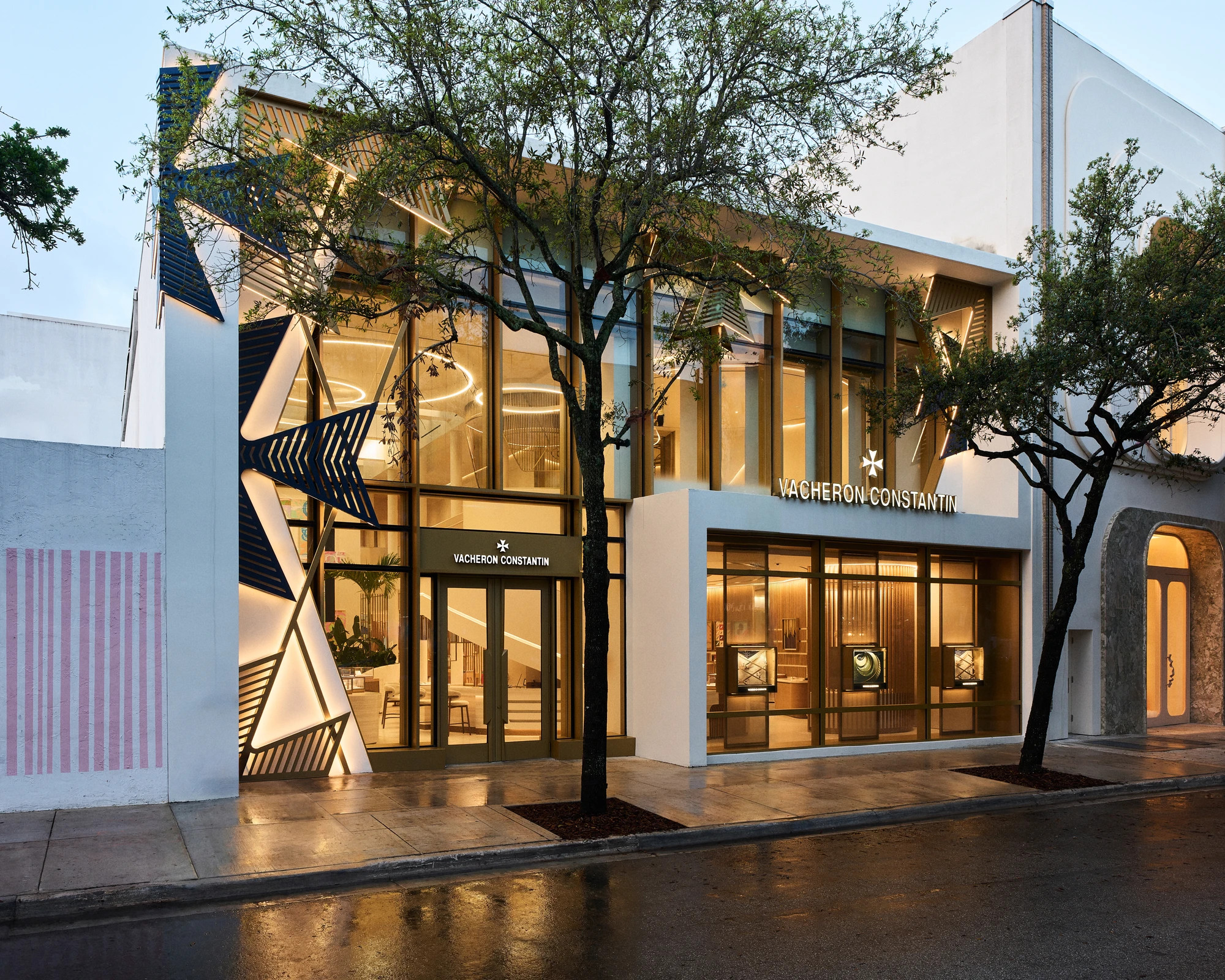
Miami has its own architectural grammar. A language of sunbursts, chevrons, and strong vertical lines born from the Art Deco period. It is a city defined by light, energy, and a very specific kind of forward momentum. It is not the first place you might think of for the world’s oldest watch manufacture, a house built on the quiet, patient precision of the Swiss Alps.
Yet Vacheron Constantin has reopened its Miami boutique as a new flagship, and the result is a considered study in translation. The challenge for any brand with such a deep history, one that has been in continuous production since 1755, is how to exist in the present without becoming a museum piece. The answer, it seems, is not to impose your own world, but to engage with the one you are in.
A Dialogue with Place
The new space is designed to absorb the city’s character. It blends the geometric flair of Art Deco with the established codes of the Maison. This is not a generic luxury interior air-dropped into the Design District. It is an attempt to find common ground between the meticulous craft of Geneva and the expressive spirit of South Florida. The boutique becomes a physical dialogue between two very different cultures.
This approach says something about how heritage brands must now operate. In an age where products are available everywhere online, the physical store has to offer something more. It has to provide a sense of place. It must feel specific to its location, offering an experience that cannot be replicated on a screen or in another city.