The Venice Biennale arrives every two years with the force of a weather system. It brings crowds, arguments about the future of art, and a temporary layer of newness to a city defined by its resistance to change. Yet the real story of Venice is found in the quiet that settles just a few alleys away from the main event. It is a city of permanent treasures, not just seasonal exhibitions.
To find them requires a deliberate turn, a choice to look past the pavilions and into the buildings that have shaped the city's character for centuries. This is a different kind of art experience. It is not about consumption, but immersion. It is about seeing works that were made for the very walls they still hang on, commissioned by a republic at the height of its power.
The Weight of History
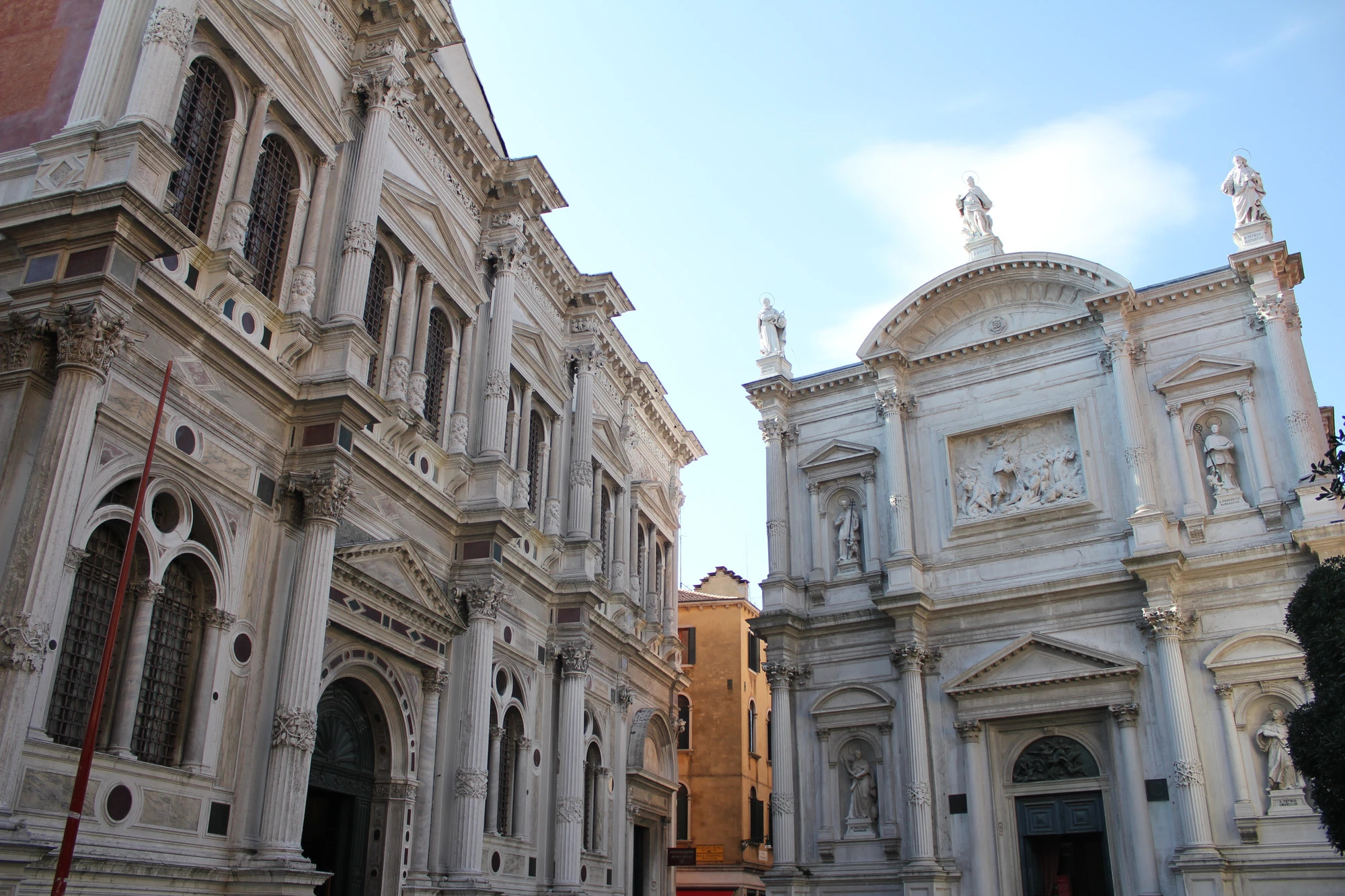
Some places in Venice are so dense with art they feel structural. The Scuola Grande di San Rocco is one of them. Here, more than sixty of Tintoretto’s paintings cover the walls and ceilings. It is not a gallery. It is an environment. The project took the artist nearly a quarter of a century to complete, a lifetime spent wrestling with a single, monumental vision.
A similar weight is felt at the Basilica di Santa Maria Gloriosa dei Frari. It is a vast Gothic church that holds one of Titian’s most important works, the “Assumption of the Virgin.” The painting sits over the high altar, framed perfectly by the marble choir screen. It was designed for this specific viewpoint, a piece of sacred theatre that has been running for five hundred years.
A Different Scale of Craft
Venice was also built by hand, piece by piece. That tradition continues in small workshops tucked away from the Grand Canal. In one, Saverio Pastor carves *fórcole*, the intricate, sculptural oar-rests for gondolas. Each one is a functional piece of abstract art, shaped from walnut or cherry wood, unique to the gondolier who will use it. It is a reminder that in this city, even the most practical objects carry an aesthetic purpose.
This more intimate scale of art finds its voice in the city’s smaller *scuole*, or confraternity halls. The Scuola di San Giorgio degli Schiavoni is home to a cycle of paintings by Vittore Carpaccio, telling stories with a narrative clarity that feels almost modern. Nearby, the Oratorio dei Crociferi, recently restored with support from Sotheby's, holds a complete cycle by Palma il Giovane. These were not just decorations. They were the visual heart of a community.
A Space to Breathe
The city can feel overwhelmingly dense, a maze of stone and water. But quiet spaces exist. On the island of Giudecca, across the water from the main crush of San Marco, lies L’Orto Giardino del Redentore. It is a former Capuchin monastery garden, returned to life after years of neglect.
With its orchard, vegetable plots, and quiet pathways, the garden offers a different perspective on Venice. It is a place of calm and cultivation, a connection to a more grounded, agricultural past that existed alongside the maritime empire. It is a place to simply be, away from the demands of looking.
The Biennale poses questions about what art is now. These places are the answer to what it has always been. They offer not a trend, but a foundation. And in a city of beautiful surfaces, finding that depth is the real prize.
Read more about collecting here.