
A Campbell's Soup can rendered in wool. Andy Warhol’s most recognizable images are being translated into a new medium, shifting from silkscreen prints to collectible woolen tapestry rugs. The project brings his Pop Art icons into a format that lives somewhere between fine art and interior design.
These are authorized editions, produced in the late 1990s by Museum Masters International, often called MMI, in direct collaboration with the Andy Warhol Foundation. The series was developed to reinterpret Warhol's signature aesthetic, moving his compositions from paper and canvas into a woven, textile form.
The idea is a logical extension of Warhol’s own practice. His career was built on the principles of reproduction and circulation, challenging the boundaries between a museum piece and a mass-media image. He understood that repeating an image could amplify its power. These tapestries continue that conversation, carrying his work into the domestic space.
Marilyn in a New Medium
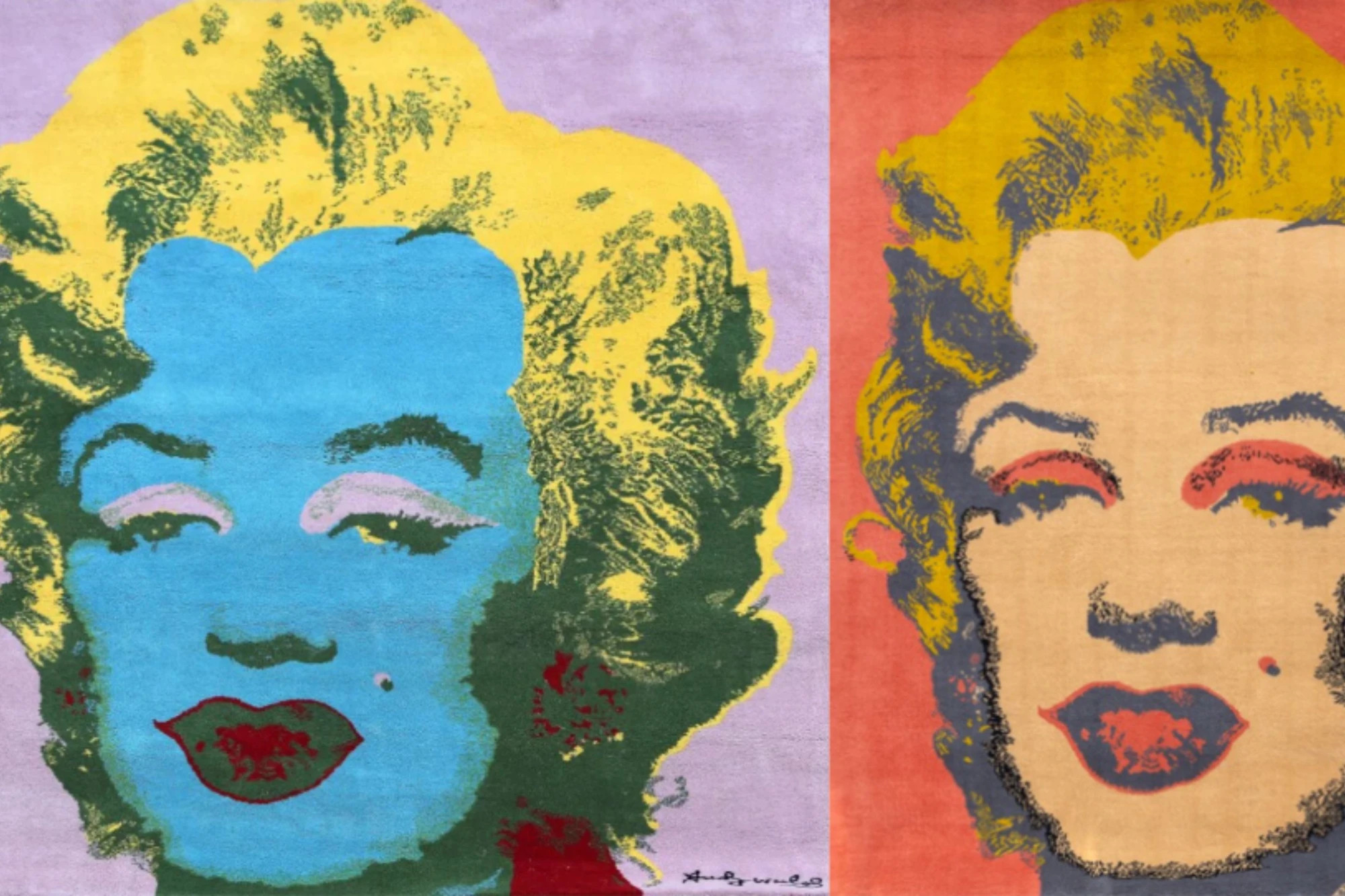
Few of Warhol's subjects are as famous as Marilyn Monroe. He began using her likeness after her death in 1962, turning a publicity still into one of modern art’s most enduring motifs. In 1997, MMI published the Marilyn tapestry editions as part of this project.
Produced in limited editions of 99, the woolen tapestries reinterpret the portrait in two distinct colorways: a cool Blue Purple and a vibrant Red Yellow. The woven surface introduces a texture and warmth that gives the familiar image a different physical presence from the slick finish of a traditional screenprint.