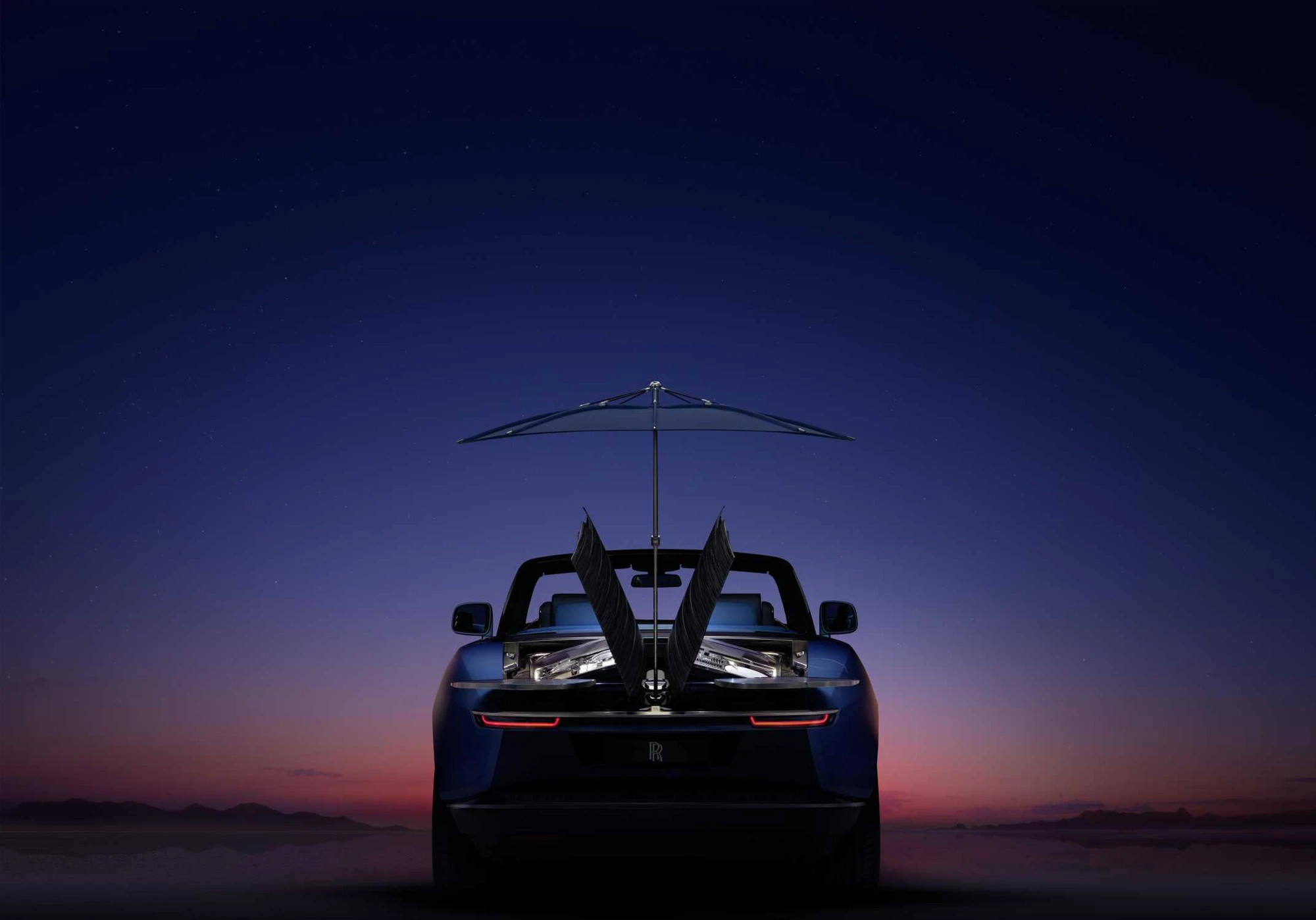
The idea of a custom car has been diluted. Today, it mostly means choosing from a menu of pre-approved options on a screen. A different color of leather, a specific wood veneer, perhaps a contrasting roof. It is personalization, not creation. At its Goodwood home, Rolls-Royce is drawing a line, reminding the world of a much older and more demanding practice: coachbuilding.
This is not a new program or a limited edition model. It is a statement of capability. A reassertion of a craft that predates the automobile itself, when wealthy patrons would commission a master craftsman to build a unique horse-drawn carriage body on a standardized chassis.
The principle remains the same. The process begins with a rolling chassis, the mechanical foundation of the car. But instead of receiving a factory-stamped body, it becomes a blank canvas. Clients work directly with designers to conceive an entirely new form. A different roofline, a longer tail, a completely unique silhouette. The body is then created by hand, panel by panel.
A Craft Nearly Lost
For most of the 20th century, this way of working all but vanished. The rise of mass production and unibody construction, where the body and frame are a single integrated unit, made true coachbuilding impractical and ruinously expensive. Cars became products, not commissions. Individuality was expressed through trim levels and option packages.
A few specialized houses kept the tradition alive, but for major manufacturers, the art was effectively extinct. Rolls-Royce, however, never fully let go of the idea. Its unique position in the market, and the expectations of its clients, allowed the embers of this craft to survive. The modern commitment to coachbuilding is not about reviving the past. It is about leveraging a century of experience to offer something that has become almost impossible to find elsewhere.
It’s an answer to a world where even the most expensive objects often feel mass-produced. The process is slow, collaborative, and intensely personal. It moves at the speed of craft, not the speed of a production line. The result is a car that is not merely owned, but commissioned.