

The grace of a racing yacht is found in its lines. Long, taut, and purposeful, they are drawn to manage immense forces with minimal effort. It is a language of physics and aesthetics, where performance and beauty are the same thing. You see a similar logic in the way a Rolls-Royce occupies the road. The presence is undeniable, yet it feels composed, not heavy.
The link between Rolls-Royce and the world of yachting is not a recent marketing invention. It is a long-running conversation between two disciplines that share a fundamental understanding of luxury. Both operate on the principle that the experience of travel is as important as the destination. And both attract a clientele that sees no clear line between their passions on land and on the water. The challenges of building a world-class sailing yacht, one that can withstand the pressures of the open ocean while remaining elegant, require a specific kind of engineering. The same can be said for an automobile built to deliver a serene ride without isolating its driver from the world.


One of the clearest examples was the Phantom Drophead Coupé. Its most memorable feature was not the engine or the Spirit of Ecstasy, but the teak decking that covered the rear tonneau. It was a direct reference to the deck of a classic yacht. The gesture was deliberate. It suggested a space for leisure and observation, transforming the car into a private viewing platform. It was less a mode of transport and more a destination in itself.
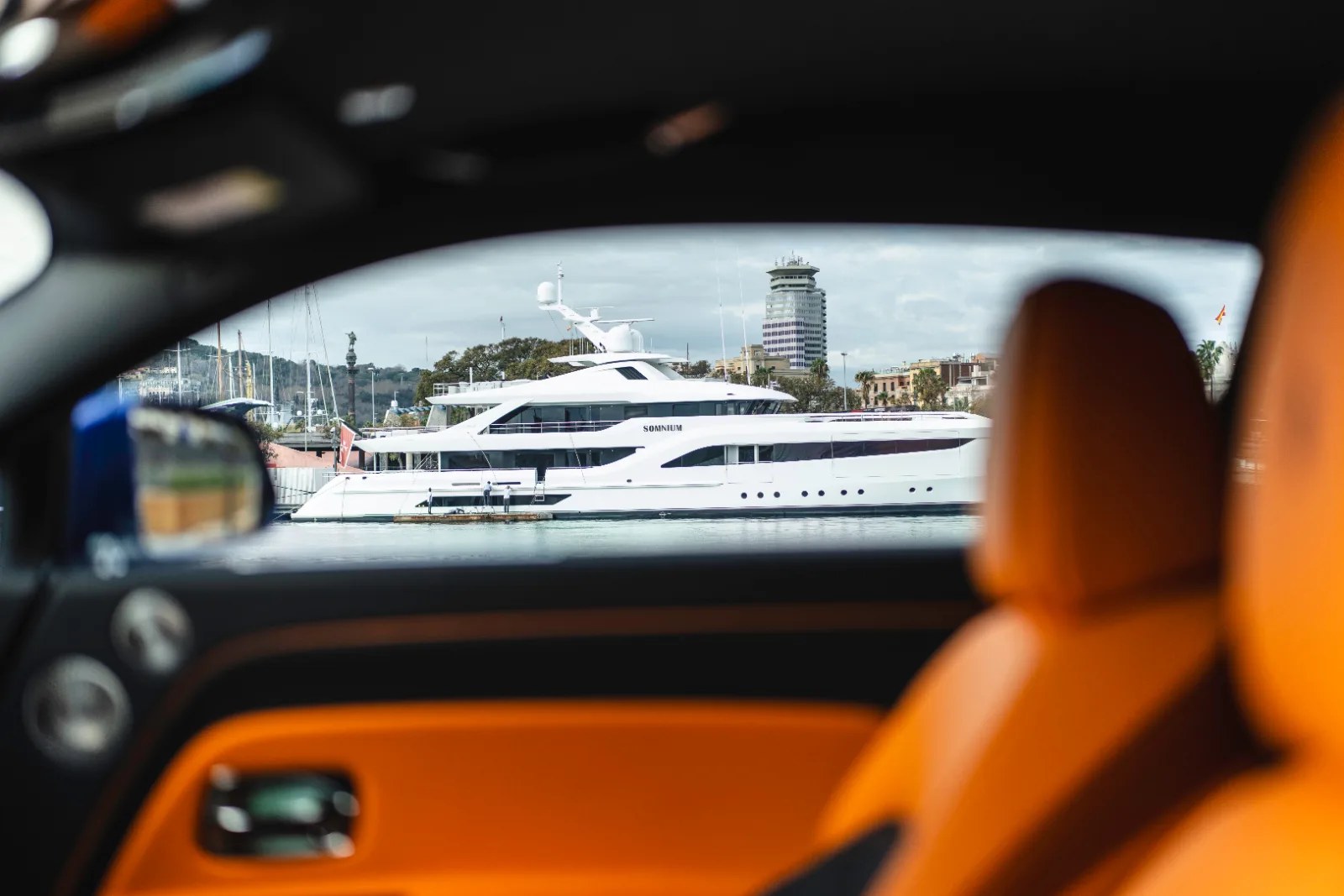
That idea found its most complete expression in the Boat Tail Coachbuild commissions. Here, the reference was not an accent but the entire concept. The car's rear silhouette tapers to a point, directly mimicking the stern of a J-class yacht. The deck opens like butterfly wings to reveal a hosting suite. It is perhaps the most literal translation of nautical design into an automobile ever attempted at this level.