The Overseas is the watch Vacheron Constantin built to be worn everywhere. Born in 1996 and reshaped in 2016, it is the Maison's sports-luxury line: water-resistant, built around an interchangeable bracelet and straps, finished to the same standard as the rest of the house, and the Vacheron Constantin most people actually wear day to day.
It turns thirty this year, and Watches & Wonders 2026 marked the moment with two new models that, at first glance, sit at opposite ends of what the collection can be, but in fact share much of the same DNA.
Our guide to both is Morgan Maillard, the Maison's Style and Heritage Expert, who came to the role through the bench and still thinks like the watchmaker he trained to be. "For Vacheron Constantin, something is really important: we never compromise between design and technique. Both always go together," he says, a principle that runs through the whole Overseas line, where the engineering and the wearing are never far apart.

A watch built to be worn
The Overseas has always defined Vacheron Constantin's sportier, more versatile side, the counterpoint to the dress registers of the Patrimony and Traditionnelle. Its bezel carries the form of the Maltese cross, the Maison's emblem, and every model is built around a quick-change system that lets an owner swap between the integrated bracelet, rubber and leather in seconds, without tools.
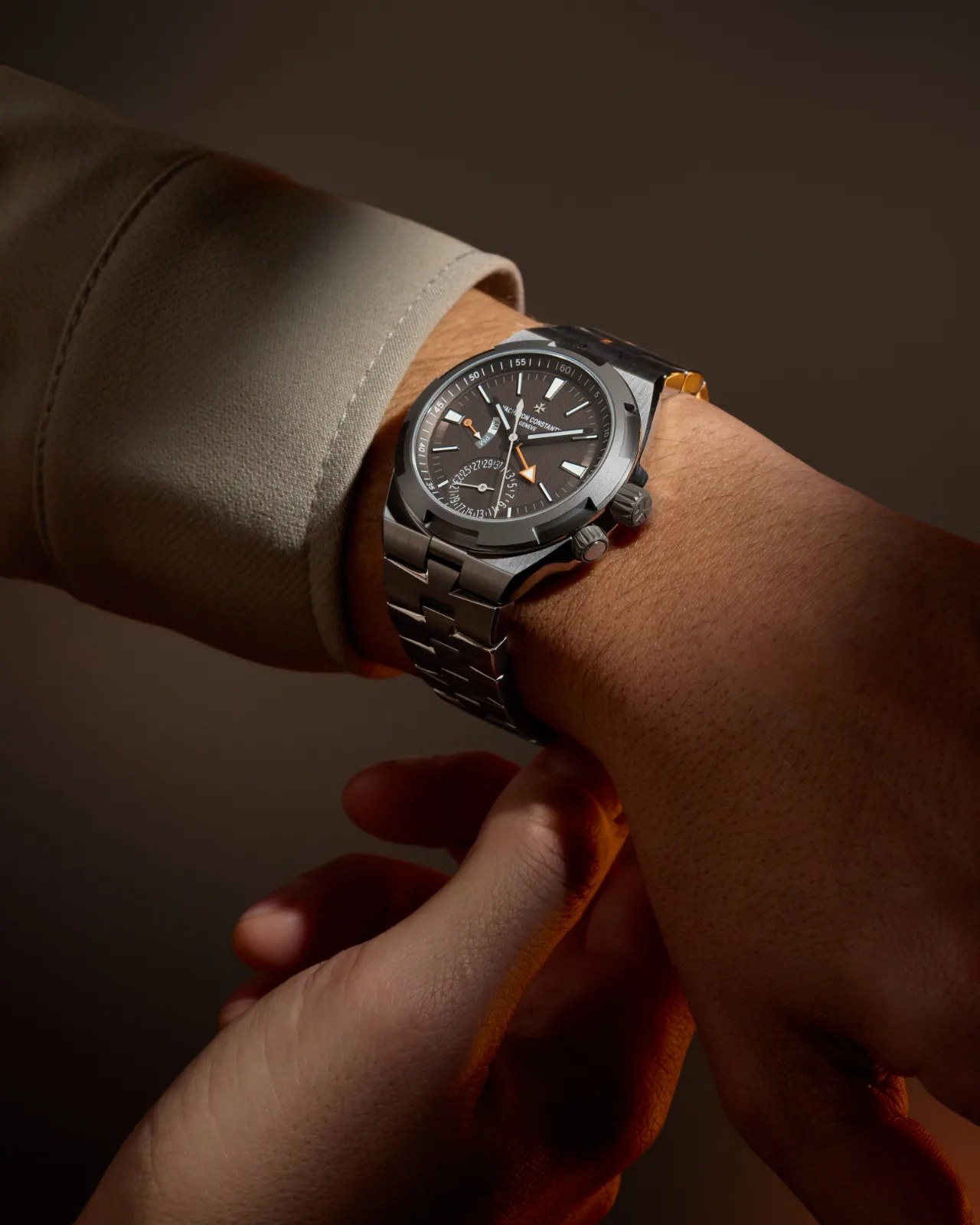
Maillard traces the line part by part. "The first bracelet was square. Then came the Maltese cross, which we still keep. Between the second and third generation you could change the strap, but you needed screws and to remove the bar. Now it's quick."
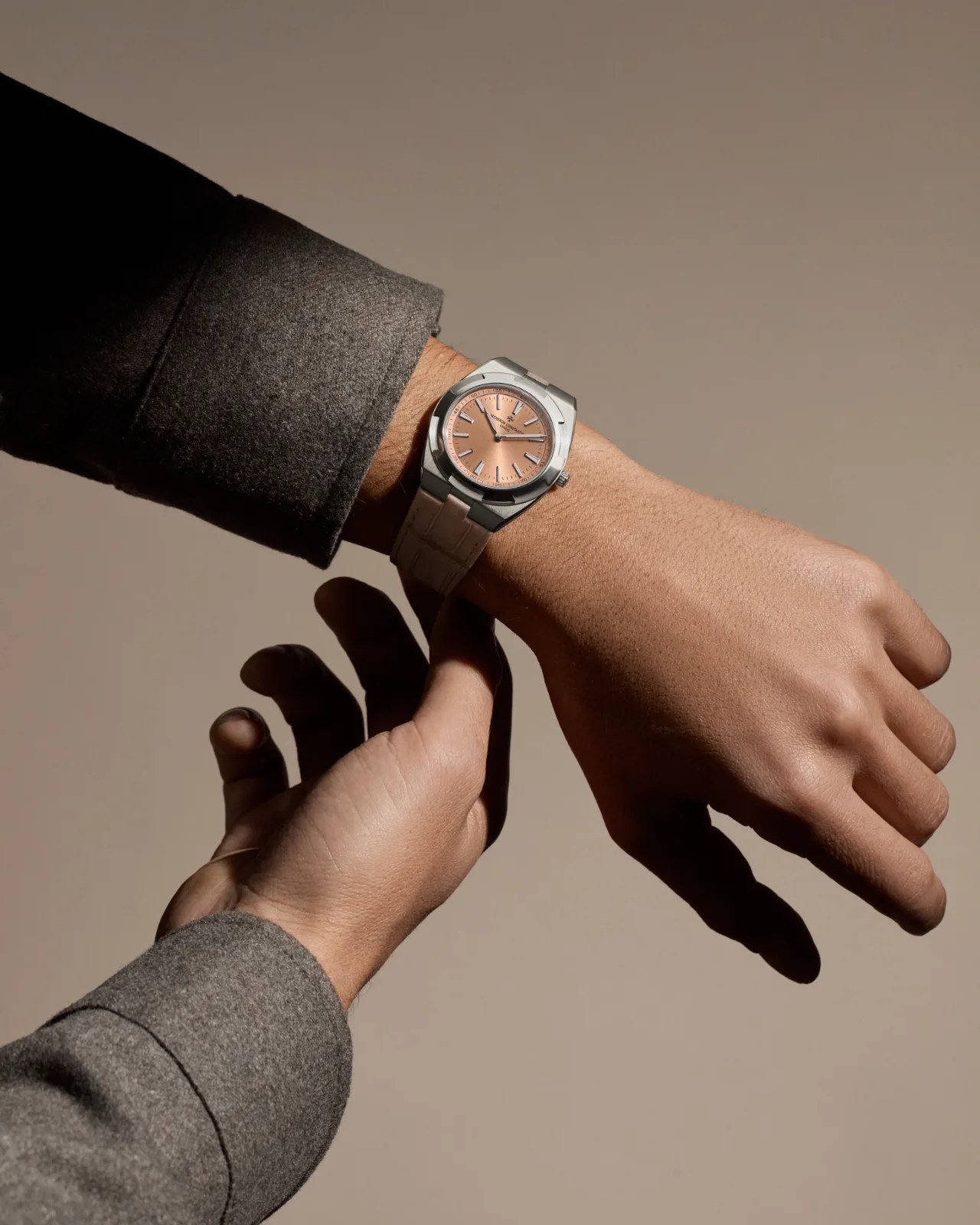
What stayed fixed mattered as much: the screwed crown, the water resistance, the bezel. The proportions moved with taste. "The first one, in 'ninety-six, was thirty-seven millimetres, a big size then. Today that would be too small for most clients." Through all of it, he says, the watch stays recognisable. "Straight away on the wrist, it's an Overseas. But there's a small evolution all the time."
What it offers is range on a single, familiar canvas, from time-and-date through dual-time travellers and chronographs up to ultra-thin perpetual calendars and tourbillons.
The headline: seven years for 2.4 millimetres
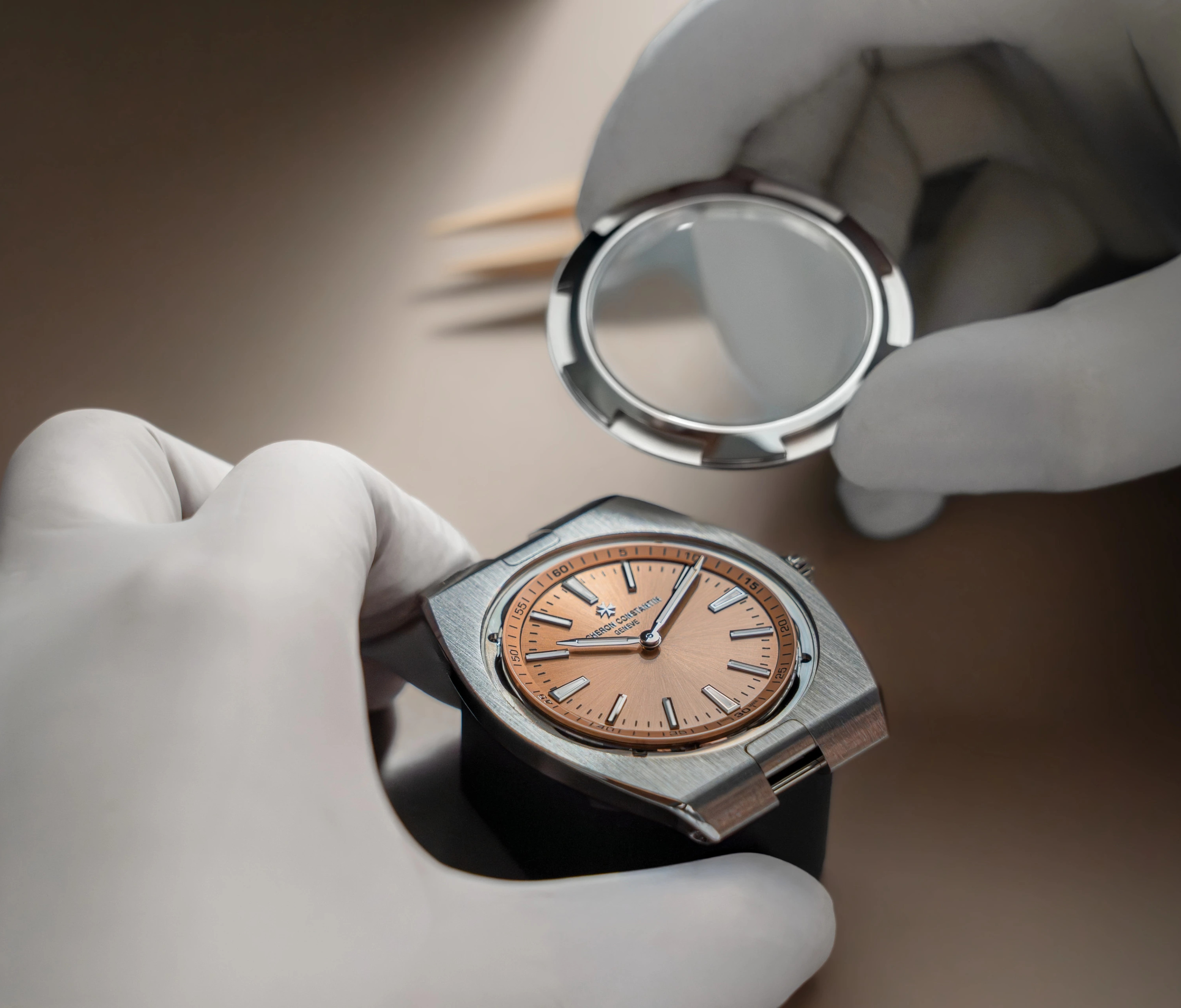
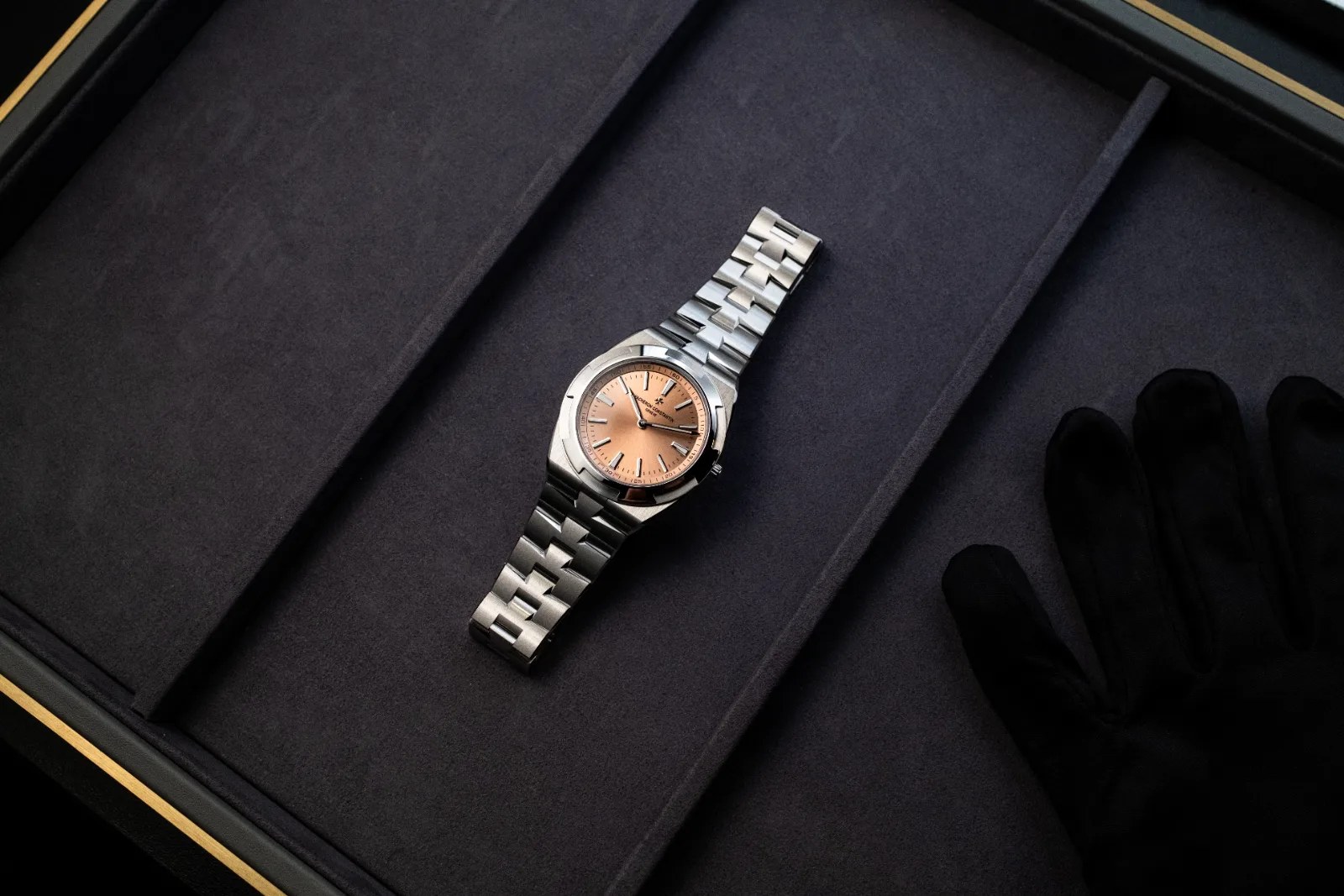
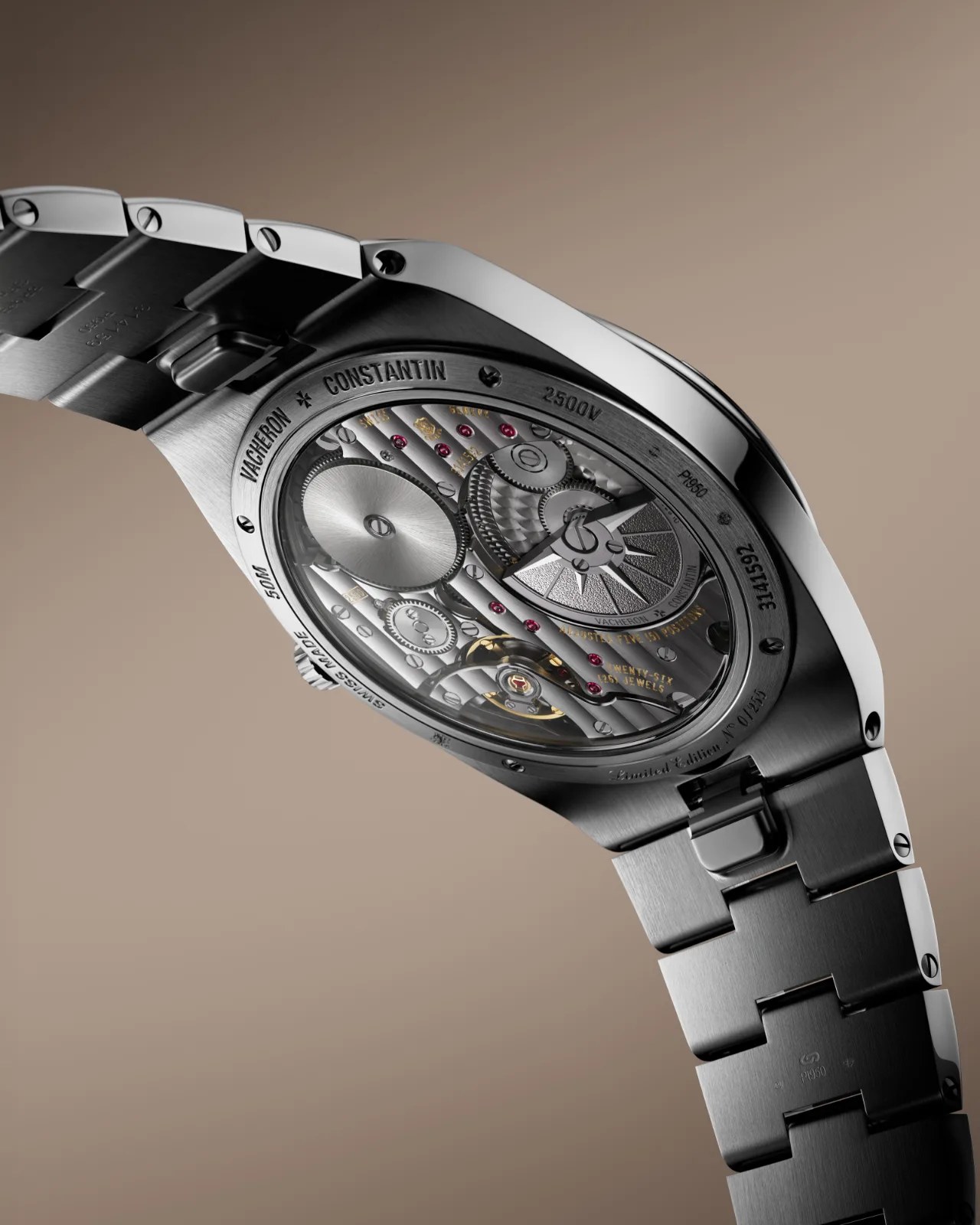
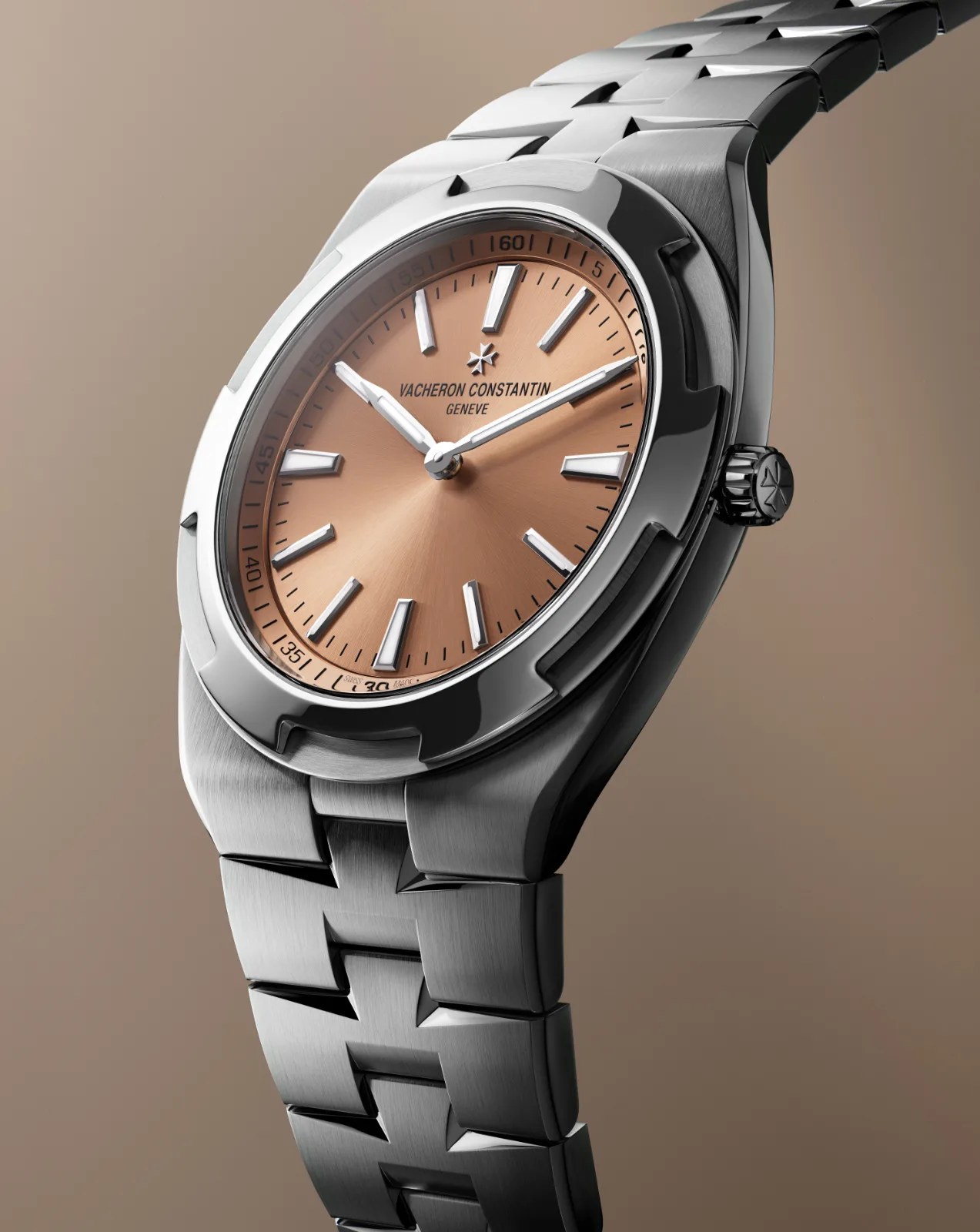
The first of this year's novelties is the Overseas Self-Winding Ultra-Thin, a 39.5mm platinum watch with a salmon dial and, at 7.35mm, the thinnest Overseas the Maison has made. It is limited to 255 pieces, a nod to the new movement inside it, the Calibre 2550, seven years in the making.
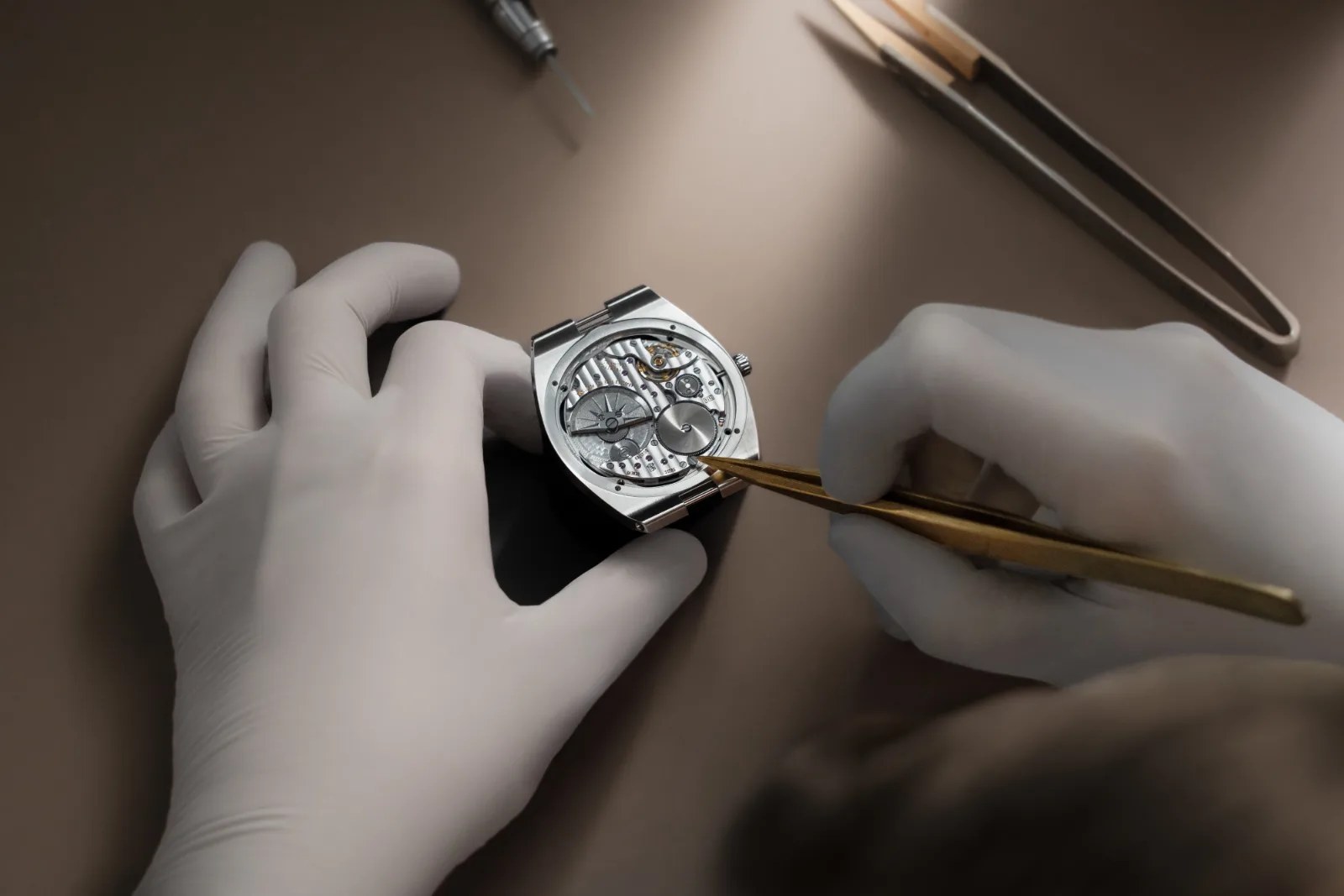
Maillard is careful about what it was not. "This movement is not made to be a record breaker. We've shown we can do a world record. But we wanted a new experience of ultra-thin, where you're not afraid to use it. People always say an ultra-thin has to be delicate, that the power reserve is a day, maybe two. Now you have eighty hours. Leave it over the weekend, come back Monday like nothing changed."
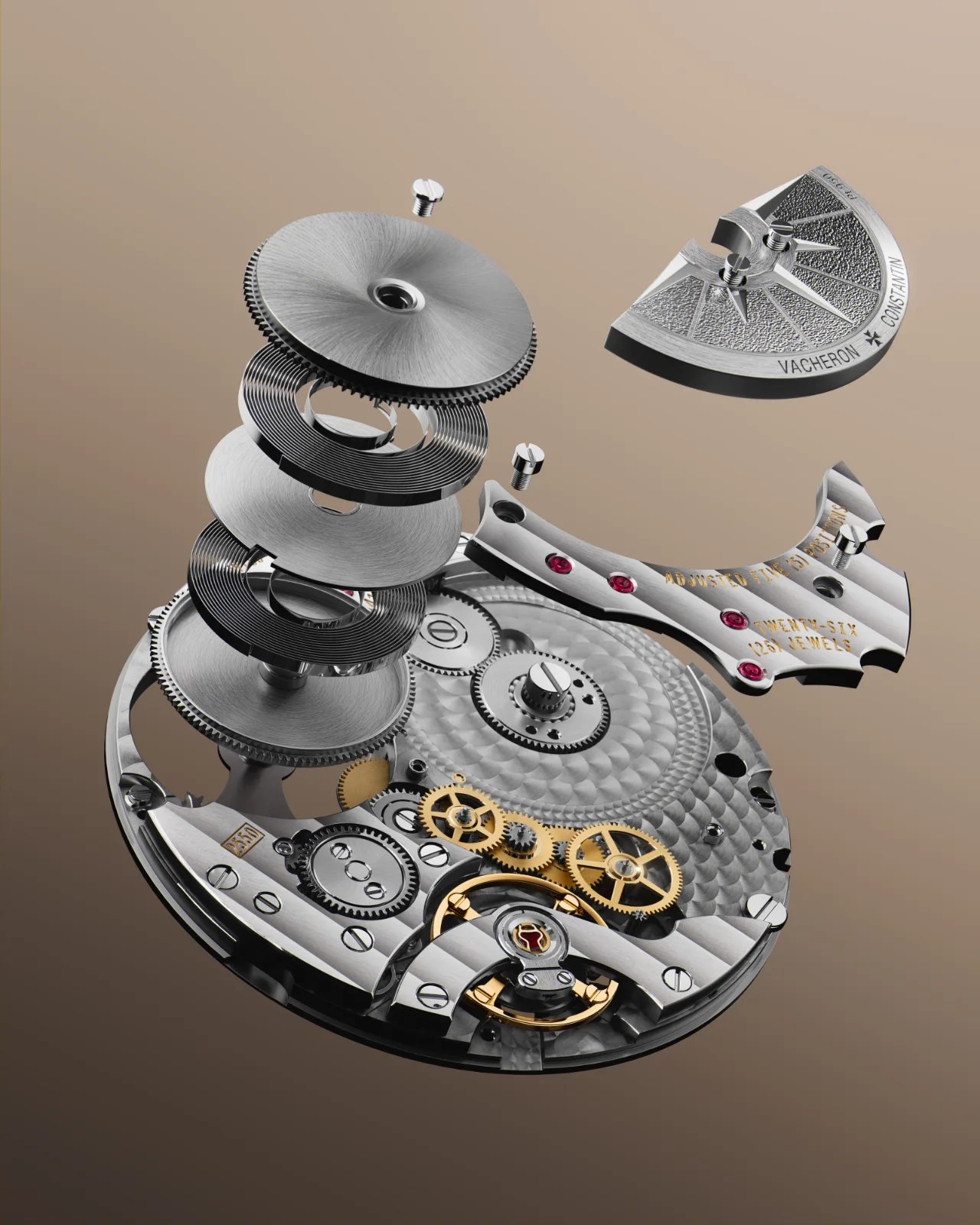
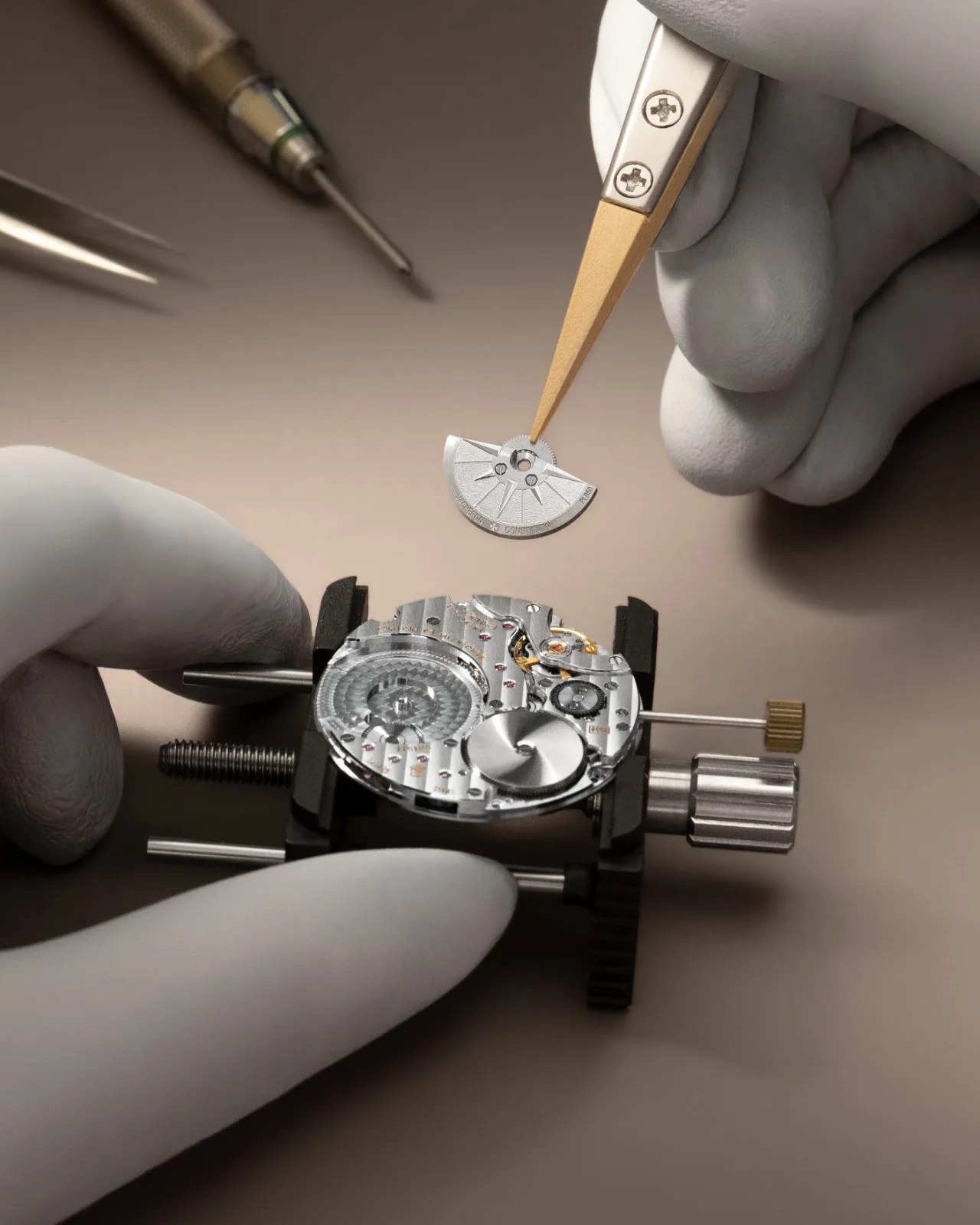
Eighty hours inside 2.4mm meant a part Vacheron Constantin had never built. He frames it as a problem to solve. "We wanted a bigger power reserve, and that's the mainspring. If we added a winding system on top, it wouldn't work. We needed a micro-rotor. We never made a micro-rotor. It's not for us, saying Vacheron Constantin never made one. It's for the client." The difficulty, he says, was never one part. "It was the association of everything, at the right place at the right moment. With Vacheron Constantin there's no rush. Quality comes before expectation."
The salmon dial is its own quiet piece of continuity. "We had a steel watch with a salmon dial, very rare. Vacheron Constantin always made these in capsule collections, white metal and salmon dial. So we have this combination transmitted generation after generation."
Platinum and titanium
The Ultra-Thin did not arrive alone. Beside it came the Overseas Dual Time Cardinal Points, a travel watch in full titanium offered in four colours, and worn together the pair plays a quiet trick. The platinum watch, for all its thinness, carries real weight; the titanium one all but disappears on the wrist. "It's a strange feeling when you wear both of them at the same time," he says. I had the same reaction handling them at Watches & Wonders; our full impressions here.
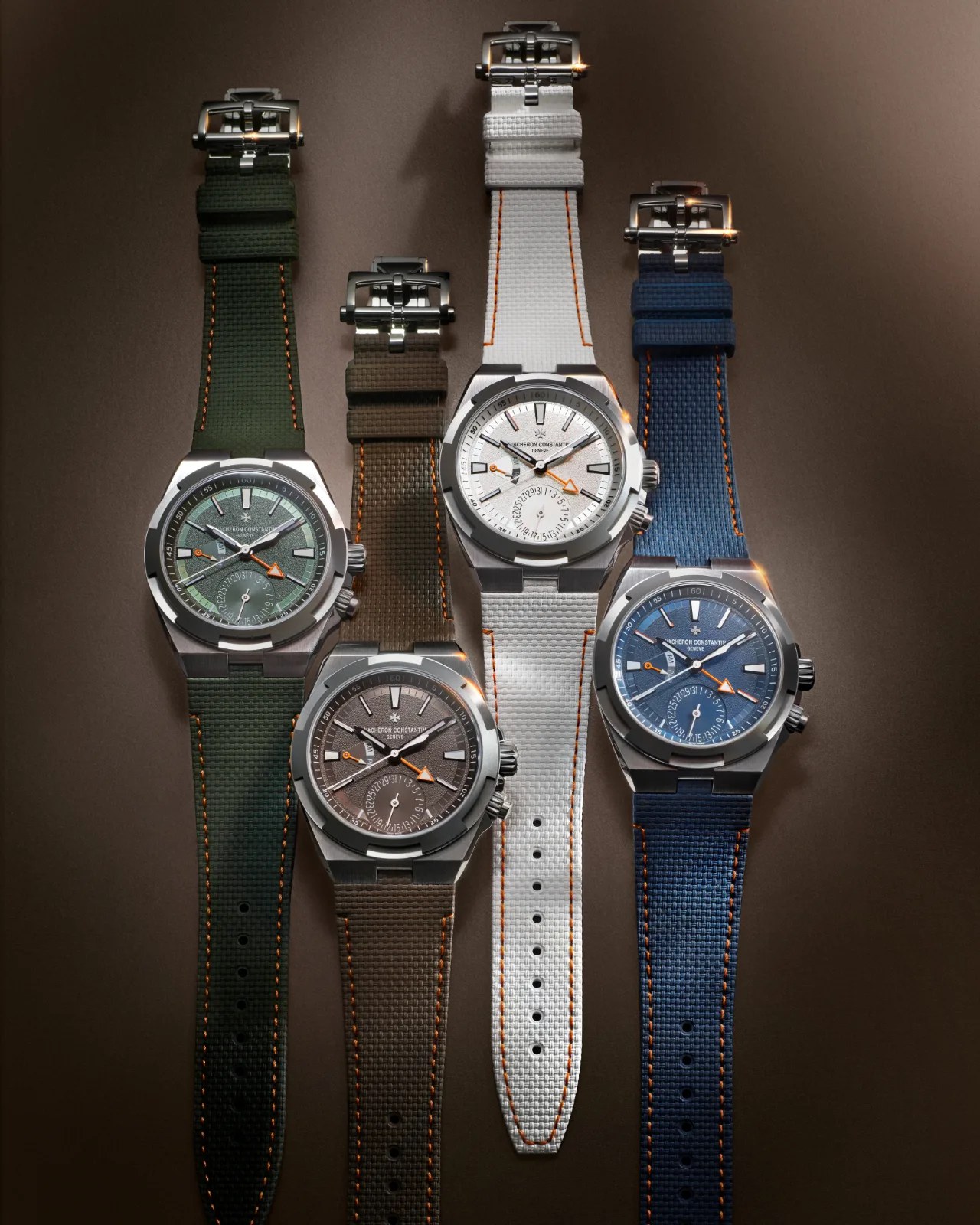
He resists reading the lighter, more colourful watch as a break from character. "I don't think titanium is about being younger. It's a great material, and it gives you the pleasure of something very light."
The precedent, he says, is older than most assume.
"In 1938 Vacheron Constantin made a pocket watch in almost full aluminium, for a Canadian aluminium company, for employees after twenty-five years. Case, dial, hands, even the bridges, all aluminium. Nineteen grams. Vacheron Constantin has always been avant-garde with materials. We're just more discreet, so sometimes it's under the radar."
From there comes the line that holds the rest together.
"We don't follow trends. We listen to clients. A trend is made to go. Style is made to stay."
From two hands to perpetual calendar
The two novelties bracket the collection, but the middle is where its breadth shows. Last year the line gained two Overseas Perpetual Calendar Ultra-Thin references, one in pink gold with a matching dial and moon phase, the other in white gold with a deep burgundy lacquered dial. At 41.5mm and 8.1mm thick, both carry a self-winding perpetual calendar with moon phase that needs no correction until 2100, and a caseback that reveals a gold rotor engraved with a compass rose, the Overseas reminding you, even here, that it was made to travel. Each comes on a gold bracelet with interchangeable rubber straps, so a grand complication can still be worn to the beach house.
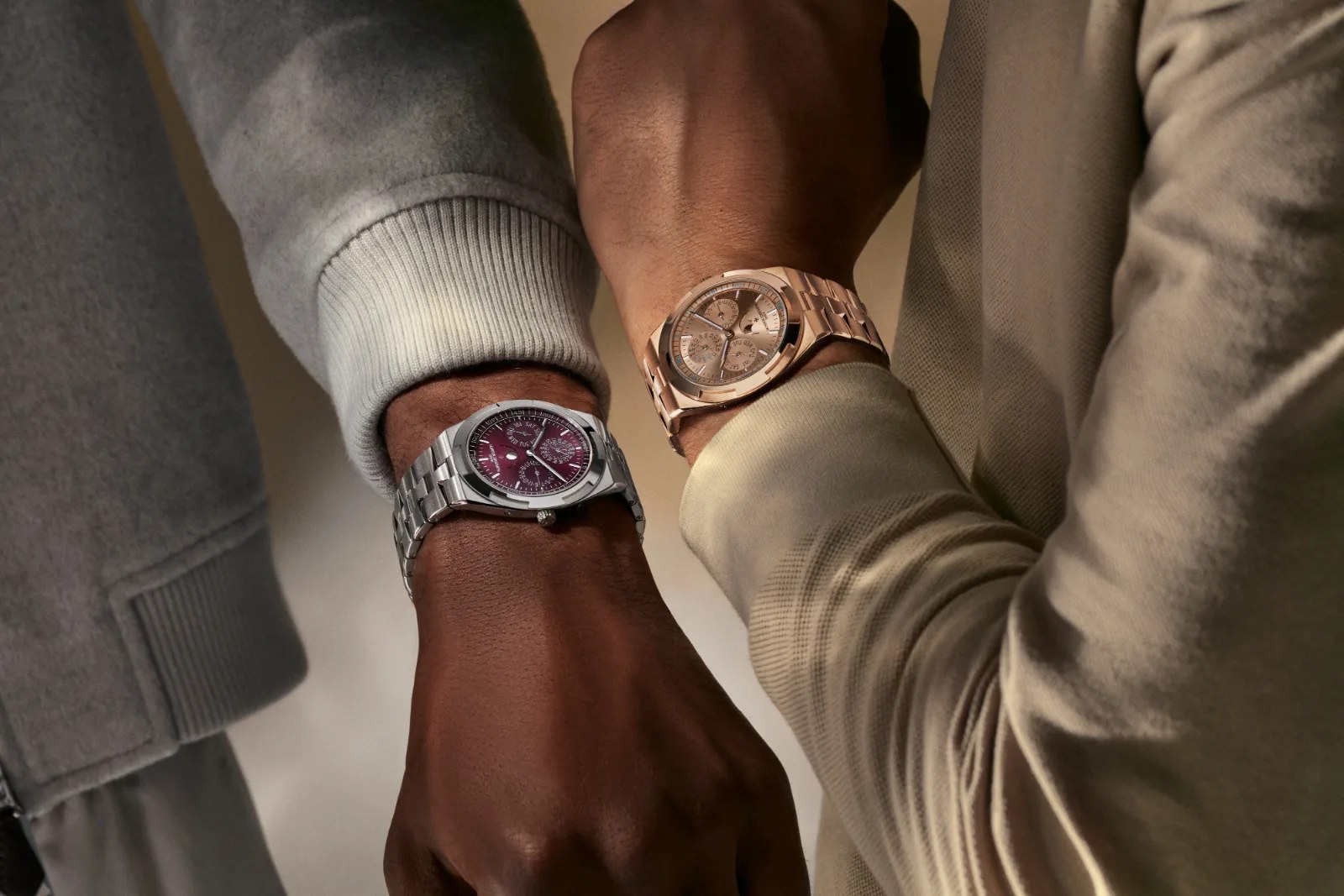
That, alongside the dual-time Everest models, the steel chronographs and the tourbillons, is the point Maillard keeps returning to: the Overseas is one design that absorbs almost any horological intent without ceasing to look like itself.
Three that feel like ten
For all the engineering, what he most enjoys is watching people live with the watches. "What I love is that clients play with the bracelets. Everywhere I go, someone says, 'You see my new bracelet?' or 'You see this combination?'"
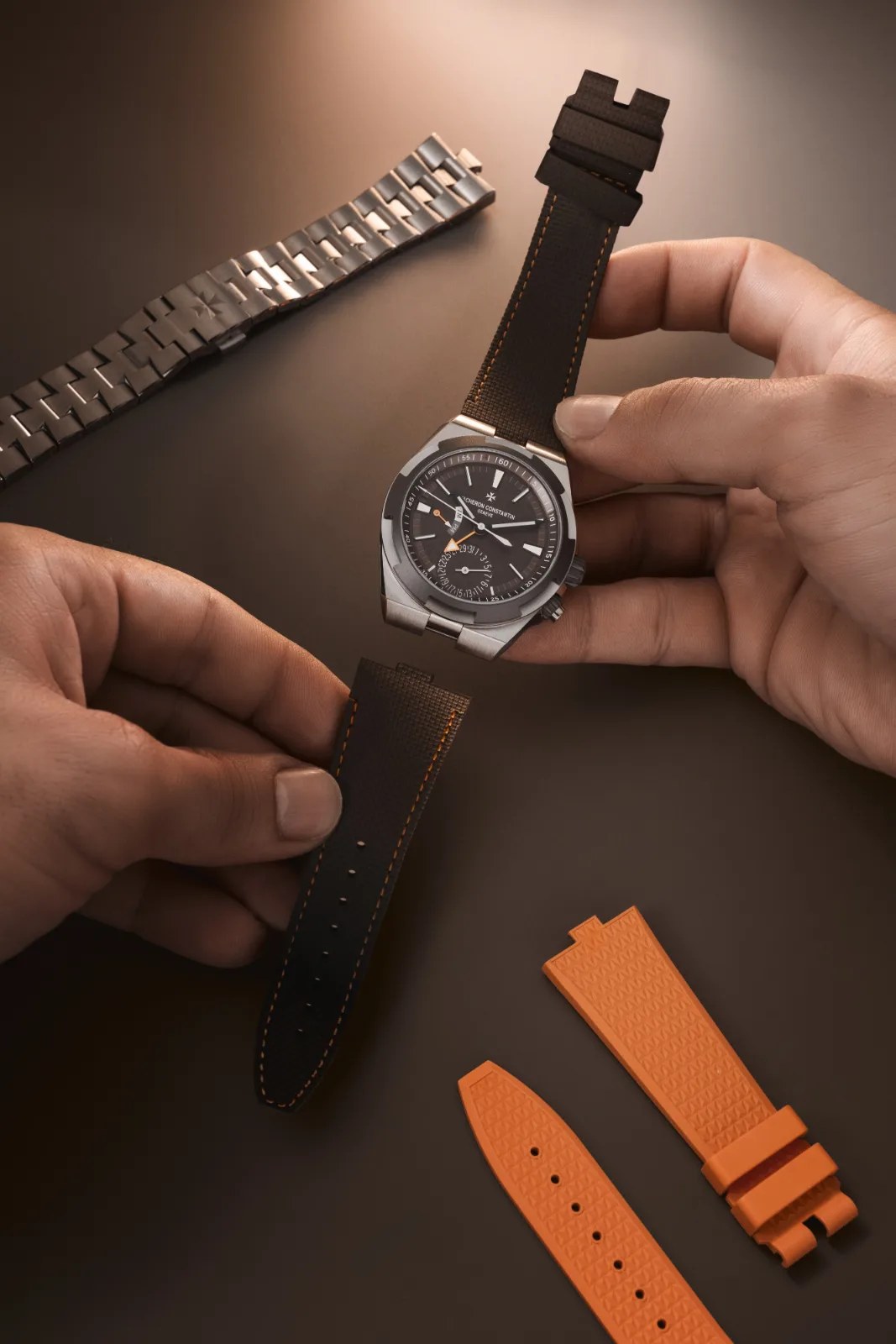
The effect, he says, is a kind of multiplication. "For them it feels like ten new watches. At the end they maybe have three. I find that exceptional." His favourite version of it happens away from any boutique. "You go on vacation and take six or seven straps. You have an outfit for the whole trip, but you only brought one watch."
That, more than any single reference, is what the Overseas is for: a Vacheron Constantin made not to be kept in a safe, but to be worn, swapped, travelled with, and used.
Beyond the Overseas
As one of the oldest watchmakers in continuous operation, Vacheron Constantin draws on an archive few can rival, and asked to pick a favorite from it, Maillard shares a somewhat lesser known timepiece.
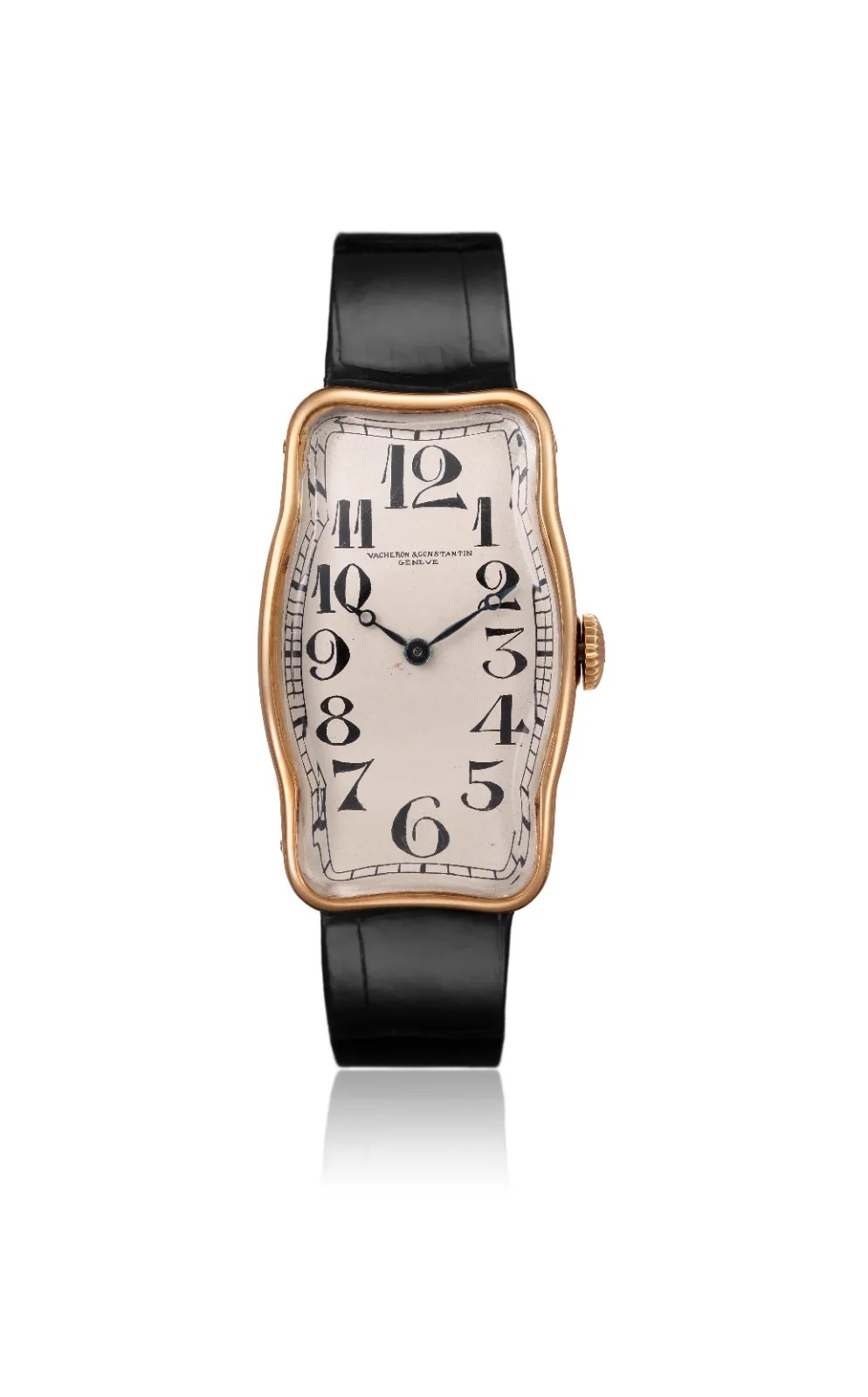
"We nicknamed it the Sole, like the sole of a shoe. Made in 1917, right at the start of wristwatches. Massive, wavy, around forty-seven millimetres. Recently some collectors in Paris put it on and said it looked so modern. At one point I'd like to bring it back. And at one point I love that it stays in its time. Sometimes you don't need to recreate something that was great."